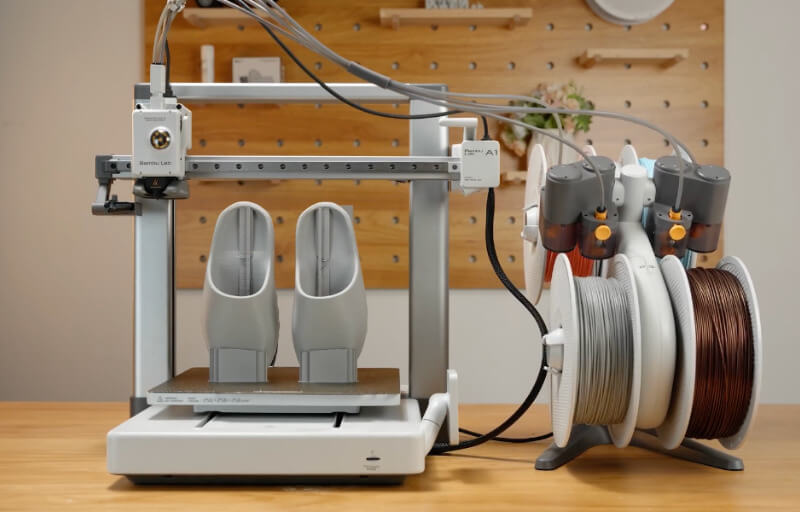
The growing role of STEAM education has changed the way students are encouraged to learn, create, and solve problems. Rather than focusing only on theory, many classrooms and home learning spaces now place greater value on practical experiences that connect science, technology, engineering, arts, and mathematics in meaningful ways. Tools that allow students to move from ideas to real-world results can make that process far more engaging and memorable.
The Bambu Lab A1 stands out as a 3D printer that fits naturally into that learning model. It combines a user-friendly design with advanced capabilities that help make 3D printing feel approachable without stripping away the excitement of creating something detailed and functional. For students, educators, and parents looking to support hands-on learning, it offers a strong balance of accessibility, speed, and creative potential.
What makes the Bambu Lab A1 especially compelling for STEAM use is the way it helps turn abstract concepts into physical outcomes. Designs created on a screen can quickly become objects that can be tested, improved, and understood from every angle. That ability to connect digital design with practical making is a major reason why the A1 is such a valuable option for modern learning environments.

Table of Contents
Why 3D Printing Matters in STEAM Education
Bringing multiple subjects together in one activity
One of the biggest strengths of 3D printing in STEAM education is the way it naturally combines several learning areas into one practical task. A single project can involve measurement, digital design, structural thinking, creativity, and material awareness, all while giving students a clear goal to work towards. Instead of learning these ideas in isolation, students can see how different skills support one another in a real process.
This makes lessons feel more connected and purposeful. When students design an object, adjust its dimensions, and then print a working version, they are not just following instructions. They are using mathematics, technology, engineering logic, and creative thinking together in a way that feels relevant and rewarding.
It also helps teachers create richer classroom experiences without forcing artificial links between subjects. A project based on a bridge, container, model organism, or historical artefact can open the door to discussions across several disciplines at once. That type of crossover is what gives STEAM its value, and 3D printing supports it exceptionally well.
Students often respond more strongly when learning has a visible outcome. A concept that may have seemed distant in a worksheet or textbook can feel much more understandable when it becomes something they can hold, inspect, and improve. That shift from passive observation to active creation can have a major impact on how confidently students engage with their work.
Making learning more tangible and memorable
Many STEAM concepts are easier to understand when students can interact with them physically. Shapes, structures, tolerances, balance, fit, and function all become easier to grasp when a design moves beyond the screen and becomes a real object. This helps bridge the gap between theory and experience in a way that suits a wide range of learners.
For younger students, that physical connection can make technical ideas feel less intimidating. For older students, it creates opportunities to explore more advanced topics such as prototyping, iteration, design efficiency, and mechanical performance. In both cases, the learning becomes more immediate because students can see the outcome of their decisions in a clear and practical way.
3D printing also encourages a stronger understanding of process. Students begin to recognise that a successful result usually comes from planning, testing, refining, and trying again. That lesson is valuable well beyond the classroom because it reflects the way real innovation happens in design, engineering, and product development.
Another reason 3D printing matters in STEAM is that it gives students ownership over what they create. Instead of only consuming information, they are producing something original based on their own choices and ideas. That sense of authorship can boost motivation and help students feel more invested in the learning journey.
It can also make collaboration more meaningful. Students can work together on a design challenge, discuss how to strengthen an object, divide creative tasks, and review the printed result as a team. In that environment, communication and critical thinking become part of the activity rather than separate classroom goals.
When used well, 3D printing does more than add novelty to a lesson. It creates a stronger link between imagination, knowledge, and practical action. That is exactly why it has become such an important tool in modern STEAM education, especially in learning spaces that want students to experiment, solve problems, and think more confidently with real-world outcomes in mind.
Introducing the Bambu Lab A1
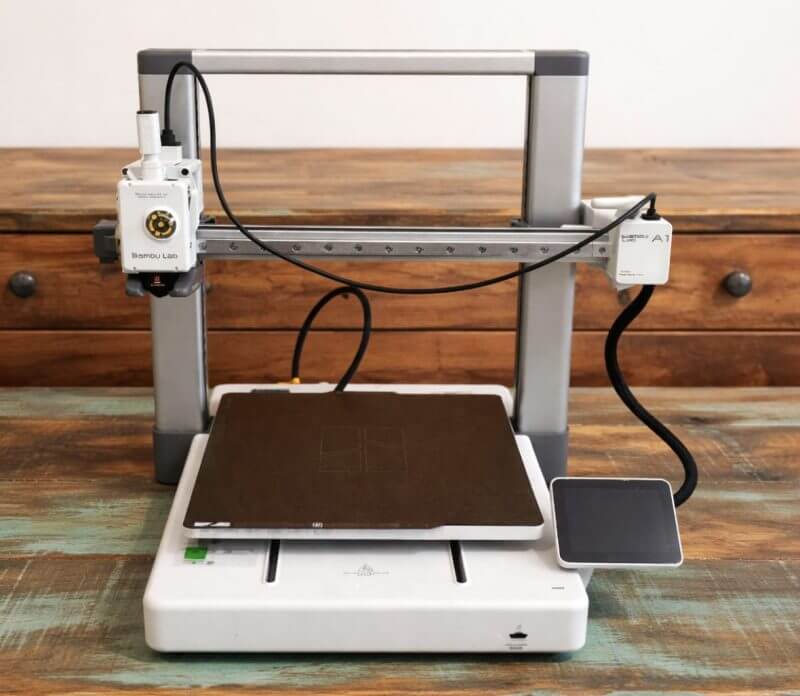
A 3D printer designed to feel approachable from the start
The Bambu Lab A1 is a desktop 3D printer that makes a strong first impression by focusing on ease of use without giving up the features that make printing genuinely rewarding. It is designed in a way that feels welcoming to beginners, yet it still offers the kind of performance that keeps the experience satisfying as users become more confident. For STEAM learning, that balance is especially important because it allows students and educators to focus more on creating and less on overcoming technical barriers.
One of the reasons the A1 suits learning environments so well is that it does not feel overly complicated to operate. Its interface is straightforward, the setup process is far less intimidating than many people expect from 3D printing, and much of the calibration work is handled automatically. That means students can spend more time understanding design ideas and project goals rather than getting stuck on the machine itself.
This kind of accessibility matters in classrooms, makerspaces, and home learning settings where time and attention are valuable. A printer that is easier to start using can help keep momentum high during lessons and projects. It also supports confidence, which is a major factor when students are trying a new technology for the first time.
Combining user-friendly operation with advanced capability
Although the Bambu Lab A1 is approachable, it still delivers features that make it feel far more capable than a basic entry-level machine. It offers a generous print area, fast print speeds, automatic calibration functions, and a well-thought-out design that supports reliable day-to-day use. These qualities make it easier to move from simple learning activities to more ambitious project work as students develop their skills.
The A1 also benefits from thoughtful hardware choices that improve the experience in practical ways. Its sturdy construction, smooth motion system, and direct drive setup all contribute to consistent output, which is important when students are learning how digital design choices affect physical results. When a printer behaves predictably, it becomes a stronger teaching tool because it helps learners focus on cause and effect.
Another useful aspect is the way the A1 works with Bambu Lab’s wider software ecosystem. With access to Bambu Studio and mobile monitoring through Bambu Handy, it feels connected and modern in a way that supports current learning habits. Students and educators can prepare files, manage prints, and keep track of progress without the workflow feeling outdated or clumsy.
The option for multi-colour printing through the AMS Lite also adds another layer of educational value. In STEAM settings, colour can be more than decoration, since it can help distinguish parts, highlight design features, support labelled models, or make student projects more expressive. That gives the A1 an added advantage for activities that blend technical understanding with visual communication and creativity.
What makes the printer especially appealing is that these capabilities do not come at the cost of usability. The A1 still feels accessible, well organised, and friendly to learners who may be using a 3D printer for the first time. That combination of simplicity and performance is a big part of what makes it such a strong fit for modern STEAM education.
Making Design Thinking More Practical for Students
Turning ideas into workable designs
Design thinking becomes far more meaningful when students can move beyond brainstorming and actually build what they imagine. The Bambu Lab A1 supports this process by giving learners a practical way to take a digital concept and turn it into a physical object they can examine, test, and improve. That shift helps students understand that good design is not only about having an idea, but also about shaping that idea into something usable.
In many learning settings, students are encouraged to sketch, plan, and discuss solutions, but the process can feel incomplete if those concepts never become real. With 3D printing, they can see how dimensions, structure, and material use affect the final result. This makes design thinking feel active rather than theoretical, which helps students build stronger confidence in their decision-making.
The A1 is especially useful here because it lowers the friction between concept and creation. When the machine is easier to operate and quicker to prepare, students can spend more energy on refining their work instead of struggling through unnecessary technical delays. That makes it easier for design-based learning to stay focused on ideas, testing, and improvement.
Helping students learn through iteration
A major part of design thinking is understanding that first attempts are rarely the final answer. Students need opportunities to try something, evaluate it, make changes, and test again. The Bambu Lab A1 supports this learning cycle by making repeated prototyping feel achievable, which is essential when students are learning how to improve a design through observation and feedback.
When students print an object and discover that it is too small, too weak, or not shaped the way they expected, they gain valuable insight that no diagram alone can provide. They begin to understand how planning choices affect outcomes, and they can respond by adjusting their file and trying again. This repeated process teaches resilience as well as technical understanding.
Because the A1 is designed for dependable operation, it becomes easier to run these kinds of iterative tasks in a classroom or shared learning space. Students can focus on asking useful questions about their work, such as whether a piece fits properly, whether a support is strong enough, or whether a design could be simplified. Those moments are at the heart of real design thinking because they encourage reflection, adaptation, and smarter problem-solving.
The practical nature of 3D printing also helps students see design as a process shaped by purpose. Instead of creating something that only looks appealing on a screen, they start thinking about who will use it, what it needs to do, and how well it performs. That encourages a more mature understanding of design that connects creativity with function.
This is where the Bambu Lab A1 becomes more than just a machine for making objects. It becomes a tool that helps students engage with the full journey of problem-solving, from first concept through to revision and refinement. In STEAM education, that ability to make design thinking visible and hands-on is one of the strongest reasons the A1 stands out.
Encouraging Creativity Through Hands-On Learning

Giving students more freedom to explore ideas
Creativity tends to grow when students are given the chance to test ideas in a practical way rather than simply describing them on paper. The Bambu Lab A1 supports that kind of exploration by making it easier to transform concepts into real objects that can be touched, examined, and improved. This gives students a stronger sense that their ideas have value, which can encourage them to think more imaginatively and take greater pride in their work.
In a STEAM setting, creativity is not limited to artistic expression alone. It also appears in the way students solve problems, adapt designs, combine functions, and find new ways to meet a challenge. A 3D printer like the A1 gives them the freedom to experiment with form and structure while still working within practical constraints, which is often where the most meaningful learning happens.
Because the A1 is approachable to use, students are less likely to feel blocked by the technology itself. That matters in creative work, since too many technical hurdles can quickly reduce enthusiasm and interrupt the flow of ideas. When the printer feels manageable and responsive, students can stay focused on designing, refining, and trying something original.
Hands-on creation also helps students become more confident in their own judgement. They are not simply selecting from pre-made answers, but making decisions about shape, size, purpose, and presentation. That process can build independence and encourage students to see themselves as capable creators rather than passive learners.
Making creative learning more engaging and memorable
Physical project work often creates a much stronger emotional connection to learning than abstract tasks alone. When students design an object and then watch it take shape layer by layer, the experience feels active and rewarding in a way that is difficult to replicate through conventional classwork. The Bambu Lab A1 makes that process more accessible, which helps keep students engaged from the first idea through to the finished print.
That engagement can be especially valuable for students who learn best by doing. Some learners understand concepts more easily when they can handle an object, observe its structure, and see how it performs in real space. By supporting this kind of interactive learning, the A1 helps creative thinking become something students can experience directly instead of something they only discuss in theory.
The printer also opens the door to a wider variety of project styles. Students might design models, classroom aids, artistic pieces, prototypes, labels, mechanisms, or subject-based objects that connect with science, mathematics, engineering, or visual design. This variety helps keep learning fresh and allows different students to bring their own interests into the process.
Another strength of hands-on creative work is that it encourages experimentation without making mistakes feel like failure. If a design does not come out as expected, students can review what happened, make a change, and try again. That helps create a more positive relationship with trial and error, which is an important part of both creativity and innovation.
The Bambu Lab A1 supports this kind of learning by making 3D printing feel less like a specialist activity and more like a natural extension of student creativity. It gives learners the chance to move from imagination to physical outcome with less friction, which can lead to more curiosity, stronger engagement, and a deeper sense of achievement across STEAM projects.
Supporting Engineering and Problem-Solving Skills

Helping students think like builders and designers
Engineering skills develop best when students are asked to create something with a clear purpose and then work through the challenges involved in making it succeed. The Bambu Lab A1 is well suited to this kind of learning because it allows students to move from theory into practical construction with relatively little friction. Instead of only talking about how something should work, they can design a part, print it, and see whether it actually performs the way they intended.
This process encourages students to think more carefully about structure, strength, fit, and function. A design may look convincing on screen, but printing it often reveals areas that need more support, better proportions, or a smarter shape. Those moments help students build a more realistic understanding of engineering because they can connect their design decisions directly to physical outcomes.
The A1 is particularly effective in this role because it is capable enough to support detailed and functional projects while still feeling approachable to use. Students can focus on testing concepts such as load distribution, mechanical movement, component fit, or part efficiency without being overwhelmed by an overly complex machine. That balance makes it easier for engineering-based activities to stay accessible while still feeling authentic.
It also helps students understand that engineering is rarely about finding a perfect answer immediately. It is often about evaluating constraints, making informed choices, and improving a design based on evidence. A 3D printer like the A1 makes that lesson much easier to see in practice because every prototype gives students something concrete to analyse.
Building resilience through testing, revision, and improvement
Problem-solving becomes much stronger when students are given the chance to identify an issue, investigate why it happened, and try a better solution. The Bambu Lab A1 supports that cycle naturally because it makes iterative design more practical in educational settings. Students can create a model, discover where it falls short, and return to the design with a clearer idea of what needs to change.
This approach helps learners become more comfortable with revision. Rather than seeing a flawed result as a failure, they start to view it as useful feedback that guides the next version. That mindset is central to both engineering and broader STEAM learning because it teaches persistence, adaptability, and logical thinking.
The reliability of the A1 also strengthens this process. When the machine delivers consistent results, students can more easily tell whether a problem comes from the design itself rather than random behaviour from the printer. That makes troubleshooting more meaningful, since learners can make clearer connections between their choices and the printed outcome.
Engineering projects often involve balancing competing priorities such as strength, weight, simplicity, material use, and visual appeal. Working through those decisions gives students valuable experience in practical reasoning. They begin to understand that solving a problem is not just about making something work, but about making thoughtful decisions that suit the purpose of the design.
The Bambu Lab A1 supports these lessons by making prototyping and revision feel achievable within real learning environments. Whether students are building a simple mechanical part, a classroom model, or a functional prototype, the printer helps turn engineering and problem-solving into active skills rather than abstract ideas.
Helping Students Understand Real-World Prototyping
Showing how ideas evolve into usable solutions
Prototyping is one of the most valuable concepts students can learn in STEAM because it teaches them that strong ideas are usually developed through testing and refinement rather than appearing fully formed. The Bambu Lab A1 helps make that process visible by allowing students to produce physical versions of their designs and evaluate how well those ideas work in practice. This gives them a much clearer understanding of how products, tools, and components are developed in real-world settings.
When students move from a digital model to a printed object, they begin to notice details that are easy to overlook on a screen. A part may be awkward to hold, a feature might be too small, or the shape may need adjustment to improve stability or function. These observations help students understand that prototyping is not just about making something once, but about learning from each version and improving the next.
The A1 is especially effective in this context because it makes the prototyping process feel achievable rather than overly technical. Students can focus on the purpose of the object, how it performs, and what should change, instead of getting bogged down by a difficult machine setup. That allows the lesson to stay centred on design thinking and development, which is exactly where the educational value lies.
This kind of learning also helps students appreciate that many industries rely on repeated testing before a final product is ready. Whether the focus is product design, engineering, architecture, healthcare, or education, prototyping is used to explore ideas, reduce errors, and improve outcomes. Seeing that process firsthand gives students a more realistic view of how innovation happens beyond the classroom.
Building confidence through testing and revision
One of the strongest benefits of hands-on prototyping is that it gives students permission to improve their work in stages. Instead of expecting every design to be right the first time, they learn to look at each version as part of a broader development process. The Bambu Lab A1 supports this mindset by making it easier to print, review, adjust, and test again in a practical way.
This encourages students to ask better questions about their own work. They might consider whether a part fits properly, whether a model needs stronger support, or whether a shape could be simplified without losing its function. These are the kinds of questions that build stronger problem-solving habits because they require students to think critically about purpose and performance.
The physical nature of 3D printing also makes revision more meaningful. A student can hold the result, compare it to the original intention, and identify changes with much more clarity than they often could from a digital file alone. That direct feedback helps them build confidence in their ability to assess and improve a design.
Because the A1 offers reliable operation and a smooth workflow, it becomes easier to use prototyping as a repeatable classroom practice instead of a one-off novelty. Students can work through multiple stages of development and see how small improvements lead to better results over time. This reinforces the idea that progress often comes from careful revision, not just inspiration.
By helping students understand how ideas are shaped, tested, and refined, the Bambu Lab A1 brings real-world prototyping into everyday learning. It turns an important industry practice into something students can experience directly, which makes STEAM education feel more relevant, practical, and future-focused.
Making Technology More Accessible in the Classroom
Reducing barriers for students and educators
One of the biggest challenges with introducing new technology into a learning environment is making sure it feels approachable for the people using it. A tool may be powerful, but if it is difficult to set up, confusing to operate, or too demanding to maintain, it can quickly become more frustrating than useful. The Bambu Lab A1 helps reduce those barriers by offering a 3D printing experience that feels far more manageable for classrooms, makerspaces, and home learning environments.
Its user-friendly design is a major reason it suits educational use so well. Students do not need to feel overwhelmed the moment they see it, and educators do not need to spend excessive time navigating a complicated workflow before a lesson can begin. That matters in real learning settings where time is limited and confidence levels can vary widely from one user to another.
The A1 supports accessibility by automating key parts of the printing process that often seem intimidating to beginners. Tasks such as calibration and bed preparation can be major stumbling blocks on less refined machines, especially for students who are still learning what each step means. When those processes are handled more smoothly, learners can spend more time understanding design, function, and creative problem-solving instead of getting stuck on setup.
This also helps teachers introduce 3D printing in a more inclusive way. Students who are new to digital fabrication can participate without feeling that the technology is only for highly technical users. That wider sense of accessibility is important in STEAM education because it encourages more students to engage with engineering and design-based learning.
Creating a smoother path from interest to action
Technology becomes far more valuable in the classroom when students can move from curiosity to participation without too much delay. The Bambu Lab A1 supports this by making the path from idea to printed result feel more direct and less intimidating. A smoother experience can have a big impact on student motivation because it helps maintain excitement around the learning process.
This is especially useful in classroom environments where momentum matters. If a teacher introduces a design task, students benefit from being able to quickly understand the workflow and see how their digital work can become a physical outcome. The A1 helps preserve that connection, which makes the technology feel like a practical classroom tool rather than a specialist device that sits on the side.
Its touchscreen interface also contributes to this accessibility. A clear and modern interface can make a significant difference when students are interacting with a machine for the first time, as it helps reduce hesitation and makes the system feel more intuitive. When a printer is easier to understand visually, it becomes easier to integrate into lessons without requiring constant intervention.
The support offered through Bambu Studio and the Bambu Handy app adds another useful layer. Having a connected software experience can make file preparation, print management, and monitoring feel more familiar to students and educators who are already used to working across devices. That kind of workflow can make 3D printing feel more naturally aligned with the digital habits of modern learning environments.
By making 3D printing easier to approach, easier to manage, and easier to integrate into day-to-day teaching, the Bambu Lab A1 helps technology feel more accessible where it matters most. It opens the door for more students to take part in practical innovation, which is one of the most valuable outcomes any STEAM tool can offer.
The Value of Fast and Reliable Printing for Learning Environments
Keeping lessons moving with less downtime
In any learning environment, momentum matters. Students are more likely to stay engaged when they can see progress happening in front of them, and that is one of the reasons print speed can make such a difference in STEAM education. The Bambu Lab A1 stands out because it is capable of producing prints quickly while still maintaining the level of quality needed for meaningful classroom projects.
That speed is valuable because it helps ideas move forward while interest is still high. If students design a part or model during a lesson, being able to begin printing sooner makes the process feel immediate and connected to their effort. This strengthens the relationship between planning and outcome, which is a major part of effective hands-on learning.
Fast printing also makes it easier to fit 3D printing into real school routines. Lessons do not always allow unlimited time, and teachers often need tools that can support project-based learning without creating unnecessary bottlenecks. A printer like the A1 can help more students see their work become real within a practical timeframe, which makes 3D printing more usable as part of everyday teaching.
Reliability is just as important as speed in this context. A fast printer only helps if it can also deliver consistent results that educators and students can trust. The A1 is particularly appealing for learning spaces because it combines quick output with features designed to support accurate and dependable printing.
Supporting confidence through consistent performance
When a printer performs consistently, it becomes much easier to use as a teaching tool. Students can focus on what they designed, why it worked, and what they might improve next time, rather than losing confidence because of unpredictable machine behaviour. The Bambu Lab A1 supports that kind of productive learning by offering a workflow that feels stable and dependable.
This consistency matters during group projects, classroom demonstrations, and repeat design tasks. If students are testing ideas and comparing results, they need the machine to behave in a way that allows fair observation and meaningful reflection. Reliable printing helps reinforce the idea that outcomes are shaped by design choices, which is essential for learning about engineering, prototyping, and problem-solving.
The A1 also benefits learning environments by reducing the kind of friction that can interrupt creative flow. Automatic calibration features, a well-designed motion system, and strong overall usability all contribute to a smoother experience from file preparation through to finished print. That means less time managing avoidable issues and more time spent discussing ideas, refining designs, and exploring how a concept performs in physical form.
In busy educational spaces, dependable performance also helps teachers plan with more confidence. A printer that can be trusted to handle regular use is easier to incorporate into lessons, project timelines, and collaborative activities. This makes the A1 a more practical option for schools, makerspaces, and home learning setups where consistency can have a major effect on how useful the technology becomes.
By combining speed with reliable day-to-day performance, the Bambu Lab A1 supports a learning experience that feels both exciting and manageable. It helps students stay engaged, allows educators to make better use of available time, and turns 3D printing into a more practical part of STEAM education rather than an occasional extra.
Bridging Digital Ideas with Physical Outcomes
Turning screen-based concepts into real objects
One of the most powerful aspects of 3D printing in STEAM education is the way it connects digital work with something students can physically examine. Many learners are comfortable creating on screens, whether through drawing, modelling, or planning software, but the learning deepens when those ideas become real objects. The Bambu Lab A1 helps make that transition feel direct, which gives students a much clearer sense of how digital design can lead to practical outcomes.
This matters because many important STEAM concepts can remain abstract until students see them take shape in the real world. Measurements, tolerances, proportions, structure, and usability all become easier to understand when a design leaves the screen and becomes something they can hold in their hands. That physical result adds a level of clarity that often makes lessons more memorable and more meaningful.
The A1 is especially well suited to this role because it makes the process of moving from file to finished print feel approachable. Students can focus on the connection between what they designed and what the printer produces, rather than becoming distracted by a difficult or unreliable workflow. That makes the machine more effective as a bridge between digital creativity and practical understanding.
This link between virtual planning and physical output also reflects how many modern industries work. Designers, engineers, architects, educators, and product developers often begin with digital concepts before moving into testing and prototyping. Giving students early experience with that process helps prepare them for real-world thinking in a way that feels relevant and grounded.
Strengthening understanding through physical feedback
When students can compare a digital design with a printed result, they gain immediate feedback that supports deeper learning. A model might look perfectly proportioned on a screen but reveal new issues once it is printed, such as weak supports, awkward dimensions, or areas that need refinement. The Bambu Lab A1 helps make those lessons visible by giving students the chance to see exactly how their design choices translate into physical form.
This physical feedback encourages students to become more thoughtful in the way they plan and evaluate their work. They start to think more carefully about scale, fit, function, and how a shape will behave once it becomes a real object. That is an important step in developing stronger design awareness, especially in STEAM projects that aim to build both creativity and technical understanding.
It also helps students appreciate that digital tools are not separate from hands-on learning. Instead, the two can work together as part of one creative and practical process. A design can begin as a digital concept, become a printed prototype, and then return to the screen for revision before the next version is produced. The A1 supports this cycle well, which makes learning feel more dynamic and more authentic.
For many students, this is where the excitement of 3D printing becomes especially clear. They are not simply making something decorative, but seeing their own thinking become visible in a useful and testable form. That can be incredibly motivating, particularly for learners who respond strongly to project-based activities and practical outcomes.
By helping students move confidently between digital design and physical making, the Bambu Lab A1 strengthens one of the most valuable parts of STEAM education. It shows that ideas do not need to stay on a screen, and that learning can become much more powerful when students are able to build, inspect, and improve what they create.
Why the Bambu Lab A1 Is Ideal for Schools, Makerspaces, and Home Learning
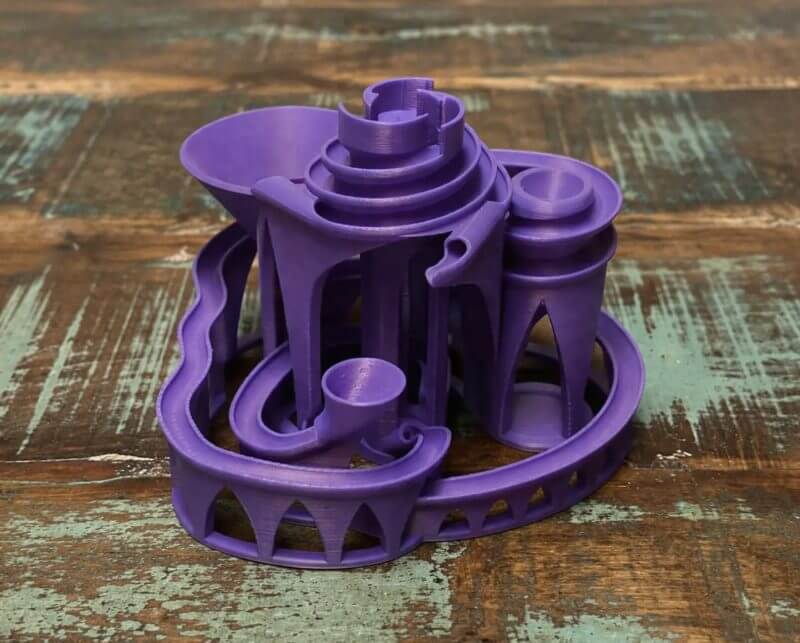
A flexible fit for different learning environments
The Bambu Lab A1 is especially well suited to STEAM learning because it can adapt to a wide range of settings without feeling out of place. In a school environment, it offers the kind of approachable workflow that helps teachers introduce 3D printing without turning it into a specialist-only activity. In a makerspace, it supports experimentation, prototyping, and collaborative project work in a way that feels practical and rewarding.
For home learning, the A1 is just as compelling because it allows students and families to explore design, creativity, and problem-solving in a more independent way. A printer that is easier to understand and operate can make it much more realistic to bring digital fabrication into everyday learning at home. That creates opportunities for students to continue exploring ideas beyond the classroom and build confidence through regular hands-on use.
Its full-sized build volume is another reason it suits these environments so well. Students are not restricted to only very small ideas, which gives them more freedom to create functional parts, detailed models, classroom aids, and more ambitious project pieces. This added space supports a broader range of activities, making the printer more useful across different age groups and learning goals.
The A1 also feels modern in the way it connects hardware and software. With support from Bambu Studio, mobile monitoring through Bambu Handy, and a workflow that feels streamlined rather than clunky, it aligns well with the expectations of contemporary learning spaces. That makes it easier for students and educators to integrate the printer into project-based learning without the process feeling outdated or disconnected.
Strong performance that supports real educational value
A good STEAM tool needs to do more than look impressive. It needs to help learners stay engaged, encourage practical experimentation, and produce reliable results that support meaningful reflection. The Bambu Lab A1 does this well by combining ease of use with the kind of speed, consistency, and print quality that make 3D printing genuinely valuable in an educational context.
Its automatic calibration features and user-friendly design help reduce the common points of frustration that can discourage new users. This is particularly useful in schools and shared learning spaces, where a smoother workflow makes it easier for more students to participate. When the technology is easier to manage, the focus can stay where it belongs, on creativity, prototyping, engineering concepts, and the satisfaction of making something real.
The option for multi-colour printing through the AMS Lite also broadens what students can create. In educational settings, this can support clearer visual communication, more engaging models, and more expressive project work across science, design, mathematics, and the arts. It adds another layer of flexibility that can make classroom and home projects feel more polished and more exciting.
The A1 also supports the repeated cycle of design, testing, and revision that sits at the heart of effective STEAM learning. Students can create an idea, evaluate the result, and improve it with greater confidence because the printer is dependable enough to support that process consistently. This gives the machine lasting educational value instead of limiting it to occasional novelty use.
The Bambu Lab A1 stands out as one of the best options for STEAM learning because it brings together accessibility, capability, and creative potential in a way that feels genuinely useful. It helps students connect digital thinking with physical outcomes, supports deeper engagement across multiple subjects, and makes hands-on innovation more achievable in schools, makerspaces, and home learning environments.
It gives educators and families a practical way to introduce 3D printing without losing the depth that makes the technology so worthwhile. Students are not only able to produce interesting objects, but also learn how ideas are developed, tested, refined, and improved. That makes the A1 far more than just a classroom device, since it becomes a platform for active learning and real creative growth.
The strongest part of its appeal is how naturally it supports the core goals of STEAM education. It encourages experimentation, strengthens problem-solving, supports design thinking, and helps learners see the relationship between planning and physical results. These are the kinds of experiences that leave a lasting impression because they make learning feel practical, relevant, and empowering.
For anyone looking to invest in a 3D printer that can support curiosity, creativity, and hands-on skill development, the Bambu Lab A1 makes a compelling case. It offers a learning experience that feels modern, approachable, and capable, which is exactly what makes it such a strong choice for today’s students and tomorrow’s makers.
Conclusion
The Bambu Lab A1 is an excellent fit for STEAM learning because it makes 3D printing feel practical, approachable, and genuinely useful across a wide range of educational settings. It gives students a clear way to move from ideas on a screen to real objects they can test, refine, and better understand.
Its combination of user-friendly operation, reliable performance, and strong print capability makes it especially valuable for classrooms, makerspaces, and home learning. Rather than getting in the way of the learning process, it supports creativity, design thinking, engineering, and problem-solving in a way that feels natural and engaging.
The A1 also stands out because it helps students experience the kind of iterative development used in real-world design and prototyping. That makes it more than just a tool for producing models, since it also encourages critical thinking, experimentation, and confidence through hands-on learning.
For educators, parents, and learners looking for a 3D printer that can support meaningful STEAM activities, the Bambu Lab A1 is one of the strongest options available. It brings together accessibility and capability in a way that helps make modern learning more active, creative, and rewarding.