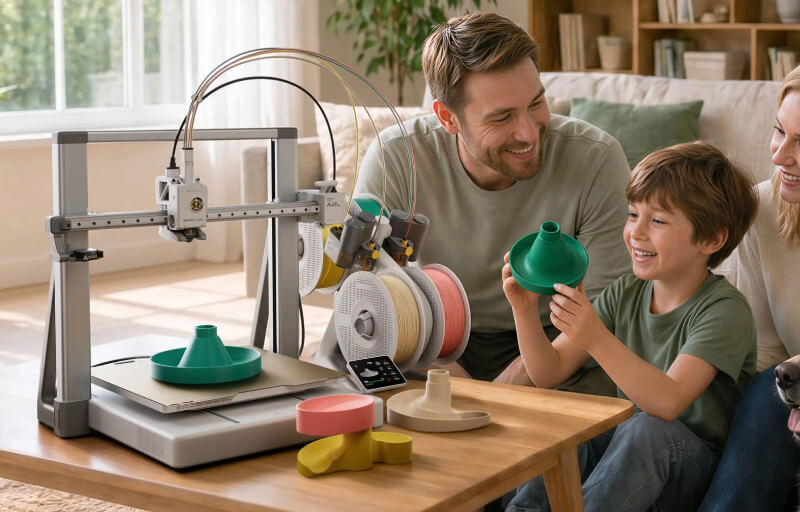
The Bambu Lab A2L is designed for users who want more room to create without moving away from the familiar simplicity of an open-frame desktop 3D printer. Its generous build area makes it suitable for larger household projects, detailed models, functional parts and small production runs that would otherwise need to be split into multiple sections.
It also places a strong emphasis on accessibility, with automated calibration, guided controls and intelligent monitoring features that help reduce the learning curve. This makes the A2L appealing to newcomers, families and experienced makers who want dependable results without spending excessive time fine-tuning the machine before every print.
Beyond standard 3D printing, the A2L can expand into a broader creative platform through multicolour printing and optional cutting or drawing capabilities. Combined with Bambu Studio, Bambu Handy and the wider Bambu Lab ecosystem, it offers a flexible way to move from an idea to a finished object with a workflow that feels organised, capable and easy to manage.
Table of Contents
Design and Functionality
The Bambu Lab A2L uses a large open-frame Cartesian design that gives users clear access to the build area from every side. Its layout keeps the machine approachable while still providing enough structure to support a substantially larger printing platform.
With physical dimensions of 544 x 529 x 505 mm, the A2L requires a reasonably generous work surface. Its 12.8 kg weight gives it a solid presence, and the combination of aluminium, steel and plastic creates a balance between rigidity and a clean consumer-friendly appearance.
The build volume measures 330 x 320 x 325 mm, providing enough room for large decorative pieces, practical household items, cosplay components and batches of smaller parts. This additional capacity reduces the need to divide models into multiple sections, which can simplify preparation and improve the appearance of completed projects.
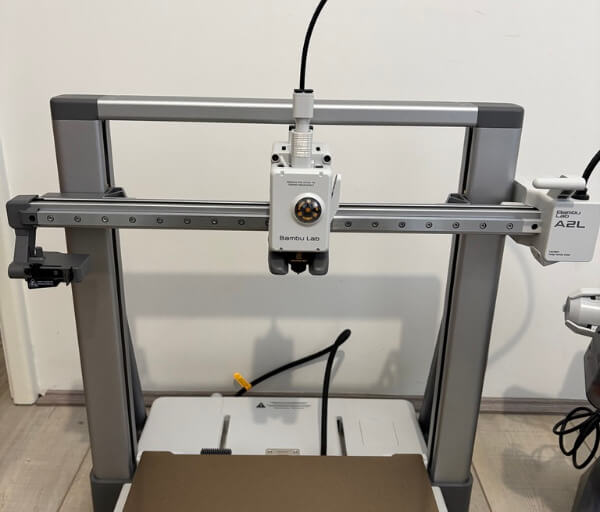
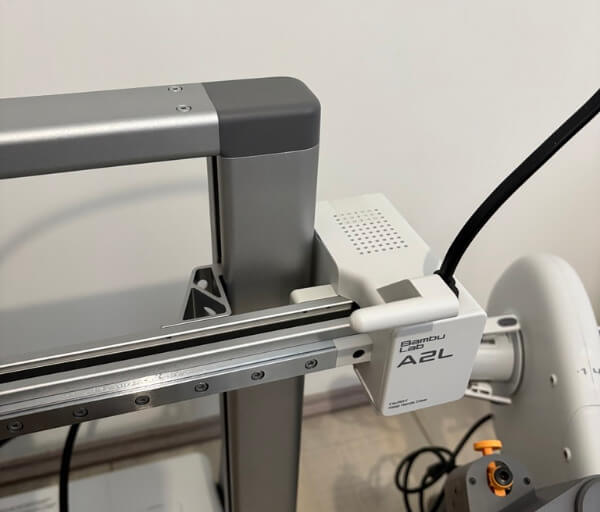
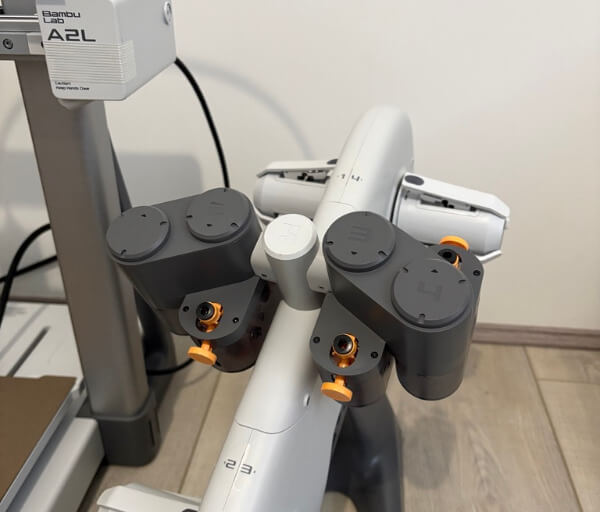
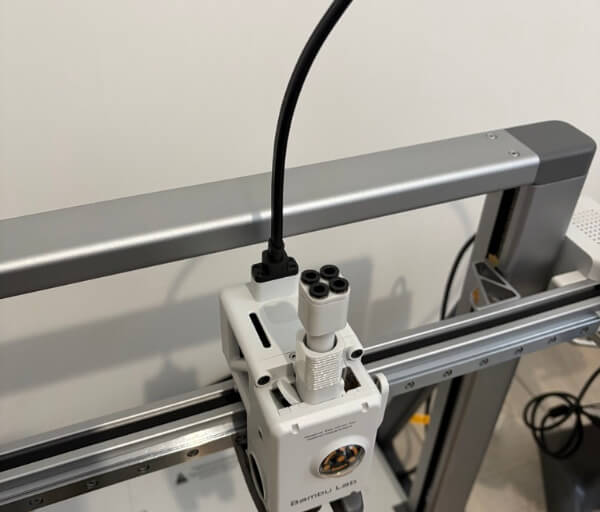
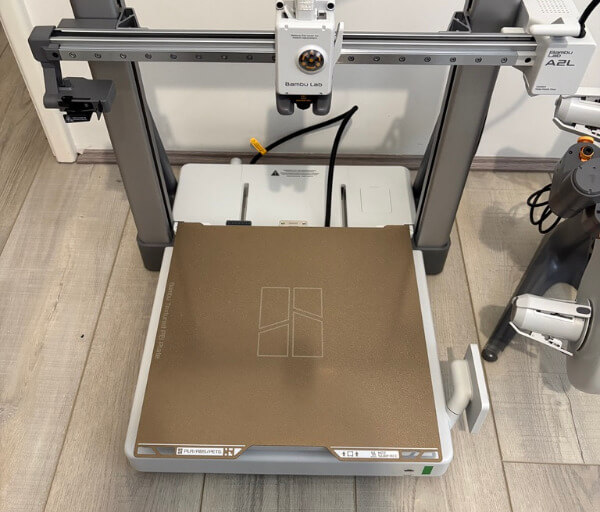
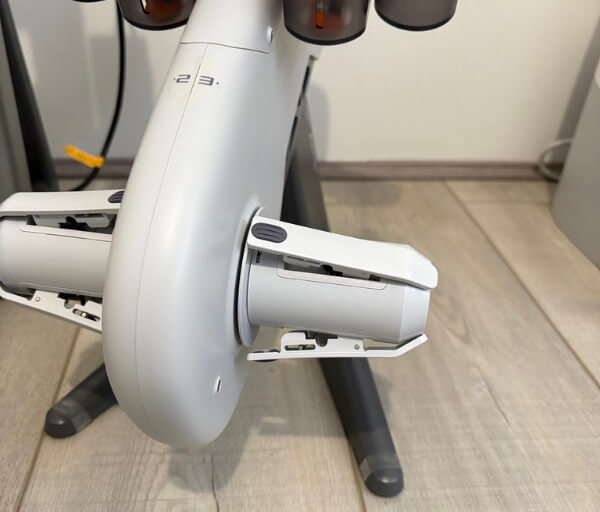
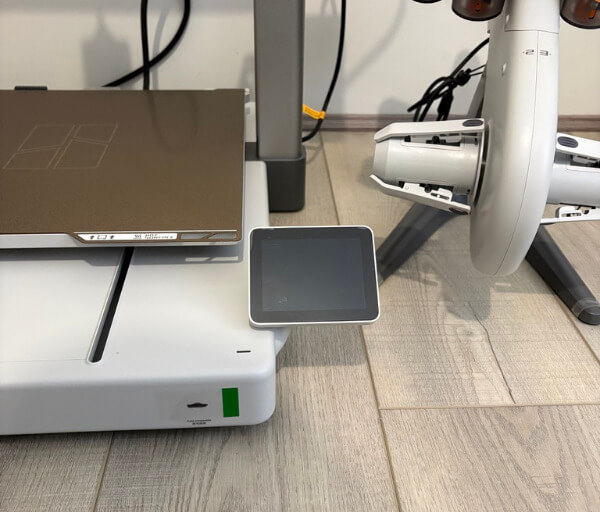
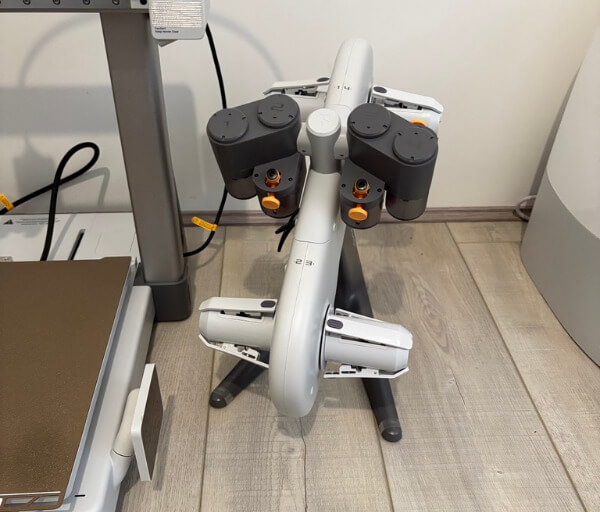
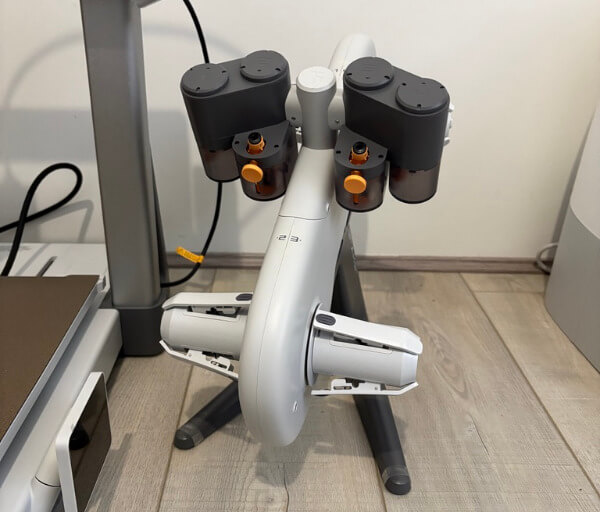
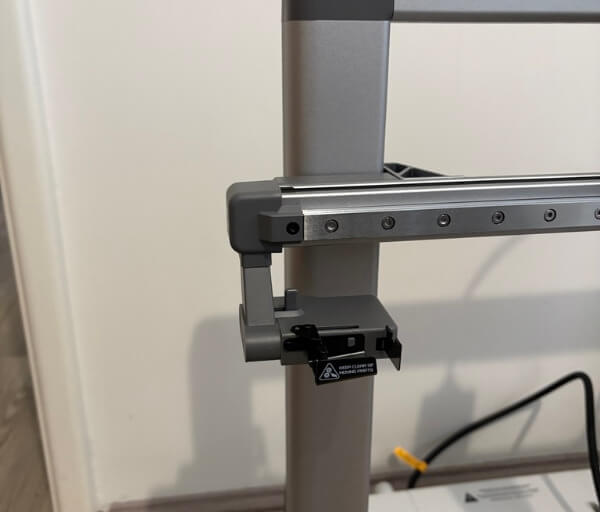
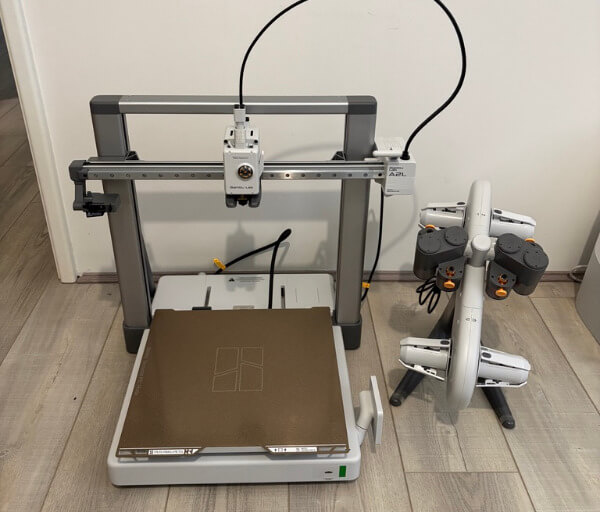
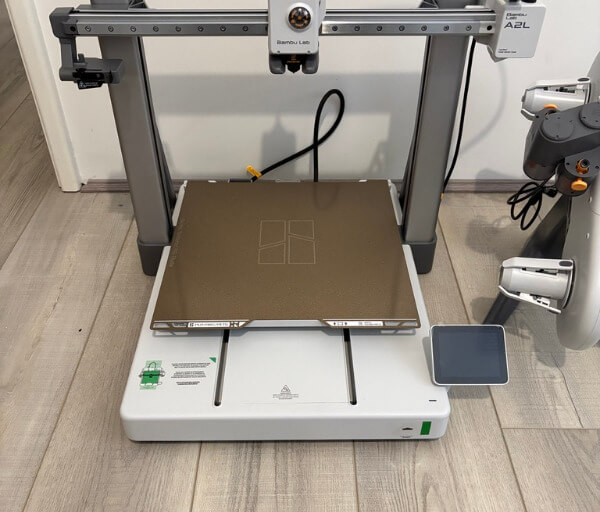
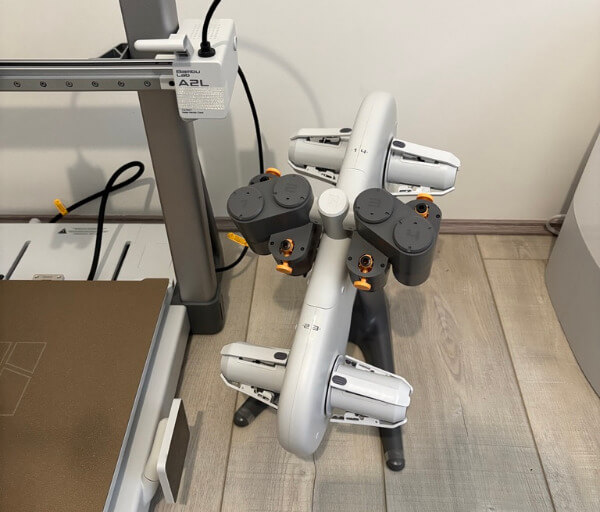
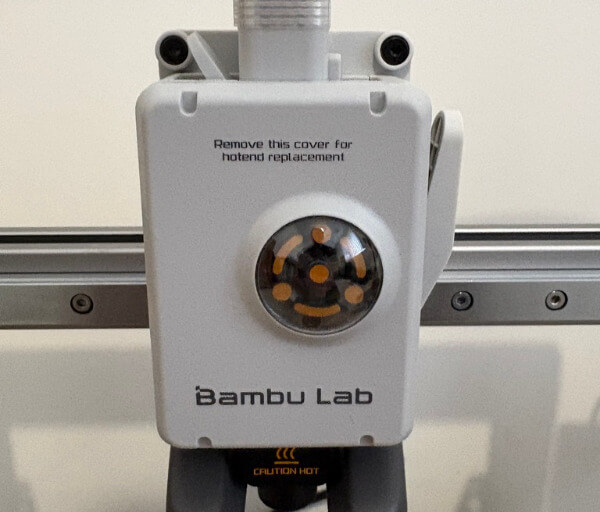
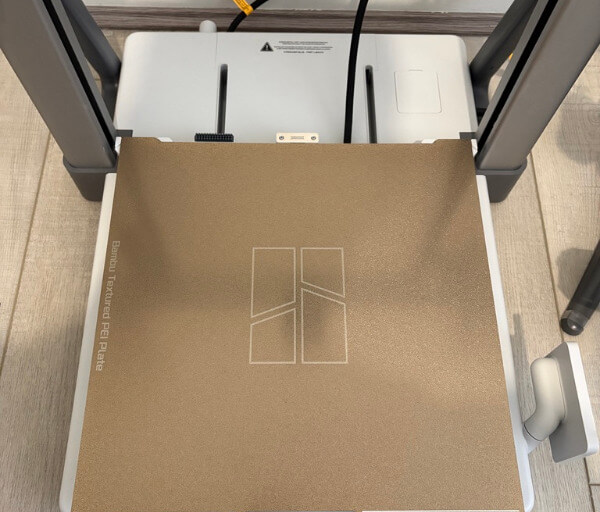
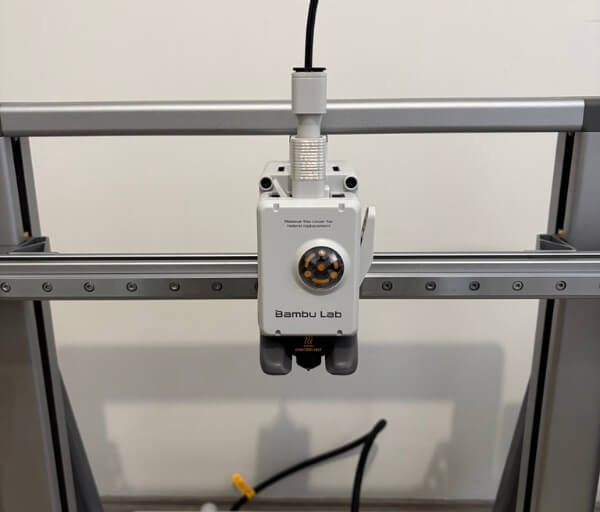
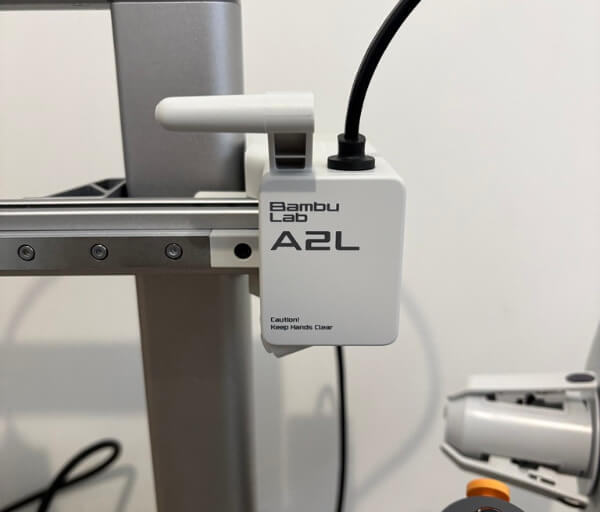
The frame has a polished and cohesive finish that helps the printer look at home in a study, workshop, classroom or family craft area. Metal rails, linear bearings and dual Z-axis rods are integrated neatly into the structure, keeping the mechanical system protected while maintaining a streamlined appearance.
Because the A2L uses a moving bed, it benefits from being placed on a stable and level surface. Bambu Lab has included internal granular dampers to help absorb movement and reduce the effect of vibration during faster print jobs.
Adaptive Vibration Compensation adds another layer of control by responding to changes that occur as a model becomes taller and heavier. Instead of relying only on a single calibration at the beginning, the system can adjust its vibration model throughout the printing process to support consistent surface quality.
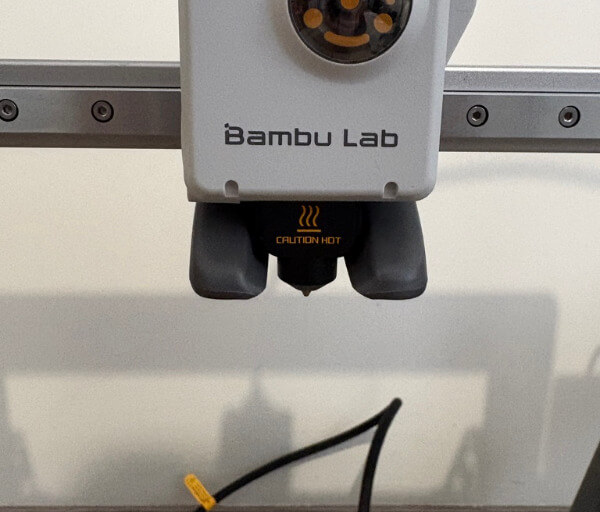
The toolhead is compact and carefully organised, with its filament path, cooling system and hotend arranged for straightforward maintenance. A built-in filament cutter supports automatic material changes, while the closed-loop cooling fans adjust their operation according to the printer’s requirements.
Bambu Lab has equipped the A2L with a servo-driven extruder motor that can monitor how filament moves through the system. This allows the printer to detect issues such as grinding, interrupted extrusion or an empty filament path before they develop into larger print failures.
The quick-change nozzle design makes routine servicing far less complicated than traditional hotend systems. Users can replace compatible nozzles without dealing with exposed wiring, thermal compound or a lengthy dismantling process.
A stainless steel nozzle is included, while supported nozzle sizes range from 0.2 mm to 0.8 mm. This gives users the flexibility to prioritise fine detail, balanced everyday printing or faster production of larger models.
The heated bed reaches up to 80°C and includes a flexible steel plate with a textured PEI surface. Once a model has cooled, the plate can be removed and flexed gently to release the finished print with minimal effort.
The 3.5-inch touchscreen provides direct access to loading, calibration, maintenance and print controls. Its interface uses guided steps and clear prompts, which helps users complete common tasks without needing to remember complicated procedures.
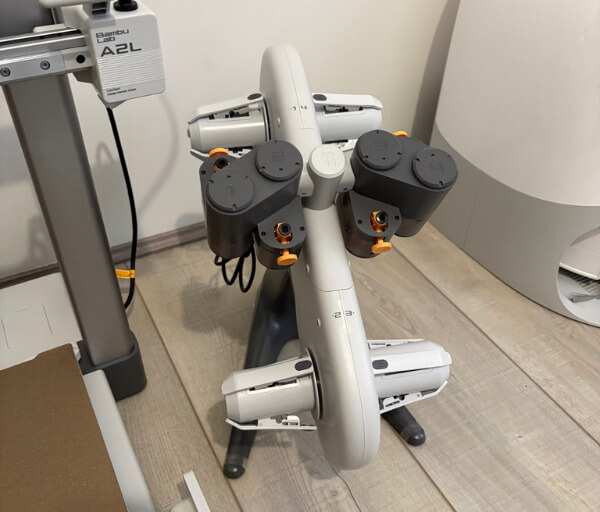
Filament can be supplied from the standard spool holder or through an AMS system for automatic material management. The A2L supports the AMS Lite as well as compatible second-generation AMS hardware, giving users several ways to organise single-colour, multicolour and multi-material workflows.
An optional cutting module broadens the machine’s function beyond fused-filament printing. Once fitted, it can work with compatible blades, pens and markers to cut or draw on materials such as paper, vinyl and thin leather, turning the A2L into a more versatile creative workstation.
Key Features
One of the A2L’s defining features is its 330 x 320 x 325 mm build volume. This provides considerably more space than many standard desktop printers, allowing larger objects to be produced as single pieces while also making batch printing more practical.
The printer supports toolhead speeds of up to 500 mm/s and acceleration of up to 10 m/s². These capabilities help reduce production times while maintaining the responsive motion required for clean edges, accurate dimensions and detailed surfaces.
Adaptive Vibration Compensation continuously accounts for the changing weight and height of a model during printing. By adjusting how the machine responds as the job progresses, the system helps minimise ghosting and unwanted surface patterns on tall or substantial objects.
Internal granular dampers provide a hardware-based method of controlling movement through the frame. Fine particles inside sealed chambers dissipate vibration through repeated small collisions, complementing the software-based motion compensation system.
The servo extruder motor acts as an intelligent feedback point within the filament path. It can recognise irregular resistance and extrusion behaviour associated with grinding, clogs and air printing, allowing the printer to pause before a small issue affects the entire model.
Clumping detection provides further protection around the nozzle and purge area. This system is designed to identify material building up where it should not, reducing the likelihood of a failed print developing into a large mass of tangled filament.
Automatic bed levelling and nozzle-based probing simplify the preparation process before printing. The machine can assess the build surface, establish the correct nozzle height and perform the necessary calibration without requiring repeated manual adjustments.
Flow Dynamics Calibration measures how the selected filament moves through the extruder before each job. It accounts for variables such as spool condition, nozzle wear and material behaviour, helping the A2L maintain precise corners and balanced extrusion across different projects.
AMS Lite support enables automated printing with up to four loaded spools. Each spool uses its own motorised spindle and filament path, which helps streamline colour changes and provides broad compatibility with different spool shapes and materials.
The A2L can also work with compatible second-generation AMS equipment. This gives users access to enclosed filament storage and drying capabilities while creating a path towards larger multicolour configurations for more complex creative work.
A low-frame-rate 1080p camera supports remote monitoring and timelapse recording. Through Bambu Handy, users can check progress from a mobile device and respond when the printer identifies a condition that needs attention.
Connectivity can be managed through Bambu Cloud or LAN-only operation, depending on the user’s preferred workflow. Bambu Studio is available across macOS, Windows and Linux, providing model preparation, filament management, colour assignment and direct printer control from a single application.
Experience Using the Product and Performance
Setting up the Bambu Lab A2L is straightforward, even though the printer arrives with a small amount of assembly required. The supplied instructions clearly explain how to connect the base, gantry, heatbed and wiring, making the process manageable for users with limited 3D printing experience.
The main frame feels sturdy once assembled, and the triangular gantry provides reassuring support around the large build area. Applying lubricant to the exposed Y-axis during setup is a sensible step that helps prepare the motion system for regular use.
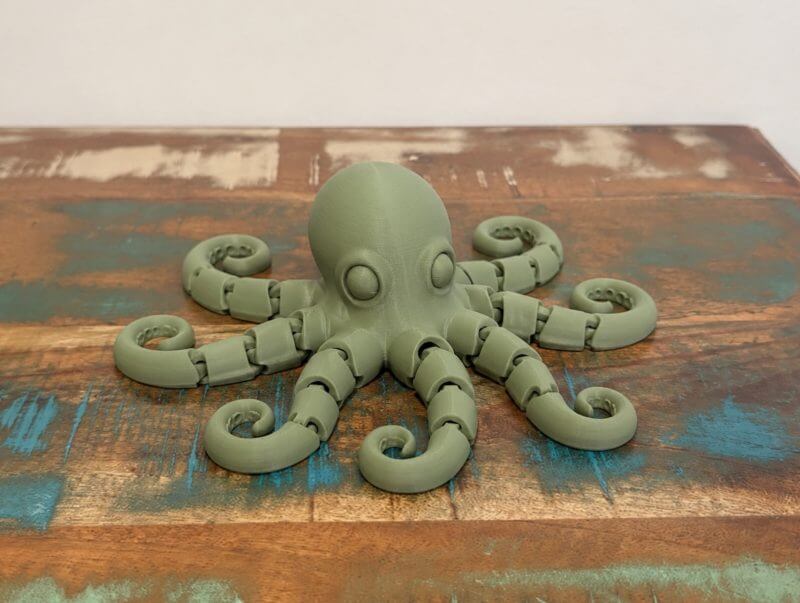
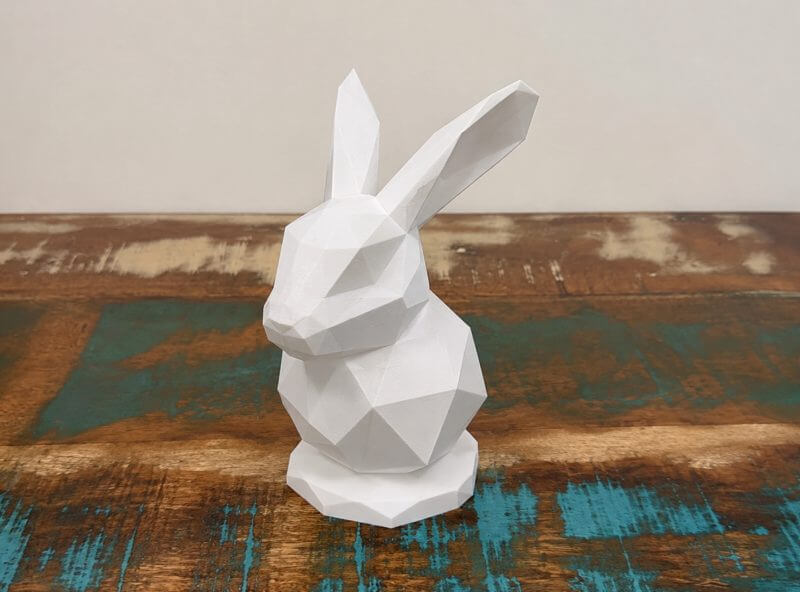
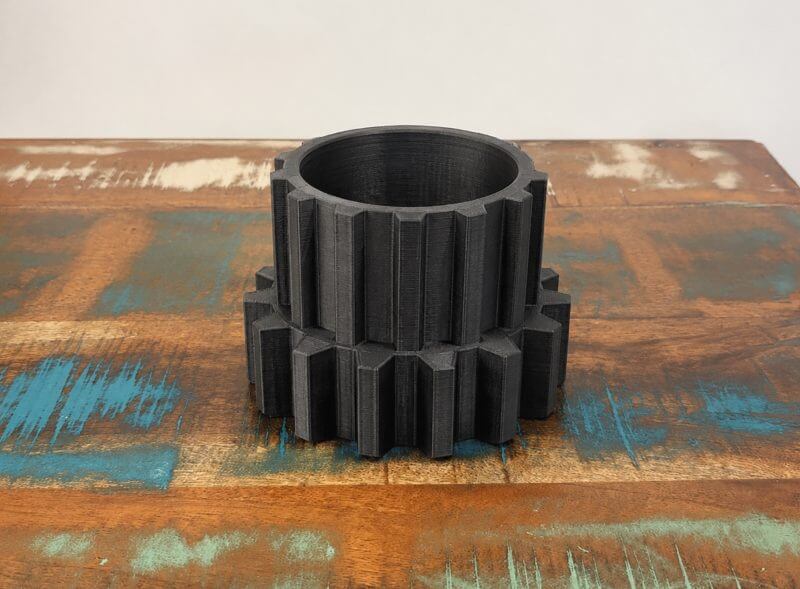
Initial calibration is largely automated, with the printer checking the build surface and establishing the correct nozzle position. This removes much of the uncertainty that can come with preparing a larger machine for its first project.
The touchscreen guides users through the main stages of operation with clear prompts and checklists. Loading filament, starting calibration and selecting common controls can be completed without navigating complicated menus.
Using a single spool is particularly simple, as the filament is guided through the Bowden tube before the automatic loading routine takes over. The printer then heats the nozzle, advances the material and confirms when it is ready to begin.
The AMS Lite makes multicolour preparation equally approachable. Once the spools are placed onto the motorised holders, the filament only needs to be inserted into the appropriate intake before the system draws it through automatically.
When compatible tagged filament is used, the AMS Lite can identify its material type and colour through RFID. This saves time during setup and reduces the risk of selecting an incorrect profile before sending a job to the printer.
Untyped filament is also easy to configure through Bambu Studio or the touchscreen. Entering the material and colour manually takes only a short time, so users are not restricted to one specific filament range.
The spacious build volume makes a noticeable difference during everyday use. Large models that would normally need to be separated into several sections can often be printed as a single piece, reducing visible joins and assembly work.
Batch printing is another area where the A2L performs well. The broad build plate can accommodate numerous smaller objects at once, which is useful for classroom projects, event items, workshop parts or repeated household accessories.
The textured PEI plate provides a reliable surface for common materials such as PLA and PETG. First layers form evenly across the bed, while completed models generally release cleanly after the plate has cooled.
Removing the flexible steel plate makes part removal more convenient. A gentle bend is often enough to lift finished prints without needing to force a scraper underneath delicate edges.
The open-frame construction makes it easy to observe the printing process and access the toolhead when maintenance is required. It is especially well suited to everyday materials that do not require a heated enclosure.
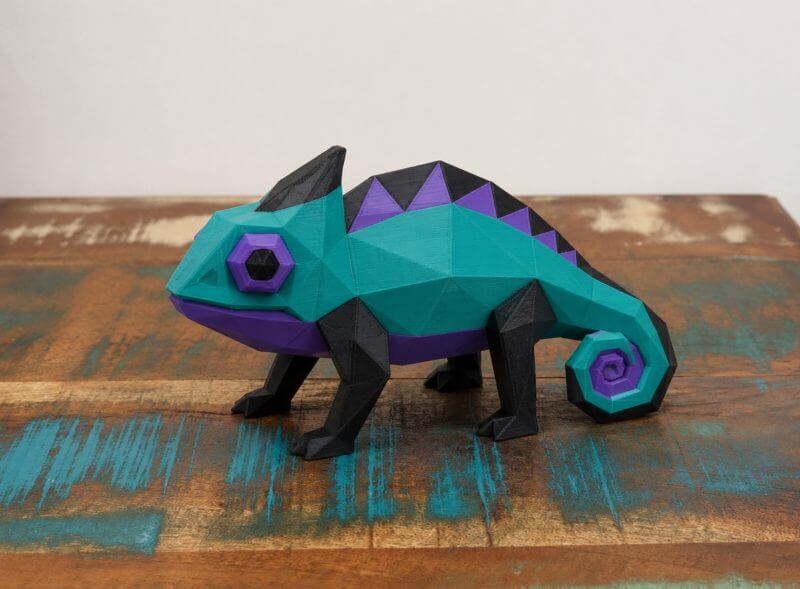
PLA produces clean and attractive results on the A2L, with detailed surfaces and consistent layer placement. The larger platform also makes the printer useful for decorative models, storage solutions, toys and full-size display pieces.
PETG benefits from the stable extrusion system and heated bed. Functional parts come out with strong layer bonding and good dimensional consistency when an appropriate material preset is selected.
Flexible TPU can be used for items such as protective feet, soft grips and adaptable household components. The controlled filament path helps maintain a steady feed, although slower settings remain useful when working with especially soft materials.
The A2L handles fine details confidently when paired with a smaller nozzle. Text, patterned surfaces and compact model features remain well defined, making the printer suitable for projects where visual precision is important.
Larger nozzles allow the machine to take better advantage of its generous build area. They can shorten production times for storage containers, prototypes and substantial structural pieces where extremely fine surface detail is not the main priority.
Adaptive Vibration Compensation supports consistent results as tall models develop. The printer adjusts to changes in bed load and model height, helping upper layers retain the same controlled appearance as those printed closer to the build plate.
The internal granular dampers also contribute to stability during faster movement. They work alongside the software-based compensation to reduce visible ringing and keep the frame more controlled throughout demanding jobs.
A firm workbench or desk remains the best location for the A2L due to the size and motion of its moving bed. When placed on a stable surface, the printer can use its faster profiles effectively while maintaining dependable output.
Users who prefer reduced movement can select steadier or quality-focused profiles. These settings provide flexibility for environments where lower noise, gentler motion or maximum surface refinement is more important than completing a job as quickly as possible.
The servo extruder and monitoring sensors add confidence during long prints. Filament tangles, interrupted flow, clumping and runout can be detected before they result in hours of wasted printing.
Remote monitoring through Bambu Handy is particularly helpful for projects that run throughout the day. The camera provides a convenient view of the build area, while mobile notifications allow users to respond when the printer pauses or requires attention.
Bambu Studio creates a well-organised workflow for slicing, filament selection and multicolour preparation. Its presets reduce the amount of manual testing required, while more experienced users can still adjust speed, support, infill and extrusion settings in detail.
The optional cutting and drawing attachment adds another creative layer to the experience. Switching from printing to cutting or plotting allows the A2L to produce stickers, paper crafts, vinyl designs and drawn artwork, making it useful as a broader family, classroom or hobby workstation.
Conclusion
The Bambu Lab A2L combines a generous build volume with the guided operation and automated calibration that make modern 3D printing more approachable. It is well suited to users who want to create larger models, produce multiple items at once or expand beyond the limitations of a standard desktop printer.
Its adaptive vibration control, intelligent extrusion monitoring and dependable material handling help support consistent results across both short and extended projects. Compatibility with the AMS Lite also makes multicolour printing accessible without adding unnecessary complexity to the workflow.
The optional cutting and drawing module gives the A2L additional value as a broader creative platform. This versatility makes it particularly appealing for families, classrooms, hobby spaces and makers who enjoy working across several types of projects.
With its spacious print area, polished software ecosystem and strong collection of automated features, the A2L offers an inviting balance of capability and convenience. It is a compelling choice for anyone seeking a large-format open-frame 3D printer that remains easy to operate and maintain.