USB-C fast charging standards have multiplied so quickly that even tech-savvy shoppers struggle to tell one from another. Between USB PD, PPS, SuperVOOC and HyperCharge, the jargon sounds more like a skill tree from a role-playing game than a spec sheet. The good news is that the underlying picture is simpler than the acronyms suggest, and understanding a handful of terms is enough to buy a charger with confidence.
Not long ago, USB charging meant a slow trickle of power that took hours to fill a phone. As mobile devices became more power-hungry, manufacturers built their own solutions on top of the USB-C connector. Qualcomm introduced Quick Charge, Oppo developed SuperVOOC and Xiaomi rolled out HyperCharge, each promising quicker top-ups through its own proprietary method.
Table of Contents
USB-C Doesn’t Guarantee Fast Charging on Its Own
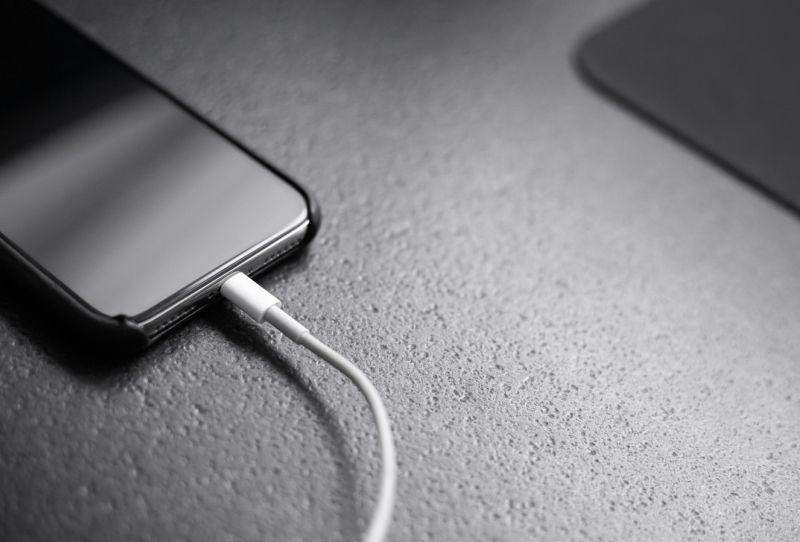
A USB-C port tells buyers almost nothing about charging speed. Plenty of USB-C devices cap out at modest wattages, and some rely on charging methods that never touch USB Power Delivery at all. Getting genuinely fast charging depends on matching the phone, the cable and the charger to the same protocol.
Plugging a phone that maxes out at 20W into a 100W charger will not magically unlock extra speed. The reverse is just as true: a phone built for a specific fast-charging protocol gets nothing extra from a charger that doesn’t support it. This is why the labelling on a box matters more than the shape of the port.
USB Power Delivery and PPS Explained
USB Power Delivery, usually shortened to USB PD, has become the closest thing to a universal fast-charging standard. It appears across phones, tablets, laptops and even handheld gaming devices. Apple’s iPhone 17 series supports USB PD, and both Samsung and Google build their charging systems around it.
Newer revisions push the ceiling higher. USB PD 3.1 lifted the maximum supported power to 240W, while USB PD 3.2 is the current version of the spec. Those higher figures are really aimed at laptops and monitors rather than phones, since thermal limits make anything close to 240W impractical for a handset.
Programmable Power Supply, or PPS, is a more advanced feature built on top of USB PD. It allows a device to request finer adjustments to voltage and current while charging, which helps with efficiency and heat control. Samsung’s Galaxy S26 Ultra uses PPS as part of its 60W Super Fast Charging 3.0 system, and Google’s Pixel 11 range relies on USB-C PPS to hit its top speeds, with the Pixel 11 Pro designed around a 45W PPS charger. For anyone charging an Android flagship, a charger offering PD with PPS is the safest all-round choice.
Proprietary Systems: SuperVOOC, HyperCharge and Quick Charge
Qualcomm’s Quick Charge was one of the earliest fast-charging systems for Android phones, and it still exists today. However, USB PD has overtaken it as the industry’s preferred approach, to the point where recent versions of Quick Charge support USB PD themselves. Having a Qualcomm chip inside a phone doesn’t even guarantee Quick Charge is being used, since manufacturers can choose a different charging system entirely.
OnePlus and Oppo lean on technology descended from SuperVOOC, while Xiaomi uses HyperCharge on several of its models. Reaching the highest advertised speeds on these phones usually means using the matching proprietary charger, and often the matching cable too. Most of these devices still accept USB-C PD charging as a fallback, though speeds will fall well short of the marketed proprietary figures.
| Standard | Typical use | Notes |
|---|---|---|
| USB PD (3.1/3.2) | Phones, laptops, monitors | Broadest compatibility, up to 240W on 3.1 |
| PPS | Samsung, Google flagships | Finer voltage/current control for efficiency |
| Quick Charge | Older and some current Android phones | Increasingly built on USB PD |
| SuperVOOC / HyperCharge | Oppo, OnePlus, Xiaomi | Needs matching proprietary charger for top speed |
What This Means for Battery Health and Buying Decisions
Manufacturer wattage claims deserve a healthy dose of scepticism. Phones advertised at 80W or 100W don’t pull that figure continuously from empty to full; charging peaks early when the battery is low, then tapers sharply as it fills up.
Fast charging isn’t automatically harmful to a battery, despite the common assumption. Heat accelerates lithium-ion degradation, and fast charging does generate more of it, but modern phones actively manage temperature, reduce power when needed and slow down near full charge. There’s also no benefit to fast charging if there’s no rush, since a gentler, cooler charge is generally easier on long-term battery health.
Built-in software tools matter more than the protocol itself. Apple’s Optimised Battery Charging learns daily habits and can hold charging below 80 percent when it expects the phone to stay plugged in, and iPhone 15 and newer models let owners set a custom charge limit between 80 and 100 percent. Samsung offers a similar Battery Protection feature, while Google’s Pixel range includes Charging Optimisation with Adaptive Charging and an 80 percent cap. Some Galaxy S26 models can even pause charging during gaming sessions, powering the phone directly from the wall instead of stressing the battery.
For buyers who want one charger that covers most bases, the safest pick supports USB-C Power Delivery with PPS and enough wattage for the most demanding device in the house, whether that’s a phone, tablet or laptop. It won’t necessarily unlock the fastest proprietary speed on an Oppo, OnePlus or Xiaomi phone, but it remains the most dependable option across a mixed household of devices, including compact GaN chargers built for multiple devices and versatile USB-C chargers from brands like Ugreen. Shoppers who prefer something smaller for travel can also look at smaller chargers that still pack useful wattage without sacrificing broad compatibility. The specifications set by the USB Implementers Forum and legacy systems detailed on Qualcomm’s own Quick Charge page are worth a glance for anyone who wants the full technical picture before buying.
Ultimately, the alphabet soup of USB-C fast charging standards looks more complicated than it needs to be. Checking for USB PD with PPS support, matching wattage to the most demanding device, and leaning on a phone’s built-in battery protection features covers almost every practical charging scenario a household is likely to face.