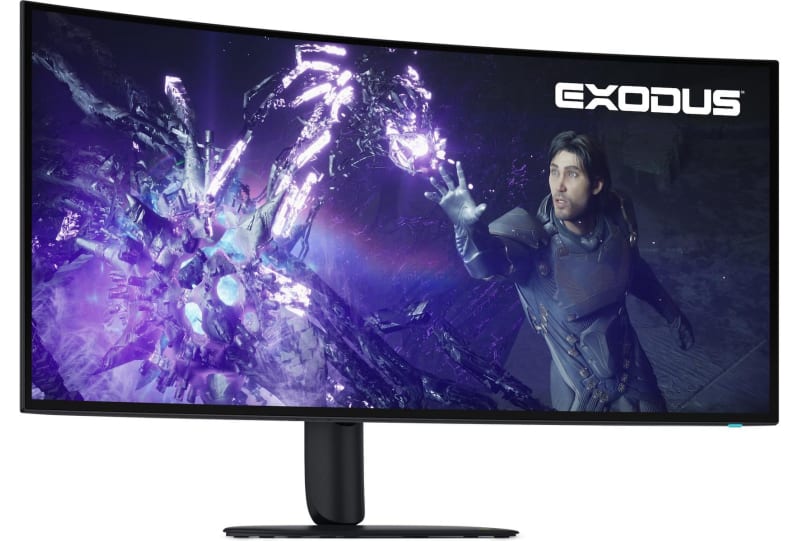
Alienware has used IFA 2026 in Berlin to reveal three new gaming monitors, and the standout is a 39-inch 5K panel that buyers can already order. Dell’s gaming brand has spent the past few years building a genuine reputation among competitive and enthusiast gamers alike, and this latest Alienware OLED gaming monitor rollout covers almost every use case at once, from ultrawide productivity and immersion to bare-knuckle esports response times.
The three displays split neatly into different jobs. There’s a curved 39-inch 5K ultrawide already on sale, a 32-inch 4K panel built for image quality, and a 24.5-inch 1080p screen tuned purely for speed. Between them, they show how far OLED gaming panels have come since the first wave of curved ultrawides landed a few years back.
Table of Contents
What Alienware announced at IFA 2026
The headline model is the Alienware AW3926QW, a 39-inch 5K OLED monitor built around Tandem OLED technology, and it’s the one shoppers can buy right now rather than wait for. Tandem construction stacks light-emitting layers to push brightness higher than earlier single-layer OLEDs managed, which has been one of the more persistent criticisms of OLED gaming monitors compared with the peak brightness of premium LCD alternatives.
Alongside it, Alienware unveiled the AW3226Q, a 31.5-inch 4K OLED aimed at gamers who want sharp text and rich colour as much as raw speed, and the AW2527HX, a 24.5-inch 1080p OLED that refreshes at a genuinely startling 560Hz without any overclocking required. Each panel targets a distinct kind of player, and none of them directly replaces the others.
AW3226Q: a 4K OLED built for colour accuracy
The AW3226Q uses an RGB Stripe Tandem OLED panel, which arranges subpixels in a more traditional layout than the triangular structure common on many OLED monitors. That matters because it substantially reduces text fringing, a long-running annoyance for anyone using an OLED gaming monitor for everyday desktop work as well as games.
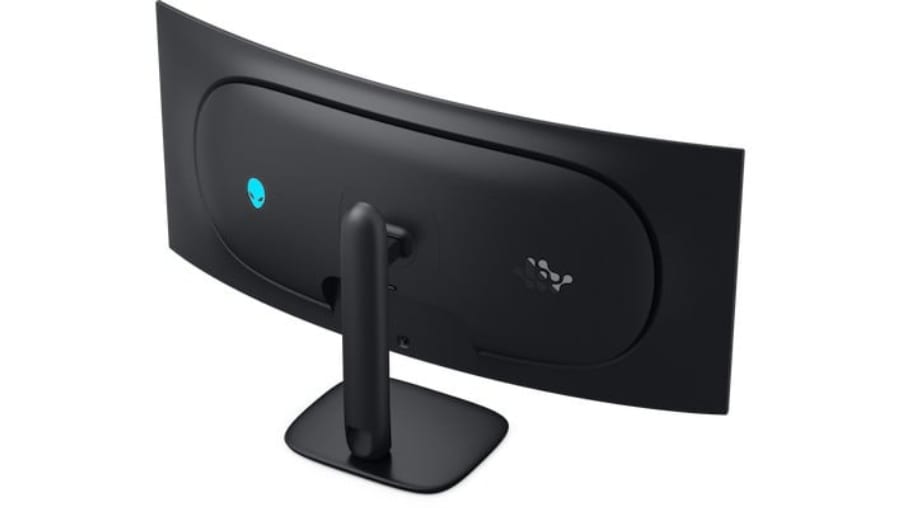
Brightness reaches up to 1,000 nits in a small highlight window, and Alienware quotes 99 percent DCI-P3 coverage with a factory-calibrated DeltaE under 2, figures that suggest serious attention to colour accuracy out of the box. Gaming credentials remain solid too, with a 165Hz refresh rate, a 0.03ms response time, and support for both NVIDIA G-SYNC Compatible and AMD FreeSync Premium Pro. HDMI 2.1 VRR support means console players get variable refresh rate benefits as well.
Connectivity includes two HDMI 2.1 ports, one DisplayPort 1.4 port, and a built-in USB hub, though Dell hasn’t mentioned KVM switching as a feature. Alienware backs the AW3226Q with a three-year warranty that explicitly covers OLED burn-in, a meaningful reassurance given how often that risk gets raised against OLED gaming monitors. It’s expected to arrive this northern autumn priced at 699 US dollars, though Australian pricing and availability haven’t been confirmed yet.
AW2527HX: an esports monitor built with Team Liquid
The AW2527HX takes the opposite approach, dropping resolution to 1080p in exchange for speed that few rivals currently match. Alienware developed the panel with Team Liquid, one of the longest-running professional esports organisations, and says the goal was maximum motion clarity and the lowest possible response time above every other consideration.
It uses what Alienware calls a Penta Tandem QD-OLED panel, prioritising brightness and reaction speed over the finer colour work found on the AW3226Q. Even so, it still claims 99 percent DCI-P3 coverage and a peak brightness of 1,500 nits, earning DisplayHDR True Black 600 certification. The 560Hz native refresh rate works out to under two milliseconds per frame, a figure that could offer a real edge for competitive players used to 120Hz or 144Hz screens.

A single DisplayPort 2.1 connection (UHBR13.5) drives the panel without needing Display Stream Compression, since the relatively modest 1080p resolution keeps bandwidth demands manageable at such a high refresh rate. The AW2527HX is due in early 2026, though Alienware hasn’t announced pricing yet.
How the three monitors compare
| Model | Size | Resolution | Refresh rate | Panel type | Availability |
|---|---|---|---|---|---|
| AW3926QW | 39-inch ultrawide | 5K | Not specified | Tandem OLED | Available now |
| AW3226Q | 31.5-inch | 4K UHD | 165Hz | RGB Stripe Tandem OLED | Autumn 2026 |
| AW2527HX | 24.5-inch | 1080p | 560Hz | Penta Tandem QD-OLED | Early 2026 |
Set side by side, the lineup reads less like three variations on a theme and more like three separate products for three separate audiences. The 5K ultrawide suits creative and productivity users who still want strong gaming performance, the 4K model targets image-quality enthusiasts, and the 1080p panel is unapologetically built for tournament-level reflexes.
What it means for gamers and monitor shoppers
Alienware isn’t alone in chasing these numbers. Rivals such as high-end OLED gaming monitors from Gigabyte and ViewSonic’s own 240Hz QHD OLED panel show just how competitive the premium monitor segment has become. What sets this Alienware refresh apart is the sheer spread across resolution and refresh rate, rather than a single flagship trying to do everything at once.
For anyone comparing options, it’s worth checking how these new panels stack up against a recent OLED gaming monitor review or against AOC’s own dual-mode 5K monitor, which takes a different approach to combining high resolution with high refresh rates. The three-year burn-in warranty on the AW3226Q also sets a useful benchmark other manufacturers may need to match as OLED gaming monitors become more mainstream.
None of the three displays has confirmed Australian pricing or release timing yet, so local buyers will need to wait for Dell’s regional rollout details. Even so, the range gives a clear signal about where gaming monitor technology is heading: higher brightness through layered OLED construction, refresh rates climbing well past what most eyes can consciously track, and burn-in protections that finally start to match the confidence manufacturers place in the panels themselves.