
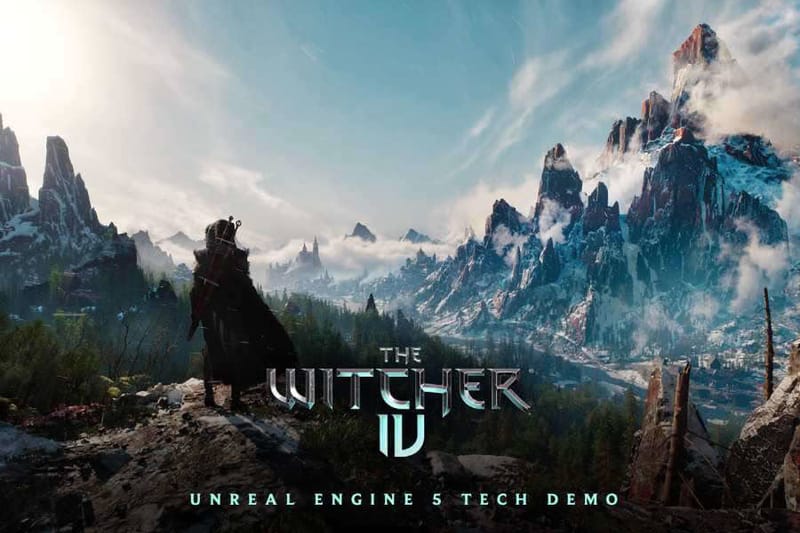
The Witcher 4 Unreal Engine 5 decision has finally got a proper explanation, and it has nothing to do with the mess that followed Cyberpunk 2077’s launch. CD Projekt Red joint CEO Michał Nowakowski addressed the switch directly on the Deconstructor of Fun podcast, pushing back on a theory that has followed the studio for years: that its own REDengine was somehow to blame for Cyberpunk’s troubled 2020 debut.
Nowakowski was blunt about it. He called that assumption mistaken, and instead pointed to a specific moment that changed the studio’s thinking about what tool it should use for its next generation of games.
Table of Contents
The Witcher 4 Unreal Engine 5 call wasn’t about Cyberpunk
For a long time, the working theory among players and industry watchers was straightforward. Cyberpunk 2077 launched in a rough state on last-generation consoles, REDengine had never powered an open world that ambitious before, so the engine copped a fair share of the blame. CD Projekt Red spent years patching the game and rebuilding its reputation, which only reinforced that narrative.
Nowakowski says that story simply isn’t accurate. According to him, the studio’s leadership didn’t sit down after the Cyberpunk launch and decide REDengine had failed them. The real trigger came from somewhere else entirely, and it happened around the same period rather than as a direct reaction to the game’s problems.
The Matrix Awakens moment
The actual catalyst, Nowakowski explained, was an early look at The Matrix Awakens, the tech demo Epic Games built to show off Unreal Engine 5’s capabilities. That demo, which later released publicly in December 2021, dropped dense city environments, realistic crowds and cinematic lighting into a playable showcase that stunned a lot of developers who saw it.
For CD Projekt Red, getting an early glimpse of that demo apparently raised a pointed internal question. Nowakowski summarised it as the studio asking itself whether Unreal Engine 5 was mature enough to ship a game built to the standard CD Projekt Red games are known for. That question led directly to talks with Epic Games, and those talks turned into what he describes as a strategic collaboration.
That collaboration is now public knowledge. CD Projekt Red confirmed some time ago that The Witcher 4 would be built on Unreal Engine 5 rather than a further evolution of REDengine, and the studio has also said it is working with Epic to help refine the engine for large open-world titles, similar to how other big studios have contributed engine improvements back to Epic in the past.
What actually happened with Cyberpunk 2077’s launch
None of this means Cyberpunk 2077’s launch was smooth or that criticism of it was unfair. The 2020 release drew heavy scrutiny for performance issues on PlayStation 4 and Xbox One, to the point where Sony temporarily pulled the game from the PlayStation Store and CD Projekt Red’s co-founder issued a public apology alongside a support roadmap.
What Nowakowski is separating here is cause and effect. The game’s problems were real, and the recovery effort that followed, including the Phantom Liberty expansion and years of patches, is well documented. But he’s arguing that those launch issues weren’t the reason leadership decided to abandon REDengine going forward. The timeline he describes has the Unreal Engine 5 conversation starting around the same window, driven by what the studio saw Epic’s tools could do, not by a post-mortem on what went wrong with Cyberpunk.
What this means for The Witcher 4 and CD Projekt Red’s future
Moving to Unreal Engine 5 is a significant shift for a studio that built its identity on proprietary technology. REDengine powered The Witcher 3 and Cyberpunk 2077, and CD Projekt Red had invested heavily in customising it for its specific style of open-world storytelling. Switching to a widely used commercial engine means the studio gains access to Epic’s ongoing development resources, a large pool of experienced Unreal developers to hire from, and tools that are already proven across dozens of major releases.
It also carries risk. Unreal Engine 5 has earned a reputation in some circles for stutter and traversal issues in certain releases, problems that have shown up in other big-budget games built on the engine. CD Projekt Red’s collaboration with Epic appears aimed at avoiding those pitfalls specifically, given the studio’s history of chasing high fidelity open worlds.
For players waiting on The Witcher 4, the practical upshot is that CD Projekt Red is betting a widely adopted, actively developed engine gives it a stronger technical foundation than continuing to build out REDengine alone would have. Whether that bet pays off will become clearer as more of the game is shown, but Nowakowski’s comments at least put to rest the idea that the switch was some kind of admission of failure tied to Cyberpunk 2077’s rocky start.