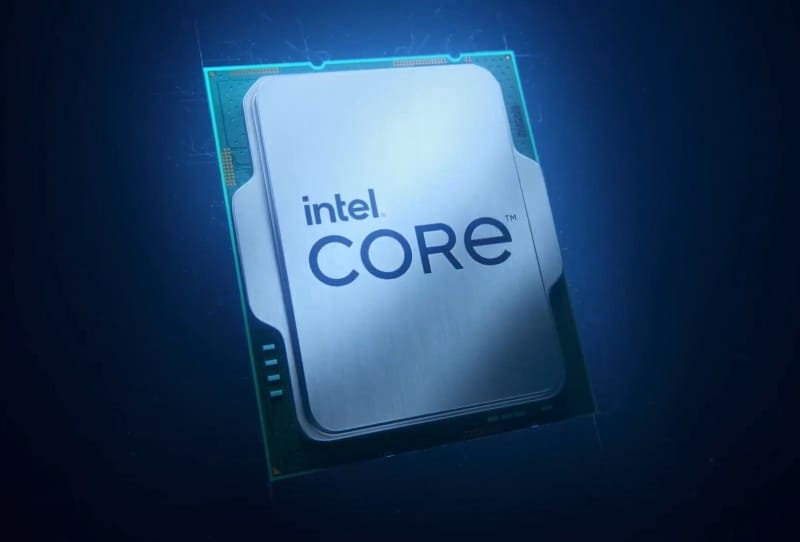
A newly leaked product table suggests Intel’s upcoming Nova Lake CPU lineup will include three chips built specifically for gaming, each carrying a huge L3 cache of up to 144MB. The table, which surfaced online and has not been confirmed by Intel, labels these chips “BFC” rather than the “bLLC” codename that had circulated in earlier rumours, but the idea behind them appears unchanged: stack on extra cache to squeeze more frames out of games that respond well to it.
Key takeaways
- ✓A leaked table reportedly lists Intel's Nova Lake CPU lineup, Intel's next desktop platform after Arrow Lake.
- ✓Three chips use a new designation, BFC, believed to replace the earlier bLLC cache codename.
- ✓The top BFC chip allegedly packs up to 144MB of L3 cache for gaming-focused performance.
- ✓Core counts reportedly scale up to 28 cores, with the flagship tipped as a Core Ultra 9 4970K.
- ✓Nova Lake is still expected to launch in early 2027, so the table remains unconfirmed and subject to change.
Nova Lake is Intel’s next major desktop CPU architecture, the successor to the current Arrow Lake generation. It has been the subject of steady leaks for months, and this latest table adds real specificity to what had mostly been speculation. If accurate, it points to a lineup that finally gives Intel a direct answer to AMD’s cache-stacked X3D chips, which have dominated gaming benchmarks for several generations running.
Table of Contents
What the leaked Intel Nova Lake CPU table actually shows
The table reportedly lists a range of Nova Lake parts spanning different core counts and cache configurations, consistent with how Intel typically segments a desktop generation into mainstream and enthusiast tiers. The standout detail is the appearance of three SKUs carrying the BFC designation, understood to stand for a large functional cache block sitting alongside the standard L3.
Previous leaks referred to this feature as bLLC, shorthand for “big Last Level Cache,” so the rename to BFC looks more like an internal labelling shift than a change in the underlying engineering. Either way, the purpose is the same: give certain chips a cache pool large enough to keep more of a game’s working data close to the cores, cutting down trips to system memory that can stall frame rates.
None of this is confirmed by Intel, and leaked tables of this kind have a mixed track record. Specifications, naming and even the existence of individual SKUs can shift considerably between an early leak and a final retail lineup, so the numbers here should be read as a snapshot of current rumour rather than a locked specification sheet.
Up to 144MB of L3 cache, aimed squarely at gamers
The headline figure is 144MB of L3 cache on the top BFC chip, a substantial jump from what current Intel desktop CPUs offer. For context, AMD’s Ryzen 9 9950X3D pairs its 3D V-Cache with a total cache pool well below that figure, so if the leak holds up, Intel would be leapfrogging rather than simply matching its rival on paper.
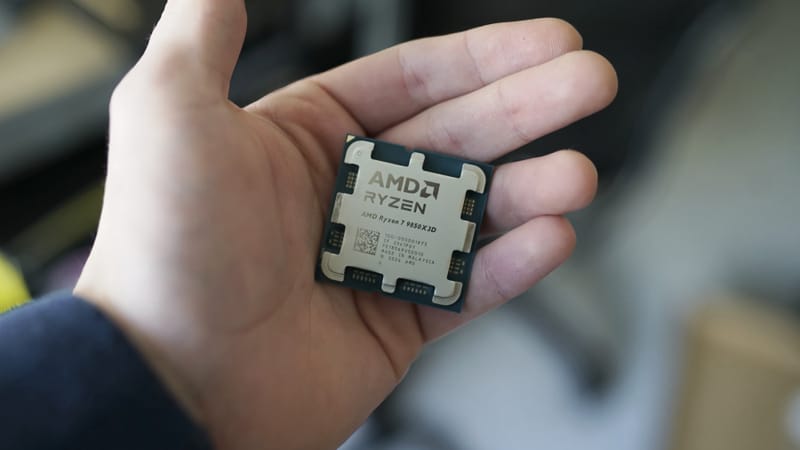
Extra cache matters most in games that are sensitive to memory latency rather than raw core throughput, which is exactly the workload AMD’s X3D chips have used to post strong gaming benchmarks despite not always leading in productivity tasks. A similar trade-off is plausible for Intel’s BFC chips: better gaming performance in cache-hungry titles, with the real-world gains depending heavily on the specific game engine and settings.
It is worth remembering that cache size alone does not guarantee a performance lead. AMD’s approach involves physically stacking cache dies on top of the compute die, which introduces its own thermal and clocking trade-offs. How Intel implements a comparably large cache pool, whether through die stacking, tile arrangement, or another method, will matter just as much as the raw capacity figure once real benchmarks arrive.
Core counts and the Core Ultra 9 4970K
Beyond cache, the leaked table reportedly shows Nova Lake scaling up to 28 cores at the top of the stack, continuing Intel’s hybrid approach of pairing performance cores with efficiency cores, and in some tiers, low-power efficiency cores for background tasks. The flagship part is tipped to arrive as a Core Ultra 9 4970K, continuing the naming scheme Intel introduced with Arrow Lake’s Core Ultra 200 series.
A BFC-equipped variant of that flagship, or a closely related SKU, is understood to be one of the three cache-heavy chips in the table. That would mirror AMD’s strategy of offering both a standard flagship and a cache-boosted gaming variant within the same core-count tier, letting buyers choose between broader multi-threaded performance and gaming-optimised latency.
| Detail | Reported figure |
|---|---|
| Codename | BFC (previously rumoured as bLLC) |
| Top L3 cache | Up to 144MB |
| Flagship core count | Up to 28 cores |
| Rumoured flagship SKU | Core Ultra 9 4970K |
| Expected platform | Nova Lake, successor to Arrow Lake |
What it means for PC builders watching Nova Lake
For anyone planning a desktop upgrade, the practical takeaway is patience rather than action. Nova Lake is still believed to be on track for an early 2027 launch window, so none of these chips are close to retail shelves yet, and pricing, final clock speeds and exact SKU names can all still change before launch.
If the cache-heavy BFC chips do arrive as described, they would mark a meaningful shift in how Intel competes for the gaming crown, moving away from pure clock-speed and core-count races toward the kind of cache-first design AMD has used to win over enthusiasts. That shift would land alongside other platform-level work Intel has been doing, including Intel’s recent Arc GPU driver updates, as the company tries to present a more complete gaming package across CPU and GPU.
Software-side gains matter too. Features aimed at freeing up CPU and GPU headroom for games show how much performance can still be found outside raw silicon specs, which means a big L3 cache is only one part of the picture for anyone chasing smoother frame rates in 2027 and beyond.
Frequently asked questions
What is Intel Nova Lake?
Nova Lake is the codename for Intel’s next generation of desktop CPUs, expected to follow the current Arrow Lake lineup with a new architecture and core configuration.
What does BFC mean in the Nova Lake leak?
BFC appears to be Intel’s updated internal name for a large functional cache block, previously referred to in leaks as bLLC, or big Last Level Cache, designed to boost gaming performance.
How much cache do the leaked Nova Lake chips have?
The leaked table points to up to 144MB of L3 cache on the top-tier BFC chip, which would be a significant increase over current Intel desktop processors if confirmed.
When will Nova Lake CPUs launch?
Nova Lake is still rumoured for an early 2027 release, and Intel has not officially confirmed specifications, naming, or pricing for any chip in the leaked table.