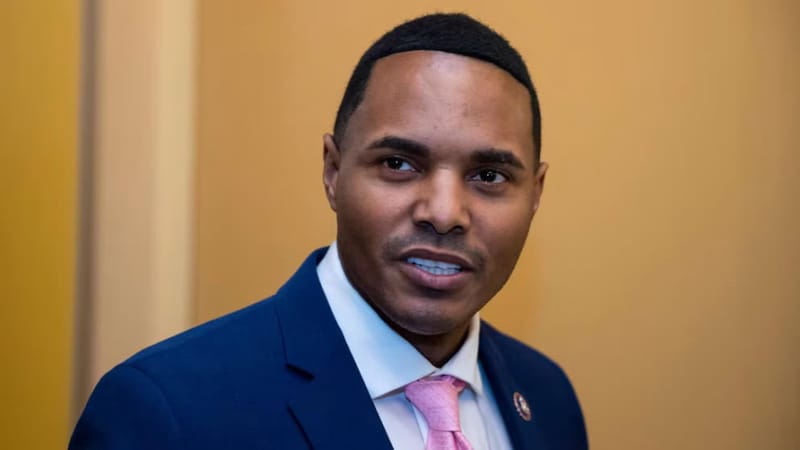
New York congressman Ritchie Torres has announced plans for the Power To The Players Act, a proposed federal law that would force publishers to treat a game purchase as genuine ownership instead of a licence that can be switched off whenever a company feels like it. The bill would direct the Federal Trade Commission to write rules guaranteeing buyers the right to own, play and transfer the games they pay for, and it would require any game that depends on online servers to offer an offline mode before those servers go dark.
Key takeaways
- ✓Rep. Ritchie Torres (D-NY) has announced the Power To The Players Act, though it hasn't been formally introduced in Congress yet
- ✓The bill would direct the FTC to write rules guaranteeing that buying a game means genuinely owning it
- ✓Games relying on online servers would need an offline mode before those servers are switched off
- ✓Buyers would gain a legal right to transfer the games they purchase to someone else
- ✓Torres cited NBA 2K25, which leaves digital storefronts on October 30 with servers closing by year's end, as the trigger example
Nothing has been formally introduced in Congress yet. There is no bill text available for public reading, and Torres has not named any cosponsors so far. What exists right now is an announcement and a clear statement of intent, built around a case he says shows exactly why the rule is needed.
Table of Contents
What the Power To The Players Act would actually require
According to Torres, the legislation rests on three practical rights for consumers. Buyers would keep the right to own a game they have paid for, the right to keep playing it, and the right to transfer it to someone else, much like selling a used disc or handing a copy to a friend. The FTC would be tasked with turning those principles into enforceable rules rather than leaving them as marketing language in a storefront agreement.
The offline mode requirement is the part most likely to change how publishers plan a game’s lifecycle. Many live-service titles rely entirely on remote servers for matchmaking, saves and core functionality, which means a publisher can end a game’s usable life simply by flipping a switch. Under the proposed rule, a publisher would need to provide some form of offline access before pulling that plug, rather than just quietly powering down and walking away.
Torres framed the issue in blunt terms. “When you pay for a game, you should own it,” he said. “Consumers must have the right to own, the right to play, and the right to transfer the games they buy. A game that can be taken away the moment a company pulls the plug is not a purchase. It is a rental disguised as a sale. Families in the Bronx and across the country save up to buy these games, and they deserve better than a license that can vanish at any time. The Power To The Players Act ensures consumers own what they buy and can keep playing long after a company moves on.”
The NBA 2K25 example behind the push
Torres pointed directly to NBA 2K25 as the case that prompted the announcement. The game is scheduled to leave digital storefronts on October 30, and its online servers are set to shut down by the end of the year, roughly two years after it first launched. For anyone who bought the game expecting years of ongoing use, that is a short window before a chunk of its functionality simply stops existing.
That timeline is the kind of thing publishers rarely spell out clearly at the point of sale. A shopper buying a new release typically has no easy way to know how long servers will stay active, or whether an offline mode will ever be added once support winds down. Torres argues that gap between what a purchase implies and what a licence actually guarantees is exactly the problem his bill is meant to close.
Part of a wider fight over who really owns a game
This isn’t the first attempt to put game permanence into law. Lawmakers and advocacy groups have floated a similar push behind the Protect Our Games Act, which also targets the practice of killing live-service titles without any path for players to keep them running. Industry responses to these efforts have been mixed, with publishers generally arguing that server costs and licensing deals make permanent offline support impractical for every title.
The debate also echoes recent conversations around physical media more broadly, including Nintendo’s recent reassurance that physical Switch 2 games are staying rather than disappearing in favour of digital-only distribution. Whether a cartridge, a disc, or a digital licence, the underlying question is the same: does paying for a game actually secure lasting access to it, or just temporary permission that a company can revoke later.
| Current model | What the Power To The Players Act proposes |
|---|---|
| Purchase grants a revocable licence | Purchase grants enforceable ownership rights |
| Servers can shut down with no offline option | Offline mode required before servers close |
| No guaranteed right to transfer a game | Buyers keep the right to transfer games they own |
| Rules set unilaterally by publishers | FTC writes binding consumer protection rules |
What happens next
Until the bill is formally introduced, there is no legislative text to analyse, no committee assignment, and no indication of how much bipartisan support it might attract. Consumer advocacy around game preservation has grown louder in recent years, but turning that sentiment into federal law involves a slower, more contested process than a single announcement.
For players, the practical takeaway for now is awareness rather than any immediate change. Nothing about how publishers handle server shutdowns or digital licences changes today. If the Power To The Players Act does eventually reach Congress with real text and cosponsors, it would mark one of the more direct federal attempts yet to redefine what “buying” a video game actually means.
Frequently asked questions
Has the Power To The Players Act been introduced in Congress?
No. As of the announcement, Ritchie Torres had revealed his intention to introduce the bill, but no formal bill text has been filed and no cosponsors have been confirmed.
What would the bill require from game publishers?
It would direct the FTC to write rules guaranteeing that a game purchase counts as real ownership, require an offline mode before online-dependent games lose server support, and protect a buyer’s right to transfer games they own.
Why did Ritchie Torres cite NBA 2K25?
NBA 2K25 is leaving digital storefronts on October 30 and will lose its online servers by the end of the year, roughly two years after release, which Torres used as an example of a purchase effectively expiring on a company’s timeline rather than the buyer’s.
Is this the only bill targeting game preservation and ownership?
No. Similar concerns have driven other proposals, including the Protect Our Games Act, reflecting a broader push from lawmakers and advocacy groups to stop publishers from shutting down purchased games without warning or recourse.