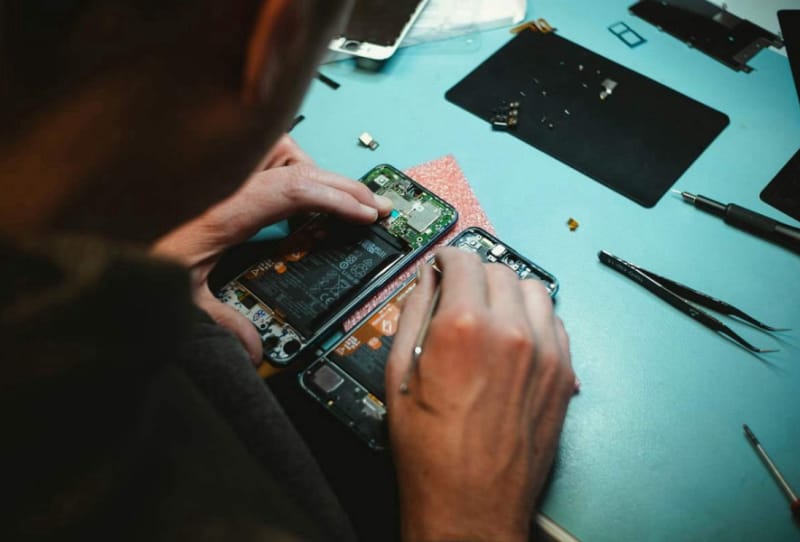
More than a year after the EU repairability rules came into force, repairing a smartphone or laptop is only somewhat easier than it used to be, according to specialists who track right-to-repair progress across Europe. Battery access, spare parts supply and repair documentation have all improved on paper. Actually getting a device fixed without paying through the nose, however, remains a different story for a lot of owners.
Key takeaways
- ✓EU ecodesign rules for smartphones and tablets became enforceable in mid-2025, requiring longer spare parts access.
- ✓Manufacturers must now supply critical spare parts to professional repairers for at least seven years.
- ✓Batteries must withstand at least 800 charge cycles and be replaceable with basic tools.
- ✓Experts say spare parts pricing and software locks still make many repairs expensive or impractical.
- ✓Australia has no equivalent law, but global device design means some benefits reach local buyers anyway.
The EU repairability rules are built on two main pieces of legislation. The first is an ecodesign regulation covering smartphones and tablets, which became enforceable in mid-2025 after years of drafting. The second is a broader Right to Repair Directive, agreed at EU level in 2024, that extends obligations across a wider range of consumer electronics. Together they were meant to force manufacturers to design devices that last longer and cost less to fix. A growing body of reporting from repair advocates and independent technicians has been checking whether that promise is holding up in practice, or whether companies are simply doing the minimum required to stay compliant.
Table of Contents
What the EU repairability rules actually require
Under the ecodesign rules, phone and tablet batteries sold in the EU must withstand at least 800 full charge cycles while retaining 80 percent of their original capacity. Batteries also need to be removable and replaceable using basic, commonly available tools, rather than requiring specialist heat guns and solvents to peel away adhesive. Manufacturers must keep critical spare parts available to professional repairers for at least seven years after a model stops being sold, and they are required to guarantee security updates for five years from launch.

The Right to Repair Directive adds further obligations. It requires manufacturers to offer repair as an option during the legal guarantee period, rather than defaulting to replacement, and extends the warranty on a product by an extra 12 months whenever a repair is carried out. It also pushes for spare parts and repair tools to be sold at reasonable prices, and backs an EU-wide platform intended to help consumers find local repair services. None of this bans manufacturers from using glue or proprietary screws outright, but it does put a cost on designs that make repairs unnecessarily difficult.
Where repair access has genuinely improved
Some of the clearest gains are visible in newer phone and tablet models, where batteries are now easier to pull out than they were two or three years ago, and official repair manuals are more widely published than before. Independent repair shops report that sourcing genuine screens, batteries and charging ports has become noticeably less of a headache for recent releases, even if older devices remain a struggle.
The pressure has also reshaped how some brands market themselves. Fairphone has built its entire identity around modular, user-serviceable hardware, and its approach has pushed mainstream manufacturers to publish repairability scores more prominently. Laptop makers have followed a similar path, with Framework’s swappable-module design frequently cited as proof that a repairable laptop does not have to sacrifice performance. The European Commission has credited this competitive pressure, alongside the legal requirements, for faster progress than expected in some product categories.
Why repairs are still hard and expensive
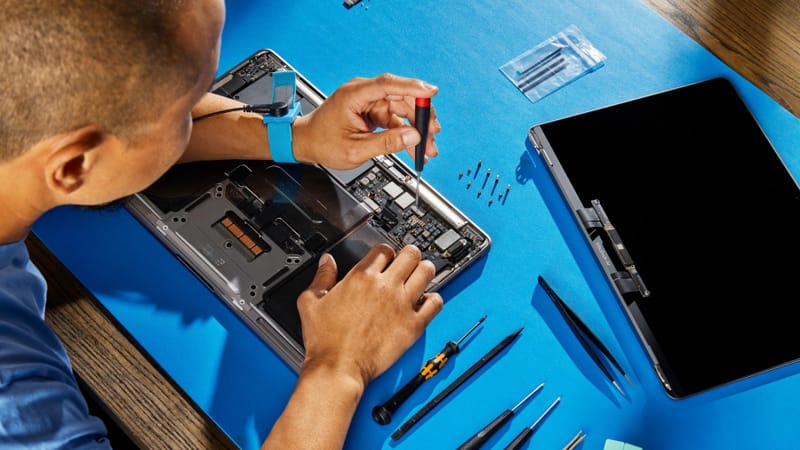
The gap between what is legally permitted and what is practical for an everyday owner remains wide. Spare parts for some phones are priced close to the cost of buying a refurbished or even entry-level new handset, which discourages anyone without a trade discount from bothering. Component pairing, where a device’s software flags a replacement part as “unauthorised” even if it is genuine, continues to crop up on premium smartphones, undermining the point of making parts available at all.
Enforcement also varies between EU member states, and some manufacturers appear to meet the letter of the rules while avoiding the spirit of them, such as using screws that still require unusual bit sizes or keeping key components soldered despite nominal spare parts availability elsewhere in the device. It is a pattern not unlike the gaming industry’s response to EU pressure, where regulators have cracked down on in-game currency practices at Activision, Riot and Ubisoft and separately warned Call of Duty and Minecraft’s publishers over currency rules, only to find companies adjusting just enough to stay technically compliant.
What it means for buyers outside Europe
Australia has no direct equivalent of the EU repairability rules, and the Australian Competition and Consumer Commission has so far relied on existing consumer guarantee laws rather than a dedicated right-to-repair statute for electronics. That leaves local buyers without the same spare parts guarantees or repairability scoring that EU shoppers now see on shelves.
There is a practical upside, though. Most global manufacturers build a single hardware platform for multiple markets, so a phone or laptop designed to satisfy EU battery and parts rules often ships in the same form to Australia, the UK and beyond. Buyers here can still use EU repairability scores, where published, as a rough guide to how serviceable a device is likely to be. The same logic applies to broader manufacturing shifts, such as Anduril and Qualcomm’s push to build laptops domestically in the US, which shows how policy in one region can ripple into design and supply decisions everywhere else. For now, persistence still counts for a lot in the repair world, not unlike a modder’s nine-year effort to fix a notoriously tricky console fault, proof that fixing hardware properly often takes more patience than any regulation can mandate.
Frequently asked questions
What do the EU repairability rules actually cover?
They cover smartphones and tablets sold in the EU, setting minimum requirements for battery durability, spare parts availability, software update support and repair documentation, backed by a separate directive covering repair rights more broadly.
Do the EU repairability rules apply to laptops bought in Australia?
Not directly, since Australia has no matching legislation. In practice, many manufacturers use the same hardware design globally, so some of the repair-friendly changes made for the EU market also show up in devices sold locally.
How can shoppers tell if a device is easy to repair?
Look for a published repairability score, check whether the battery is listed as user-replaceable, and search for independent teardown guides before buying, since marketing claims about repairability are not always backed by an easy real-world fix.