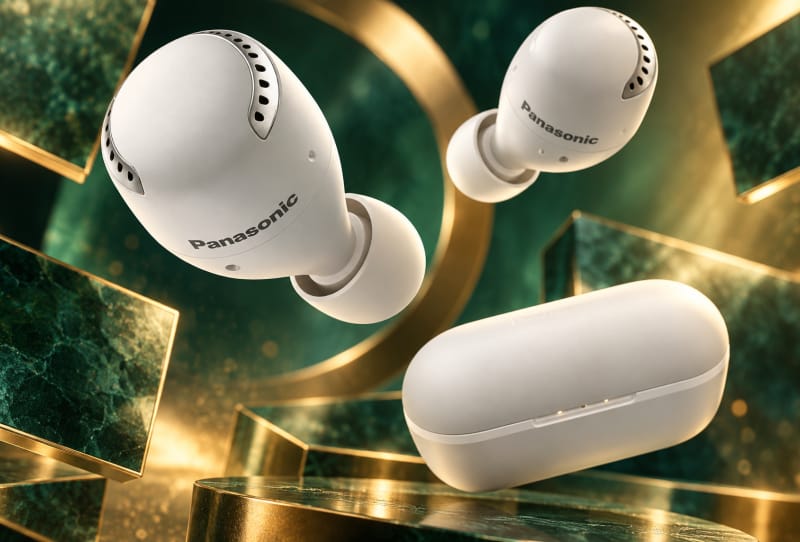
Panasonic has announced the RB-HJ800, a new pair of wireless headphones claiming up to 100 hours of battery life on a single charge. That figure, if it holds up outside lab conditions, would put the Panasonic RB-HJ800 headphones among the longest-lasting models currently on the market, well ahead of most flagship rivals.
Key takeaways
- ✓Panasonic has announced the RB-HJ800 headphones with up to 100 hours of battery life.
- ✓That figure would put the RB-HJ800 among the longest-lasting wireless headphones available.
- ✓Panasonic has not yet confirmed pricing, release date, or full feature specifications.
- ✓Long battery life is becoming a key battleground as headphone makers chase multi-day playback.
Beyond the headline battery number, Panasonic has released very little detail about the RB-HJ800. No pricing, release window, or full specification sheet has been confirmed, so much of what makes these headphones interesting is still an open question. What is clear is the direction Panasonic is pushing: fewer charging interruptions and more time actually listening.
Table of Contents
What Panasonic has confirmed about the RB-HJ800
The core detail attached to this announcement is the battery claim itself. Panasonic is positioning the RB-HJ800 around that 100-hour figure rather than around active noise cancellation, driver size, or codec support, none of which have been detailed publicly yet. That suggests the headphones are being aimed squarely at buyers who prioritise endurance over bells and whistles.
It is also worth being precise about what “up to 100 hours” typically means in headphone marketing. Manufacturers usually measure this kind of figure with noise cancellation switched off and at a moderate, fixed volume, so real-world use with ANC enabled or louder listening levels will likely bring that number down. Panasonic has not published the testing conditions behind its claim, so the figure should be treated as a best-case scenario until independent testing or a fuller spec sheet arrives.
How a 100-hour claim compares to the rest of the market
Most wireless headphones on shelves today land somewhere between 20 and 60 hours of battery life per charge, depending on whether noise cancellation is active. Reaching into triple digits is unusual, even among headphones built specifically for long shifts of use rather than outright audio performance or ANC strength.
Panasonic is not alone in chasing this kind of number. Audio-Technica’s own 75-hour open-back headphones were built around a similar pitch earlier this year, trading some of the convenience features found on noise-cancelling flagships for stamina instead. If the RB-HJ800 genuinely delivers 100 hours, it would edge past that benchmark and set a new reference point for anyone shopping primarily on runtime rather than feature count.
| Headphones | Claimed battery life | Positioning |
|---|---|---|
| Panasonic RB-HJ800 | Up to 100 hours | Endurance-focused, details still limited |
| Audio-Technica ATH-AL5NC | Up to 75 hours | Open-back, long-session listening |
| Typical ANC flagship headphones | Roughly 20 to 40 hours | Feature-rich, noise cancellation focused |
Why battery life has become such a selling point
Charging anxiety is a real factor in how people choose headphones, particularly for commuters, frequent flyers, and anyone working long hours with audio running constantly. A pair that can genuinely last several days without needing a cable removes one more thing to think about before leaving the house.
This is also a competitive response. As wireless headphones mature as a category, companies that cannot easily out-engineer rivals on sound quality or noise cancellation often look for a different number to lead with. Bose, for instance, has recently focused on adding Auracast support to its flagship QuietComfort Ultra line rather than chasing runtime records, showing there is more than one way to differentiate a pair of headphones once the basics are covered. Panasonic appears to be betting that raw endurance is the gap worth filling.
What is still unconfirmed about the Panasonic RB-HJ800
Several important details remain unknown. Panasonic has not said whether the RB-HJ800 includes active noise cancellation, what Bluetooth codecs it supports, how much it will cost, or when it will go on sale in any particular region. Until Panasonic publishes a full specification sheet, the 100-hour figure should be read as the headline claim rather than a guaranteed real-world result.
Anyone interested in the RB-HJ800 would be wise to wait for independent reviews or a fuller announcement before treating that battery figure as settled. Marketing numbers for battery life are notoriously optimistic, and the gap between a lab claim and daily use can be significant, particularly once noise cancellation or higher-quality audio streaming is switched on.
Frequently asked questions
How long does the Panasonic RB-HJ800 battery actually last?
Panasonic claims up to 100 hours of playback, though that figure likely reflects ideal conditions such as noise cancellation off and moderate volume. Real-world battery life may be shorter depending on how the headphones are used.
When will the Panasonic RB-HJ800 be available to buy?
Panasonic has not confirmed a release date or regional availability for the RB-HJ800. Further details are expected as the launch gets closer.
Does the Panasonic RB-HJ800 have noise cancellation?
Panasonic has not detailed whether the RB-HJ800 includes active noise cancellation or other features. The initial announcement has focused on battery life rather than a full specification list.
How does 100 hours of battery life compare to other headphones?
Most wireless headphones last between 20 and 60 hours per charge, particularly with noise cancellation enabled. A genuine 100-hour runtime would place the RB-HJ800 ahead of most rivals, including Audio-Technica’s 75-hour open-back headphones.