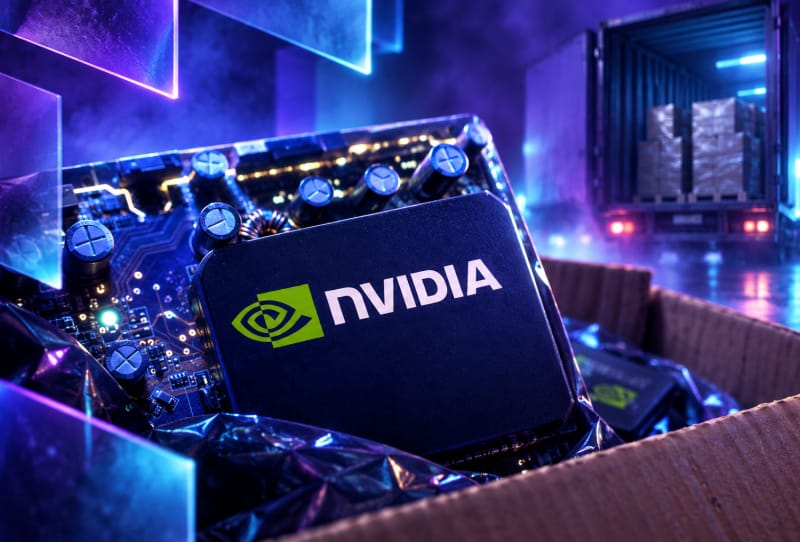
Thieves made off with six pallets of NVIDIA hardware worth an estimated $11.4 million in California, in what ranks among the largest reported chip cargo thefts of the year. The NVIDIA chip shipment theft highlights a growing problem for the hardware industry: as GPU and AI chip prices climb, freight shipments are becoming a bigger target for organised theft.
Key takeaways
- ✓Thieves stole six pallets of NVIDIA hardware worth an estimated $11.4 million in California
- ✓The heist is one of several recent high-value GPU cargo thefts amid surging chip demand
- ✓A separate stolen RTX 5090 shipment from Brazil resurfaced for resale earlier this year
- ✓Rising GPU, memory and storage prices are making freight shipments increasingly attractive targets
- ✓Investigators have not disclosed how the theft occurred or whether any suspects are in custody
Details of the incident remain limited. What’s known is that the stolen pallets were loaded with NVIDIA-branded hardware destined for distribution, and that their combined value was put at roughly $11.4 million by the time the theft was reported. Exactly where along the supply chain the pallets disappeared, whether from a warehouse, a loading dock, or during transit, has not been publicly confirmed, and no arrests have been announced.
Table of Contents
What’s known about the NVIDIA chip shipment theft
Cargo theft investigations often move slowly, especially when high-value electronics are involved and multiple jurisdictions or logistics providers are in play. For now, the case sits in a familiar grey zone: a confirmed loss, a dollar figure, and a location, but no public account yet of the method used or who might be responsible.
That lack of detail is not unusual this early in an investigation. Companies moving valuable freight typically keep specifics about security protocols and ongoing inquiries close to the chest, partly to avoid tipping off other would-be thieves watching the same routes. NVIDIA has not issued a detailed public statement breaking down the contents of the shipment, so it isn’t yet clear whether the pallets held consumer graphics cards, data centre accelerators, or a mix of both.
A pattern of high-value GPU cargo theft
This isn’t an isolated case. Earlier this year, a stolen RTX 5090 shipment that resurfaced for sale online showed just how lucrative diverted GPU freight can be for criminals, and how difficult it is to fully track once cards enter grey-market resale channels. Both incidents point to the same underlying driver: demand for high-end silicon has rarely been higher, and the resale value of a single pallet of flagship chips can run into the millions.
Part of the appeal for thieves is density of value. A shipping container of televisions or appliances is bulky and comparatively low value per kilogram. A handful of pallets loaded with GPUs or AI accelerators, by contrast, can be worth more than a truckload of almost anything else moving through the same supply chain, making them a disproportionately attractive target for organised theft rings that specialise in cargo diversion.
Demand for NVIDIA hardware shows no sign of easing either. GPUs like the RTX 3060 remain in high demand among PC gamers, even as newer generations arrive, and that sustained appetite across gaming, workstation, and data centre markets only adds to the resale appeal of stolen chips.
Recent high-profile GPU and chip theft incidents
| Incident | Reported location | Estimated value | Goods involved |
|---|---|---|---|
| California NVIDIA shipment theft | California, United States | $11.4 million | Six pallets of NVIDIA hardware |
| RTX 5090 shipment theft | Brazil | Undisclosed | RTX 5090 graphics cards, later resold online |
What it means for buyers and the wider market
For everyday shoppers, the immediate risk is less about missing out on stock and more about where stolen hardware eventually ends up. GPUs diverted from legitimate shipments often surface on secondary marketplaces, sometimes with altered serial numbers or missing documentation, which can leave buyers without valid warranty support if something goes wrong.
Industry-wide, incidents like this add another layer of cost to an already strained supply chain. Memory, storage, and graphics card prices have been climbing for months, driven by surging AI demand competing with gaming and PC upgrade cycles for the same manufacturing capacity. Every stolen shipment represents lost inventory that still has to be replaced, and those replacement costs tend to filter through to retail pricing over time.
Logistics and retail partners handling NVIDIA hardware will likely face pressure to tighten tracking and security around high-value freight following this latest loss. Until more details emerge about how the theft actually occurred, it’s hard to say whether this points to a gap in a specific carrier’s security or a broader vulnerability that other companies moving similar cargo should be worried about.
Frequently asked questions
How much was stolen in the NVIDIA chip shipment theft?
Reports put the value of the stolen hardware at approximately $11.4 million, spread across six pallets of NVIDIA-branded product.
Has anyone been arrested over the theft?
No arrests or suspects have been publicly confirmed at this stage, and investigators have not released details about how the pallets were taken.
Is this the first time an NVIDIA GPU shipment has been stolen?
No. A separate shipment of RTX 5090 graphics cards was stolen in Brazil earlier this year and later resurfaced for sale online, suggesting cargo theft targeting high-value GPUs is becoming more common.
Could this theft affect GPU prices or availability?
A single incident is unlikely to move prices on its own, but it adds to broader supply pressure at a time when graphics card, memory, and storage prices are already rising due to strong demand.