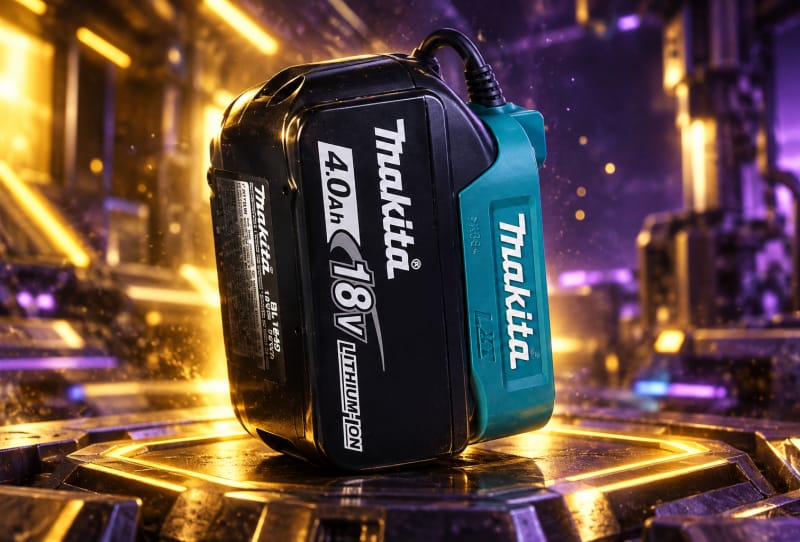
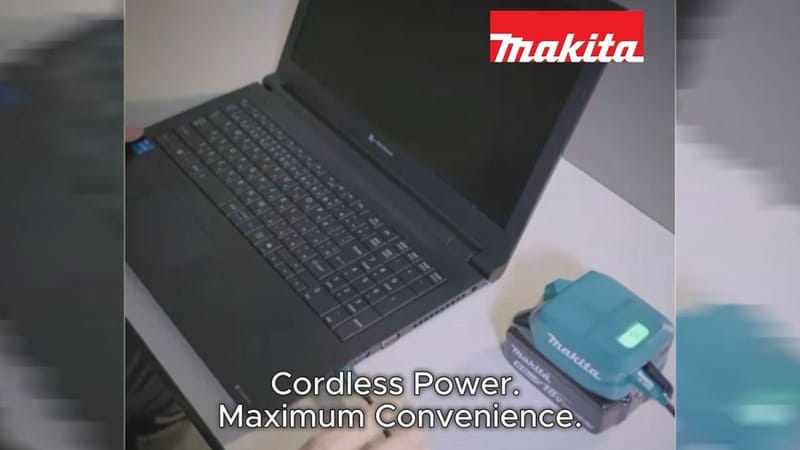
The Makita battery adapter now does something few expected from a power tool accessory: it can keep a laptop alive on a job site. Known as the ADP15, the small USB-C unit clips onto Makita’s existing power tool battery packs and converts their stored energy into charging output for phones, tablets and notebooks, turning a toolbox staple into a backup power bank.
Key takeaways
- ✓Makita's ADP15 adapter converts its power tool battery packs into a USB-C charging source.
- ✓A Japanese PC magazine measured it delivering up to 60W to a Lenovo ThinkPad laptop.
- ✓The same adapter pushed 37W into an iPhone 17 Pro Max during testing.
- ✓It works with Makita's existing LXT battery lineup, reusing batteries tradies already own.
- ✓The device targets outdoor workers and remote users rather than typical office laptop buyers.
Makita built its name on cordless drills, saws and grinders, and its LXT battery platform already powers a huge range of tools used by tradies across Australia and beyond. The ADP15 adapter is a logical extension of that ecosystem rather than a new product category. It slots onto the same batteries workers already carry, meaning nobody needs to buy a separate power bank just to keep a phone or laptop topped up between jobs.
Table of Contents
How the Makita battery adapter actually works
The adapter attaches directly to Makita’s LXT battery packs, the same ones used across its 18V tool range, and exposes a USB-C output capable of delivering serious wattage rather than a trickle charge. That matters because most USB power banks top out well below what a modern laptop needs to charge quickly, forcing users to wait hours or run the laptop on its own dwindling battery.
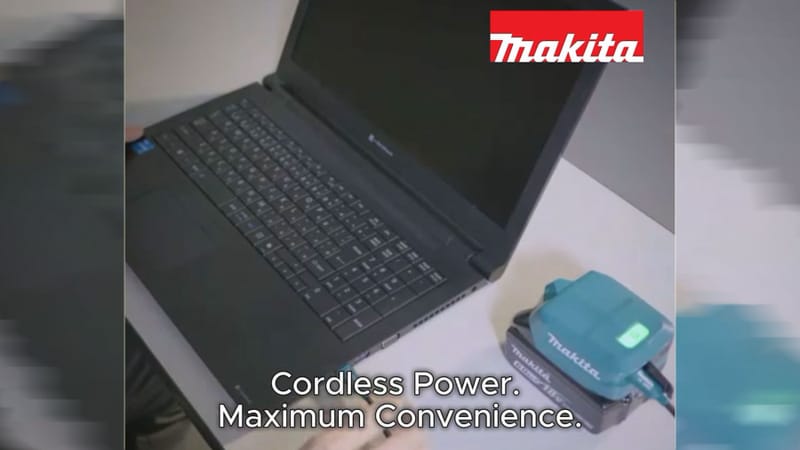
Because the ADP15 draws from a full-sized tool battery rather than a compact internal cell, it can sustain higher output for longer. Tradies working off-grid, campers, and field technicians are the obvious audience, since they often already own several Makita batteries for drills and saws and can repurpose a spare one for charging duty without extra outlay beyond the adapter itself.
Real-world charging results from a Japanese PC magazine
A Japanese PC publication put the adapter through practical testing to see how it performed against the kind of devices people actually carry. The results showed the adapter is no gimmick. It delivered up to 60W into a Lenovo ThinkPad laptop, enough to charge many thin-and-light business notebooks at a reasonably fast rate rather than merely keeping them from draining further.
The same test also charged an iPhone 17 Pro Max, pulling 37W during the session. That figure lines up with the kind of fast-charging speeds Apple’s own wired chargers support, suggesting the adapter negotiates USB Power Delivery properly rather than defaulting to a generic low-power mode.
| Device tested | Measured output | Notes |
|---|---|---|
| Lenovo ThinkPad laptop | Up to 60W | Matches typical USB-C laptop charging speeds |
| iPhone 17 Pro Max | 37W | In line with Apple’s fast-charge ceiling |
Those numbers put the Makita battery adapter in genuinely useful territory for anyone who needs to work away from mains power for an extended stretch, rather than treating it as an emergency top-up device only.
Why this matters beyond the tool shed
Portable power has typically meant choosing between bulky dedicated power banks, generators, or car chargers, each with its own trade-offs in weight, noise or availability. Makita’s approach sidesteps that by making an existing battery investment do double duty. A worker who already owns several 18V or 40V packs for drills and impact drivers gains a charging solution without buying new batteries specifically for that purpose.
The approach also reflects a broader shift in how battery ecosystems are marketed. Tool makers increasingly want customers locked into one battery platform across as many products as possible, from lawn mowers to vacuums to, now, charging accessories. For Makita owners, that loyalty pays off directly in flexibility. For those outside the ecosystem, it is a reminder that building out a single battery platform early can offer practical benefits years later.
There are limits worth noting. The adapter still depends on having a charged Makita battery on hand, and those packs are heavier and bulkier than a typical slim power bank. It suits scenarios where the battery is already being carried for tool use, rather than being bought purely as a laptop charging solution. For office workers or commuters, a dedicated USB-C power bank will usually remain the more practical choice.
Frequently asked questions
What is the Makita ADP15 adapter?
It is a USB-C adapter that attaches to Makita’s LXT power tool battery packs, letting users charge phones, tablets and laptops directly from the stored battery energy instead of needing a separate power bank or wall outlet.
How fast can the Makita battery adapter charge a laptop?
Testing by a Japanese PC magazine recorded output of up to 60W into a Lenovo ThinkPad laptop, which is fast enough to charge many thin-and-light notebooks at close to their standard wired charging speed.
Does it work with phones as well as laptops?
Yes. The same test measured 37W delivered to an iPhone 17 Pro Max, a speed consistent with Apple’s own fast-charging limits for that model.
Do buyers need new batteries to use it?
No. The adapter is designed to work with Makita’s existing LXT battery lineup, so anyone who already owns compatible tool batteries can use them for charging without purchasing additional packs.