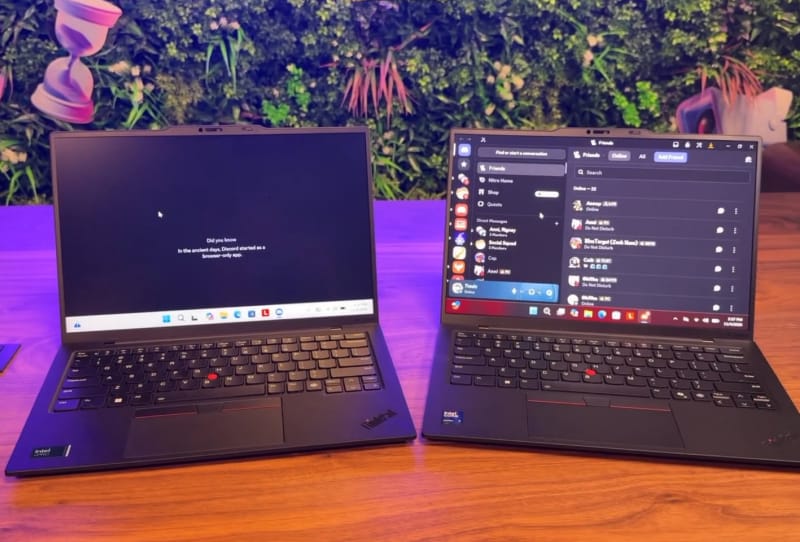
Discord is rebuilding its desktop app from the ground up, and an early version of the project, known internally as the Discord Phoenix Rust app, is already using a fraction of the memory the current client needs. A Task Manager screenshot shared by Discord’s chief technology officer shows the new build consuming just 290.2MB of RAM, a dramatic drop from the usage patterns Discord itself has described in the past.
Key takeaways
- ✓An early build of the Discord Phoenix Rust app uses just 290.2MB of RAM, according to a Task Manager screenshot shared by Discord's CTO.
- ✓Discord's current Windows client typically uses under 1GB of RAM and has been tested with auto-restarts past 4GB.
- ✓The rebuild drops Electron on desktop and React Native on mobile in favour of Rust across both platforms.
- ✓The new interface runs on GPUI, the Rust framework built by the team behind the Zed code editor, not Tauri as many assumed.
- ✓Discord has not announced a release date and says it hopes to begin testing the new client with users soon.
The screenshot came from Stanislav Vishnevskiy, Discord’s CTO and co-founder, who posted it directly on X. Alongside the Phoenix figure, the same image shows Steam’s WebHelper process sitting at 856MB and Battle.net at 344MB, giving a rough sense of how the new client stacks up against other popular desktop apps running at the same time. For a platform that millions of people leave open in the background all day, that difference matters.
Table of Contents
What the Discord Phoenix Rust app changes under the hood
The core change is a move away from Electron, the web-technology framework that has underpinned Discord’s desktop app for years. Electron makes it easy to build cross-platform apps using web code, but it has a reputation for being memory-hungry because each app effectively runs its own bundled browser engine. Discord has acknowledged the cost of that approach before. Late last year, the company said its Windows client typically stays under 1GB of RAM during normal use, and it had even tested a feature that would automatically restart the app if memory use crossed 4GB.
Phoenix replaces that foundation with Rust, a systems programming language known for speed and tight memory control. Rather than relying on a bundled browser, the new client is built on GPUI, a Rust-based interface framework developed by the team behind the team behind the Zed code editor. That detail surprised some observers, since much of the speculation around Discord’s rewrite assumed it would land on Tauri, another popular Rust-based framework for building lightweight desktop apps.
How the memory use compares
The numbers in Vishnevskiy’s screenshot give a useful snapshot of where Phoenix sits next to other chat and gaming-adjacent software people commonly run alongside Discord.
| Application | RAM usage in screenshot |
|---|---|
| Discord Phoenix (early build) | 290.2 MB |
| Battle.net | 344 MB |
| Steam WebHelper | 856 MB |
| Current Discord (Windows, typical) | Under 1 GB |
Those figures come from a single screenshot on one machine, so they should be read as an early indicator rather than a guaranteed result across every PC. Still, a roughly threefold drop from the current client’s typical footprint is a meaningful shift, especially for anyone running Discord on a laptop with limited memory or juggling it alongside several other background apps during a gaming session.
Faster boot times and a shared mobile codebase
Beyond memory savings, Vishnevskiy also posted a side-by-side video showing the new client launching noticeably faster on two separate laptops. He described the experience of clicking through menus and channels as feeling “instant,” a claim that lines up with what a lighter, natively compiled app would be expected to deliver compared with a web-based wrapper.
The rewrite is not limited to desktop. According to Vishnevskiy, Discord is also dropping React Native on mobile, the framework currently used to build its iOS and Android apps. Instead, the mobile apps will keep their native look and feel while sharing underlying app code with the desktop client through Rust. That approach lets Discord maintain one core codebase across platforms instead of separate logic for each, which should make future features and bug fixes easier to roll out consistently.
What it means for Discord users
Discord has not set a release date for the new client, and the company has only said it hopes to get Phoenix into testing with real users before too long. That caution makes sense given how large and active Discord’s user base is; a rebuild of this scale touches voice chat, screen sharing, overlays, and every third-party integration built on top of the existing app, so a careful rollout is far more likely than a sudden switch.
For everyday users, the appeal is straightforward. Lower memory use means Discord competes less aggressively for resources with games, browsers, and other chat tools running at the same time, which matters most on lower-spec laptops and machines already stretched thin. Faster load times also address one of the more common complaints about the current client, particularly on older hardware. If Phoenix delivers even close to the numbers shown in Vishnevskiy’s screenshot once it reaches public testing, it would mark one of the more significant under-the-hood changes Discord has made since it first launched.
Frequently asked questions
What is Discord Phoenix?
Discord Phoenix is the internal name for Discord’s in-development desktop app rebuild, which replaces the Electron framework with Rust and the GPUI interface toolkit to cut memory use and improve speed.
How much RAM does the new Discord client use?
An early build shown by Discord’s CTO used 290.2MB of RAM in a Task Manager screenshot, compared with the current Windows client, which Discord says typically stays under 1GB.
When will Discord release the Rust-based app?
Discord has not announced a release date. The company has said only that it hopes to bring the new client into testing with users soon.
Will the Discord mobile app change too?
Yes. Discord is also dropping React Native on mobile, moving to a setup where the mobile apps keep their native interface while sharing code with the desktop client through Rust.