Small form factor computers have come a long way from the underpowered boxes of a decade ago, and the GIGABYTE GB-BRU7-255H is a strong example of just how far the category has progressed. Built around Intel’s Core Ultra 7 processor 255H and paired with Intel Arc Graphics, this BRIX barebone kit squeezes genuine desktop-class performance into a chassis that fits in the palm of a hand. For this review, the unit was configured with 16GB of DDR5 memory to see how it copes with everyday tasks as well as more demanding jobs.
Review summary
GIGABYTE BRIX Mini PC Review
The GIGABYTE GB-BRU7-255H pairs a Core Ultra 7 255H processor with Intel Arc Graphics in a compact BRIX barebone chassis that handles everyday productivity, 4K playback and multi-monitor setups with ease. Solid build quality, generous connectivity and flexible upgrade options make it well suited to roles ranging from desktop PC to home theatre box or media server.
Highlights
- ✓Compact, well-built chassis with quiet cooling
- ✓Four 4K display outputs via HDMI and USB-C
- ✓Easy access for memory and storage upgrades
- ✓2.5G Ethernet and Wi-Fi 7 connectivity
- ✓VESA mounting bracket included for flexible placement
GIGABYTE has built the BRIX line for years, but this generation leans heavily into the efficiency and AI capability that Intel’s latest mobile-derived silicon brings to the desktop. It is a barebone system, meaning storage, memory and an operating system need to be added by the buyer, but that flexibility is part of the appeal for anyone who wants to tailor the build to a specific job.
What makes this particular release interesting is how broad its potential use cases are. It is equally at home as a quiet productivity machine on a desk, a home theatre PC tucked behind a television, or a dedicated server quietly running a media library or a multiplayer game world in the background. This review works through the design, the features on offer, and how the GB-BRU7-255H actually performs when put to work.
Table of Contents
Design and Functionality
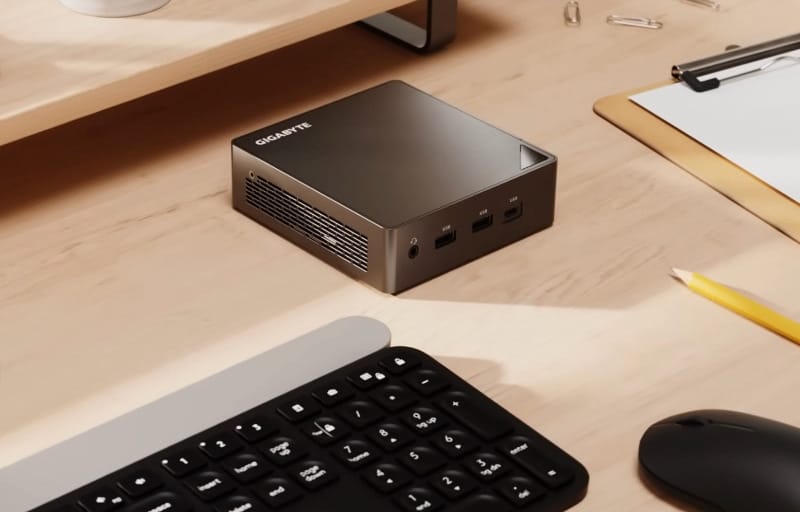
The first thing that stands out about the GB-BRU7-255H is just how little desk space it demands. GIGABYTE has kept the BRIX line’s signature boxy footprint, and this model continues that tradition with a chassis that could comfortably sit under a monitor stand or slip into a media cabinet without drawing attention.
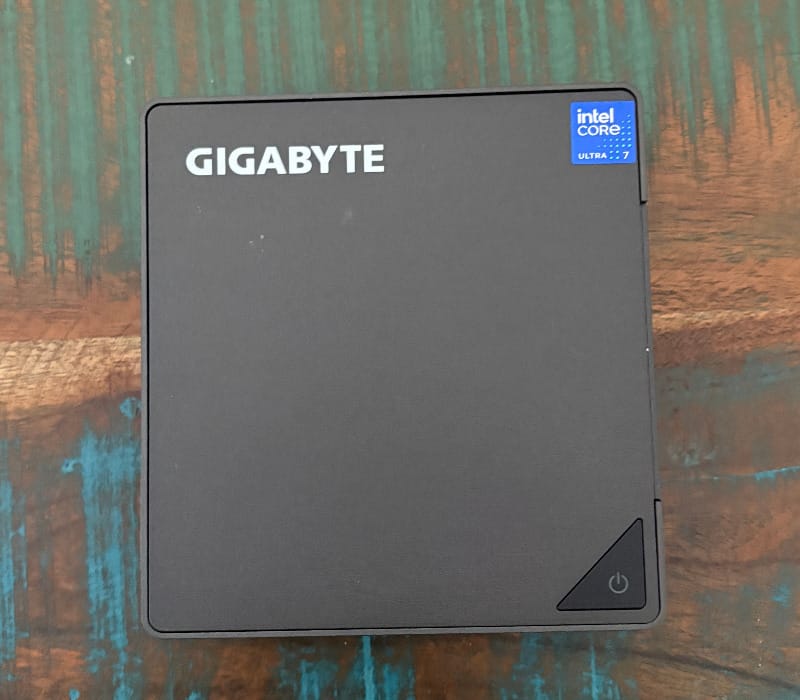
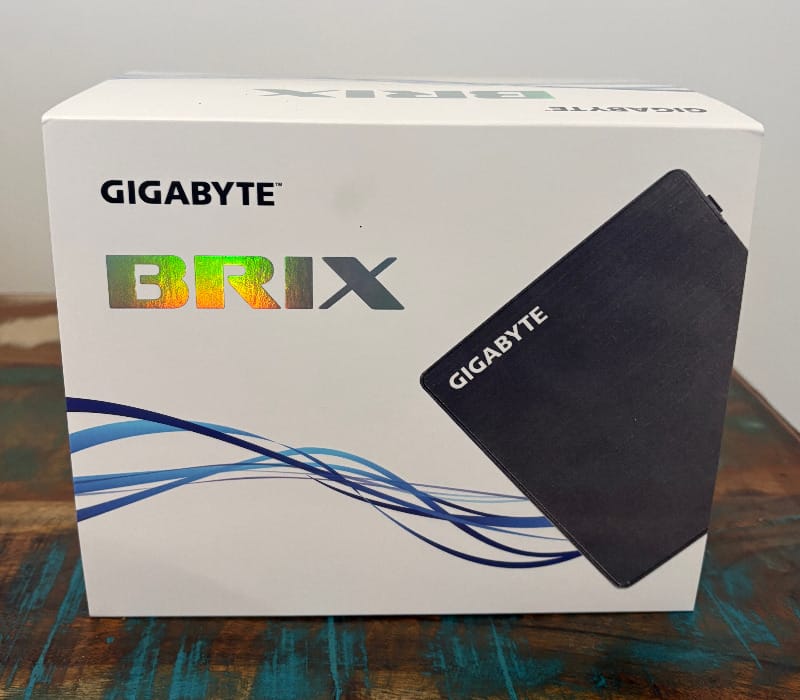
Despite the compact dimensions, the build quality feels solid rather than flimsy. The panels are finished cleanly, the seams are tight, and there is none of the creak or flex that sometimes creeps into ultra-small enclosures once internal components are installed.

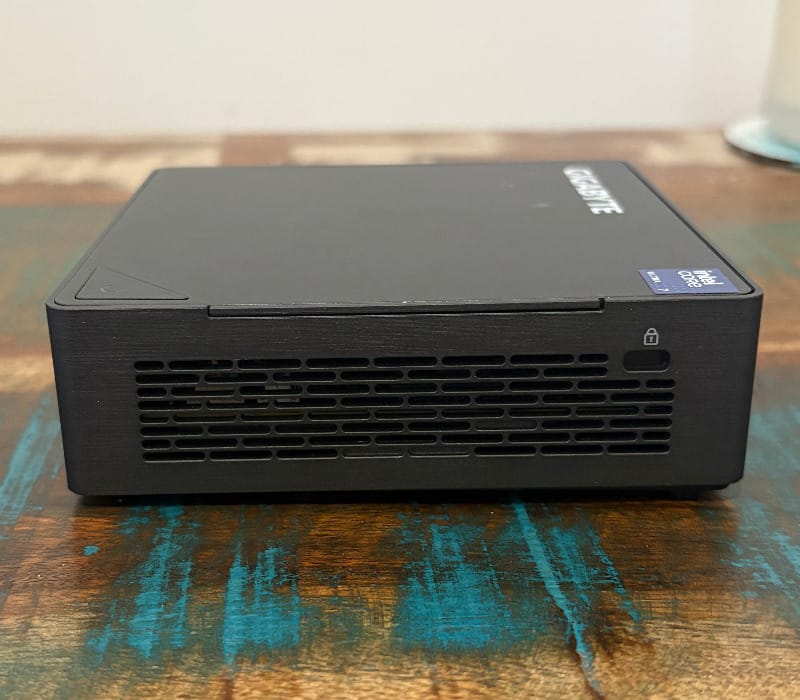
Ventilation is handled through grilles positioned along the sides of the unit, allowing air to be drawn across the internals without needing a particularly large intake area. This ties directly into GIGABYTE’s stated goal of keeping the system quiet, which matters a great deal for a machine that might sit within earshot on a desk or in a lounge room.
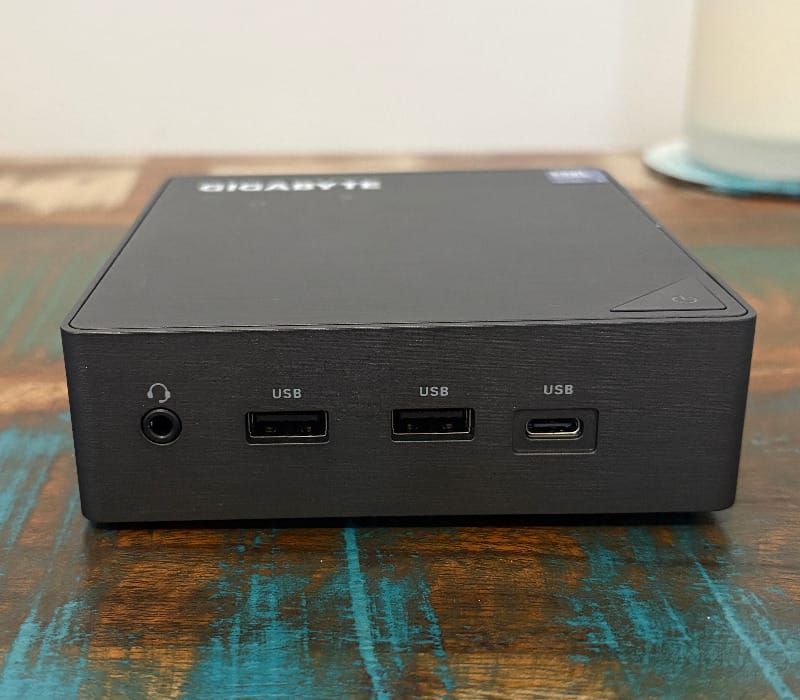
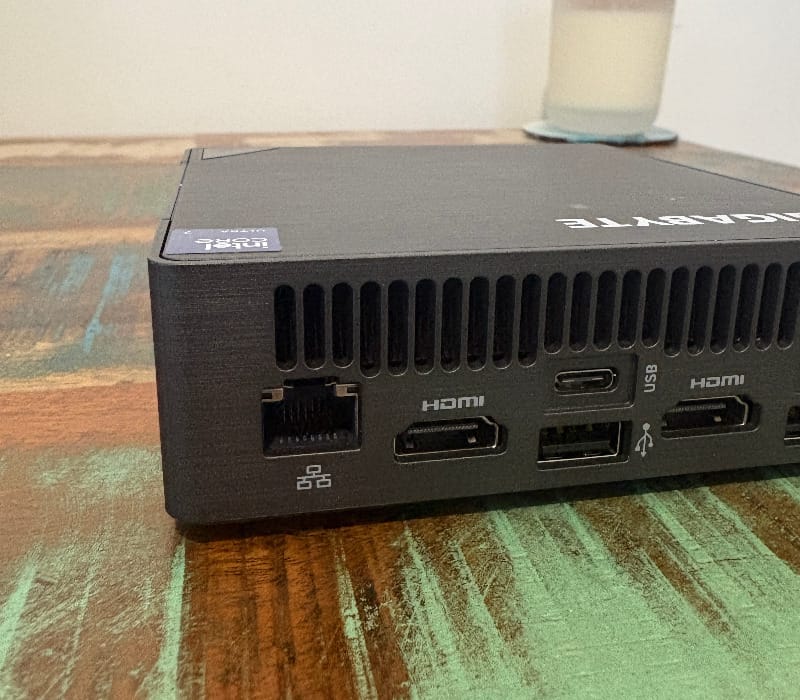
Port selection is generous for something this size. The rear I/O includes two HDMI 2.1 outputs and one USB-C port with DP Alt Mode, while the fourth display output comes from the front USB4 port, giving the GB-BRU7-255H the ability to drive up to four 4K displays simultaneously.

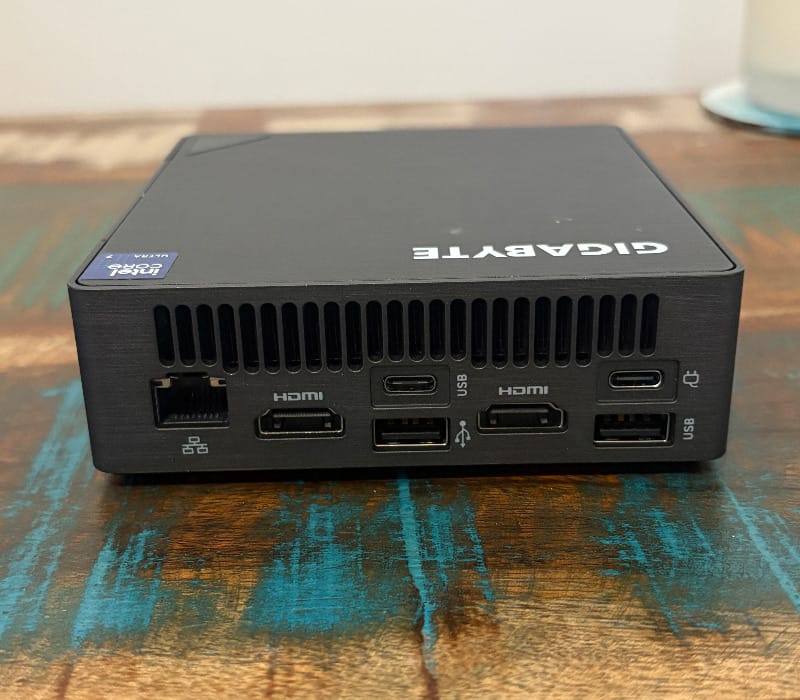
Alongside the display outputs are three USB 3.2 Gen2 Type-A ports, which provide plenty of headroom for external drives, peripherals or accessories without needing to reach for a hub. A 2.5G Ethernet port and Wi-Fi 7 module round out the connectivity, catering to households and offices that have upgraded their networking gear.

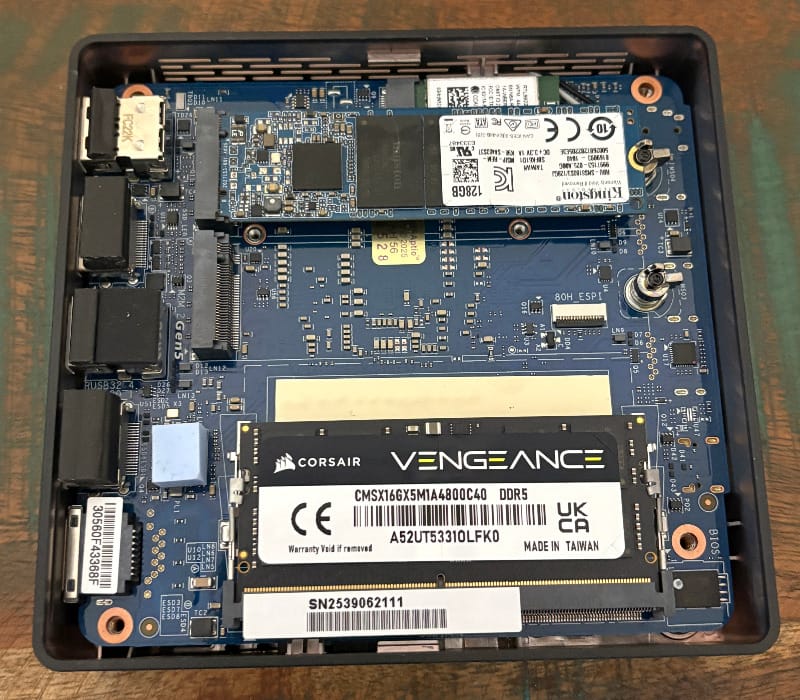
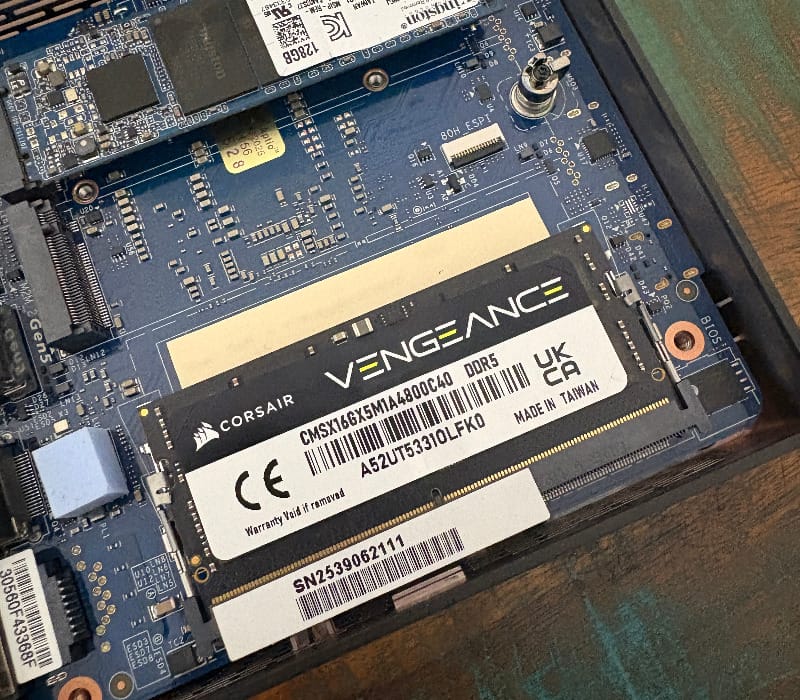
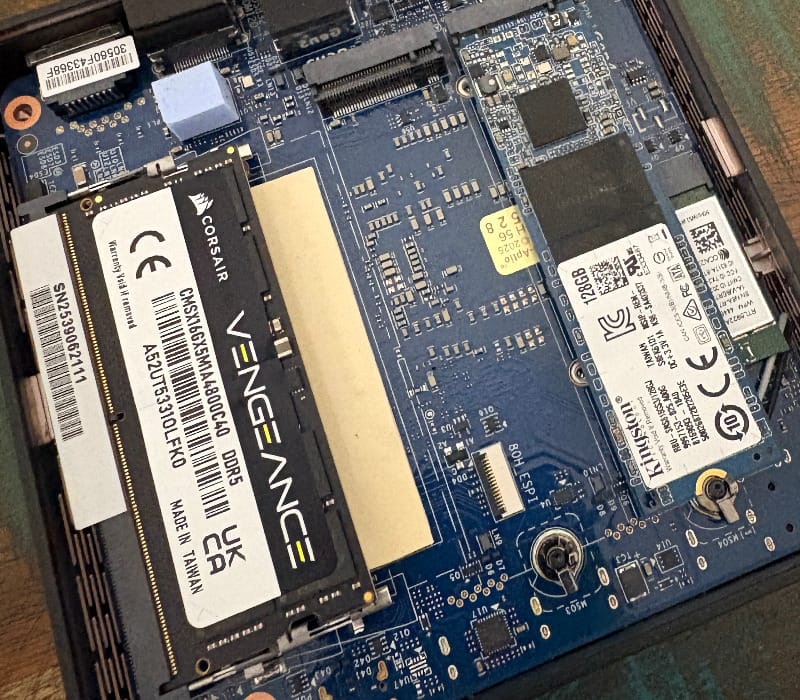
Opening the chassis to access the internals is refreshingly straightforward. GIGABYTE has designed the BRIX for easy upgrades, with a removable panel granting access to the SO-DIMM memory slots and the storage bays without needing to strip the whole unit down.
Inside, the GB-BRU7-255H supports SO-DIMM DDR5 memory running at up to 6400MT/s, with a maximum capacity of 96GB across two slots. For this review, the unit was set up with 16GB of memory installed, which proved more than adequate for the workloads tested.
Storage is equally flexible, with two M.2 2280 PCIe Gen4 x4 slots, plus a SATA connection for additional or bulk storage. That combination means a fast boot drive can sit alongside a larger, cheaper drive for media libraries or backups.
Because this is a barebone kit, an operating system is not included in the box, so buyers will need to supply their own Windows licence or Linux distribution of choice. This keeps the unit flexible for different use cases, from a Windows 11 productivity desktop to a Linux-based home server.
GIGABYTE includes a power adapter with every BRIX unit, and the company notes that each one undergoes safety and reliability testing to meet international standards. It is a small detail, but a reassuring one for anyone setting up a machine that may run continuously for long stretches.
A VESA mounting bracket is bundled in the box as well, supporting both 75 x 75mm and 100 x 100mm patterns. This makes it simple to bolt the GB-BRU7-255H to the back of a compatible monitor or television, effectively hiding the computer entirely while keeping it fully accessible for cable management.
For anyone setting up a tidy workstation or a media centre, that VESA compatibility is genuinely useful. It turns any suitably mounted display into a self-contained computer, without a tower or bulky case cluttering the desk or entertainment unit.
The layout of the ports has clearly been considered with real-world usage in mind, with enough separation between connectors that thicker cables and dongles do not compete for space. It is a small thing, but it becomes obvious how many small form factor PCs get this wrong once a unit that gets it right is in front of you.
Cooling in a chassis this size is always a balancing act between noise, temperature and component longevity, and GIGABYTE appears to have leaned toward the quieter end of that spectrum. The fan profile is tuned to stay unobtrusive during typical desktop use rather than spinning up aggressively at the first sign of load.
The overall footprint and design language make it clear this unit is intended to disappear into its environment, whether that is a home office, a lounge room entertainment unit, or a server rack shelf. It does not demand attention, and that is precisely the point.
Taken as a whole, the physical design of the GB-BRU7-255H reflects a mature understanding of what small form factor buyers actually want: easy access for upgrades, sensible port placement, flexible mounting options and a quiet footprint, all wrapped in a chassis that takes up barely any room at all.
Key Features
At the heart of the GB-BRU7-255H sits the Intel Core Ultra 7 processor 255H, a 16-core chip built from six performance cores, eight efficient cores and two low-power efficient cores, running at a 28W power envelope. That core mix is designed to balance strong single and multi-threaded performance against the kind of power draw that suits a small, quiet chassis.
Intel’s newer Lion Cove and Skymont core architectures underpin this generation, and according to Intel’s own figures, this brings a roughly 14 percent uplift in single-threaded performance and around 19 percent in multi-threaded performance over the previous generation of Core Ultra chips. For a machine this compact, that is a meaningful step forward.
Graphics duties are handled by Intel Arc Graphics with the 140T configuration, built on the Xe-LPG+ architecture with up to eight Xe-cores. This includes full-rate ray tracing support and XeSS upscaling, both of which help the integrated GPU punch above its weight in supported titles and creative applications.
Intel’s own benchmarks point to roughly a 20 percent graphics performance improvement over the prior Core Ultra generation, which is a solid gain for an integrated GPU that also needs to fit within the same power and thermal budget as the CPU cores.
Sitting alongside the CPU and GPU is a dedicated NPU AI accelerator, complemented by Intel’s GNA3.5 low-power engine for lighter, always-on AI tasks. Together these give the GB-BRU7-255H genuine on-device AI capability without needing to lean entirely on the GPU or send workloads to the cloud.
Memory support is generous for a system this size, with SO-DIMM DDR5 running at up to 6400MT/s and a maximum capacity of 96GB spread across two slots. The review unit was configured with 16GB, which is a sensible starting point for most productivity and light server workloads.
Storage flexibility is another strong point, with an M.2 2280 slot supporting either PCIe Gen5 x4 or Gen4 x4 drives, plus a separate SATA connection. This lets buyers mix a fast NVMe boot drive with additional bulk storage for media, backups or virtual machines.
Display output is handled through four separate 4K-capable connections: two HDMI 2.1 ports and two USB-C ports with DP alt mode support. That means a genuine four-monitor setup is possible straight out of the box, which is unusual for a device this small.
Networking is future-facing, combining a 2.5G Ethernet port with a Wi-Fi 7 module. Both offer a healthy step up over the Gigabit Ethernet and older Wi-Fi standards still found on many competing mini PCs.
Security has not been overlooked either, with Linear Address Space Separation, or LASS, built into the platform to help guard against certain side-channel attack vectors. It is a feature that matters more the longer a machine is left running unattended, which is exactly how many buyers will use this one.
GIGABYTE bundles a VESA mounting bracket supporting both 75mm and 100mm patterns, along with a power adapter that the company states has been tested against safety and reliability standards in multiple regions. These inclusions remove a couple of common headaches from the setup process.
Three USB 3.2 Gen2 Type-A ports round out the connectivity, giving plenty of scope for external drives, capture devices or other peripherals without needing an external hub. Combined with the USB-C ports, that is a solid total port count for a machine this size.
Because the GB-BRU7-255H ships as a barebone kit, buyers get to choose their own memory capacity, storage configuration and operating system. That is a feature in its own right for anyone who wants to build a machine tailored precisely to a specific job, whether that is content creation, a home server or general desktop use.
Taken together, these specifications place the GB-BRU7-255H well above what most people expect from a mini PC this size, particularly around graphics performance, display output and AI acceleration, while keeping the physical footprint and noise output firmly in check.
Experience Using the Product and Performance
Setting up the GB-BRU7-255H starts with the fact that it is a barebone kit, so the first job is fitting memory and storage before an operating system can even be installed. With 16GB of DDR5 slotted into place alongside an NVMe drive, the whole process took only a few minutes thanks to the easily accessible internal panel.
Installing Windows 11 onto the system was uneventful, with the Core Ultra 7 chip making light work of the setup process and driver installation. First boot times were quick, and there was none of the sluggishness sometimes associated with squeezing full desktop hardware into a tiny chassis.
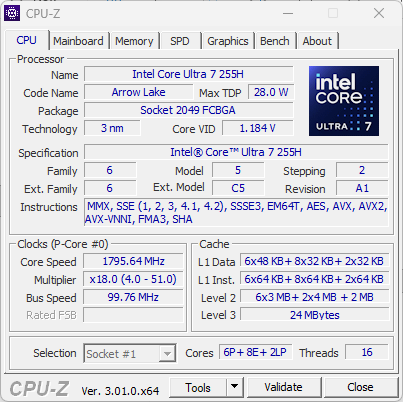
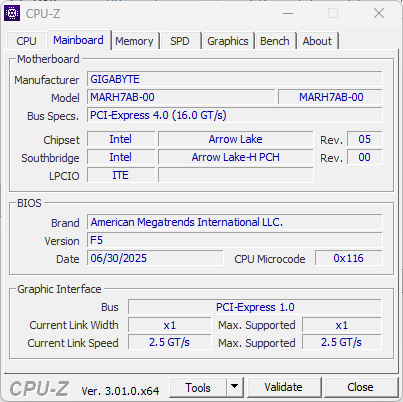


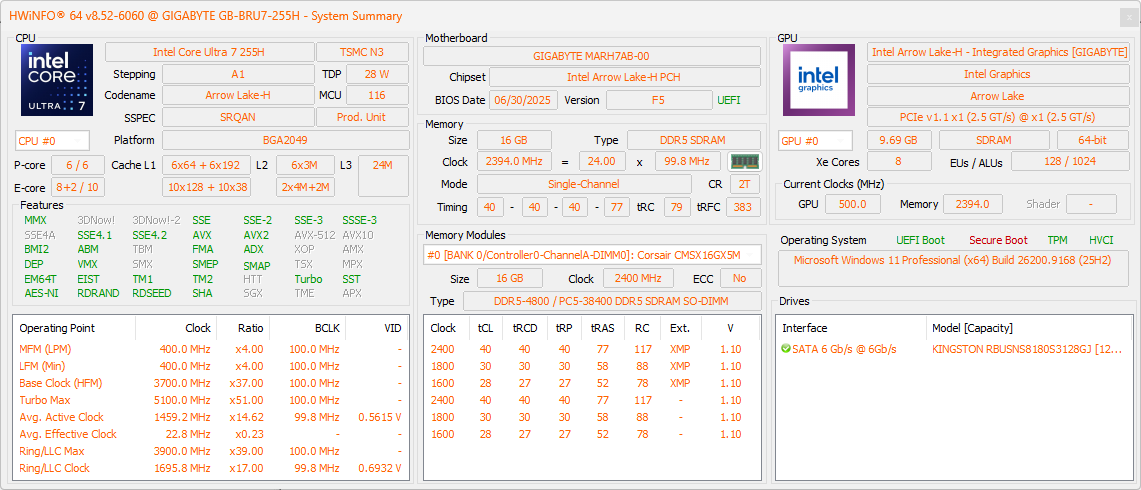
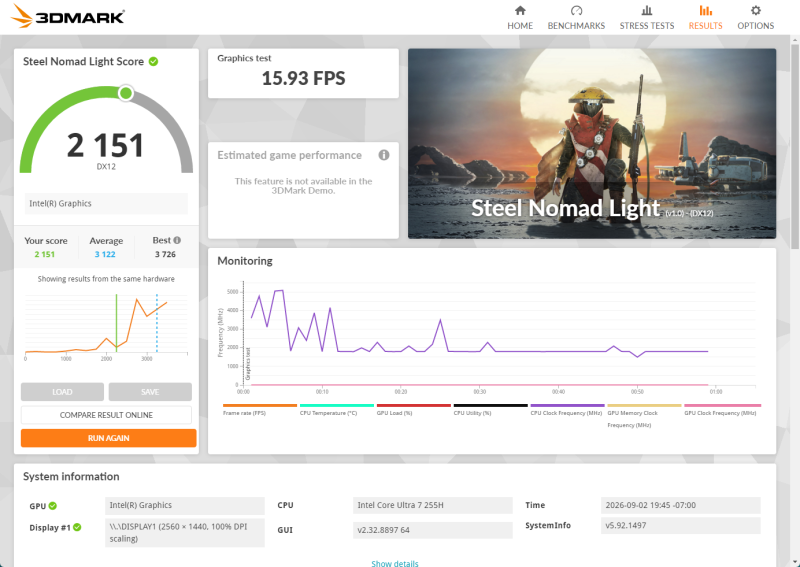
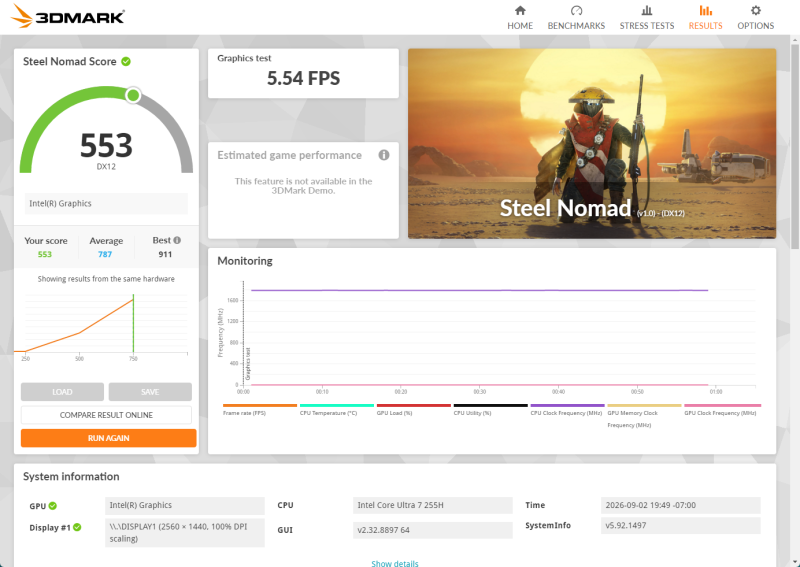
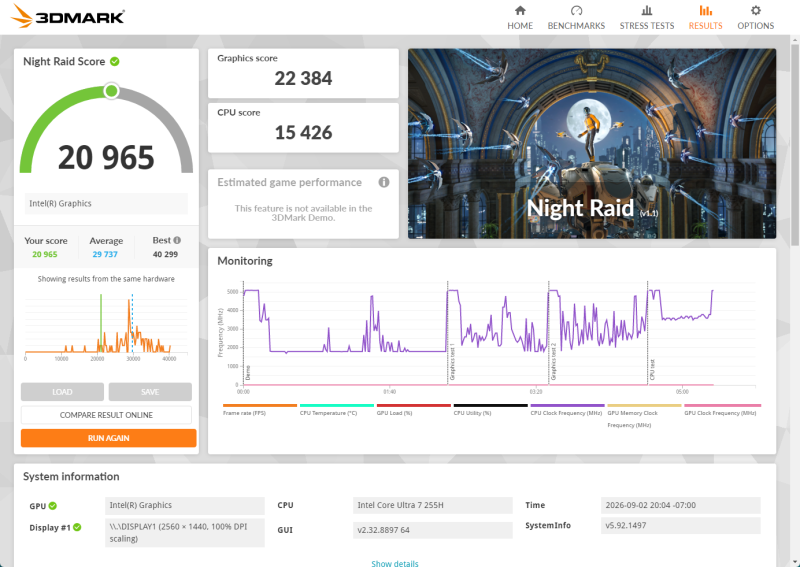
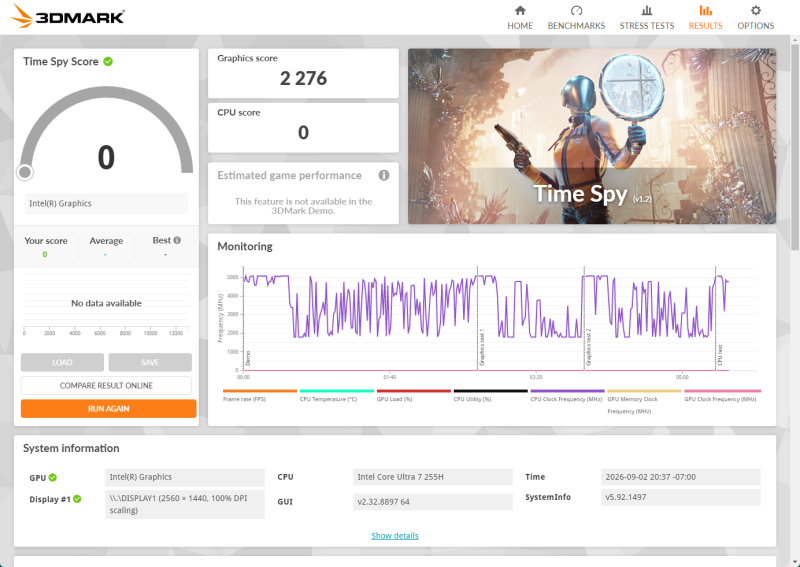
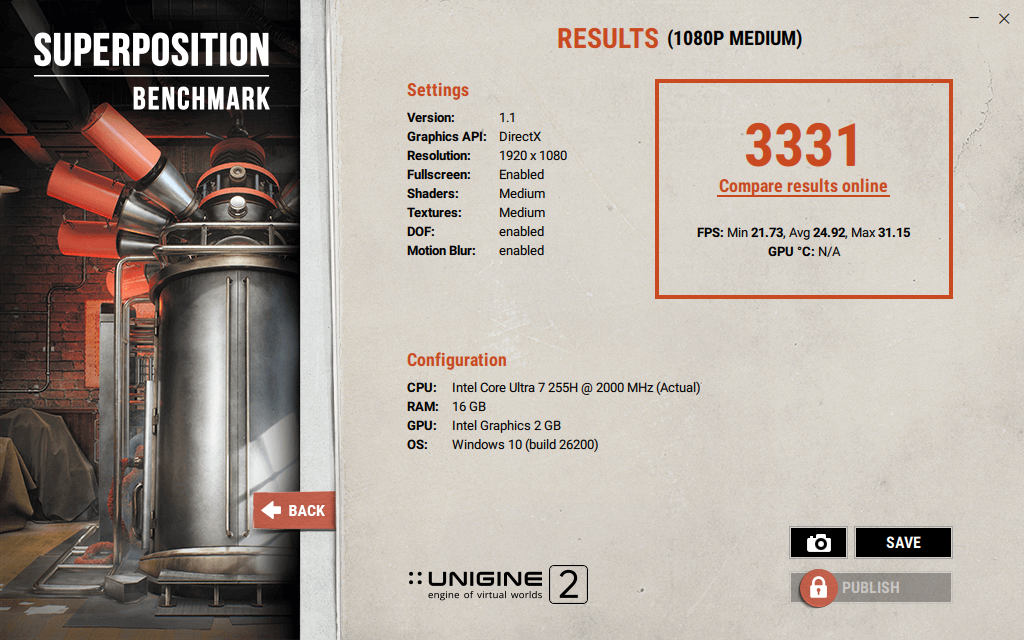


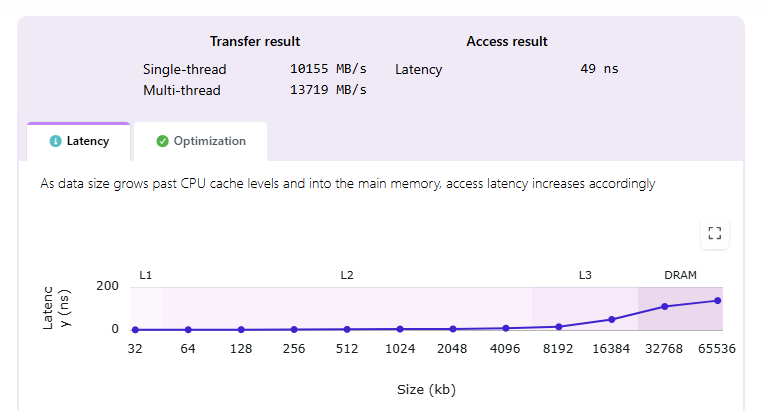
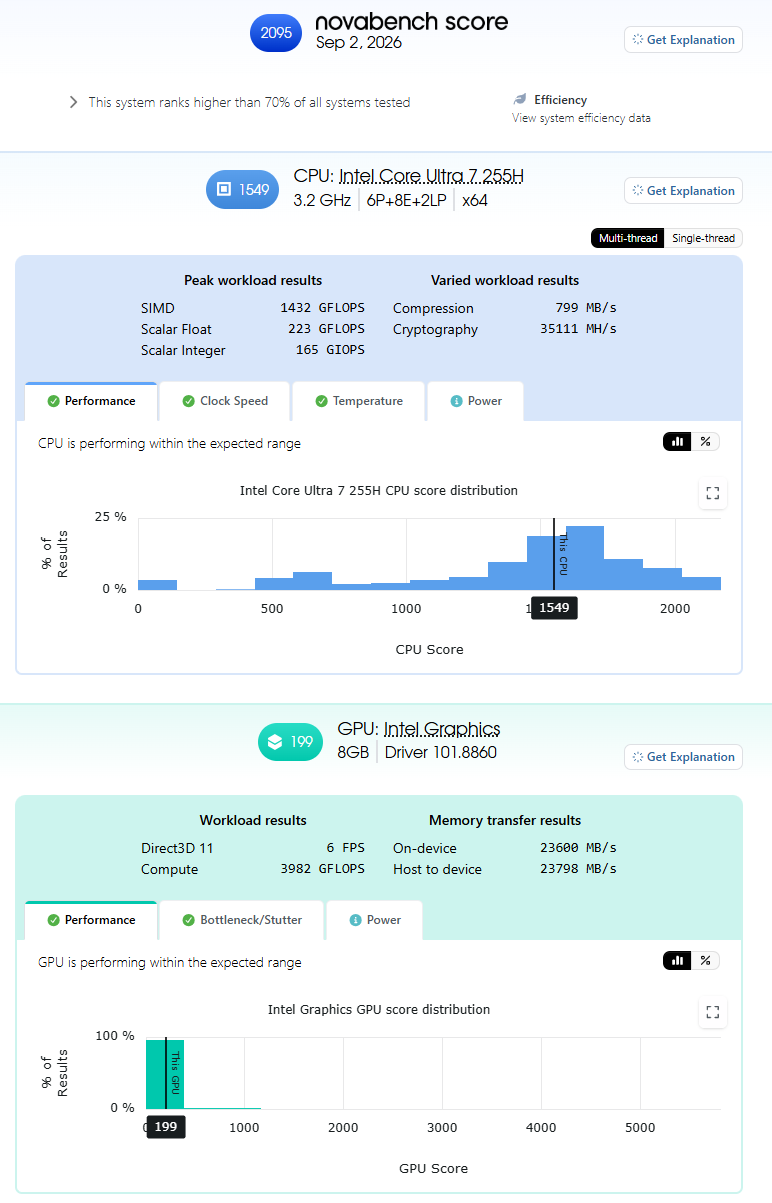
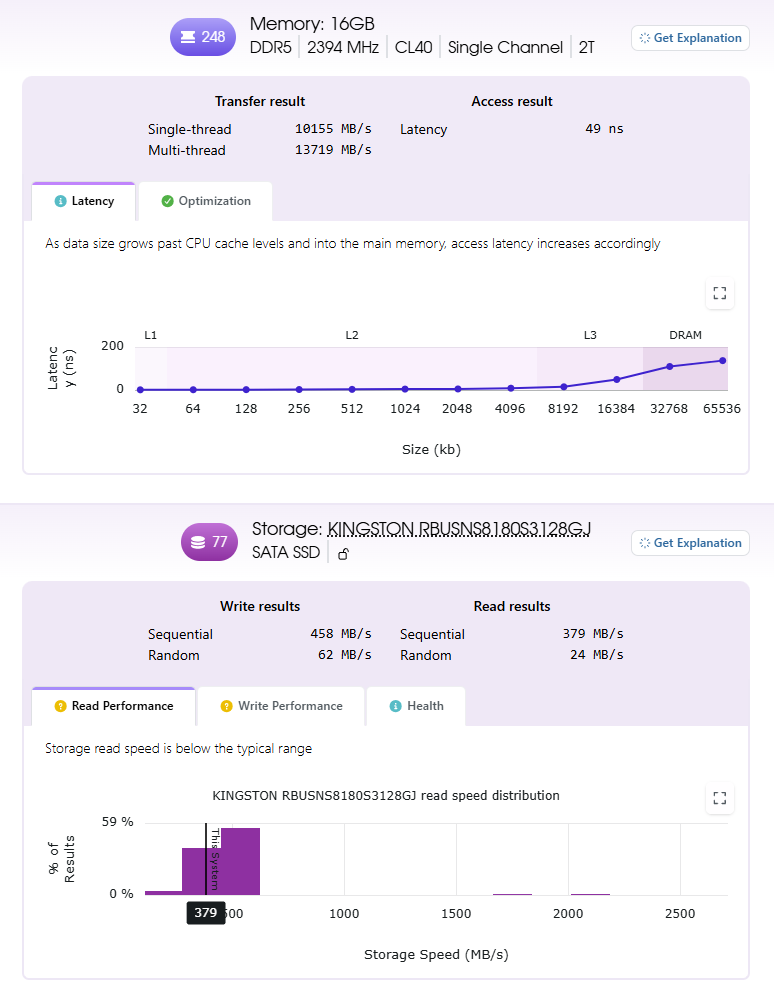
Everyday productivity tasks are where this machine feels immediately comfortable. Web browsing with dozens of tabs open, spreadsheet work, email and document editing all ran smoothly without any hint of the system struggling to keep up.
Multitasking between several applications at once, such as switching between a browser, a word processor and a chat client, showed no lag or stutter. The combination of the Core Ultra 7’s core count and the 16GB of memory installed handled this kind of everyday juggling with ease.
Video conferencing performance was another strong point, with the integrated NPU helping offload background blur and noise suppression tasks that would otherwise fall entirely on the CPU. Calls remained smooth even while other background applications were running.
Playing back 4K video content was handled effortlessly, whether streaming through a browser or playing local files, and the ability to drive four displays simultaneously opened up genuinely useful multi-monitor productivity setups during testing.
Where the GB-BRU7-255H really shows its versatility is in less conventional roles, and setting it up as a dedicated media server highlighted this well. With a media library stored on the internal NVMe drive and additional content on a SATA-connected drive, the system handled transcoding and streaming duties without breaking a sweat.
Running Plex on the unit worked reliably throughout testing, and anyone setting one of these machines up for that purpose will want to pay attention to naming media files correctly for Plex so the server can identify content properly from the outset.
Television libraries in particular benefit from consistent naming conventions, and getting TV show naming right for Plex made a noticeable difference to how quickly the server matched episodes and pulled in artwork during setup.
The 2.5G Ethernet port proved genuinely useful here, allowing large media files to be transferred to and from the unit far quicker than a standard Gigabit connection would allow, which matters when building out a sizeable library.
Beyond media serving, the GB-BRU7-255H handled duties as a dedicated gaming server without issue. Hosting a persistent world for a game like Minecraft or a similar multiplayer title ran in the background quietly, leaving plenty of headroom thanks to the Core Ultra 7’s efficiency cores handling lighter background tasks.
Because the chassis is designed to run quietly, leaving it powered on around the clock for a gaming server or media server did not become a nuisance, even when the unit was sitting on a nearby shelf rather than tucked away in another room.
Power draw during these always-on server tasks stayed sensible, which matters for anyone concerned about running a machine continuously rather than switching it off between sessions. The efficiency-focused core design clearly pays dividends here.
Network-attached storage duties were another area where the GB-BRU7-255H performed well, with the combination of fast NVMe storage and a SATA-connected drive making it simple to set up a basic file server for a household or small office.
Wi-Fi 7 support meant that even without a wired connection, file transfers to and from the unit remained fast and consistent throughout testing, which is a genuine step up for anyone still running older wireless hardware elsewhere in the house.
Mounting the unit to the back of a monitor using the included VESA bracket worked exactly as expected, and it is an approach worth considering for anyone wanting a completely clutter-free desk setup with the computer hidden entirely from view.
Used as a home theatre PC connected to a television over HDMI 2.1, the GB-BRU7-255H handled 4K playback and streaming apps without issue, and the low noise output meant it did not compete with dialogue or quiet scenes during viewing.
Light gaming sessions using the Arc Graphics 140T GPU produced playable results in less demanding titles, with ray tracing support adding a noticeable visual boost in games that support it, though this remains an integrated GPU rather than a discrete graphics card.
Emulation of older console titles ran comfortably, making the unit a solid option for retro gaming setups where a full-sized gaming PC would be overkill for the workload involved.
Photo editing tasks in applications that can lean on the integrated GPU felt responsive, with exports and filter previews rendering quickly enough that the workflow never felt like it was waiting on the hardware.
Boot times throughout testing remained consistently quick, and waking the system from sleep was near-instant, which matters for a machine that might be switched on and off frequently throughout the day in a home office setting.
Reliability over an extended testing period was solid, with no crashes, driver issues or unexpected restarts across a mix of productivity, media server and light gaming workloads.
Compared with a full-sized tower PC, the space savings on offer here are significant, and for anyone short on desk or shelf space, that alone can be a compelling reason to choose a machine like this over a conventional build.
The two SO-DIMM memory slots and dual storage options mean there is a clear upgrade path down the line, whether that means adding more memory up to the 96GB ceiling or fitting a larger NVMe drive as storage needs grow.
The inclusion of LASS security at the platform level is a welcome addition for anyone running the unit as an always-on server exposed to a home network, adding a layer of protection against certain attack methods without requiring any extra setup.
Standby power draw when the unit was left idle overnight remained low, reinforcing the sense that this is a machine designed with continuous operation in mind rather than purely as a desktop that gets switched off at the end of the day.
For a small business or home office setup, the combination of fast networking, solid CPU performance and flexible storage makes the GB-BRU7-255H a genuinely capable choice for a shared file server or lightweight application server.
Running the unit simultaneously as a Plex media server and a background gaming server during testing showed no real conflict between the two roles, with the Core Ultra 7’s core count comfortably splitting the workload.
The four display output capability came in handy for a productivity-focused multi-monitor setup, and switching between that configuration and a single-display home theatre setup involved nothing more than reconnecting cables, with no driver headaches in between.
Across every role tested, from productivity desktop to media server to gaming server, the GB-BRU7-255H handled the switch between duties without needing to be reconfigured from scratch each time, which speaks well to how sensibly GIGABYTE has balanced the hardware inside it.
Conclusion
The GIGABYTE GB-BRU7-255H manages to be several machines in one small chassis. It is a capable productivity desktop, a quiet home theatre PC, a reliable media server and a dependable dedicated gaming server, all without needing to swap hardware between roles.
The Intel Core Ultra 7 processor 255H and Arc Graphics 140T combination gives it enough headroom for genuinely demanding tasks, while the efficiency-focused core design keeps power draw and noise low enough for round-the-clock use. With 16GB of DDR5 memory installed, the review unit handled everything thrown at it without hesitation.
Flexible storage options, generous display outputs, Wi-Fi 7 and 2.5G Ethernet round out a feature set that feels well thought through rather than simply ticked off a spec sheet. The included VESA bracket and safety-tested power adapter add a level of polish that barebone kits do not always bother with.
For anyone after a small, quiet computer capable of juggling everyday productivity, media duties and background server tasks without fuss, the GB-BRU7-255H is well worth serious consideration.