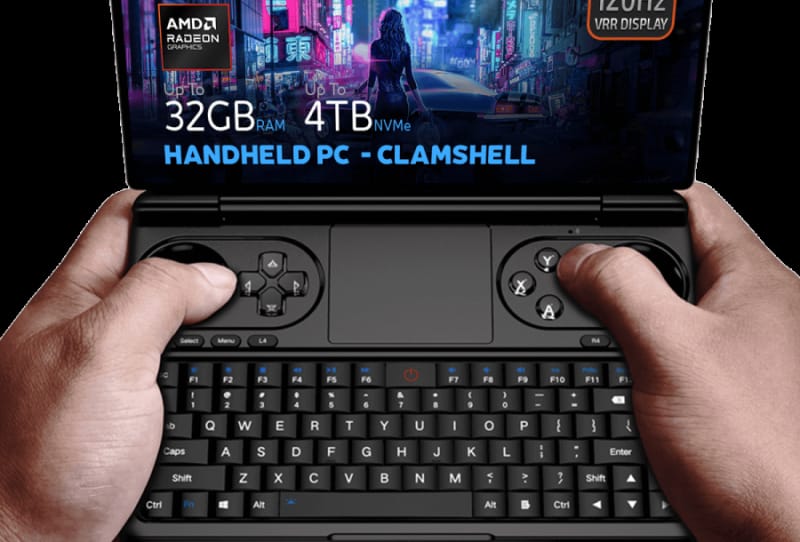
GPD has confirmed it is building a new version of its Win Mini handheld gaming PC powered by Intel’s Arc G3 Extreme chip, a move that could make the Win Mini Ultra one of the fastest small-form gaming handhelds on the market. The confirmation came straight from the company rather than a leaker, via a post on the Chinese social platform Weibo, making this one of the rare handheld announcements that reporters can treat as confirmed rather than rumour.
Key takeaways
- ✓GPD confirmed the Win Mini Ultra via a company Weibo post, not a third-party leak.
- ✓The handheld uses Intel's Arc G3 Extreme chip with a 12-core Xe3 Arc B390 iGPU.
- ✓Earlier Win Mini models topped out with AMD's Ryzen AI 9 HX 370 and Radeon 890M graphics.
- ✓GPD says the Arc B390 iGPU can approach entry-level discrete GPU performance.
- ✓No release date, pricing, or full specification sheet has been announced yet.
Handheld PC gaming has become a crowded, fast-moving category, and chip choice is what separates a device that struggles with modern titles from one that can genuinely substitute for a small gaming laptop. GPD’s decision to pair its compact Win Mini chassis with Intel’s newest integrated graphics silicon signals how seriously handheld makers are now chasing raw performance, not just portability.
Table of Contents
What GPD has confirmed about the Win Mini Ultra
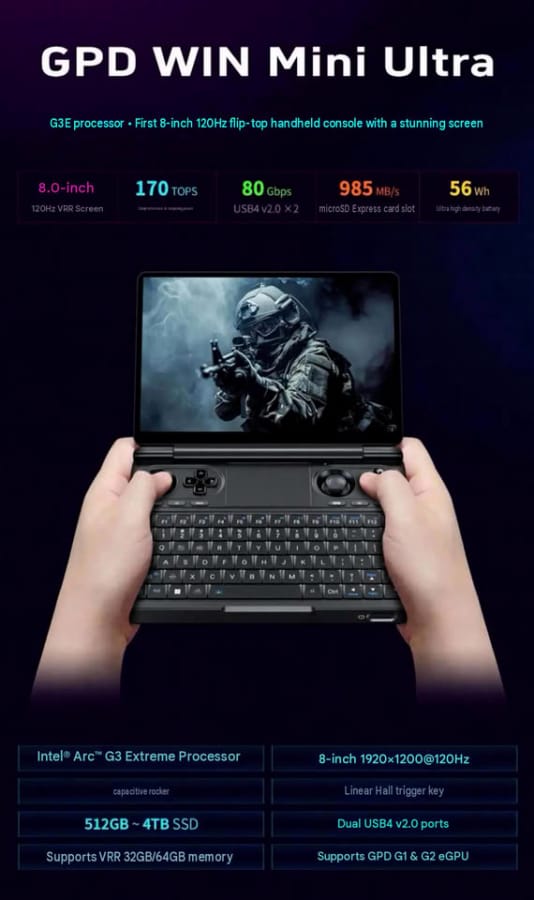
According to GPD’s own statement, the Win Mini Ultra will use Intel’s Arc G3 Extreme processor, a chip that pairs CPU cores with a much larger integrated graphics engine than earlier mobile silicon. GPD has not published full specifications, a release window, or details on memory and storage configurations, so plenty remains unconfirmed beyond the core chip decision.
That matters because GPD has a track record of shipping ambitious, expensive handhelds, including the GPD Win Max 3 that launched in August 2026 as one of the company’s most powerful handhelds to date. The Win Mini Ultra appears to sit alongside that lineup as a smaller-chassis option built around Intel rather than AMD silicon, which is a notable shift given GPD’s recent Win Mini models have leaned on AMD chips.
Inside the Arc G3 Extreme and its Arc B390 graphics
The headline feature of the Arc G3 Extreme is its onboard Intel Arc B390 graphics engine, which includes 12 full Xe3 compute cores. That is a substantial jump in graphics horsepower for an integrated chip, and GPD’s own framing suggests it can land somewhere close to entry-level discrete graphics card performance, a tier that integrated graphics have historically struggled to reach.
Previous Win Mini models topped out with AMD’s Ryzen AI 9 HX 370 processor and its Radeon 890M integrated graphics, a combination that put the device roughly in line with rivals like the Lenovo Legion Go 2. The table below lays out how the two generations compare based on what GPD and Intel have disclosed so far.
| Model | Processor | Integrated graphics | Positioning |
|---|---|---|---|
| GPD Win Mini (previous) | AMD Ryzen AI 9 HX 370 | AMD Radeon 890M | On par with Lenovo Legion Go 2 |
| GPD Win Mini Ultra (new) | Intel Arc G3 Extreme | Intel Arc B390 (12 Xe3 cores) | Approaching entry-level discrete GPU |
How the GPD Win Mini Ultra stacks up against rivals
If GPD’s performance expectations hold up in independent testing, the Win Mini Ultra would push ahead of most AMD-based handhelds currently on shelves, including devices built around the Ryzen AI 9 HX 370 that have become the default high-end choice for the category. That would make Intel’s Arc graphics architecture a genuine contender in handheld gaming rather than a niche alternative mostly seen in laptops.
Intel has been steadily building out the software side of its Arc platform to support this kind of hardware push, including recent Intel Arc GPU drivers aimed at improving game compatibility and fixing performance issues, plus Intel’s work on XeSS upscaling support for Proton that benefits Linux-based handhelds running through compatibility layers. Both efforts suggest Intel is treating handheld gaming as a priority rather than an afterthought for its Arc graphics division.
What it means for buyers eyeing a new handheld
For shoppers currently weighing up a handheld purchase, the Win Mini Ultra is worth watching rather than waiting on indefinitely, given GPD has not committed to a launch date or pricing. Anyone comparing current options should still look closely at storage and software support, areas where accessories like compact storage built specifically for handheld gaming PCs are becoming more relevant as game install sizes grow.
The broader trend is clear: Intel is pushing harder into mobile and handheld silicon, a push that also shows up in leaks around Intel’s upcoming Nova Lake chip lineup. Handheld buyers who have assumed AMD was the only serious option for high-performance portable gaming now have a genuine reason to wait and compare once GPD releases full specifications and benchmarks for the Win Mini Ultra.
Frequently asked questions
What chip powers the GPD Win Mini Ultra?
The GPD Win Mini Ultra uses Intel’s Arc G3 Extreme processor, which includes an Arc B390 integrated graphics engine built on 12 full Xe3 compute cores.
When will the GPD Win Mini Ultra be released?
GPD has not announced a release date or pricing. The company has only confirmed, via a Weibo post, that the device is in development.
How does the Win Mini Ultra compare to the previous GPD Win Mini?
Earlier Win Mini models used AMD’s Ryzen AI 9 HX 370 with Radeon 890M graphics, roughly matching rivals like the Lenovo Legion Go 2. GPD indicates the Arc-based Win Mini Ultra could offer noticeably stronger graphics performance.
Is Intel Arc graphics good for handheld gaming?
Intel’s newer Arc integrated graphics, including the Arc B390 in the Arc G3 Extreme chip, are designed to close the gap with discrete graphics cards, making them increasingly viable for demanding handheld gaming use.