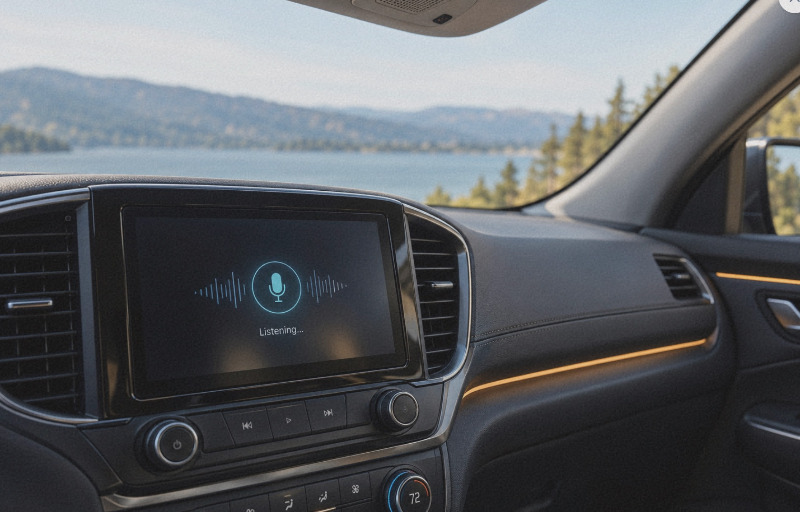
This article looks at the growing role of voice control technology in modern car audio systems, how it is changing the use of car radios and infotainment, and highlights the evolution of major industry players such as Pioneer Audio.
Voice-controlled technology has shifted from luxury to expectation in today’s vehicles, transforming how you interact with broader infotainment systems. As drivers demand easier access to music, navigation, and communication without taking their hands off the wheel, voice integration stands out as a key feature for convenience. The popularity of smartphones and smart speakers has also fueled higher standards for seamless, natural language control behind the wheel. This shift has changed what drivers consider standard in modern car audio.
Table of Contents
How voice control works in the cabin
At the core of voice control are speech recognition systems that respond when you use a specific wake word (“Hey Car” or “OK Google,” for example). Once activated, the system captures your voice using microphones placed throughout the vehicle. Background sounds from the cabin, including road and HVAC noise, are filtered out through noise suppression algorithms. Depending on the system, your request might be processed locally by the car’s computer or sent to the cloud for more advanced natural language understanding.
Low latency is important, as many systems aim to respond quickly so you are not waiting for feedback while issuing commands on the move.
Common uses for in-car voice control
In practice, voice commands let you play specific songs, artists, or playlists, search for radio stations, adjust volume, or browse podcasts by speaking naturally. You can also make phone calls, dictate and send text messages, and request navigation directions without reaching for the display.
Technical and privacy challenges
Vehicles present a noisy and unpredictable environment. Road noise, fans, passenger conversations, and reflections from the cabin can make clean audio capture difficult. Audio systems address these issues with approaches such as multi-microphone beamforming, echo cancellation, and ambient noise adaptation.
On privacy, what you say may be analyzed onboard but could also be transmitted for cloud processing, depending on the system and settings. Many systems offer permission controls to help you manage what is shared or stored.
Integration, reliability, and user experience
Modern head units often work alongside a smartphone ecosystem, with Android Auto and Apple CarPlay as common frameworks. Consistency depends on how well these platforms integrate and update across different vehicles, with occasional hiccups like connection drops or misunderstood speech. Interface design aims to minimize these issues by prioritizing clarity and reducing distractions while driving.
Industry perspectives and the next steps
Manufacturers such as Pioneer Audio have a long history in the sector, beginning in 1930 with the production of dynamic speakers and evolving into a major developer of car audio equipment. Their automotive systems are known for combining reliable sound quality with user-friendly features, including touchscreen navigation and seamless device connectivity. Looking ahead, voice control in vehicles may benefit from improvements in multi-user recognition, more conversational interfaces, and closer integration with vehicle systems, while keeping driver attention in mind.