Jagex has confirmed that RuneScape 4 is officially in development, unveiling the long-rumoured sequel at RuneFest 2026 with a CGI teaser and a promise that it’s being built in Unreal Engine. It’s the first numbered follow-up to the series since RuneScape 3 launched back in 2013, and it marks a genuine departure for a studio that has spent more than a decade refining its existing engines rather than starting fresh.
Key takeaways
- ✓Jagex announced RuneScape 4 (working title RS4) at RuneFest 2026
- ✓It is the first numbered RuneScape sequel since RuneScape 3 launched in 2013
- ✓The game is built in Unreal Engine, though Jagex hasn't confirmed which version
- ✓RS4 grew out of a planned expansion for RuneScape: Dragonwilds before becoming a standalone MMO
- ✓Jagex says the game is still years away, with no platforms or release window confirmed
The game currently carries the working title RS4, though fans at the event and online were quick to settle on RuneScape 4 as the name that will likely stick. Jagex has been careful not to overpromise. The studio says the project has its own dedicated team and is still “a few years away,” with no platforms confirmed and no release window attached to the announcement.
Table of Contents
What Jagex revealed about RuneScape 4 at RuneFest 2026
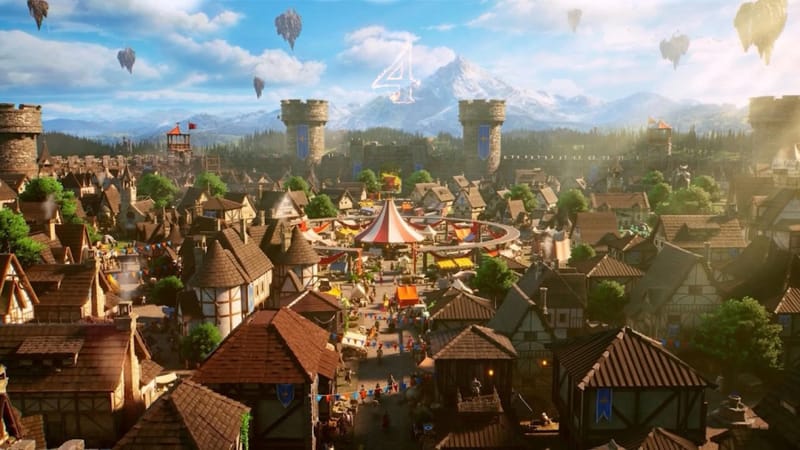
The reveal leaned heavily on mood rather than mechanics. The teaser shown to the RuneFest crowd depicted a town tucked into a green valley, floating islands drifting above it, and a dragon rider under attack from a three-headed dragon. There was no gameplay footage, no combat demo, and no skill trees on display, which suggests Jagex wanted to establish tone and scale before getting into specifics.
Choosing Unreal Engine is the headline technical detail. Jagex hasn’t specified whether RS4 runs on Unreal Engine 5 or an earlier build, but the decision puts the new MMO in the same technical family as RuneScape: Dragonwilds, the studio’s open-world survival game that already runs on Unreal Engine 5. That shared foundation isn’t a coincidence, and it explains a lot about how this project came together.
From a Dragonwilds expansion to a standalone MMO
RuneScape 4 wasn’t originally pitched as a new mainline game at all. According to Jagex, it began life as a planned expansion for Dragonwilds, reportedly targeted for release around 2027. During playtesting, players apparently pushed back toward a more traditional MMO structure rather than the survival-crafting format Dragonwilds uses, and the idea eventually grew large enough to become its own title.

That origin story shapes the setting. RS4 is said to pick up years after the events of Dragonwilds and opens in the same region, Ashenfall. For long-time players, that’s a meaningful signal: rather than rebooting the RuneScape universe from scratch, Jagex appears to be building forward from lore it has only recently introduced, giving Dragonwilds retroactive weight as the starting point for the next generation of the franchise.
Jagex has been explicit that none of its existing games are going anywhere. RuneScape 3, Old School RuneScape, and Dragonwilds will all continue running alongside RS4 once it eventually launches, rather than being folded into or replaced by it.
What’s still unconfirmed
Plenty remains genuinely unknown, and Jagex has been upfront about that rather than letting speculation fill the gaps. There’s no word yet on monetisation, which matters given RuneScape’s long history with subscriptions, microtransactions, and free-to-play tiers running in parallel. It also isn’t clear whether progress or purchases from RuneScape 3 will carry over in any form, or whether RS4 will function as a completely separate account and economy.
Platform support is another open question. Jagex hasn’t said whether RuneScape 4 will target PC exclusively at launch or follow Dragonwilds onto consoles and handhelds down the track. Given how early the project is, a firm answer on any of this could be a long way off, and anything short of an official Jagex statement should be treated as speculation rather than fact.
Why a new RuneScape matters for the MMO genre
Numbered RuneScape sequels are rare enough that the announcement alone is significant. Jagex has spent years iterating on RuneScape 3 and building Old School RuneScape as a parallel legacy product, so committing to a genuinely new entry built on modern tooling is a notable shift in strategy. Unreal Engine has become something of a default choice for studios wanting better lighting, animation, and scale without building proprietary tech from scratch, a path also taken by CD Projekt Red with The Witcher 4’s move to Unreal Engine 5.
It also arrives at a moment when live-service MMOs are under pressure to keep communities engaged through features beyond combat and questing, as seen with League of Legends recently adding built-in voice chat. Whether RuneScape 4 leans into similar social tooling from day one, or sticks closer to the series’ traditional formula, will say a lot about how Jagex wants to position the game against newer competitors. For now, the safest takeaway is that RuneScape 4 exists, it’s early, and Jagex has chosen Unreal Engine as the foundation for whatever comes next.
Frequently asked questions
Is RuneScape 4 the official name of the game?
Not yet. Jagex is currently using the working title RS4, though it is widely expected to be called RuneScape 4 once development progresses further.
What engine is RuneScape 4 built in?
Jagex confirmed the game uses Unreal Engine but hasn’t specified whether it’s Unreal Engine 5 or an earlier version.
Will RuneScape 3 and Old School RuneScape shut down when RuneScape 4 launches?
No. Jagex has said RuneScape 3, Old School RuneScape, and RuneScape: Dragonwilds will all continue to run alongside RuneScape 4.
When will RuneScape 4 be released?
Jagex hasn’t given a release date, only saying the game is still “a few years away” and remains in early development.