
The Seestar S30 Pro is designed for people who want to experience astrophotography without turning it into a technical project. It brings together optics, sensors, tracking, and software into a single compact device that can be set up and running in minutes. The goal is simple: make capturing the night sky feel approachable while still delivering results that feel rewarding.
What makes this smart telescope particularly appealing is how it bridges the gap between casual stargazing and serious image capture. You do not need prior knowledge of mounts, alignment, or manual focusing to get started. Instead, the system takes care of those tasks automatically, allowing you to focus on choosing targets and enjoying the process as images slowly take shape on your screen.
After spending extended time using the Seestar S30 Pro across a wide range of conditions, its strengths and limitations become clear. It is built for convenience, portability, and consistency, especially for users imaging from suburban or light-polluted locations. This review explores how well it delivers on those promises and what it is like to live with as a regular part of an observing routine.
Design and Functionality
The Seestar S30 Pro adopts a compact, all-in-one design that prioritises portability without feeling fragile. Its size makes it easy to carry in one hand, yet it has enough weight to feel stable once mounted. This balance encourages spontaneous observing sessions rather than careful planning.
The housing is clean and minimal, with smooth contours that suit both indoor storage and outdoor use. There are no exposed cables or loose components, which reinforces its identity as a self-contained system. Everything feels deliberately integrated rather than added as an afterthought.
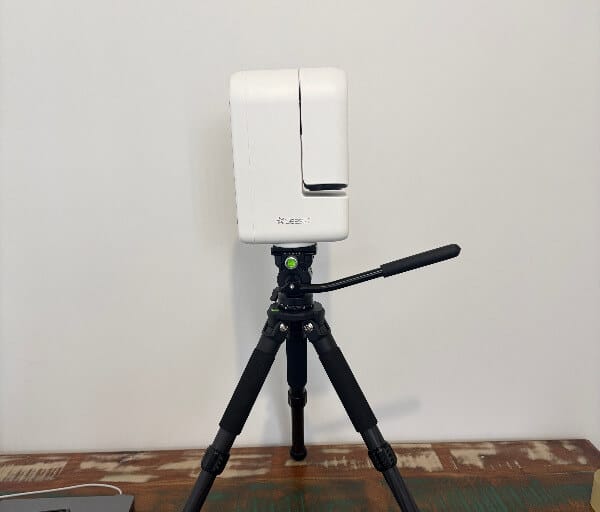
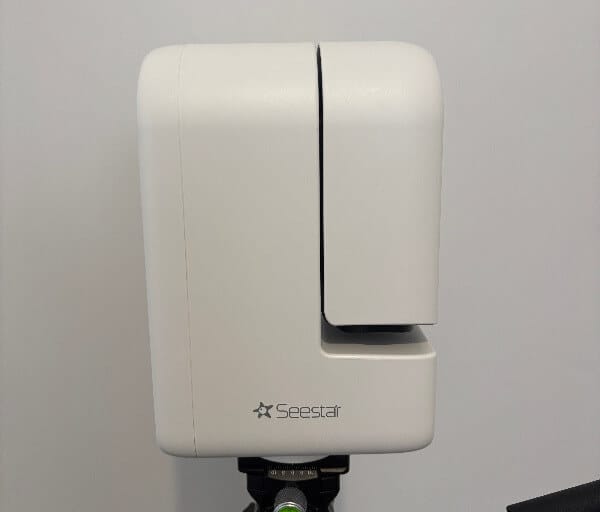
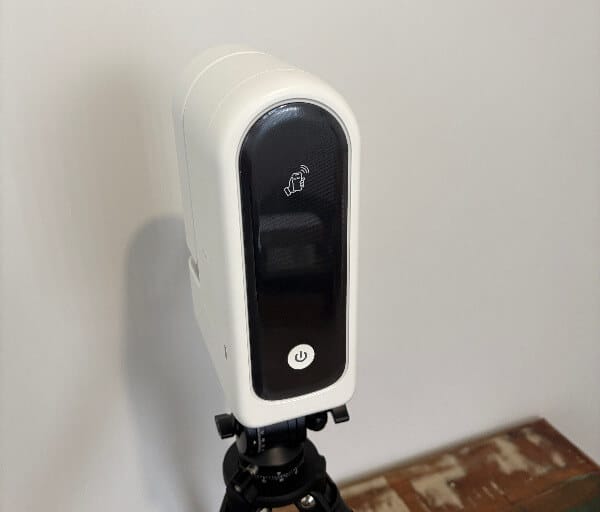
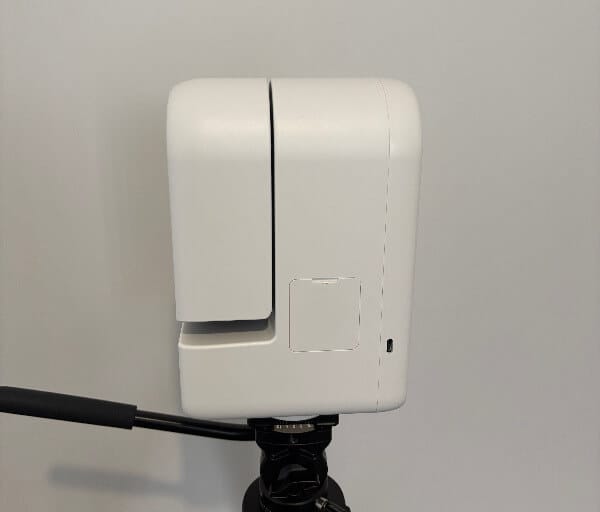
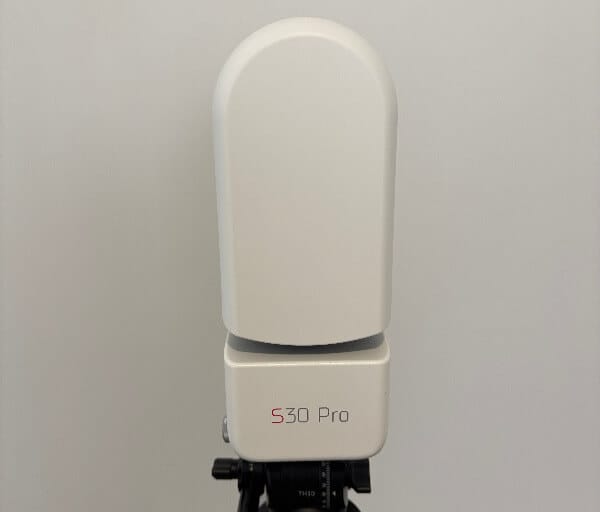
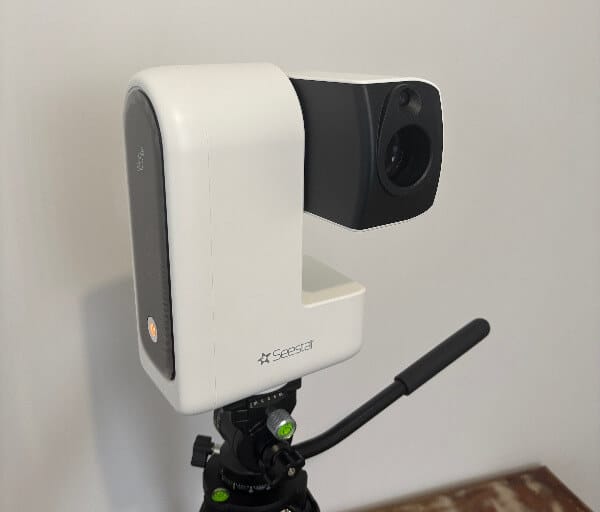
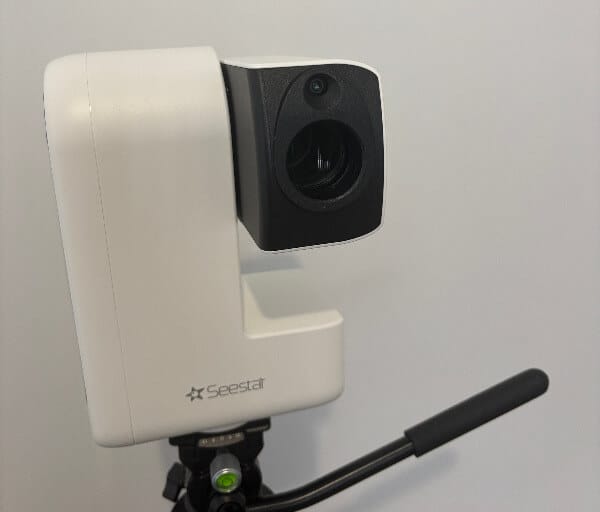
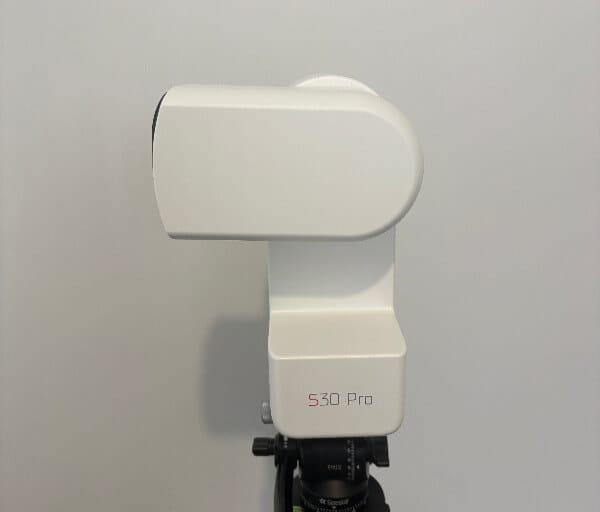
A notable design choice is the absence of a traditional eyepiece. All interaction happens digitally through a companion app, which aligns with the telescope’s goal of simplifying astrophotography. This approach removes mechanical complexity while making the experience more accessible to new users.
The telescope relies on internal motors for slewing and tracking, and their operation is quiet and controlled. Movements feel precise when switching between targets, with no sudden jerks or excessive vibration. This contributes to consistent framing and reliable image capture over longer sessions.
Mounting flexibility is another strong point in the design. The base includes a standard mounting thread, allowing it to be used on the included tabletop tripod or a larger photographic tripod. This flexibility makes it suitable for balconies, backyards, and travel setups.
The included tabletop tripod is compact but surprisingly solid. Its metal construction provides a stable platform for quick sessions, especially when space is limited. However, its low height means clear views of the sky are important when choosing a setup location.
From a functional standpoint, the Seestar S30 Pro is built to minimise setup steps. Powering it on and connecting through the app takes very little time. This streamlined process encourages frequent use rather than saving it only for ideal conditions.
The dual-camera system is seamlessly integrated into the body. One camera is dedicated to higher magnification imaging, while the other handles wide-field views. The system automatically selects the appropriate camera based on the chosen mode, which removes guesswork for the user.
Internal storage is built directly into the unit, eliminating the need for external memory cards. This keeps the exterior clean and reduces the risk of accidental data loss. File transfers are handled later through a cable or wireless connection.
Cooling and thermal management are handled passively, with no external fans or vents that could introduce dust. This helps maintain consistent performance during long imaging sessions. It also contributes to the telescope’s quiet operation.
The built-in battery is another key part of the overall design. It supports extended use without requiring external power, which is ideal for backyard sessions or remote locations. Charging is handled through a standard USB-C connection for convenience.
Weather considerations have clearly influenced the design. The sealed construction protects internal components from light moisture and dust. While it is not intended for harsh conditions, it feels well suited to typical outdoor use.
The interface between hardware and software is where the design truly comes together. Physical buttons are kept to a minimum, relying instead on app-based control. This keeps the device visually simple while placing functionality where it is most intuitive.
The design and functionality of the Seestar S30 Pro focus on reducing friction. Each choice supports ease of use, portability, and reliability. The result is a telescope that feels approachable while still offering meaningful capability.
Key Features
At the core of the Seestar S30 Pro is a fully integrated smart imaging system that removes much of the complexity traditionally associated with astrophotography. The telescope handles alignment, tracking, and focusing automatically, allowing users to move quickly from setup to capturing images. This automation is central to how the device delivers consistent results with minimal effort.
One of its standout features is live stacking, which builds an image progressively as data is captured. Instead of waiting until the end of a session, you can watch detail and brightness improve in real time on your phone or tablet. This makes the experience far more engaging, especially for newer users.
The imaging sensor used in the main telescope camera is well suited to deep-sky work. It delivers high-resolution output that holds up well when viewed on larger displays. Fine detail in nebulae and galaxies is preserved more effectively than earlier generations of smart telescopes.
Supporting this is a carefully matched optical system designed to maintain sharpness across the frame. Star shapes remain clean towards the edges, which is often a challenge for compact wide-field instruments. This contributes to images that look balanced without heavy cropping.
The addition of a secondary wide-angle camera significantly expands what the telescope can do. It enables large-scale sky views, Milky Way captures, and time-lapse sequences that go beyond traditional deep-sky targets. This dual-camera approach adds versatility without increasing complexity.
Automatic camera selection is handled entirely by the system. Based on the chosen mode or target, the telescope switches between optical paths without user input. This keeps the workflow simple and reduces the chance of configuration errors.
Built-in filtering plays a major role in improving results from suburban locations. Internal filters are tuned to reduce the impact of light pollution while enhancing contrast in emission nebulae. This allows useful data to be captured even when skies are far from ideal.
The telescope also supports saving data in formats suitable for later processing. In supported modes, individual frames can be retained for those who want more control over editing. This flexibility makes the system appealing to users who wish to grow their skills over time.
Planning tools within the app allow entire imaging sessions to be automated. Multiple targets can be scheduled in advance, with the telescope moving and capturing data on its own. This is especially useful for long nights or when you prefer not to stay outside monitoring progress.
Mosaic functionality further expands creative options. Large objects that exceed the native field of view can be captured in sections and combined automatically. The final result offers higher detail and more flexible framing than a single exposure.
Tracking performance is enhanced by internal stabilisation and intelligent frame rejection. Frames affected by movement or tracking errors are discarded automatically. This improves the quality of the final image without manual intervention.
For users who want improved tracking accuracy, support for equatorial operation is included. When paired with appropriate mounting hardware, this mode reduces field rotation and allows longer exposures. It is a meaningful upgrade path for those seeking better deep-sky results.
Solar observation is supported through an included filter and dedicated imaging mode. The system safely locates and centres the Sun without requiring manual alignment. This makes daytime use both practical and approachable.
Anti-dew control is built into the optical system to maintain clarity during long sessions. By gently managing lens temperature, it helps prevent condensation in changing conditions. This feature is particularly useful during cooler nights.
Wireless connectivity options provide flexibility in how the telescope is controlled and accessed. Direct connections work well in the field, while network-based modes suit backyard use. Data transfer can be handled wirelessly or through a wired connection.
These features create a system that feels cohesive rather than fragmented. Each capability supports the others, resulting in a smooth and intuitive experience. The Seestar S30 Pro focuses on making advanced imaging feel accessible without stripping away meaningful control.
Technical Specifications
Product Name
- Seestar S30 Pro
Sensor
- Telephoto: Sony IMX585
- Wide-angle: Sony IMX586
Resolution
- Telephoto: 2160 × 3840 (8.3MP)
- Wide-angle: 2160 × 3840 (8.3MP)
Field of View
- Telephoto: 4.6°
- Wide-angle: 63°
Aperture
- Telephoto: 30 mm
- Wide-angle: 3.4 mm
Focal Ratio
- Telephoto: f/5.3
- Wide-angle: f/1.75
Focal Length
- Telephoto: 160 mm
- Wide-angle: 6 mm
Optical Lens
- 4-element apochromatic lens with ED glass
Autofocus
- Wide-angle autofocus: Supported
Working Distance
- Telephoto: 6 m to infinity
- Wide-angle: 0.1 m to infinity
Built-in Filters
- UV / IR cut filter
- Astronomical light pollution filter (OIII 30 nm / Hα 20 nm bandwidth)
- Dark field filter
External Filter
- Magnetic solar filter
Storage
- 128 GB eMMC
Battery
- Capacity: 6000 mAh
- Battery life: 6 hours (ZWO laboratory test data)
Power Input
- USB Type-C, DC 5V ~ 3A
Transmission Modes
- Wi-Fi
- USB Type-C
- Bluetooth
Wi-Fi
- Specifications: 5G / 2.4G
- Range: Within 10 m
- Reset: Supported
Bluetooth
- Range: Within 5 m
Image Formats
- JPEG
- FITS
Video Formats
- MP4
- AVI
Mount
- Alt-azimuth (supports equatorial mode)
- Mounting thread: 3/8-16
Environmental Conditions
- Working temperature: -10℃ to 40℃
- Charging temperature: 0℃ to 40℃
- Storage temperature: -10℃ to 60℃
- Operating humidity: 20% to 80%
- Storage humidity: 20% to 50%
Physical Specifications
- Net weight: 1.65 kg
- Size: 210 mm × 140 mm × 80 mm
Experience Using the Product and Performance


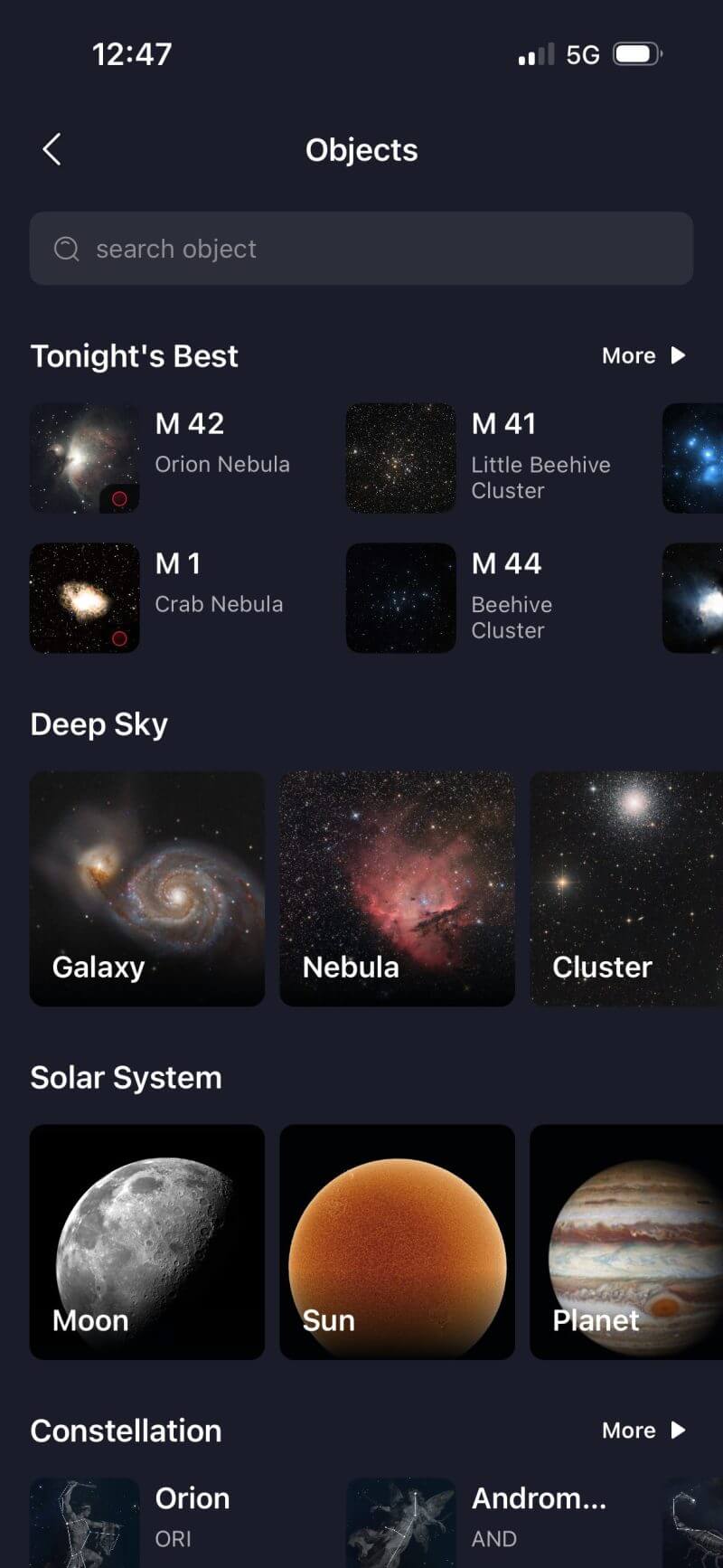

Using the Seestar S30 Pro quickly becomes part of a relaxed routine rather than a technical exercise. Powering it on and connecting through the app feels straightforward, even after periods of not using it. The system remembers previous settings well, which reduces friction between sessions. This ease of entry encourages more frequent use instead of waiting for perfect conditions.
Selecting a target inside the app feels intuitive and well organised. Objects are clearly presented, and helpful visual indicators make it easier to judge what is currently visible from your location. This is particularly useful when dealing with trees, rooftops, or limited sky access. It allows for better decision-making before committing time to a capture.
Once a target is selected, the telescope handles the entire process confidently. It slews smoothly to position, performs its internal checks, and begins imaging without hesitation. There is no sense of uncertainty or trial-and-error during this stage. Everything feels deliberate and repeatable.
Autofocus performance is one of the more reassuring aspects during real-world use. Focus adjustments happen automatically and rarely need correction. Changes in temperature or target position do not appear to disrupt focus stability. This consistency allows sessions to run longer without interruption.
Live stacking is where the experience becomes genuinely engaging. Watching faint detail slowly emerge creates a sense of progression that static observing does not offer. Each added frame contributes visible improvement, which makes it easy to decide when to stop or continue. The process feels rewarding rather than passive.

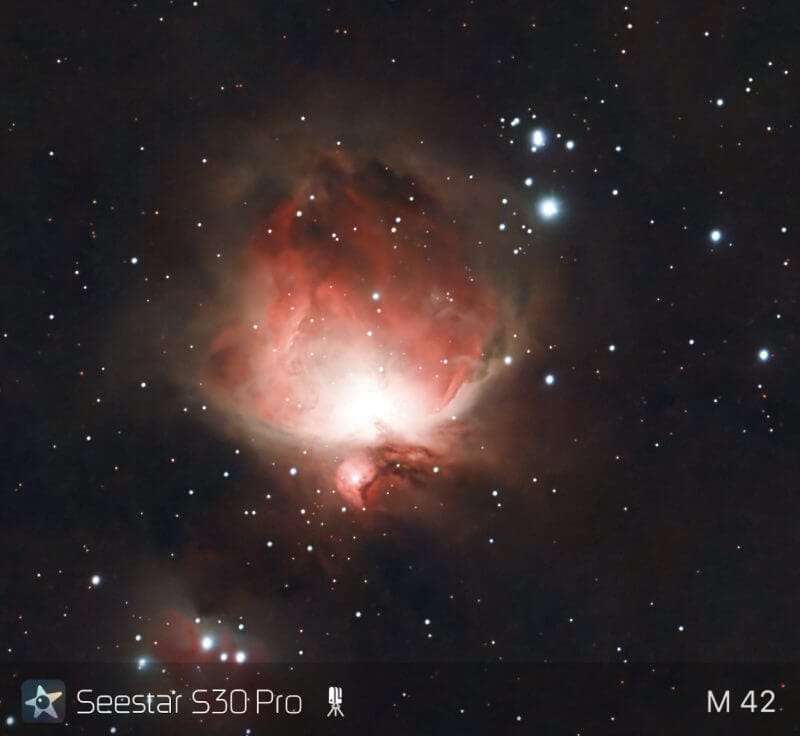


Short exposure stacking works particularly well under suburban skies. Individual frames are captured quickly, allowing the system to discard those affected by vibration or tracking errors. This results in cleaner images without requiring constant supervision. The telescope quietly manages quality control in the background.
One of the biggest advantages during extended sessions is that processing happens internally. You do not need to keep the app open or your phone active. This allows you to step away, stay warm, or focus on other tasks. Returning later to a more refined image feels genuinely satisfying.
This hands-off behaviour changes how often the telescope gets used. It fits naturally into evenings where time is limited. Even short sessions feel worthwhile because progress continues unattended. That convenience becomes a defining part of the ownership experience.
Deep-sky performance is strongest on brighter nebulae. Built-in filtering helps isolate emission regions effectively, even when the sky background is far from ideal. Structure and contrast build steadily with time. The results feel impressive given the compact size of the system.
Galaxies require more patience, but the telescope remains capable. Bright cores appear first, followed by subtle outer detail as stacking continues. Longer sessions yield noticeably better definition. While expectations should remain realistic, the results are satisfying within this category.
Star shape consistency is another strength during extended imaging. Stars remain well controlled across most of the frame. Edge performance holds up better than expected for such a small optical system. This reduces the need for aggressive cropping later.
Wide-field imaging introduces a completely different experience. Capturing large sections of sky feels more exploratory than targeted. These modes are well suited to experimenting with composition and movement. They add variety to each session.
Time-lapse capture is reliable and easy to set up. Once started, the system maintains consistent framing and exposure. The resulting sequences feel smooth and cohesive. This opens creative options beyond traditional still imaging.
Mosaic mode allows larger objects to be approached more thoughtfully. Targets that exceed the native field of view can be captured in multiple sections. The telescope manages positioning and overlap automatically. Final stitched results feel expansive and detailed.
Mosaics do require more time and planning. Longer capture sessions are necessary to complete each panel cleanly. However, the payoff is a more flexible and detailed final image. It encourages patience rather than rushed results.
Plan mode fundamentally changes how overnight sessions are approached. Creating a sequence of targets and letting the telescope run independently feels liberating. It removes the need to monitor progress constantly. Checking results the following day becomes part of the enjoyment.
There are limitations within automated plans. Exposure control remains largely fixed between targets. This reduces flexibility when switching between very different objects. Even so, the convenience outweighs the lack of fine adjustment for most users.
Solar imaging adds an enjoyable daytime dimension to the telescope. Locating and centring the Sun is handled safely and efficiently. The process feels accessible even for first-time users. It expands the telescope’s usefulness beyond night sessions.
At native magnification, the Sun appears relatively small in the frame. This is expected given the wide field design. Digital zoom and video capture provide options for closer inspection. It remains a fun and educational mode rather than a specialised solar tool.
Switching between daytime and nighttime use feels seamless. The same basic workflow applies regardless of target. This consistency reduces the learning curve. It makes the telescope feel versatile rather than limited.
Tracking performance in standard alt-az mode is dependable. Short exposures and stacking manage field rotation effectively. Results remain sharp for typical session lengths. This makes casual imaging sessions productive.
Equatorial tracking support significantly improves performance when used correctly. With proper alignment and a stable setup, longer exposures become viable. Star sharpness improves noticeably. This mode rewards careful setup with better results.
Longer exposures reduce reliance on sheer frame count. Faint detail becomes easier to extract. This is particularly beneficial for dim targets. The improvement feels meaningful rather than incremental.
Battery life supports extended sessions comfortably. Several hours of imaging is realistic under normal conditions. This removes anxiety about power management. It suits both short and long observing nights.
Thermal stability remains consistent throughout use. Focus does not drift noticeably as temperatures change. Built-in anti-dew control helps maintain clear optics. This reliability reduces interruptions.
Data handling after sessions is straightforward. Files can be transferred easily, though storage management is important. Larger data sets accumulate quickly during longer sessions. Regular transfers keep things organised.
Saving individual frames allows for more advanced workflows. Users interested in post-processing can extract additional detail later. This flexibility supports skill development over time. It makes the telescope feel like more than a closed system.
Wireless connectivity remains stable within typical backyard distances. Connection drops are uncommon and recover quickly. This stability builds confidence during unattended sessions. It contributes to a smooth experience.
Noise handling is effective for a compact sensor. Background noise reduces gradually as stacking progresses. Fine detail is preserved without looking over-processed. Images maintain a natural appearance.
Colour balance out of the telescope is pleasing. Results look balanced without heavy adjustment. Minor tweaks may improve personal preference. The starting point is strong.
The overall experience encourages experimentation. Trying new targets and modes feels low risk. Each session offers something different. This keeps the experience fresh over time.
Consistency is one of the strongest performance traits. Behaviour remains predictable between sessions. This reduces frustration and builds trust. Reliability becomes part of the appeal.
Rather than replacing traditional setups, the Seestar S30 Pro complements them. It excels in situations where convenience matters most. Quick sessions feel worthwhile. It fills a distinct role.
The Seestar S30 Pro feels enjoyable rather than demanding. It removes barriers without removing engagement. The balance between automation and involvement feels well judged. That balance defines its real-world performance.
Conclusion
The Seestar S30 Pro succeeds in making astrophotography feel accessible without stripping away the sense of discovery that draws people to the night sky. Its compact design, automated operation, and thoughtful software integration allow users to focus on observing rather than managing equipment. This approach makes it especially appealing for regular use rather than occasional outings.
What stands out most is how confidently it performs within its intended role. From suburban backyards to quick travel sessions, it consistently delivers clean, engaging results with minimal effort. The balance between automation and capability feels carefully judged, offering enough depth for learning without becoming overwhelming.
The dual-camera system, strong live stacking, and reliable tracking combine to create a versatile imaging tool. Features like planning, mosaics, and wide-field capture add meaningful flexibility rather than feeling like extras. Each mode feels purposeful and well integrated into the overall experience.
For anyone looking to explore astrophotography in a practical, enjoyable way, the Seestar S30 Pro fits naturally into everyday life. It rewards curiosity, encourages experimentation, and lowers the barrier to capturing the night sky. That combination makes it a compelling option for both newcomers and experienced users seeking convenience without compromise.
