The 64 Audio Ocean has arrived as the company’s newest flagship in-ear monitor, unveiled at CanJam SoCal in front of an audience of hi-fi enthusiasts and reviewers. It’s a significant moment for the brand, because the Ocean is being positioned to replace the Fourté, a model that has held the flagship title for a full decade. That’s a rare stretch of longevity in an industry where new releases usually arrive every year or two.
Rather than a modest refresh, 64 Audio has rebuilt its top-tier universal in-ear monitor from the ground up. The Ocean leans on a six-driver, four-way configuration and a deep well of tuning options, aiming to give listeners a neutral, natural sound that can still be shaped to personal taste. For a company known for pushing acoustic engineering in the in-ear space, the Ocean reads as a genuine statement piece rather than an incremental update.
Table of Contents
What the 64 Audio Ocean Brings to the Table
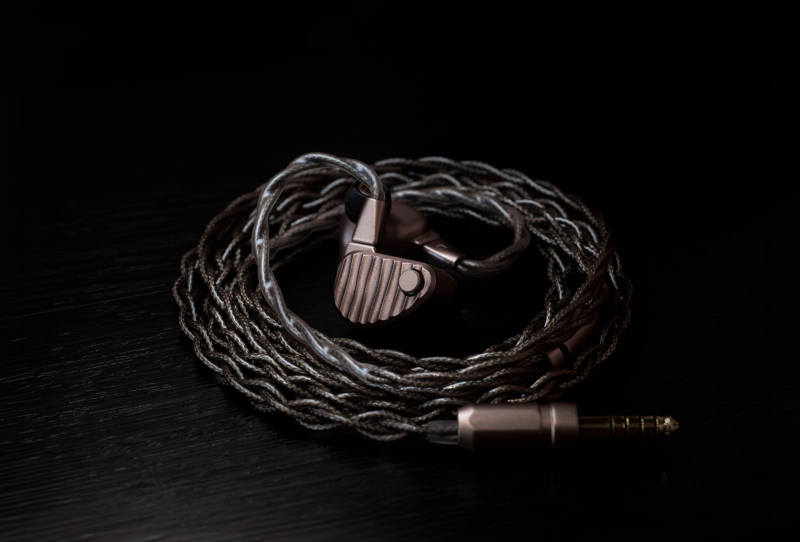
Visually, the Ocean stands apart from the Fourté it succeeds. Its shell is finished in a champagne copper aluminium, with a design language 64 Audio says draws from aeolian ripples, the wave-like patterns wind carves into sand on a beach. It’s a distinctive look for a category where black or clear resin shells are still the norm, and it signals that 64 Audio wants the Ocean to be recognisable at a glance rather than blending in with the rest of its universal-fit lineup.
Inside that shell sits a hybrid driver array built for balance rather than raw bass impact or treble sparkle alone. Two custom dynamic drivers work in a true isobaric arrangement, a configuration designed to deliver low-end punch without the bloat or looseness that can affect single dynamic driver setups. That isobaric pairing is one of the more technically involved choices in the Ocean’s design, and it signals how much attention has gone into getting the low end right before anything else. In practical terms, an isobaric arrangement uses two drivers working together to move air more efficiently than a single driver of the same size could manage, which typically results in tighter, more controlled bass extension.
Mid-range duties fall to two balanced armature drivers, chosen specifically for clarity and richness through vocals and instruments. A third balanced armature driver is tuned separately to smooth the upper-mid region, an area that can otherwise sound harsh or shouty on monitors chasing detail. Treble is handled by 64 Audio’s patented tia high-driver, paired with the company’s tia waveguide acoustic system, a combination the brand has refined across several previous flagship and mid-tier releases. Together, these six drivers and four crossover points give the Ocean a layered response, with each frequency band handled by hardware specifically chosen for that job rather than a single driver stretched across the whole spectrum.
Tuning Options and Personalisation
What sets the Ocean apart from a simple driver upgrade is how much control it hands back to the listener. 64 Audio has built in four different back-vent filters, letting owners adjust bass response by roughly 8dB depending on preference. That’s a meaningful swing, enough to shift the Ocean from a leaner, more reference-style signature to something noticeably warmer and more bass-forward.
High-frequency tuning gets its own adjustment path too, through a removable stainless steel screen that alters the treble character. Combined with the back-vent filter options, 64 Audio says the Ocean supports 32 possible sound signature combinations in total. That’s an unusually generous amount of personalisation for a universal-fit in-ear monitor, and it puts the Ocean closer to a modular reference tool than a fixed-tuning product. Swapping filters is designed to be simple enough for owners to do themselves at home, without needing to send the earpieces back to 64 Audio or a retailer for retuning.
This kind of adjustability matters for listeners who move between genres or listening environments. A commuter wanting more bass presence on a noisy train, and the same listener doing critical mixing work at a desk later that night, could realistically use the same physical earpieces with different filters rather than owning two separate monitors. It also gives the Ocean a longer useful life for buyers whose tastes shift over time, since the earpieces themselves don’t need replacing just because a listener’s preferred signature changes.
How the Ocean Compares to the Fourté
The Fourté has been 64 Audio’s flagship for ten years, an extraordinary run in a market where competitors, including brands behind in-ear monitors built around bold visual design, tend to refresh their top models far more often. Replacing a decade-long flagship is a bigger call than launching a new mid-range model, and it puts real weight on the Ocean to justify the change.
Where the Fourté relied on its own driver configuration and tuning philosophy, the Ocean’s isobaric dynamic pairing and expanded filter system represent a more modular approach to sound shaping. It suggests 64 Audio has learned from a decade of flagship feedback and wants the Ocean to serve a wider range of listener preferences straight out of the box, rather than locking buyers into one fixed signature. Existing Fourté owners considering an upgrade will likely be weighing whether the Ocean’s added flexibility is worth moving on from a monitor many have used for years, while newcomers to the flagship tier get the benefit of a design built with a decade of accumulated feedback baked in from day one.
Specifications at a Glance
| Feature | Detail |
|---|---|
| Driver configuration | Six drivers, four-way crossover |
| Low end | Two dynamic drivers in true isobaric arrangement |
| Mid-range | Two balanced armature drivers, plus one tuned for upper-mid smoothing |
| High end | Patented tia high-driver with tia waveguide acoustic system |
| Tuning options | Four back-vent filters (approx. 8dB adjustment) plus removable treble screen |
| Total sound combinations | 32 |
| Shell finish | Champagne Copper aluminium, aeolian-ripple design |
Why the 64 Audio Ocean Matters for Enthusiasts
Flagship in-ear monitors sit at the top of a fiercely competitive niche, and the Ocean’s launch gives 64 Audio a fresh product to set against rivals while the broader market continues to push boundaries, much like other recent flagship headphone launches have done in the over-ear space. For long-time 64 Audio owners, the Ocean signals the brand isn’t content to let the Fourté coast on reputation alone.
For prospective buyers researching high-end personal audio, the Ocean’s emphasis on adjustable tuning is arguably the more interesting story than the driver count itself. It reflects a broader shift in premium audio gear, where manufacturers increasingly recognise that no single tuning suits every listener or genre, a lesson also visible in how other earbuds balance detail and warmth. Full technical measurements and independent listening impressions will take time to surface, but the Ocean’s design choices already mark it as one of the more considered flagship releases in recent memory, and a notable addition to the wider audiophile gear market heading into this year’s CanJam season.
Further detail on the Ocean, including full specifications, is available through 64 Audio’s official website.
Frequently asked questions
What makes the 64 Audio Ocean different from other flagship in-ear monitors?
The Ocean’s combination of a six-driver, four-way hybrid layout with true isobaric dynamic drivers and 32 possible sound signature combinations sets it apart from most fixed-tuning flagships. Rather than committing listeners to one signature, it’s built to be reshaped after purchase using swappable filters and a removable treble screen.
Does the Ocean fully replace the 64 Audio Fourté?
64 Audio is positioning the Ocean as the new flagship, succeeding the Fourté after a decade at the top of the range. The Ocean uses a different driver philosophy, built around an isobaric dynamic pairing and expanded tuning options, rather than simply refining the Fourté’s existing formula.
How many sound signatures can the Ocean produce?
64 Audio states the Ocean supports 32 total sound signature combinations, achieved through four back-vent bass filters offering roughly 8dB of adjustment, combined with a removable stainless steel treble screen that alters high-frequency character.
Where can I find pricing and availability for the 64 Audio Ocean?
Pricing and availability details are best confirmed directly through 64 Audio’s official website, as these can vary by region and retailer following a flagship launch of this kind.