Nvidia has unveiled a new laptop chip that it wants to replace the choice between a work machine and a gaming machine altogether. Announced at Computex 2026, the Nvidia RTX Spark is a single system-on-chip that folds AI processing and RTX graphics into one package, and Nvidia is calling it nothing less than “a new beginning” for portable computing.
That is a big claim from a company that has spent the last decade rewriting its own definition of success. Whether RTX Spark genuinely reshapes the laptop market, or simply narrows consumer choice under one dominant supplier, is the more interesting question.
Table of Contents
What the Nvidia RTX Spark actually is
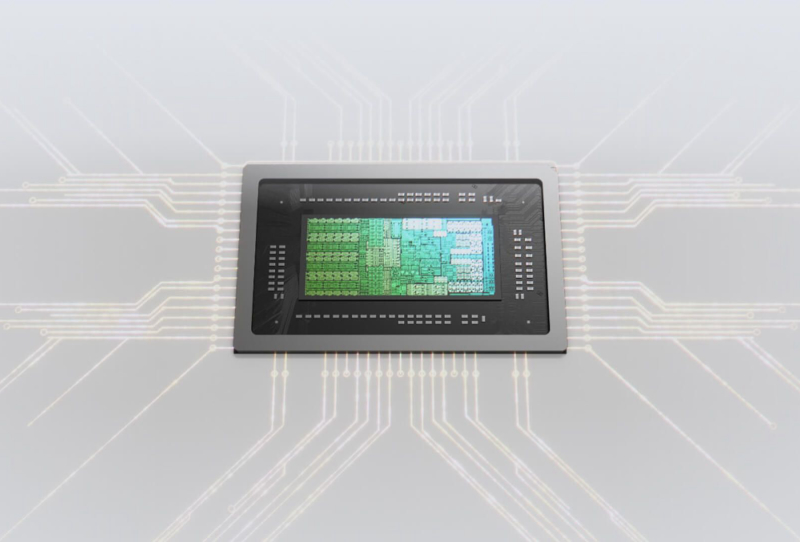
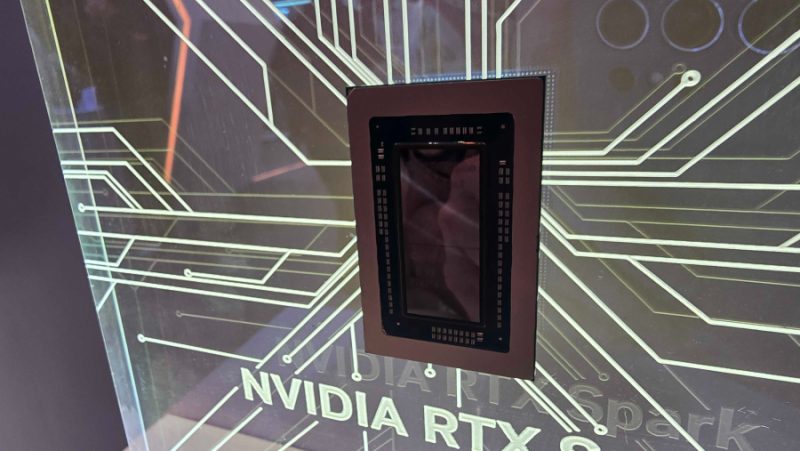
Nvidia describes RTX Spark as a “Superchip”, built around 6,144 Blackwell GPU cores paired with 20 Grace CPU cores. It supports up to 128GB of unified memory and is rated for as much as one petaflop of AI performance. Nvidia says the design is aimed at a slim chassis with all-day battery life, while still supporting the company’s usual gaming toolkit of DLSS, Reflex and G-Sync.
Rather than treating CPU, GPU and memory as separate components competing for space and power, the unified approach lets a laptop maker build a much thinner device without the usual thermal and battery compromises of a discrete graphics card. That is the pitch, at least. Nvidia’s own messaging leans heavily on productivity, describing the target buyer as someone who “works on large projects who also game”, with gaming framed almost as a bonus rather than the headline feature.
Which laptops will use it
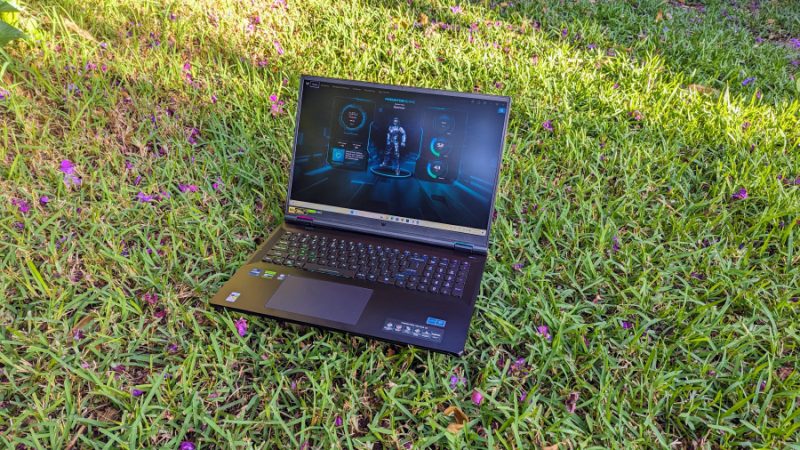
Nvidia has confirmed six launch partners for the platform so far, spanning both traditional productivity brands and gaming-adjacent names.
| Manufacturer | Laptop model |
|---|---|
| Asus | ProArt P16 |
| Dell | XPS 16 |
| HP | OmniBook X 14 |
| Lenovo | Yoga Pro 9n |
| Microsoft | Surface Laptop Ultra |
| MSI | Prestige N16 Flip AI+ |
That spread of partners shows Nvidia is not just chasing gaming laptop buyers. It wants a seat inside creative and productivity-first machines too, putting RTX Spark in direct competition with everything from ultrabooks to the best gaming laptops in one move.
How it performs for gaming
Nvidia’s own promotional material, published in a short video on 26 August, leans on the phrase “Game Ready” to describe RTX Spark. Alexander Mejia, one of the company’s senior product managers, went further, claiming “triple-A gaming is great on RTX Spark” while footage played of titles including Alan Wake II, Cyberpunk 2077, Doom: The Dark Ages, F1 25 and Fortnite running on the platform.
The only concrete number offered so far is “100 FPS 1440p gaming” when ray tracing and DLSS upscaling are both switched on. There is no breakdown of settings, no per-game benchmarks and no detail on how demanding titles like Cyberpunk 2077 compare with lighter ones like Fortnite. It is a promising headline figure, but a thin one until independent testing arrives closer to launch. Nvidia previously confirmed a broad lineup of supported games ahead of the chip’s debut, which at least suggests software compatibility is being treated seriously.
Placed alongside rivals, the picture looks competitive rather than dominant. Qualcomm’s Snapdragon X2 Elite, running its Adreno X2-90 integrated graphics, manages around 43 FPS in Cyberpunk 2077 at native 1080p on high settings, but claims strong efficiency at roughly 0.841 frames per watt. AMD’s Ryzen AI Max 395+, using its Radeon 8060S integrated graphics, can hit around 66 FPS rasterised or 45 FPS with ray tracing in the same title at 1080p. Intel’s incoming Arc G3 Extreme leans on AI upscaling and frame generation to reach as high as 121 FPS in Cyberpunk 2077 and 178 FPS in Naraka: Bladepoint at 1080p, climbing further with more aggressive frame multiplication settings switched on.
Why Nvidia is pushing beyond gaming
It is easy to forget that Nvidia built its reputation on graphics cards for gamers, given it is now the world’s most valuable company by market capitalisation, ahead of Apple, Microsoft, Alphabet and Amazon. That rise was not driven by gaming sales alone. Nvidia’s real fortune has come from AI infrastructure, powering data centres through its Blackwell and Hopper chip families and its CUDA software ecosystem, which remains largely unmatched by competitors.
GeForce and RTX branding, in other words, now make up a comparatively small slice of Nvidia’s overall business. The company already supplies hardware for autonomous vehicles through its Drive platform and for robotics and edge computing through its Jetson modules. RTX Spark reads as a continuation of that same ambition: rather than competing only with Intel, AMD and Apple for laptop chips, Nvidia is positioning itself to supply the core computing hardware behind almost every category of device, and other manufacturers have already leaned into AI-branded gaming laptops as that shift accelerates industry-wide.
What it means for laptop buyers
For someone deciding between a workstation and a gaming laptop, RTX Spark is an appealing pitch on paper. One machine, running Windows 11 with full support for Steam, the Epic Games Store and Xbox Game Pass, that can handle creative workloads by day and modern games by night. That flexibility matters most to buyers who currently juggle two devices, or who compromise on a dedicated laptop GPU like the RTX 4060 because a single all-rounder never quite existed before.
The bigger unresolved question is component pricing, which has climbed sharply across memory, flash storage and RAM over the past year with little sign of easing. A unified chip built on premium memory allocations is unlikely to be cheap, and until Nvidia or its laptop partners confirm real-world pricing, it remains impossible to say whether RTX Spark undercuts a separate work-and-play laptop setup or simply repackages the cost differently. Independent benchmarks closer to launch will also matter more than Nvidia’s own marketing figures, given how much variance exists between lightly demanding titles and the heaviest triple-A releases. For now, RTX Spark looks like a genuinely new approach to laptop design, even if its real-world value is still an open question.