AMD kicked off IFA 2026 in Berlin with a keynote built around AMD Ryzen AI Halo hardware, framed by senior vice president and general manager Jack Huynh as the start of what he called the era of personal AI. His pitch was straightforward: agentic, on-device intelligence should make technology more personal, private, and adaptive, turning ideas into working systems without leaning so heavily on the cloud.
The keynote covered new software partnerships, a hefty prototype workstation, and a wave of laptops and mini PCs from Acer and Lenovo built around AMD’s high-performance AI silicon. Taken together, the announcements sketch out how AMD wants developers, creators, and everyday users to think about local AI processing over the next year.
Table of Contents
What AMD announced at the IFA 2026 keynote
The headline software news is that AMD Ryzen AI Halo systems will support Microsoft’s Project Zenith out of the box. This brings a Windows developer experience tuned specifically for high-performance devices, and it arrives preinstalled with a set of tools aimed at streamlining local AI development, including:
- Visual Studio Code
- Windows Subsystem for Linux (WSL)
- GitHub Copilot CLI
- PowerShell
AMD also showed off the Threadripper Halo Station, a prototype system that pairs a Ryzen Threadripper PRO 9995WX processor with dual Instinct-class accelerators. The goal is to bring datacentre-class AI compute to a desk workstation, letting developers train, fine-tune, and run large AI models locally rather than waiting on cloud infrastructure. It remains a prototype for now, but it signals where AMD wants its high-end workstation line to head next.
On the enterprise side, AMD and SUSE announced a collaboration with SUSE designed to help developers carry AI applications from local testing on Ryzen AI Halo hardware into secure, supported enterprise production environments at scale. It is a practical bridge between the prototyping AMD is showcasing on stage and the kind of deployment IT teams actually need to sign off on.
New AMD Ryzen AI Halo laptops and mini PCs from Acer and Lenovo
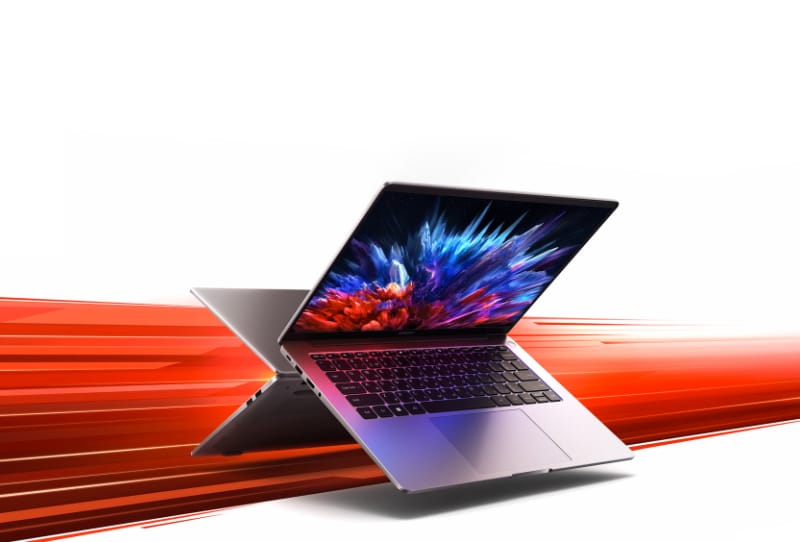
Alongside AMD’s own announcements, several OEM partners used IFA to reveal machines built on AMD Ryzen AI Max 400 Series processors, the chips that sit at the top of AMD’s AI Halo stack. Acer and Lenovo were both confirmed as launch partners this week.
| Manufacturer | Device | Processor |
|---|---|---|
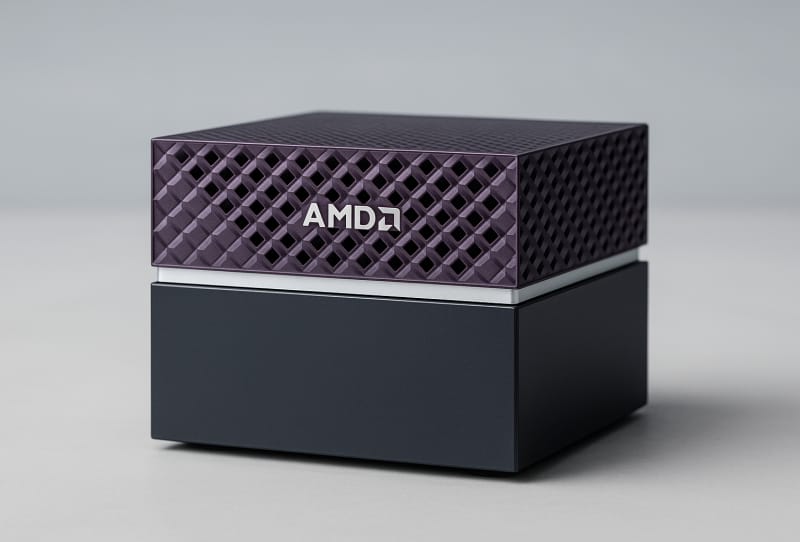
| Acer | Aspire G AGB110 mini-PC | AMD Ryzen AI Max 400 Series |
| Acer | Aspire G 3D 16 notebook | AMD Ryzen AI Max 400 Series |
| Lenovo | ThinkCentre X Ultra | AMD Ryzen AI Max 400 Series |
| Lenovo | ThinkCentre M75s Gen 6 | AMD Ryzen AI Max 400 Series |
| Lenovo | ThinkCentre M75q Gen 6 | AMD Ryzen AI Max 400 Series |
| Lenovo | IdeaPad Slim 3 | AMD Ryzen AI Max 400 Series |
That spread covers everything from a compact desktop mini-PC to a 16-inch creator notebook and several business-focused desktops, suggesting AMD wants Ryzen AI Max hardware in as many form factors as possible before the silicon becomes a niche play for one category of device.
Why AMD is pushing on-device AI so hard
The broader context here matters. Cloud-based AI has an obvious cost problem for heavy users, and it also raises privacy questions for anyone running sensitive workloads. AMD’s argument, echoed by rivals such as Intel and Qualcomm, is that shifting inference and even parts of training onto local hardware sidesteps both issues while cutting latency. A developer iterating on a model doesn’t want to wait on a round trip to a data centre for every test run.
The Threadripper Halo Station prototype is the clearest signal of how far AMD wants to take that idea. Pairing a flagship Threadripper PRO chip with Instinct-class accelerators is squarely aimed at researchers and studios that would otherwise need a rack of servers to fine-tune large models. Whether that prototype becomes a shipping product is still an open question, since AMD has not confirmed pricing, availability, or a release date for it.
The Project Zenith tie-in with Microsoft is arguably more immediately useful for a wider audience. Preloading a Ryzen AI Halo machine with Visual Studio Code, WSL, GitHub Copilot CLI, and PowerShell removes a chunk of setup friction that usually slows down a new developer machine, and it positions these systems as ready-to-code out of the box rather than requiring a lengthy toolchain install.
What it means for buyers and developers
For anyone shopping in the AI PC space, the Acer and Lenovo lineups give Ryzen AI Max 400 Series hardware a genuine foothold across consumer and business categories, not just flagship gaming rigs. That matters because on-device AI features are increasingly baked into everyday Windows workflows, from image generation to local copilots, and having the processing headroom to run them without lag is becoming a real differentiator.
None of the OEM systems announced this week have confirmed local pricing or Australian availability, and the Threadripper Halo Station remains a prototype rather than a retail product. Readers interested in the finer detail of Huynh’s keynote, including demonstrations of the SUSE collaboration and the Threadripper prototype, can watch the full replay of the keynote on AMD’s YouTube channel.