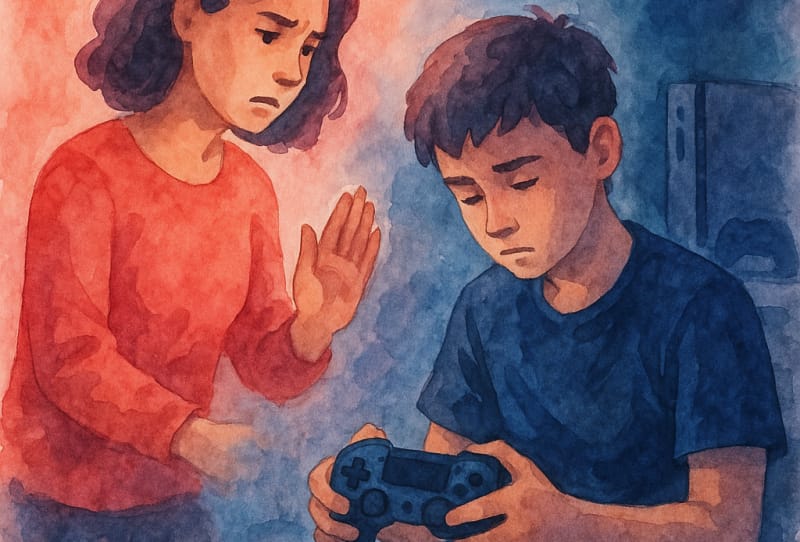
If gaming has started to crowd out sleep, schoolwork, relationships or basic self-care, it is worth stepping back and taking action before the habit hardens further. This guide helps you address gaming console addiction, whether you are worried about your own play or a family member’s, with practical steps you can start using today.
Table of Contents
What you’ll need
- Access to the console’s built-in parental controls or family management settings
- A shared understanding within the household of what “too much” gaming looks like
- A plan for alternative activities to fill the time that gaming currently occupies
- Patience, since habits built over months or years rarely change overnight
Recognise the signs worth acting on
- Notice when gaming sessions regularly replace sleep, meals, schoolwork or work commitments.
- Watch for irritability, anxiety or restlessness when the console is turned off or unavailable.
- Look for a pattern of promising to stop “after one more match” and not following through.
- Pay attention to withdrawal from friends, family or hobbies that were once enjoyed outside gaming.
- Consider whether gaming is being used to avoid stress, boredom or difficult emotions rather than for enjoyment.
The World Health Organization’s classification of gaming disorder describes it as a pattern of behaviour marked by impaired control over gaming, increasing priority given to gaming over other activities, and continuation despite negative consequences. Not everyone who plays a lot fits this pattern, but if several of these signs sound familiar, it is a reasonable point to start making changes.
Set clear, realistic boundaries
- Agree on daily or weekly time limits before a gaming session starts, not partway through one.
- Set fixed “off” times, particularly on school nights or before work, and stick to them consistently.
- Keep the console out of bedrooms where possible, or rethink where you set up a gaming console so it sits in a shared living space instead.
- Separate device use from meals and family time by making those periods console-free by default.
- Write the agreed rules down somewhere visible, so there is no ambiguity when a session runs long.
Use the console’s built-in tools
Every major console maker offers native tools to help manage playtime, and using them removes some of the friction of constant negotiation. These settings can cap daily hours, restrict late-night play, limit purchases and control who a player can communicate with online.
| Console family | Common control options | Where to find it |
|---|---|---|
| Nintendo Switch | Daily play limits, bedtime alarms, app restrictions | Nintendo Switch Parental Controls app |
| PlayStation | Playtime limits, spending limits, communication restrictions | Family management settings via PlayStation account |
| Xbox | Screen time schedules, content filters, spending controls | Xbox family settings via Microsoft account |
These options are worth combining with the official parental control resources published by industry bodies, which explain how ratings and content filters work alongside time-based restrictions. If the player in question is old enough to manage their own boundaries, involve them in setting these limits rather than imposing them silently, since buy-in tends to make the rules stick.
Fill the gap with alternatives
- Schedule specific non-gaming activities in the time slots that gaming used to fill, rather than leaving them open.
- Encourage physical activity, even something as simple as a daily walk, to break long sedentary stretches.
- Reconnect with offline hobbies or social groups that may have slipped during heavy gaming periods.
- Redirect some of the enthusiasm for games into related but lower-intensity interests, such as collecting physical releases with detailed packaging or textured foil cover art, which lets a player enjoy the hobby without adding more screen time.
- Involve the whole household in shared activities so cutting back on gaming does not feel like isolation.
Tips and troubleshooting
- Avoid removing consoles or games as a sudden punishment, since this often triggers conflict rather than lasting change; agreed limits work better than confiscation.
- If limits are frequently broken, revisit them together rather than simply tightening restrictions further without discussion.
- Be mindful that downloading new games constantly refreshes the temptation to keep playing, so consider limiting new purchases alongside time limits.
- Moving a console to a shared space, and reviewing how you connect a console to a shared TV, can make play more visible and easier to monitor without feeling invasive.
- For younger players, stay aware of age verification rules for online gaming, since online multiplayer and chat features can extend session length well beyond single-player content.
- Track progress over weeks, not days. Genuine habit change is gradual, and small slip-ups do not mean the plan has failed.
When to seek professional support
If time limits, household rules and alternative activities are not making a difference, or if gaming is tied to significant distress, declining mental health, or withdrawal from daily responsibilities, it is worth speaking with a GP or a psychologist experienced in behavioural or technology-related habits. Professional support does not mean the situation is extreme; it simply means getting guidance from someone trained to help unpick the underlying drivers of the behaviour.
Frequently asked questions
How many hours of gaming a day is considered too much?
There is no single number that applies to everyone, since context matters as much as duration. A better measure is impact: if gaming is displacing sleep, schoolwork, exercise or relationships on a regular basis, the amount being played is worth addressing regardless of the exact hour count.
Can parental controls alone fix gaming addiction?
Parental controls are a useful tool but rarely solve the underlying issue on their own. They work best combined with open conversation, agreed household rules and alternative activities, rather than being relied on as the sole solution.
Is gaming addiction the same as simply enjoying games a lot?
No. Enjoying games intensely is not automatically a problem. The distinction lies in impaired control, ongoing negative consequences and gaming taking priority over essential responsibilities, which is different from someone who plays a great deal but still meets their obligations.
What should you do if a family member refuses to acknowledge the problem?
Focus on specific, observable impacts, such as missed sleep or falling grades, rather than labelling the behaviour as an addiction outright. Calm, evidence-based conversations tend to land better than confrontation, and involving a GP or counsellor can help if resistance continues.