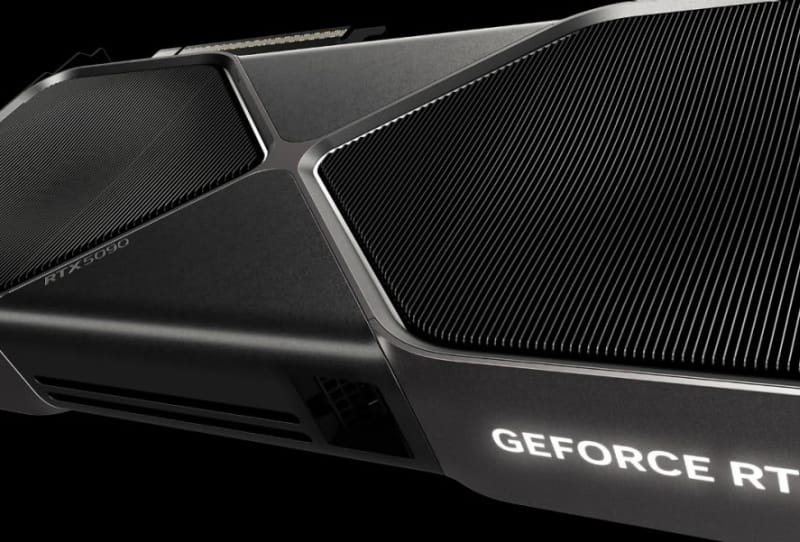
SteamOS NVIDIA driver support is officially in the works, according to Valve software developer Pierre-Loup Griffais. For years, SteamOS has been built almost exclusively around AMD silicon, a reflection of the fact that every piece of hardware Valve has shipped, from the Steam Deck to the Steam Machine prototypes, has run on AMD chips. That is now changing, as Valve pushes to bring its Linux-based gaming operating system to a much wider range of PCs, including machines built around GeForce graphics cards.
Griffais confirmed the progress in an interview with IGN, describing the effort as active and ongoing rather than a distant roadmap item. It is a meaningful shift for an operating system that has, until now, treated AMD as the default and only fully supported GPU vendor.
Table of Contents
What Valve Actually Said About SteamOS NVIDIA Driver Support
Asked directly about the state of NVIDIA compatibility, Griffais did not sugarcoat where things stand. “Yeah, we’re working on it hard,” he told IGN. “We’ve done a few things like we’ve enabled the driver now in the main tree of SteamOS, so you can get things to light up on certain generations, but in terms of the performance difference between that driver and where the state of the art is, there’s definitely still a little bit of a rift that we’re trying to work on, but it’s getting better day-to-day.”
That quote matters because it draws a clear line between two separate milestones. The first is basic functionality, getting a GeForce card to actually boot and display an image under SteamOS, which Valve says now works on certain GPU generations. The second, much harder milestone is performance parity with the drivers NVIDIA already ships for Windows and other Linux distributions. Valve is candid that a gap still exists there, even as it narrows.
This distinction is important for anyone hoping to drop a GeForce card into a SteamOS build tomorrow. Booting and rendering is one thing; getting frame rates that match a mature, tuned driver stack is another challenge entirely, and Valve has not pretended otherwise.
Why AMD Has Dominated SteamOS Until Now
The AMD-first approach was never really a philosophical choice so much as a practical one. Valve’s own hardware, from the Steam Deck’s APU to the shelved original Steam Machines, has always used AMD components, so SteamOS naturally matured alongside AMD’s open-source Linux driver stack. That stack, built around the Mesa graphics library and AMD’s own kernel contributions, is widely regarded as one of the best-supported open-source GPU driver ecosystems available.
NVIDIA, by contrast, has historically leaned on a proprietary driver model on Linux, which has made deep, low-level integration with a bespoke operating system like SteamOS considerably harder to achieve. That is not a new problem; Linux desktop users have complained about NVIDIA’s Linux driver situation for years, even as the company has slowly improved open-source kernel module support.
Bringing NVIDIA hardware properly into the SteamOS fold means Valve has to either work more closely with NVIDIA’s driver team or invest heavily in bridging that gap itself. Griffais’ comments suggest it is doing some of both, enabling NVIDIA’s driver directly in the SteamOS source tree rather than treating it as a bolt-on afterthought.
The Bigger Picture: SteamOS Beyond Valve’s Own Hardware
The real motivation here is expansion. Valve has made no secret of wanting SteamOS to run well on hardware it did not build itself, effectively letting enthusiasts assemble their own version of the long-rumoured Steam Machine using whatever components they like. That ambition falls flat if the operating system only plays nicely with one graphics vendor, especially given how many gaming PCs and prebuilt systems on the market ship with NVIDIA GPUs.
Recent SteamOS updates already point toward a platform trying to broaden its hardware compatibility more generally. The SteamOS 3.9.0 preview, for instance, brought a newer kernel and an updated desktop environment, changes that typically improve support for a wider spread of components. Proper NVIDIA driver support would be the next, arguably more consequential step in that same direction.
It also lands at an interesting moment for NVIDIA more broadly. The company has been busy on multiple fronts lately, from the way Nvidia has been shoring up game support for its RTX Spark hardware ahead of launch, to partners rolling out small-form-factor RTX Spark machines from partners like Acer. Meanwhile, on the driver side of things, modders working around Nvidia’s own driver restrictions shows just how closely the enthusiast community watches every change NVIDIA makes to its software stack.
What It Means for PC Gamers
For now, nothing changes overnight. Valve has been clear that this is a work in progress, not a finished product ready for mainstream use. Anyone running a GeForce card who wants to experiment with Valve’s SteamOS platform today should expect inconsistent results depending on GPU generation, and performance well short of what the same card delivers on Windows or a standard Linux distribution.
But the direction of travel is clear. Once SteamOS NVIDIA driver support reaches a mature state, it removes one of the biggest practical barriers to running SteamOS on a huge slice of existing gaming PCs. That matters for anyone who has watched the Steam Deck’s success and wondered why a similar console-like experience could not run on their own desktop, regardless of which brand’s graphics card sits inside it.
It also puts pressure back on NVIDIA’s GPU lineup to keep improving its Linux driver quality, since Valve’s success with SteamOS depends partly on how well NVIDIA’s own engineers collaborate on that effort. Griffais’ comments suggest the relationship is progressing, even if there is still, in his own words, a bit of a rift left to close.