Snap Pushes Its AR Glasses Into the Enterprise Market
Snap Specs AR glasses are moving beyond consumer novelty, with Nvidia, Salesforce and AWS backing a new push into workplace computing.
Latest in Tech
•
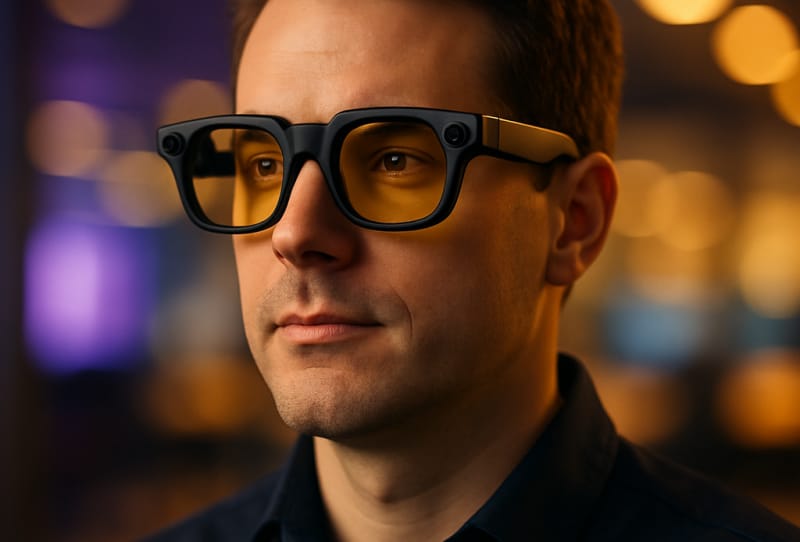
Snap Specs AR glasses are no longer just a consumer gadget chasing selfies and filters. The company behind Snapchat is pushing its $2,195 augmented reality headset into offices and worksites, striking partnerships with Nvidia, Salesforce and Amazon Web Services to give the device a reason to exist beyond social media.
Snap chief executive Evan Spiegel wants businesses to think of Specs as a computing platform rather than a camera strapped to a face. That is a significant repositioning for a company whose hardware history has largely been tied to short-form video and social sharing, and it puts Snap in direct competition with much larger rivals that have already burned through years of research and billions of dollars trying to make headworn computing stick.
Table of Contents
Why Snap Is Betting on Enterprise Use Cases
The pitch centres on practical, unglamorous tasks. Snap says Specs can display digital instructions in a technician’s field of view while they inspect or repair machinery, cutting down the need to glance at a tablet or paper manual. Workers can also stay connected to colleagues and pull up reference material without putting down their tools.
None of this is new territory for augmented reality. Field service and remote assistance have been the go-to enterprise pitch for smart glasses since the category began, largely because the return on investment is easier to demonstrate than in consumer settings. What is new is Snap’s specific combination of partners and its argument that the physical form factor of Specs, closer in size and weight to ordinary eyewear than a bulky headset, solves a problem that has held the category back.
Snap has not disclosed how many enterprise customers have committed to using Specs, nor how much revenue it expects the initiative to generate. That leaves plenty of unanswered questions about whether businesses are genuinely lining up, or whether this is still an early-stage pitch aimed at building developer interest.
The Nvidia, Salesforce and AWS Partnerships
Nvidia’s role gives Snap access to an open-source extended reality AI platform that a number of businesses are already building applications on top of. Spiegel described the goal of working with both Nvidia and Salesforce as making it simple for companies to plug into agentic AI platforms without building everything from scratch.
Salesforce brings enterprise software and customer relationship tools into the mix, while Amazon Web Services adds cloud infrastructure and another major technology relationship to Snap’s enterprise ambitions. Together, the three partnerships are designed to connect Specs with systems that businesses already rely on, rather than asking companies to adopt an entirely new software stack just to justify buying the glasses. It is a sensible strategy for a company that has never sold enterprise hardware at scale before, since it leans on established platforms instead of asking Snap to prove every layer of the stack itself.
Learning From Microsoft and Meta’s Costly Missteps
Snap’s enterprise pivot arrives against a backdrop of expensive failure elsewhere in the industry. Nvidia’s broader hardware and software partnerships have shown how the company positions itself across gaming, AI and workstation hardware, but immersive computing has proven far harder for its rivals to crack. Microsoft poured years of development into HoloLens without ever turning it into a mainstream business tool, and Meta’s Quest line, despite genuine consumer traction in gaming, has struggled to translate that into workplace adoption at any real scale.
Snap argues that bulk and weight were central to those struggles, and that Specs is deliberately built to be less intrusive for everyday wear. Whether that argument holds up in practice is untested outside of demos and early trials, but it does explain why Snap is emphasising comfort and form factor rather than raw display specifications in its enterprise pitch.
Specs Intelligence and the Push Across Apple DevicesAlongside the enterprise partnerships, Snap is developing Specs Intelligence, an AI assistant designed to work across the glasses, iPhones and Mac computers. Spiegel said pricing has not been finalised, though he expects a free tier alongside usage-based options once the service launches more broadly.
The idea is to let someone start a task on Specs and finish it on a phone or laptop without losing context, with an AI assistant bridging the gap between devices. That cross-device ambition mirrors what companies like Nvidia’s own workstation-focused AI hardware push is aiming for in professional settings, where AI tools are expected to follow the user rather than sit locked inside a single device.
What It Means for the Wearable Computing Market
Snap is a much smaller company than Microsoft or Meta, and it is entering enterprise hardware from a position of relative inexperience. That said, its consumer-facing design sense and existing developer relationships through Snap’s own announcement give it a different starting point than either rival had when they launched their headsets.
For businesses, the real test will be cost justification against a device priced well above typical peripheral hardware, paired with proof that Specs actually saves time on the shop floor or in the field. For the wider industry, Snap’s move signals that enterprise use cases, rather than consumer entertainment, may be where augmented reality glasses finally find a sustainable footing. Whether Snap can convert partnerships with Nvidia, Salesforce and AWS into paying enterprise customers remains an open question, but it is a more grounded strategy than chasing mainstream consumer adoption outright.