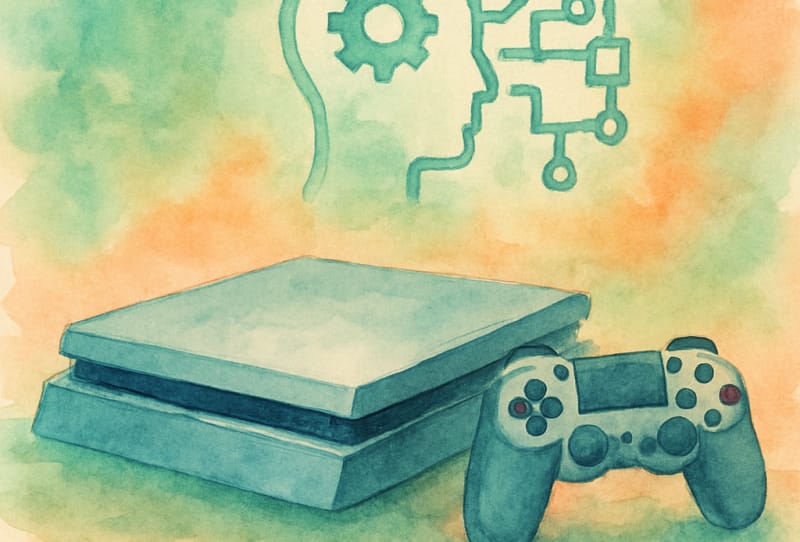
A PlayStation self-repair AI is the centrepiece of a newly surfaced Sony patent, one that imagines consoles diagnosing and fixing their own software problems without a support call in sight. The filing describes a cloud-based system that watches over connected devices, works out what has gone wrong, and either patches the issue on its own or flags it for a human engineer to review later.
The patent was first reported by TweakTown, which cited patent aggregator Patentlyze as the source of the filing details. Sony has not issued a public statement about the project, and the application has already hit a snag with the patent office, so this remains firmly in the realm of a filed idea rather than a feature heading to consoles anytime soon.
Table of Contents
How the PlayStation self-repair AI would actually work
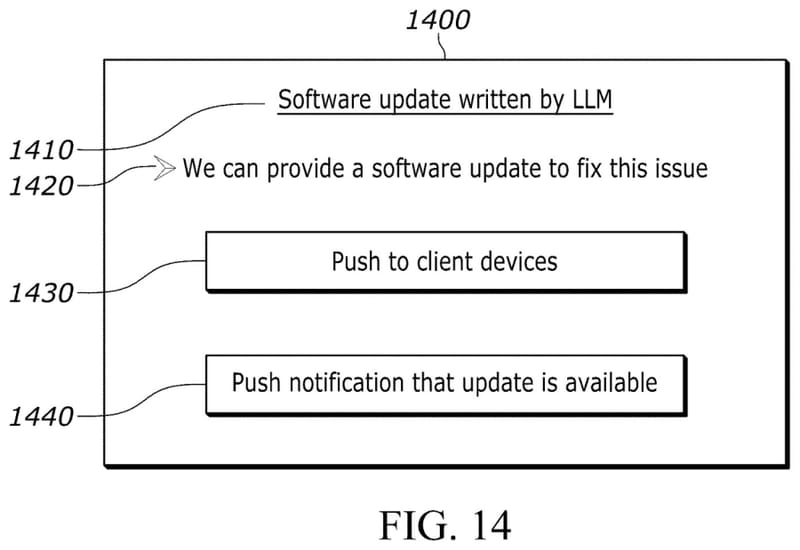
According to the patent description, the system relies on a cloud server that continuously monitors connected hardware for faults. When it spots a problem, a large language model steps in to write a diagnostic program tailored specifically to that issue, rather than relying on a fixed library of pre-written fixes.
From there, the system has two paths available. It can push the generated fix out automatically, or it can log the fault for an engineer at Sony to look at manually before anything gets deployed. That second option suggests Sony is at least considering a human checkpoint for anything deemed too risky to release without oversight, even in an early conceptual filing like this one.
Notably, the scope isn’t limited to game consoles. The patent names Sony’s wider electronics lineup as potential beneficiaries, including televisions, cameras, and headphones. That points to an ambition well beyond fixing a glitchy PS5 system update. It suggests Sony sees generative AI as a tool for reducing support overheads across its entire consumer hardware business.
What problems could this actually solve for PlayStation owners
Software gremlins on game consoles are common enough that most PlayStation owners have run into at least one. Corrupted save data, a firmware update that breaks a specific game, or a system setting that silently resets after a restart are the kinds of issues that usually mean a support ticket, a forum search, or a factory reset as a last resort.
A working version of this system could, in theory, cut a lot of that friction out. Instead of a player digging through settings menus or waiting on hold, the console itself would notice something is wrong and either correct it quietly in the background or escalate it to someone who can. For a company managing tens of millions of active consoles, even a modest reduction in support calls represents a meaningful saving.
The safety question nobody can ignore
Handing an AI model the ability to write and deploy its own firmware-level code to a console used by millions of people is a genuinely different proposition to a chatbot answering a support query. Firmware sits close to the hardware, and a badly generated patch could brick a device, corrupt data, or open a security hole rather than fix one.
Large language models are also known to hallucinate, producing code or instructions that look plausible but don’t actually do what they’re supposed to. That’s a tolerable risk when the output is a paragraph of text a human can fact-check. It’s a much bigger problem when the output is executable code being pushed automatically to consumer hardware. Any real-world version of this system would need serious verification and testing layers before Sony could trust it to act without a human in the loop every time.
It’s a similar tension to the one Insomniac faced when it had to push back on claims about generative AI use on Marvel’s Wolverine, where public trust in how AI touches a beloved product proved just as important as the technology itself.
Why this patent might never become a real feature
Patent filings describe ideas a company wants to protect, not products with a confirmed release date. This particular application has already been rejected once by a USPTO examiner, meaning Sony will need to revise and resubmit it before there’s any chance of approval, let alone a shipping feature.
Big tech companies file broad, speculative patents constantly as a matter of course, covering concepts that may never leave the drawing board. Sony’s own recent history shows a mix of follow-through and quiet abandonment, from its measured stance on winding down PlayStation disc production to its willingness to enforce control over its platforms, as seen when it moved to shut down a fan-made Last of Us multiplayer mod. Whether a self-repairing AI joins the list of shipped ideas or shelved ones will likely come down to how confidently Sony can solve the verification problem at the heart of it.
For now, PlayStation owners dealing with a buggy update or a stubborn error screen will still need the usual troubleshooting steps. But the filing is a clear signal that Sony is thinking seriously about where generative AI fits into hardware support, well beyond the console itself and across its wider catalogue of consumer electronics.