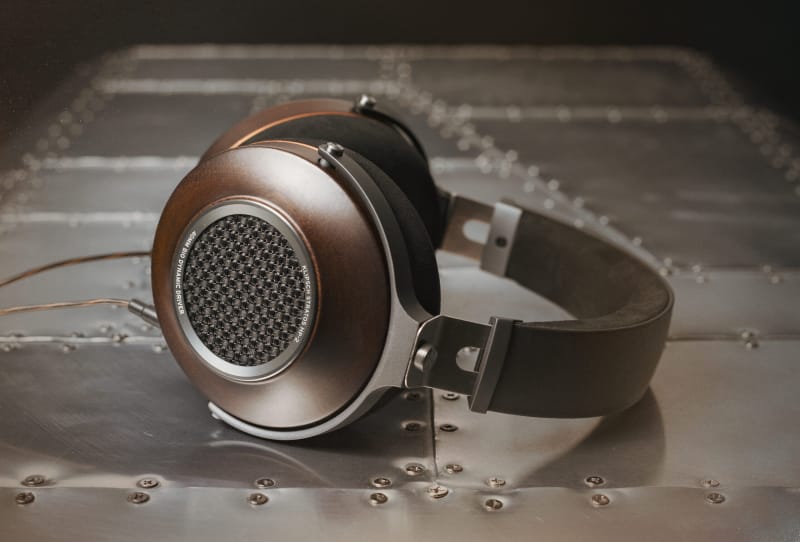
Klipsch Stratos headphones have arrived as the company’s first premium over-ear launch in years, with the closed-back HP-2 and semi-open HP-3 debuting at CanJam Dallas as part of Klipsch’s 80th anniversary celebrations. Both models pair a two-way coaxial driver array with real wood earcups, aiming squarely at listeners who want studio-grade detail without giving up a connection to Klipsch’s speaker heritage.
Key takeaways
- ✓Klipsch Stratos HP-2 is closed-back with a 40mm mid/bass driver and 10mm tweeter.
- ✓Klipsch Stratos HP-3 is semi-open with a larger 50mm mid/bass driver and the same tweeter.
- ✓Both models use bio-cellulose drivers in a two-way coaxial array for full-range sound.
- ✓Real sapele wood earcups, copper accents and magnetic microsuede pads feature on both models.
- ✓A wireless Stratos HP-1 model is planned, with details expected in early 2027.
The launch matters because Klipsch has been largely absent from the high-end headphone conversation for some time, leaving rivals such as Audeze and Beyerdynamic to dominate discussions among serious listeners. By building the Stratos Series around a driver configuration borrowed from its loudspeaker lineup, Klipsch is making a clear case that its acoustic engineering translates to a pair of cans, not just a bookshelf speaker.
Table of Contents
What the Klipsch Stratos HP-2 and HP-3 offer
Both headphones share a two-way coaxial driver array, combining a bio-cellulose mid/bass driver with a dedicated 10mm dynamic tweeter. The difference between the two models comes down to driver size and enclosure type. The HP-2 uses a 40mm mid/bass driver in a closed-back design, while the HP-3 steps up to a 50mm driver in a semi-open enclosure, trading some isolation for a more open soundstage.
| Feature | Stratos HP-2 | Stratos HP-3 |
|---|---|---|
| Backing | Closed-back | Semi-open-back |
| Mid/bass driver | 40mm bio-cellulose | 50mm bio-cellulose |
| Tweeter | 10mm dynamic | 10mm dynamic |
| Stated sound signature | Deep bass, studio isolation | Warm, punchy bass with crisp highs |
| Earcup material | Stained sapele wood | Stained sapele wood |
Klipsch has not published impedance or sensitivity figures for either model, which makes it hard to say definitively how easy they will be to drive from a phone versus a dedicated amplifier. The company does note that both headphones are designed to work across a range of sources, from smartphones through to desktop amps such as the new Onkyo HA-70.
Two-way coaxial drivers and the sound Klipsch is chasing
The coaxial arrangement, where the tweeter sits inside the mid/bass driver rather than beside it, is meant to keep the two drivers acoustically aligned so that treble and bass arrive at the ear at the same time. Klipsch uses the same philosophy in several of its home speakers, and applying it to headphones is the clearest signal yet that the Stratos Series is meant to be taken seriously by audiophiles rather than treated as a lifestyle accessory.
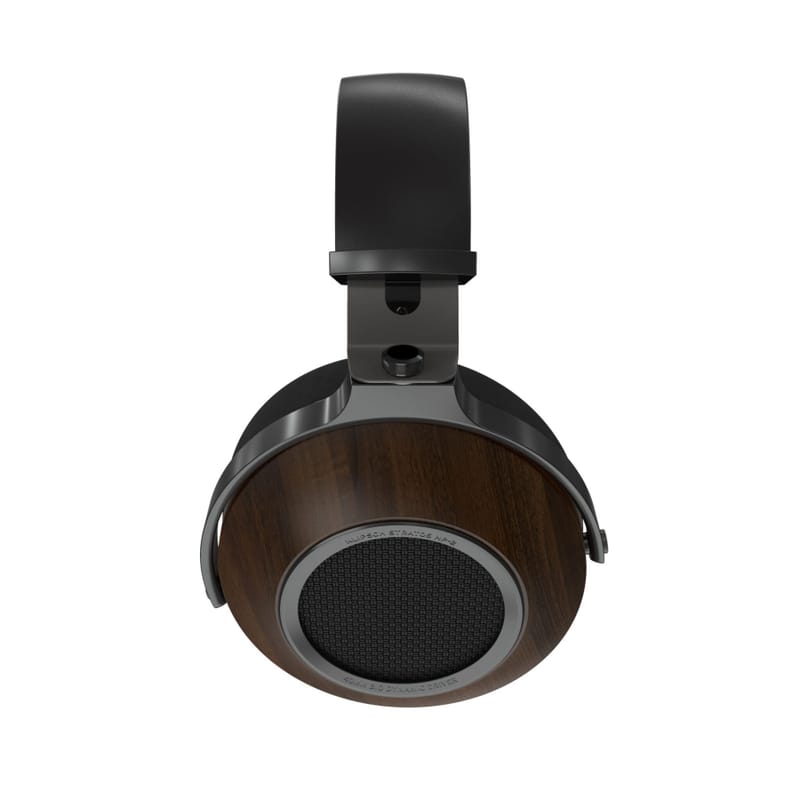
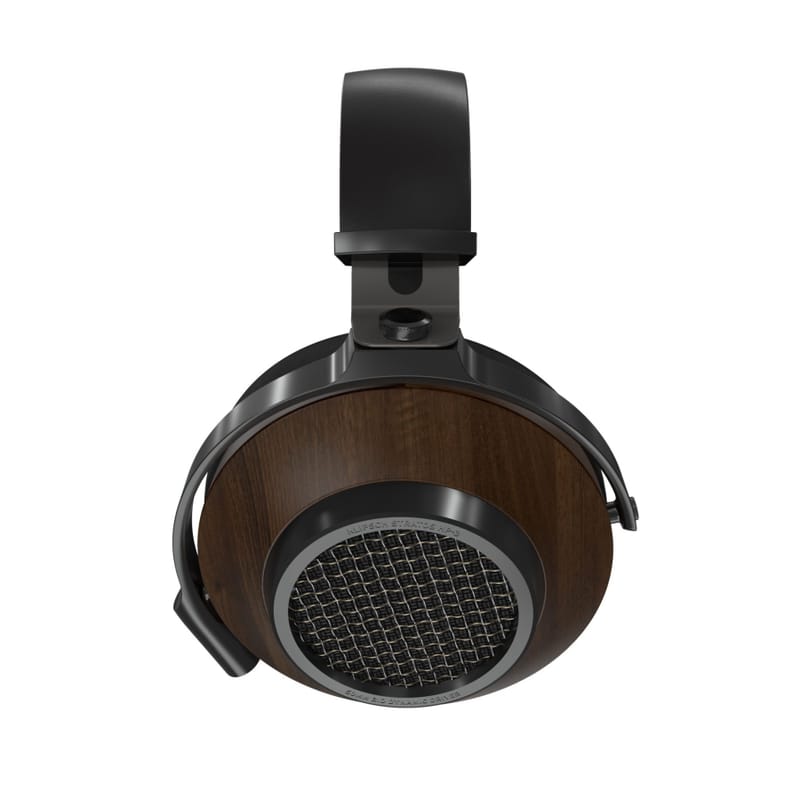
According to Klipsch, the HP-2’s closed-back design is intended for studio monitoring, where isolation from outside noise matters as much as tonal accuracy. The HP-3 instead leans into a semi-open design that the company describes as warm and punchy through the bass, with crisp, sparkly treble. Those are Klipsch’s own characterisations, and how they translate to real listening sessions will only be confirmed once reviewers get hands-on time with retail units.
Wood, copper and comfort built into every pair
Visually, the Stratos Series borrows heavily from Klipsch’s speaker cabinets. Both the HP-2 and HP-3 use stained sapele wood earcups finished in a colourway called Auburn, paired with copper-ring accents and the brand’s Heritage Twitchell grille cloth. Machined aluminium yokes and contact points round out the build, giving the headphones a weightier, more traditional look than the plastic-heavy designs common at this end of the market.
Comfort gets similar attention. The headband uses open-cell foam with a cutout designed to relieve pressure at the crown of the head, while the earpads are wrapped in microsuede and attach magnetically for easy swapping. Each headphone ships with two detachable braided nylon cables, covering both standard and balanced connections, so buyers do not need to source an extra cable for a balanced headphone amplifier.
A nod to Klipsch’s history and what comes next
Klipsch has tied the Stratos launch to its own history, pointing back to founder Paul W. Klipsch, who at 15 years old built a crude pair of headphones around a small speaker in 1919. The company still holds onto that original pair, framing it as the starting point for the same focus on efficiency and dynamics that shaped the new Stratos Series.
A third model, the wireless Stratos HP-1, is planned for early 2027, though Klipsch has not released specifications or a firm launch window for it yet. An optional Klipsch Headphone Stand is also due alongside the HP-2 and HP-3 when they reach the United States in December. For buyers weighing a wired, two-way coaxial design against more conventional dynamic-driver headphones, the Stratos Series gives Klipsch a genuine foothold in a category it has mostly sat out of for years, and it sits alongside other recent headphone launches such as Panasonic’s own long-battery-life headphones and Sony’s revival of its classic Walkman-era headphones as proof that legacy audio brands are leaning back into premium wired listening. It also places Klipsch in similar territory to specialists like OLLO Audio’s precision-focused studio headphones, which chase a comparable mix of accuracy and comfort.
Frequently asked questions
What is the difference between the Klipsch Stratos HP-2 and HP-3?
The HP-2 is closed-back with a 40mm mid/bass driver, aimed at isolation and studio monitoring, while the HP-3 is semi-open with a larger 50mm driver, designed for a more open, spacious sound.
When will the Klipsch Stratos headphones be available?
Klipsch has scheduled both models for availability in the United States in December, alongside an optional matching headphone stand.
Is Klipsch making a wireless version of the Stratos headphones?
Yes. Klipsch has confirmed a wireless Stratos HP-1 model is planned, with further details expected in early 2027.
What materials are used on the Klipsch Stratos HP-2 and HP-3?
Both models use stained sapele wood earcups in an Auburn finish, copper-ring accents, machined aluminium yokes, and microsuede earpads with magnetic attachment.