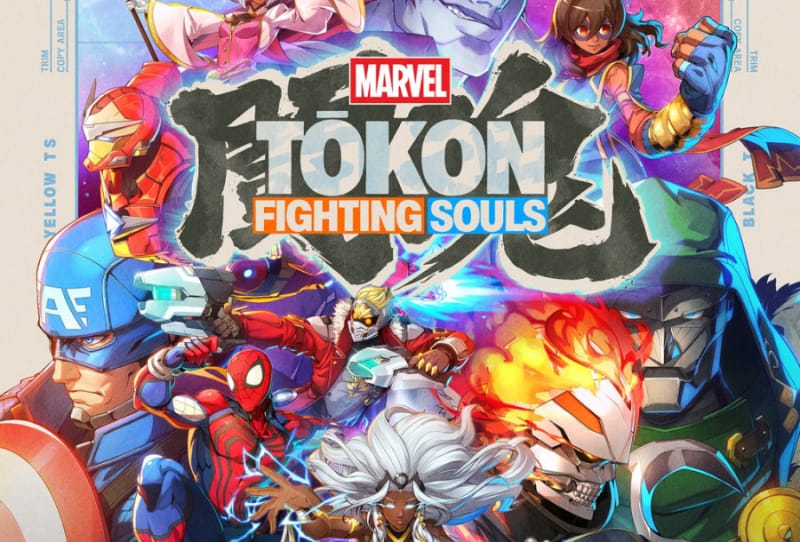
Marvel Tokon Fighting Souls is barely a month old, and its PC player base is already shrinking enough to worry the fighting game community about how long developer Arc System Works can keep the game alive. Since launch, chatter across fighting game forums and social media has shifted from excitement about a new Marvel-branded tag fighter to concern over whether the game has the staying power of its genre rivals.
The worry isn’t coming from an official sales announcement. Neither Arc System Works nor Marvel has published concrete sales figures or concurrent player numbers for the game. Instead, the concern has built organically, as players who track public player-count data have noticed a steep drop-off from the game’s launch-week peak, a pattern that’s common in competitive fighting games but one that hits harder when a title is still trying to establish its identity within a crowded genre.
Table of Contents
What’s happening with Marvel Tokon Fighting Souls on PC
Fighting games typically see a sharp decline in active players within their first few weeks, as casual buyers finish the story mode and move on. What’s rattled fans of Marvel Tokon Fighting Souls is the scale of that decline relative to expectations for a major licensed release. A big-name Marvel tie-in developed by a studio with a strong pedigree in the genre should, in theory, hold a healthier post-launch audience than the numbers currently suggest.
Without official figures from Arc System Works, most of the discussion has relied on publicly visible Steam data rather than confirmed sales totals. That distinction matters. A dip in concurrent players doesn’t necessarily mean the game sold poorly, but for a competitive title that lives or dies on matchmaking speed and a healthy online population, a shrinking player pool is a genuine structural problem regardless of how many copies moved at launch.
Why fighting game fans are frustrated
Much of the community’s dissatisfaction centres on two things: the tag-team system at the heart of Marvel Tokon Fighting Souls, and the state of its online matchmaking. Some players have praised the tag mechanics for adding depth to team compositions, while others argue the system feels unbalanced or overly complicated compared to the tag fighters it’s clearly inspired by, such as Marvel vs. Capcom.
Matchmaking complaints have compounded the problem. Long queue times and inconsistent connection quality make an already shrinking player base feel smaller than it is, which in turn discourages newer or casual players from sticking around. One fan summed up the mood bluntly, describing the situation as “very sad” after going in with high expectations for the game. That sentiment has echoed across fighting game community spaces since launch.
How it stacks up against other tag and team fighters
Arc System Works has a strong track record in the fighting game space, and comparisons to its other titles are inevitable. The table below outlines where Marvel Tokon Fighting Souls sits alongside some of the genre’s current heavyweights.
| Game | Developer | Format | Known for |
|---|---|---|---|
| Marvel Tokon Fighting Souls | Arc System Works | Tag team | Marvel roster, new tag mechanics |
| Dragon Ball FighterZ | Arc System Works | 3v3 tag | Anime-style visuals, strong esports scene |
| Guilty Gear Strive | Arc System Works | 1v1 | Long-running competitive support |
| Street Fighter 6 | Capcom | 1v1 | Broad accessibility features, large player base |
The comparison highlights the challenge facing Marvel Tokon Fighting Souls. Both Dragon Ball FighterZ and Guilty Gear Strive built loyal communities partly because Arc System Works committed to years of balance patches, new characters, and tournament support. Whether the studio applies the same long-term investment here is the question players are really asking when they talk about the game’s “longevity.”
What it means for players and the wider fighting game sceneA shrinking player count early in a fighting game’s life doesn’t automatically mean a dead game, but it does raise the stakes for whatever comes next. If Arc System Works wants to reverse the narrative around Marvel Tokon Fighting Souls, a clear roadmap of content updates, balance changes, and matchmaking fixes would go a long way toward reassuring players who feel burned by the launch experience.
There’s also a broader industry lesson here. Licensed games carry extra scrutiny, and Marvel Tokon Fighting Souls arrives at a moment when Marvel-branded titles are already under the microscope, following another Marvel-licensed game’s recent controversy over how its content was made. Publishers attaching a major license to a competitive multiplayer game need the online infrastructure and post-launch commitment to match the expectations that license creates.
For players deciding whether to jump in now or wait, the practical advice is straightforward: watch how Arc System Works responds over the next few months. Competitive scenes can recover from rocky launches, as seen with several fighting games that turned things around through patches and character additions. It also helps to know how GPU makers line up game support ahead of new hardware, since driver-level fixes and optimisation can meaningfully affect the online experience for PC players. Anyone building or upgrading a rig specifically for competitive play might also find it worthwhile to look at testing gaming PC components before assembly, since a stable connection and consistent frame times matter more in a fighting game than almost any other genre.
Frequently asked questions
What is Marvel Tokon Fighting Souls?
Marvel Tokon Fighting Souls is a tag-team fighting game developed by Arc System Works, featuring a roster of Marvel characters and a team-based combat system built around switching fighters mid-match.
Is Marvel Tokon Fighting Souls losing players?
Public player-count data suggests a notable drop from its launch-week peak, though neither Arc System Works nor Marvel has released official sales or player figures to confirm the exact scale of the decline.
Why are fans criticising the game?
Complaints have centred on the tag-team mechanics feeling unbalanced for some players, alongside frustration with online matchmaking, including long queue times and inconsistent connection quality.
Will Arc System Works keep supporting the game?
The studio hasn’t detailed a specific post-launch content roadmap, but its history with titles like Dragon Ball FighterZ and Guilty Gear Strive shows a pattern of sustained updates for its fighting games over time.