Microsoft’s RTX shader stutter fix is rolling out this month, bringing an end to the long first-launch load screens and mid-game hitches that have plagued PC gamers for years. The technology, called Advanced Shader Delivery, is expanding beyond AMD hardware to cover every NVIDIA GeForce RTX 20-series GPU and newer, along with upcoming RTX Spark-powered laptops.
Key takeaways
- ✓Microsoft's Advanced Shader Delivery is expanding beyond AMD to all NVIDIA RTX 20-series and newer GPUs this month.
- ✓ASD delivers precompiled, hardware-matched shader packages through the Xbox App instead of compiling them locally on first launch.
- ✓Microsoft claims up to a 95 percent cut in first-launch shader prep time, with Gears of War: E-Day dropping from 15 minutes to about 20 seconds.
- ✓Support is also expanding to Intel Arc B-Series GPUs, Core Ultra integrated graphics, and Qualcomm Snapdragon X2 chips.
- ✓Call of Duty: Modern Warfare 4 is among upcoming titles set to use ASD from launch.
The update lands through Windows 11 24H2 and later, and it targets one of PC gaming’s most persistent annoyances. Anyone who has launched a big new DirectX 12 title and watched a “optimising shaders” bar crawl for ten or fifteen minutes has felt the problem Microsoft is trying to solve.
Table of Contents
Why shader compilation causes stutter in the first place
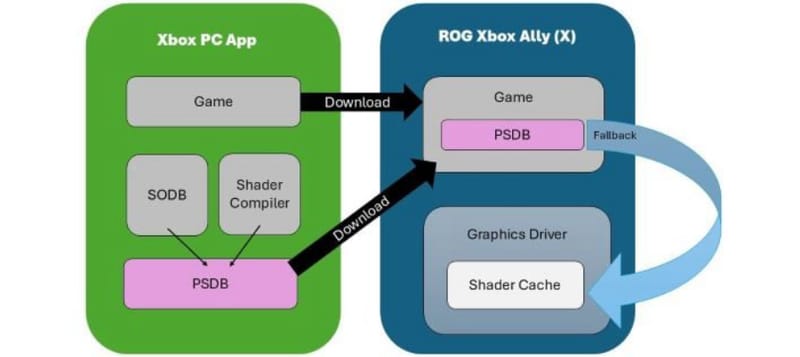
Modern DirectX 12 games lean heavily on Pipeline State Objects and custom shaders. Rather than shipping ready-to-run graphics code, many titles compile these instructions locally, using the player’s own CPU, the first time a game runs on that specific hardware. Depending on the PC’s configuration, that process can eat up several minutes before a single frame appears.
Worse, the same compilation can happen mid-game whenever a new visual effect, texture, or area is loaded for the first time, causing the brief freezes known as shader compilation stutter. It is a problem that has nothing to do with raw horsepower; even a high-end rig can stutter badly if its driver and shader cache have not caught up with what the game is asking for.
Advanced Shader Delivery sidesteps the issue entirely. Instead of compiling shaders on the fly, it hosts precompiled Shader Object Data Blocks matched to a player’s exact graphics card and driver combination inside the Xbox App. When a game is downloaded, the correct shader package arrives alongside it, so the heavy lifting has already been done before the game ever launches.
How big a difference the RTX shader stutter fix actually makes
Microsoft claims Advanced Shader Delivery can cut first-launch shader preparation time by as much as 95 percent. The clearest example so far comes from Gears of War: E-Day, a title built around dense asset streaming and large-scale environmental destruction. Players running the early release on supported Windows 11 hardware have reported shader compilation times dropping from roughly 15 minutes down to about 20 seconds.
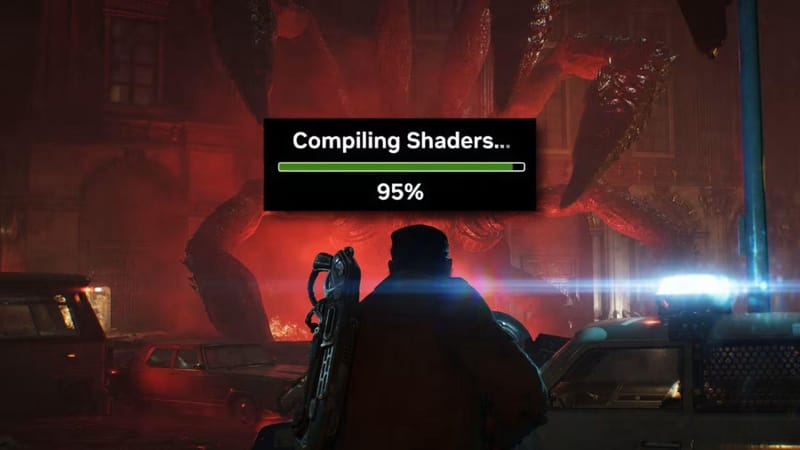
That is not a marginal improvement. For anyone who has sat through a lengthy pre-game compile just to get to a menu screen, a 20-second wait instead of a quarter of an hour changes the entire experience of installing a new release. It also removes a common source of frustration that has nothing to do with a player’s skill, settings, or patience, just an unavoidable technical step that ASD now handles ahead of time.
Which GPUs and chips are getting support
AMD’s RDNA-based graphics cards were first in line when Advanced Shader Delivery launched, thanks to updated Adrenalin drivers. NVIDIA’s rollout this month brings GeForce RTX owners into the fold, and Microsoft is extending the same support to other platforms at the same time.
| Hardware | ASD support status |
|---|---|
| AMD RDNA-based GPUs | Already supported via Adrenalin drivers |
| NVIDIA GeForce RTX 20-series and newer | Rolling out this month |
| NVIDIA RTX Spark laptop chips | Included in this month’s rollout |
| Intel Arc B-Series (Battlemage B570/B580) | Supported |
| Intel Core Ultra Series 2 and Series 3 integrated graphics | Supported |
| Qualcomm Snapdragon X2 Series | Supported |
That spread covers desktop GPUs, laptop silicon, integrated graphics, and even Arm-based Snapdragon hardware, which suggests Microsoft wants Advanced Shader Delivery treated as a baseline Windows 11 gaming feature rather than a niche optimisation for one vendor’s cards.
What it means for PC gamers and developers
For players, the practical effect is straightforward: fewer long waits on install day and fewer stutters once the game is actually running. That benefit compounds on devices with weaker CPUs, including handhelds and RTX Spark-powered laptops, where local shader compilation tends to hit hardest.
For developers, Advanced Shader Delivery removes the need to build custom shader caching solutions for every game, since the operating system and the Xbox App now handle matching and delivery automatically. Microsoft has already locked in game support ahead of RTX Spark laptop launches, and Call of Duty: Modern Warfare 4 is lined up as one of the first major releases to ship with ASD built in from day one.
It fits a broader pattern across the industry, where companies are chasing smoother frame delivery through software rather than just raw hardware gains. NVIDIA’s own RTX Kit tools for developers point the same direction, as do efforts elsewhere to free up CPU and GPU headroom during play. Shader stutter has long been treated as an unavoidable cost of PC gaming’s openness, so standardising a fix at the operating system level marks a genuine shift rather than a small driver tweak.
Full details on the rollout, including supported Windows 11 builds and driver requirements, are available through Microsoft’s DirectX engineering blog. NVIDIA owners can also check compatibility details via NVIDIA’s GeForce platform as driver updates land alongside the Windows rollout.
Frequently asked questions
What is Advanced Shader Delivery?
Advanced Shader Delivery is a Microsoft technology that sends precompiled, hardware-matched shader packages to a PC through the Xbox App when a game is downloaded, removing the need to compile shaders locally on first launch.
Does the RTX shader stutter fix require a new graphics card?
No. It covers NVIDIA GeForce RTX 20-series GPUs and every generation after, so most RTX owners already have compatible hardware once the driver and Windows 11 update land.
Which games support Advanced Shader Delivery right now?
Gears of War: E-Day is the first major title taking advantage of it, with Call of Duty: Modern Warfare 4 and other releases set to integrate it as the rollout expands over the coming weeks.
Does this replace the need for driver updates?
No. ASD works alongside regular GPU drivers; it delivers matched shader data rather than replacing the driver itself, so keeping drivers current is still recommended.