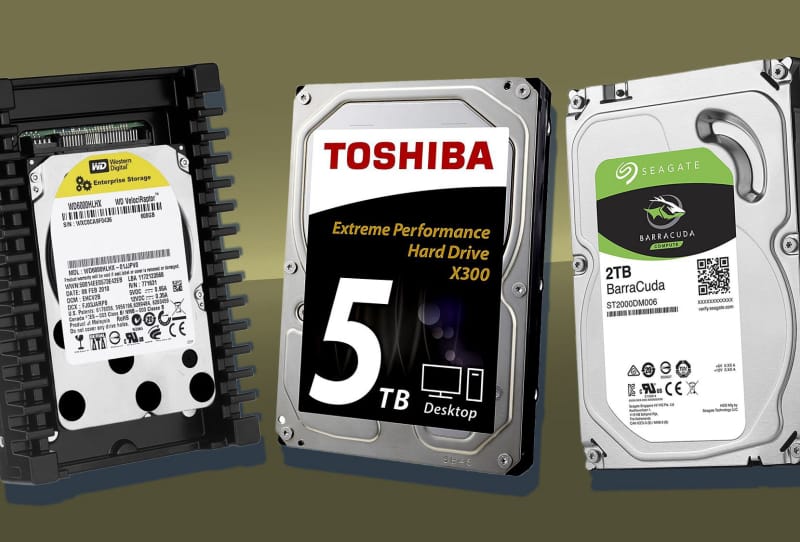
AI hard drive demand has grown so quickly that Toshiba is pulling forward years of planned factory expansion just to keep pace. The company is ramping up hard disk drive production to meet a wave of orders from data centres and cloud providers that need enormous, affordable storage pools to hold the datasets modern AI systems are trained and run on. What looked a few years ago like a shrinking, legacy technology is suddenly running years ahead of its own roadmap.
Key takeaways
- ✓Toshiba is expanding hard drive production years ahead of its original schedule to meet AI-driven demand.
- ✓Data centres need enormous amounts of cheap bulk storage to hold the datasets AI systems train and run on.
- ✓Hard drives remain far cheaper per terabyte than SSDs, keeping them essential for large-scale cloud storage.
- ✓The surge in orders is tightening supply and extending lead times across the wider hard drive industry.
- ✓The same capacity crunch that hits cloud providers can eventually flow through to consumer and small-business storage prices.
For a long time, the storage conversation centred on solid-state drives gradually pushing spinning disks out of the picture. Instead, Toshiba’s storage division is one of several major suppliers finding itself unable to build hard drives fast enough, because AI infrastructure has created an entirely new category of bulk storage buyer.
Table of Contents
What’s happening with Toshiba’s hard drive expansion
Toshiba is increasing output of its enterprise and nearline hard drives, the high-capacity disks built specifically for data centre racks rather than desktop PCs. These drives are designed to run constantly, store large volumes of data cheaply, and sit alongside flash storage in tiered systems where speed matters less than raw capacity.
The push comes as cloud operators and AI companies place larger and more frequent orders than suppliers originally forecast. Because building new hard drive manufacturing capacity takes years of planning, tooling, and testing, Toshiba is effectively compressing a multi-year expansion timeline to avoid falling behind demand it did not anticipate at this scale.
This isn’t an isolated move. Rival drive makers have reported similar order backlogs, and the broader hard drive supply chain has been tightening since AI workloads became a serious driver of storage purchasing, rather than just a niche compute story.
Why AI hard drive demand is growing so fast
Training and running large AI models doesn’t just need powerful graphics cards, it needs somewhere to put the data. Every model is trained on huge archives of text, images, video, and sensor data, and every AI service generates logs, cached results, and backups that need to be stored, often for years at a time.
Hard drives remain the default choice for this kind of bulk storage because they offer far lower cost per terabyte than solid-state drives. A data centre storing hundreds of petabytes doesn’t need every byte retrieved instantly; it needs capacity that scales affordably. That’s precisely the job hard drives are built for, and it’s why demand hasn’t simply collapsed as SSD prices have fallen.
Advances such as higher-density recording techniques have also let manufacturers pack more storage into a single drive, making hard drives more attractive again for operators trying to fit maximum capacity into limited rack space and power budgets.
Hard drives versus SSDs: why the “storage war” narrative missed something
The assumption that solid-state storage would eventually replace hard drives outright made sense for laptops and consumer PCs, where SSDs have already won. Data centres operate under different economics, and the two formats increasingly serve different jobs rather than competing head-on.
| Factor | Hard disk drives | Solid-state drives |
|---|---|---|
| Cost per terabyte | Significantly lower | Higher, though falling |
| Typical use case | Bulk, long-term, archival and nearline storage | High-speed active data, frequent reads and writes |
| Maximum capacity | Very high per drive, ideal for dense racks | High but costlier to scale to the same capacity |
| Speed | Slower access times | Much faster access and throughput |
That table explains why AI data centres typically run a mix of both. Flash storage handles the active, fast-moving data, while hard drives absorb the bulk of long-term and lower-priority storage at a fraction of the cost. AI’s appetite for data has simply made the hard drive side of that equation busier than anyone expected.
What the hard drive crunch means for buyers
When hard drive factories run flat out for data centre orders, the effects don’t stay contained to enterprise customers. Tighter supply and longer lead times for large-capacity drives can flow through to businesses and consumers buying storage for their own servers, backups, and home setups.
Anyone setting up a NAS with multiple hard drives at home has likely already noticed high-capacity drives becoming harder to find at consistent prices. Demand pressure at the data centre level tends to ripple outward, affecting everything from four-bay NAS units like Synology’s DiskStation DS925neo+ to smaller home servers used for media and backups.

It also raises the profile of devices that blend AI features with local storage, such as devices like Anker’s MindBase, which pairs AI features with local NAS storage, reflecting a broader shift where storage and AI processing are increasingly designed together rather than treated as separate purchases. For the wider industry, Toshiba’s accelerated expansion is a clear signal that hard drives still have years of relevance left, driven not by nostalgia but by the blunt economics of storing AI’s ever-growing pile of data.
Frequently asked questions
Why does AI need hard drives instead of just SSDs?
AI systems generate and store huge volumes of data that don’t need to be accessed instantly, and hard drives offer much lower cost per terabyte than SSDs for that kind of bulk, long-term storage.
Does this mean hard drives are replacing SSDs in data centres?
No. Data centres typically use both, relying on SSDs for fast, frequently accessed data and hard drives for large-scale, lower-priority storage, with AI growth increasing demand for the hard drive side specifically.
Will this affect hard drive prices for home users?
It can. When manufacturers prioritise large orders from data centres and cloud providers, supply and pricing for high-capacity consumer and small-business drives can tighten as a result.
Is Toshiba the only company affected by this demand surge?
No. Other major hard drive manufacturers have reported similar increases in enterprise orders, suggesting the AI-driven demand for storage capacity is an industry-wide trend rather than a single company’s experience.