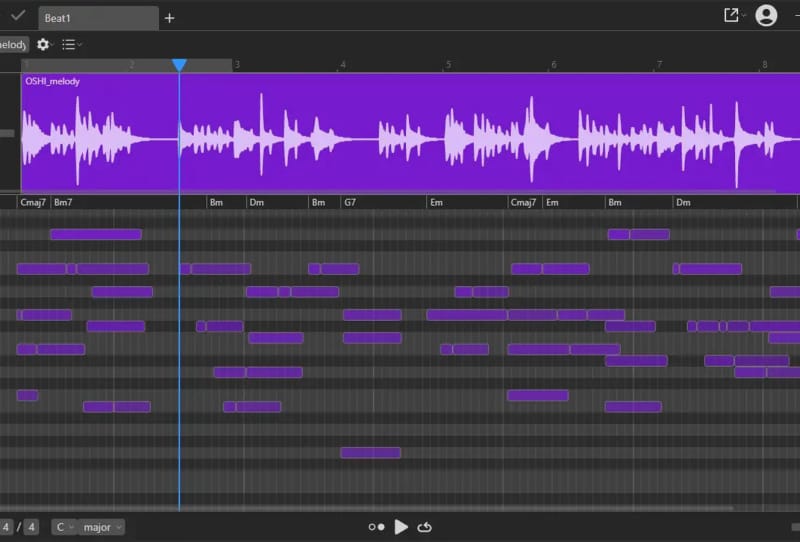
The Apple Samplab acquisition confirms that the company quietly bought AI audio editing startup Samplab back in June, according to a European Commission filing made public this week. Samplab built tools for converting audio into MIDI, isolating instrument stems, and editing individual notes inside complex recordings, and Apple appears to have taken the underlying technology in-house rather than simply licensing it.
Key takeaways
- ✓Apple acquired AI audio editing startup Samplab in June 2026, according to an EU regulatory filing.
- ✓Samplab's software converted audio to MIDI, split stems, detected chords, and edited notes in polyphonic recordings.
- ✓The European Commission filing says Apple bought certain Samplab assets and hired certain employees.
- ✓Samplab shut down on 17 September 2026 and its website now redirects straight to Apple.com.
- ✓Polyphonic note editing without altering timbre is new technology Logic Pro does not currently offer.
Details are thin because Apple almost never comments on acquisitions of this size. What is known comes entirely from regulatory paperwork, since Brussels classifies Apple as a “gatekeeper” under the Digital Markets Act. That status forces Apple to disclose deals touching its core platform services, digital services, or data collection, which is the only reason this purchase became public at all.
Table of Contents
What the Samplab filing actually says
The European Commission notice states that Apple acquired “certain assets” from Samplab and hired “certain Samplab employees”. That phrasing is deliberately narrow. It suggests an acqui-hire focused on the team’s audio processing code and talent, rather than a full corporate takeover with Samplab continuing to operate as a subsidiary.
That reading lines up with what happened next. Samplab shut down operations on 17 September 2026, and its website now redirects visitors straight to Apple.com. For a small audio software outfit, that is a familiar pattern: the product disappears, the team moves inside a much larger company, and the technology resurfaces later inside existing apps rather than as a standalone release.
What Samplab’s software could bring to Apple’s apps
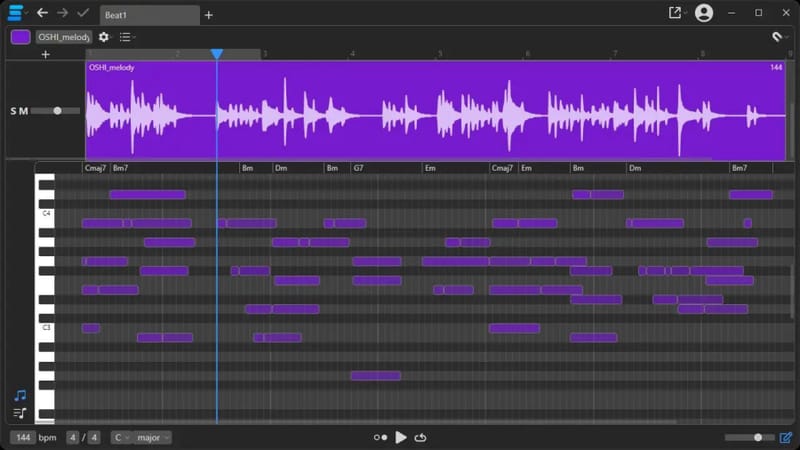
Before it closed, Samplab offered a desktop application and a set of plugins aimed at musicians and producers. Its headline features included converting recorded audio into editable MIDI data, automatically detecting and adjusting chords, splitting a mixed track into separate stems, and editing notes within polyphonic audio without distorting the original instrument’s timbre.
Apple’s own music software already covers some of that ground. Logic Pro, Apple’s professional recording suite, has a Stem Splitter feature and a Chord ID tool. What it lacks, and what Samplab specialised in, is reliable polyphonic note editing. That is a genuinely difficult audio problem, since adjusting one note in a chord usually means re-processing the whole recording without making it sound artificial.
| Samplab feature | What it does | Current Logic Pro equivalent |
|---|---|---|
| Audio to MIDI | Converts recorded audio into editable MIDI notes | Limited, monophonic only |
| Chord detection and editing | Identifies and lets users adjust chords | Chord ID (detection only) |
| Stem splitting | Separates a mix into individual instrument tracks | Stem Splitter |
| Polyphonic note editing | Edits individual notes in a chord without changing timbre | Not currently available |
Folding that capability into Logic Pro, or into the more consumer-facing GarageBand, would hand Apple a feature that rival audio software has struggled to perfect. It would also fit a pattern already visible elsewhere in Apple’s lineup, where machine learning increasingly does work that used to require manual editing, from AirPods 5 adjusting noise cancellation in real time to the smarter Siri integration on Apple TV 4K.
Why this deal needed disclosing at all
Most software acquisitions this size never reach the public record. Samplab’s case is different purely because of Apple’s regulatory status in the European Union. Under the Digital Markets Act, designated gatekeepers must notify the European Commission about acquisitions that touch core platform services, digital services, or data collection, even when the target company is small and the deal value is not disclosed.
That rule exists to help regulators spot a pattern sometimes called “killer acquisitions”, where a dominant company buys up smaller rivals or promising technology before it can grow into genuine competition. Whether or not that concern applies here, the filing is effectively the only public confirmation that the deal happened, since Apple issued no announcement of its own.
It also fits into a broader story about how Apple expands its software capabilities. Rather than building every feature from scratch, Apple has a long history of buying small, specialised teams and quietly absorbing their work into existing products, much as it has done with its growing push into smart home hardware. Samplab now joins that list.
What it means for musicians and Logic Pro users
Nothing changes immediately. Apple has not confirmed any product plans, and there is no timeline for when, or if, Samplab’s tools will appear in a shipping app. Musicians currently using Logic Pro or GarageBand will notice no difference today.
The longer-term implication is more interesting. If Apple does integrate polyphonic note editing, it closes one of the more obvious gaps between Logic Pro and competing digital audio workstations that have invested heavily in AI-assisted editing. For home producers and semi-professional musicians, that kind of feature can meaningfully cut the time spent manually correcting a take, without needing extra plugins or subscriptions from third parties.
Frequently asked questions
What was Samplab?
Samplab was an audio software company that made a desktop app and plugins for converting audio to MIDI, detecting and editing chords, splitting songs into stems, and editing notes in polyphonic recordings without changing the original timbre.
When did Apple buy Samplab?
According to the European Commission filing, Apple acquired Samplab’s assets and hired some of its staff in June 2026. The deal only became public in October when the regulatory notice was published.
Will Samplab’s features come to Logic Pro or GarageBand?
Apple has not confirmed any specific product plans. Given that Logic Pro already has a Stem Splitter and Chord ID tool, Samplab’s polyphonic note editing technology is the most likely candidate for future integration.
Is Samplab still available to download?
No. Samplab shut down on 17 September 2026, and its official website now redirects directly to Apple.com.