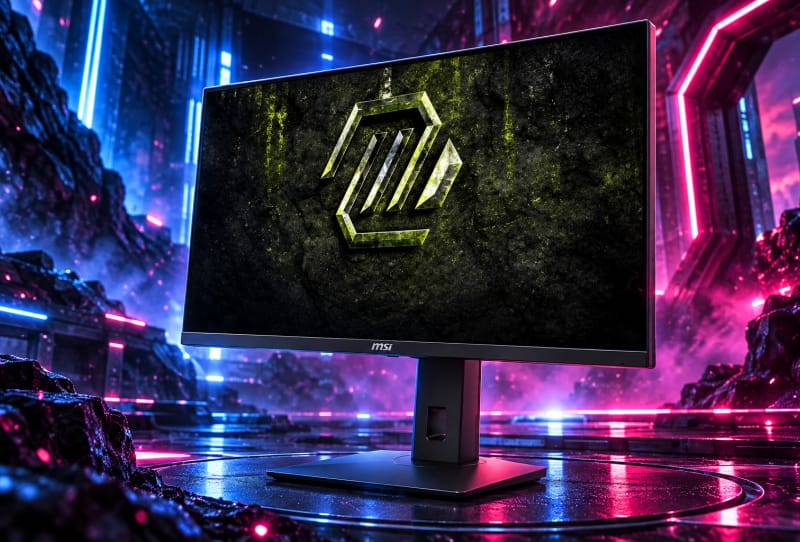
The MSI MAG 256QR36 pairs a 2560×1440 resolution with a 360Hz refresh rate on a 24.5-inch screen, an unusual combination aimed squarely at competitive players who want 1440p sharpness without giving up high-speed motion clarity. Most monitors offering that refresh rate and resolution combination have settled on a 27-inch panel, so MSI’s move to a smaller screen size stands out in a crowded gaming monitor market.
Key takeaways
- ✓The MSI MAG 256QR36 pairs a 2560×1440 resolution with a 360Hz refresh rate on a 24.5-inch panel.
- ✓It uses a Rapid IPS panel with 0.5ms GtG response time and VESA DisplayHDR 400 certification.
- ✓The screen supports both AMD FreeSync Premium and G-Sync Compatible modes for tear-free gameplay.
- ✓Ports include one DisplayPort 1.4a, two HDMI 2.1 connections and a 3.5mm headphone jack.
- ✓MSI is targeting esports players who want sharper pixel density without moving to a larger 27-inch screen.
The pairing matters because screen size and resolution usually move together. A 24.5-inch 1440p panel packs more pixels into a tighter space than a 27-inch version of the same resolution, giving sharper detail and finer text at the cost of a slightly smaller viewing area. For esports players who sit close to the screen and value pixel density over sheer size, that trade-off can be a selling point rather than a drawback.
Table of Contents
What the MSI MAG 256QR36 brings to the table
MSI built the MAG 256QR36 around a Rapid IPS panel, a technology the company has used across several of its recent gaming monitors to balance fast pixel response with the wider viewing angles and colour accuracy IPS panels are known for. The response time comes in at 0.5ms grey-to-grey, quick enough to minimise the smearing that can appear during fast-paced shooters or racing titles.
Brightness and colour are handled through VESA DisplayHDR 400 certification, with a peak HDR brightness of 400 nits. MSI also quotes 94 percent Adobe RGB and 95 percent DCI-P3 colour gamut coverage, figures that suggest the panel is tuned for more than just competitive shooters. Content creators or anyone doing colour-sensitive work alongside gaming would find those numbers reassuring, even if HDR 400 sits at the entry tier of VESA’s certification scale rather than its higher brightness tiers.
Adaptive sync support covers both major camps, with AMD FreeSync Premium and Nvidia G-Sync Compatible modes built in. That dual support means the monitor should handle variable refresh rates smoothly whether it is paired with an AMD or Nvidia graphics card, reducing screen tearing and stutter during fast motion.
Specifications at a glance
| Feature | Detail |
|---|---|
| Screen size | 24.5 inches |
| Resolution | 2560 x 1440 (QHD) |
| Refresh rate | 360Hz |
| Panel type | Rapid IPS |
| Response time | 0.5ms GtG |
| HDR | VESA DisplayHDR 400, 400 nits peak |
| Colour gamut | 94% Adobe RGB, 95% DCI-P3 |
| Adaptive sync | AMD FreeSync Premium, G-Sync Compatible |
| Ports | 1x DisplayPort 1.4a, 2x HDMI 2.1, 3.5mm headphone jack |
| Extras | HDMI CEC, console mode, height/tilt/swivel/pivot stand |
Why 24.5 inches instead of the usual 27
The 27-inch size has become something close to the default for 1440p gaming monitors, largely because it offers a comfortable middle ground between pixel density and desk space. MSI’s decision to break from that pattern with the MAG 256QR36 reflects a smaller but vocal segment of competitive players who prefer a more compact screen that sits closer to eye level without requiring the player to turn their head to track action at the edges.
That smaller footprint also means a higher pixel density than a 27-inch 1440p screen delivers, so on-screen text, UI elements and enemy models appear slightly crisper at the same resolution. Pair that with the 360Hz refresh rate, and the MAG 256QR36 is clearly built for players who care more about reaction time and visual clarity than immersive screen real estate. Readers weighing up this decision may find it useful to look at choosing the best gaming monitor for competitive FPS titles, which covers the trade-offs between size, resolution and refresh rate in more depth.
It is not the only monitor chasing that high-refresh niche. AOC’s own dual-mode 360Hz monitor takes a different approach by letting users switch between 5K and a faster QHD mode, while Acer’s 240Hz QD-OLED gaming monitor trades refresh rate ceiling for deeper contrast through an OLED panel. Further up the refresh-rate scale, LG’s 1000Hz gaming monitor shows just how far manufacturers are pushing motion clarity for esports audiences.
Connectivity and everyday usability
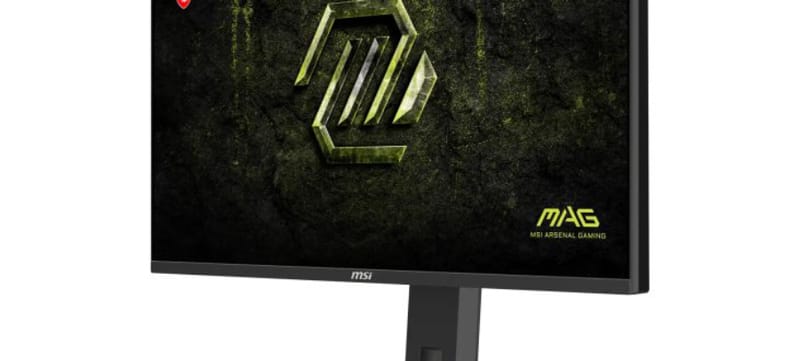
Beyond the panel itself, the MAG 256QR36 includes a fairly standard but complete set of connections for a gaming monitor at this tier. One DisplayPort 1.4a input and two HDMI 2.1 ports give flexibility for connecting both a gaming PC and a console, while a 3.5mm headphone jack covers basic audio output without needing external speakers or a separate DAC.
HDMI CEC support and a dedicated console mode suggest MSI is not treating this purely as a PC-only product, despite the esports-leaning specifications. The fully adjustable stand, with height, tilt, swivel and pivot movement, rounds out a feature set aimed at making the monitor comfortable for long sessions rather than just fast for short bursts of competitive play.
What it means for buyers
For shoppers who have been waiting for a 1440p monitor that does not default to a 27-inch frame, the MSI MAG 256QR36 offers a genuine alternative rather than a gimmick. The combination of high pixel density, a fast Rapid IPS panel and broad adaptive sync support covers most of what a serious competitive player would ask for. Whether the smaller screen size wins over players used to larger panels will likely come down to personal preference and desk setup rather than any shortfall in the specification sheet.
Frequently asked questions
What makes the MSI MAG 256QR36 different from typical 1440p monitors?
Most 1440p gaming monitors use a 27-inch panel, but the MAG 256QR36 fits the same resolution into a 24.5-inch screen, giving higher pixel density alongside a 360Hz refresh rate.
Does the MSI MAG 256QR36 support both AMD and Nvidia graphics cards?
Yes, the monitor includes AMD FreeSync Premium and G-Sync Compatible support, so it can deliver smooth variable refresh rates with either brand of graphics card.
Is the MSI MAG 256QR36 suitable for colour-sensitive work as well as gaming?
MSI quotes 94 percent Adobe RGB and 95 percent DCI-P3 colour gamut coverage along with VESA DisplayHDR 400 certification, which suggests reasonable colour accuracy, though it remains primarily built for fast-paced gaming.
What ports does the MSI MAG 256QR36 include?
It comes with one DisplayPort 1.4a input, two HDMI 2.1 ports and a 3.5mm headphone jack, plus HDMI CEC support and a dedicated console mode.