AMD has confirmed a Radeon driver SSD bug that is quietly flooding some system drives with unnecessary data writes, and says a fix is on the way. The company has pinned the fault to its latest Adrenalin 26.10.1 and 26.10.2 drivers, which can leave a background process stuck in a loop, writing dozens of gigabytes of pointless data to a PC’s storage over time.
Key takeaways
- ✓AMD confirmed Adrenalin 26.10.1 and 26.10.2 drivers trigger excessive, unnecessary SSD writes
- ✓The fault traces to atieclxx.exe, part of AMD's External Events Client Module
- ✓Affected systems see continuous writes of roughly 0.3 to 1.5 MB/s, with one report as high as 5 MB/s
- ✓A fix is scheduled for the Adrenalin 26.11.1 driver release
- ✓Sustained unnecessary writes can accelerate wear on consumer SSDs over time
The issue traces back to a component called the External Events Client Module, which runs on Windows systems as atieclxx.exe. Normally, this process handles routine background tasks such as detecting connected monitors and responding to hotkeys programmed through Radeon software. In the affected driver versions, however, it gets caught writing continuously instead of only when something actually changes.
Table of Contents
What is causing the Radeon driver SSD bug
Users first noticed the problem through storage monitoring tools, which showed the atieclxx.exe process keeping their system drive almost constantly busy. Reported write speeds range from a relatively modest 0.3 MB/s up to 1.5 MB/s, though one Reddit user flagged sustained activity as high as 5 MB/s. None of those numbers sound dramatic in isolation, but a process running around the clock adds up fast.
AMD has not detailed exactly why the External Events Utility fell into this infinite write loop, but the company has publicly acknowledged the behaviour rather than disputing user reports. That is a meaningful distinction for anyone who has spent time chasing down vague driver gremlins with no official acknowledgement at all.
It is also worth noting this is a software fault rather than a hardware defect. Nothing about the Radeon graphics card itself is at risk, and the problem lives entirely inside AMD’s Adrenalin driver software rather than the silicon.
Why constant unnecessary writes matter for SSD lifespan
Solid-state drives do not wear out the way spinning hard drives do, but they are not immune to damage either. Every NAND flash cell can only absorb a finite number of write cycles before it degrades, and unnecessary background writes chip away at that budget for no benefit whatsoever.
A drive quietly absorbing a few megabytes per second around the clock will not fail overnight. Over weeks and months, though, those writes accumulate into a genuinely large and completely avoidable total. Given how much a decent NVMe drive still costs, few PC owners will be thrilled to learn their storage is being worn down by a background process they never asked to run.
Random, constant writes are also harder on flash memory than the large sequential transfers a drive is designed around, which makes this particular failure mode more concerning than the raw megabyte figures initially suggest.
How this compares with other recent driver and Windows bugs
This is not the first time Radeon software has needed a quick follow-up patch. AMD recently pushed out a recent Radeon driver update aimed at Steam launch crashes, showing that driver stability has been an ongoing focus this cycle. Background utility bugs of this kind are less visible than a crash, but arguably more damaging if left unresolved for long.
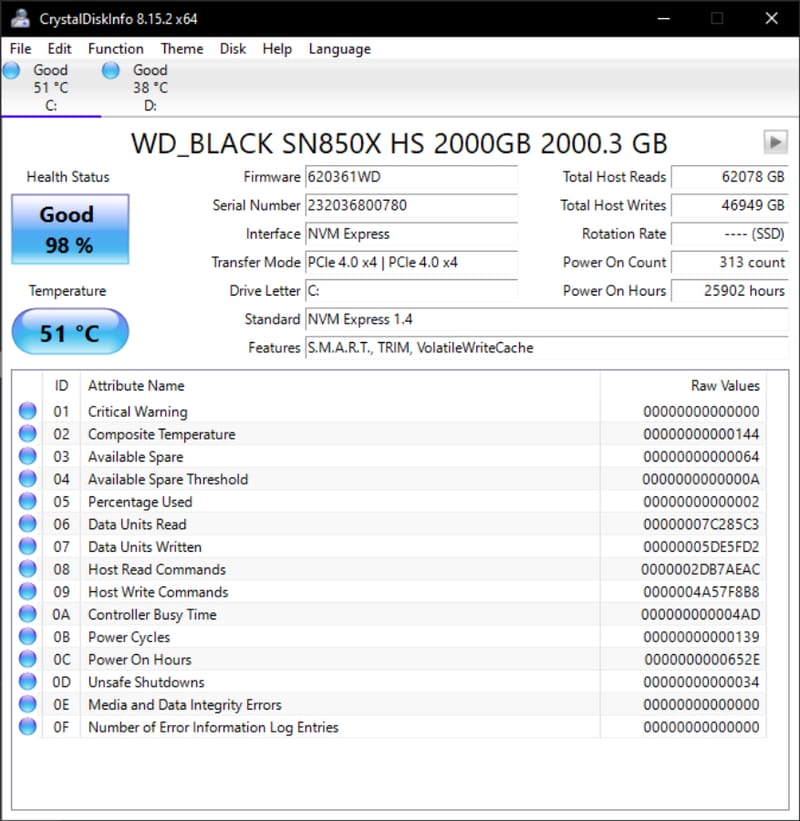
Windows itself has had a rough run of similar issues lately too, including a separate Windows 11 bug that was crashing PCs with RGB lighting. Taken together, these cases point to how a single misbehaving background service, whether from a GPU vendor or the operating system itself, can cause outsized real-world problems despite looking minor on paper.
None of this undermines the broader momentum AMD has built lately, including AMD’s strong recent run against Intel, but it is a reminder that driver quality control remains just as important as raw performance gains.
When the fix is coming and what Radeon owners should do
AMD says the Adrenalin 26.11.1 release will resolve the excessive write behaviour, which means affected users are looking at one more driver cycle before the underlying loop is closed. In the meantime, anyone running 26.10.1 or 26.10.2 who wants to check for the problem can monitor disk activity for the atieclxx.exe process using Windows Task Manager or a third-party storage monitoring utility.
Rolling back to an earlier Adrenalin release is an option for owners who are particularly concerned about drive wear before the patch lands, though that comes with the usual trade-off of missing out on any other fixes or game-ready optimisations bundled into the newer builds. For most users, waiting a short period for the official patch will be the simpler path.
| Detail | Information |
|---|---|
| Affected drivers | Adrenalin 26.10.1, Adrenalin 26.10.2 |
| Faulty process | atieclxx.exe (External Events Client Module) |
| Reported write rate | 0.3 to 1.5 MB/s, with one report of 5 MB/s |
| Fix scheduled | Adrenalin 26.11.1 |
Frequently asked questions
Which Radeon drivers are affected by the SSD write bug?
AMD has confirmed the issue affects Adrenalin 26.10.1 and Adrenalin 26.10.2. Earlier driver versions are not reported to have the same fault.
Will the Radeon driver SSD bug damage a graphics card?
No. The problem is isolated to the driver software writing unnecessary data to the system drive. It does not affect the Radeon graphics card hardware itself.
How can someone check if their PC is affected?
Open Windows Task Manager or a disk monitoring tool and look for ongoing write activity from the atieclxx.exe process, even when the PC is otherwise idle.
When will AMD release the fix?
AMD has said the correction is planned for the Adrenalin 26.11.1 driver release, the version immediately following the two currently affected builds.