A GIGABYTE RGB software bug has been linked to persistent in-game stuttering on a high-end gaming PC, after a Chinese tech creator spent nearly a month tracking down the real cause. The culprit wasn’t the processor, the memory, or the graphics card itself, but the lighting control software running quietly in the background.
Key takeaways
- ✓A Bilibili creator traced persistent game stuttering to GIGABYTE's RGB control software rather than the CPU
- ✓Frame time spikes lined up precisely with RGB lighting animation cycles on a GIGABYTE GeForce card
- ✓A recent NVIDIA driver update appears to have slowed how GIGABYTE Control Center sends lighting commands
- ✓GIGABYTE has not officially confirmed claims that its Control Center development team was dismissed
- ✓Affected users are advised to disable RGB effects or switch to static lighting until a fix lands
The case surfaced through Bilibili creator 51972, who was contacted by a viewer whose GIGABYTE-built system stuttered in every game they tried. The build was no slouch either, centred on an AMD Ryzen 7 9800X3D, one of the fastest gaming chips currently available. Naturally, the viewer assumed the processor was somehow at fault.
Table of Contents
How the GIGABYTE RGB software bug was uncovered
51972 wasn’t convinced the CPU was to blame and set out to replicate the problem rather than guess at it. The team rebuilt an identical system from scratch and ran a cloned copy of the viewer’s drive on it, trying to force the stutter to reappear under controlled conditions. That process alone reportedly took close to a month of testing and elimination.
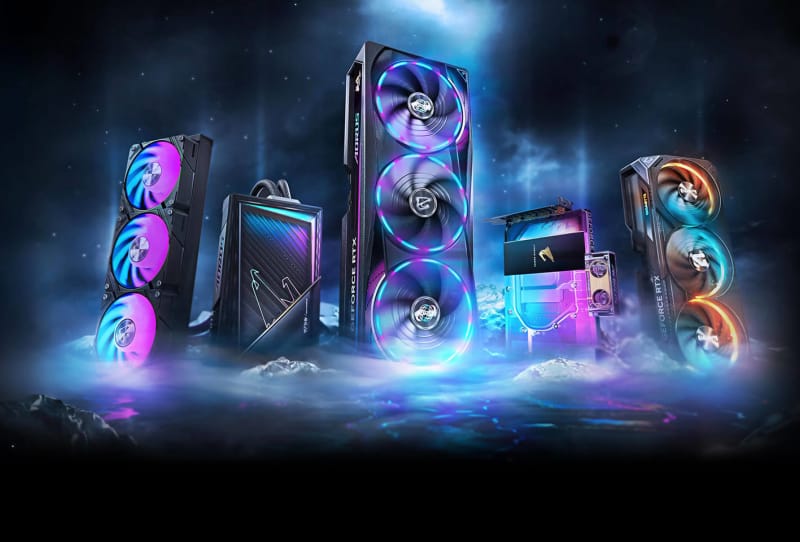
The breakthrough came when the investigators noticed something odd: the frame time spikes causing the stutter were landing in perfect sync with the RGB lighting animation cycling on the system’s GIGABYTE GeForce graphics card. That particular card also features a built-in display panel, which likely added extra strain to whatever was happening behind the scenes. Once the pattern was spotted, the GIGABYTE RGB software bug effectively identified itself.
What’s going wrong inside GIGABYTE Control Center
According to the report, the problem appeared after a recent NVIDIA driver update. Something in that update changed how the system interacts with GIGABYTE Control Center, the app responsible for managing lighting effects, fan curves, and other board-level settings on GIGABYTE hardware. Following the update, Control Center reportedly started taking longer to push lighting commands through to the graphics card’s onboard controller.
That delay doesn’t sound like much on paper, but timing matters enormously for frame delivery. Any lag in how quickly the system processes lighting instructions can translate directly into a dropped or delayed frame, which is exactly the kind of micro-stutter the viewer had been complaining about. It’s a reminder that RGB lighting isn’t just cosmetic flair sitting separately from the rest of the system. It shares resources and timing with everything else the PC is doing, including rendering the next frame of a game.
This isn’t an isolated case of peripheral software interfering with performance, either. Windows 11 has already been caught triggering its own RGB-related crashes, and PC builders have increasingly turned to open-source alternatives like OpenRGB to sidestep buggy manufacturer software altogether. GIGABYTE’s situation looks like another entry in that same pattern.
Unconfirmed report of a fired development team
The more eyebrow-raising part of this story is a claim that hasn’t been verified by GIGABYTE itself. A company representative in China reportedly told 51972 that GIGABYTE had fired its entire Control Center development team following a wave of complaints about the software’s stability.
That detail should be treated as unconfirmed rumour rather than established fact. It came from a single representative in a single conversation, not an official statement from GIGABYTE’s communications team, and no corporate filing or press release has backed it up. If true, it would suggest GIGABYTE sees the Control Center software, rather than a one-off driver clash, as the deeper source of its problems. Until the company says so publicly, though, readers should treat the claim with appropriate caution.
What to do about the GIGABYTE RGB software bug right now
For anyone running a GIGABYTE graphics card or motherboard and noticing unexplained stutter, the practical workaround is straightforward. Turning off RGB lighting effects entirely, or switching the profile to a static colour instead of an animation, removes the constant stream of lighting commands that appears to be causing the delay.

It’s not an ideal fix for anyone who bought hardware specifically for its lighting effects, but it’s a reasonable stopgap until GIGABYTE ships an official patch for Control Center. Builders who lean on RGB as a core part of their setup, including those syncing effects across cases, fans, and peripherals, may want to hold off on major driver updates until there’s confirmation the bug has been resolved. The wider lesson here fits a trend seen elsewhere in the industry: NVIDIA’s own shader stutter fix tackled a separate but related class of frame-timing issues, underlining how much software, not just silicon, now shapes how smoothly games actually run.
Frequently asked questions
What exactly is causing the stutter in GIGABYTE systems?
Reports point to a delay in how GIGABYTE Control Center sends RGB lighting commands to a graphics card’s onboard controller after a recent NVIDIA driver update, with that delay showing up as frame time spikes during gameplay.
Has GIGABYTE confirmed the bug or the reported layoffs?
No. GIGABYTE has not issued an official statement confirming either the software bug or the claim that its Control Center development team was dismissed. The layoff detail came from a single company representative and remains unverified.
How can affected users work around the issue for now?
Disabling RGB lighting effects entirely, or switching to a static lighting profile instead of an animated one, removes the repeated lighting commands believed to be triggering the stutter until an official fix is released.
Is this the first time RGB software has caused performance problems?
No. Similar issues have appeared elsewhere, including RGB-related crashes reported on Windows 11, which is part of why some PC builders prefer open-source control tools instead of relying solely on manufacturer-supplied software.