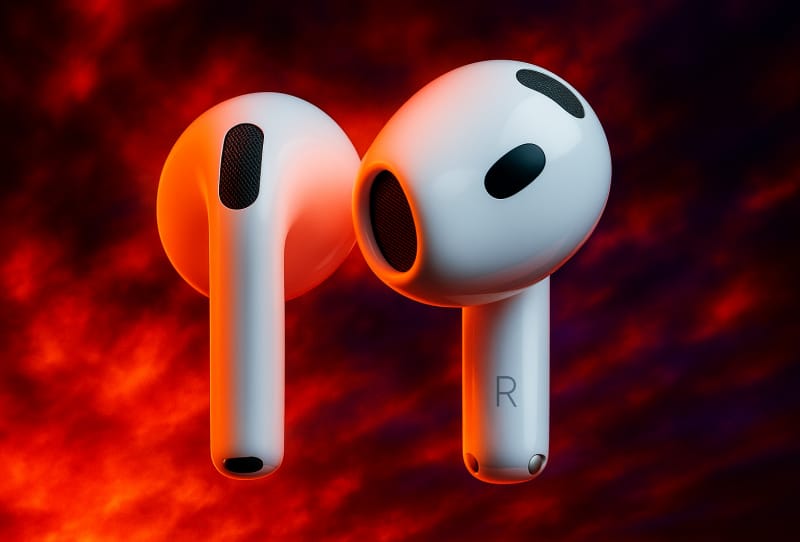
Apple has confirmed AirPods 5 noise cancellation as a standard feature across its open-ear earbuds, marking one of the biggest overhauls to the lineup in years. Until now, active noise cancellation (ANC) had been reserved for the sealed, in-ear AirPods Pro, leaving the open-ear AirPods models without it. That gap has closed with the AirPods 5, which brings ANC, adaptive controls and a swag of Apple Intelligence features to a design many users prefer for comfort over a tight in-ear seal.
The move effectively repositions the open-ear AirPods as a genuine alternative to open-ear earbuds like the JBL Endurance Zone and other rivals chasing the same audience: people who want noise reduction without earbuds that seal off the ear canal entirely. It also answers one of the most common questions shoppers have been typing into search bars since the rumours first surfaced: does AirPods 5 have noise cancellation, and if so, how does it compare with the Pro model? The short answer is yes, and Apple has built an entirely new acoustic system to deliver it.
Table of Contents
How AirPods 5 Noise Cancellation Works
Apple redesigned the internal acoustic architecture rather than simply porting over the AirPods Pro’s ANC system. The AirPods 5 use a new multi-port acoustic design paired with next-generation Adaptive EQ, which continuously tunes sound output based on how the earbuds sit in the ear. Transparency mode has also been refined, letting ambient sound in more naturally when needed.
Apple says the result delivers 50 per cent more noise reduction than the previous open-ear generation, a meaningful jump given the physical limitations of a design that doesn’t seal the ear canal. Adaptive Audio rounds out the system, automatically switching between ANC and Transparency mode depending on the surrounding environment, so users don’t need to manually toggle settings when moving between a noisy train and a quiet office.
That adaptive switching is arguably the more interesting change for everyday use. Rather than treating ANC as an on-or-off setting, the AirPods 5 constantly reassess the acoustic environment and adjust in real time, which should make the earbuds feel less like a gadget requiring input and more like something that just works in the background.
It’s worth understanding why this is technically difficult in the first place. Sealed earbuds like the AirPods Pro can block a good chunk of ambient noise purely through the physical seal of the ear tip, then layer digital noise cancellation on top. Open-ear designs have no such seal, so any noise reduction has to come almost entirely from the acoustic engineering and processing inside the earbud itself. That’s why Apple’s claimed 50 per cent improvement matters: it’s a software and hardware gain achieved without the passive advantage sealed designs get for free, and it’s the main reason AirPods 5 noise cancellation has been positioned as a headline feature rather than a minor spec bump.
Apple Intelligence and Hands-Free Features
Beyond the acoustic upgrades, the AirPods 5 lean heavily into Apple Intelligence as a selling point. Hands-free Siri access means users can call on Apple’s AI assistant without pulling out an iPhone, which fits Apple’s broader strategy of treating AirPods as an ambient computing device rather than just a pair of headphones.
Live Translation is also available on the AirPods 5, letting two people speaking different languages hold a conversation with real-time translation running through the earbuds. It’s the kind of feature that sounds like a novelty until someone actually needs it while travelling, and it signals where Apple expects wearable audio to head next.
These software features work alongside the new noise cancellation rather than separately from it. Adaptive Audio, for example, needs to know when a user is speaking or being spoken to so it can dip ANC automatically, and that same environmental awareness underpins how well Live Translation and hands-free Siri function in noisy settings like airports or busy streets.
Design, Durability and Battery Life
Apple has also reworked the physical build. The AirPods 5 have been reengineered for greater resistance to rain, sweat and dust, addressing a common complaint from users who exercise or commute in unpredictable weather. Battery life sits at up to four hours of continuous listening with ANC switched on, or up to 20 hours total when factoring in top-ups from the compact charging case.
Apple has also released a second AirPods 5 variant aimed at users who want more physical control. This version adds on-stem swipe controls for adjusting volume without reaching for a phone, stretches ANC listening time to roughly five hours per charge, and ships with a charging case compatible with both Apple Watch chargers and standard Qi wireless charging pads.
The improved weather resistance is a meaningful upgrade for anyone who has previously avoided wearing earbuds during a run in the rain or a sweaty gym session. Combined with the ANC gains, it makes the AirPods 5 a more credible option for workouts and commutes, two scenarios where background noise and unpredictable conditions are the norm rather than the exception.
| Feature | AirPods 5 (standard) | AirPods 5 (stem control) |
|---|---|---|
| Active noise cancellation | Yes | Yes |
| ANC listening time | Up to 4 hours | Up to 5 hours |
| Total listening with case | Up to 20 hours | Up to 20 hours |
| On-stem swipe controls | No | Yes |
| Wireless charging case | Standard | Apple Watch and Qi compatible |
What the AirPods 5 Change for Buyers
Standardising ANC across the whole AirPods range removes a decision point that used to trip up a lot of shoppers: whether to pay more for a sealed in-ear design just to get noise cancellation, or settle for open-ear comfort without it. That trade-off has effectively disappeared with this generation.
It also puts pressure on rival earbud makers that have leaned on open-ear ANC as a differentiator. With Apple folding the feature into its mainstream AirPods rather than keeping it exclusive to the Pro tier, competitors will need to justify their pricing and feature sets more carefully. The change also reflects Apple’s broader push into smarter audio hardware, where computational audio and AI features increasingly matter as much as raw acoustic hardware.
For everyday buyers, the practical upshot is straightforward. Anyone who found the open-ear AirPods comfortable but missed the noise reduction of the Pro model now has a reason to reconsider. The AirPods 5 arrive on shelves from September 18, giving Apple a fresh product to push into its holiday quarter lineup alongside the rest of its wearables range.
Frequently asked questions
Do the AirPods 5 actually have active noise cancellation?
Yes. AirPods 5 noise cancellation is a standard feature on both variants of the earbuds, not a Pro-only extra. Apple achieves this through a new multi-port acoustic design and updated Adaptive EQ, delivering a claimed 50 per cent improvement in noise reduction over the previous open-ear AirPods generation.
How does AirPods 5 noise cancellation compare with the AirPods Pro?
The AirPods Pro still benefit from a sealed in-ear fit, which physically blocks more ambient sound before any digital processing is applied. The AirPods 5 use an open-ear design, so their noise cancellation relies more heavily on acoustic engineering and software rather than a passive seal. Buyers who need maximum isolation may still prefer the Pro, while those who value comfort and awareness of their surroundings are better served by the AirPods 5.
Does noise cancellation reduce AirPods 5 battery life?
Slightly. With ANC switched on, the standard AirPods 5 offer up to four hours of continuous listening, while the stem-control variant stretches this to roughly five hours. Total listening time, including top-ups from the charging case, remains up to 20 hours across both versions.
When can I buy the AirPods 5?
The AirPods 5 became available from September 18, positioning Apple to push the new noise cancellation and Apple Intelligence features into its holiday quarter lineup alongside the rest of its wearables range.