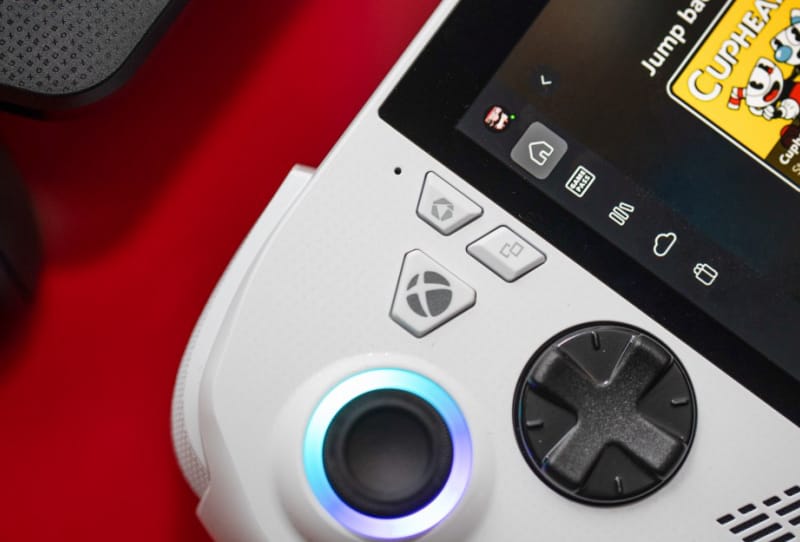
AMD will bring FSR 4 for handhelds by the end of 2026, according to the company’s consumer chip boss Jack Huynh. The commitment ends months of uncertainty over whether AMD’s newest upscaling technology would officially reach handheld gaming PCs such as the Steam Deck, ROG Ally and Legion Go, rather than leaving owners to rely on unofficial workarounds.
Key takeaways
- ✓AMD consumer chip boss Jack Huynh confirmed FSR 4 for handhelds is coming by the end of 2026
- ✓The rollout pairs a new APU with a lightweight FSR 4 model built for lower power budgets
- ✓It remains unclear whether existing handhelds like the Steam Deck will qualify or if new silicon is required
- ✓The move follows AMD's leaked Ryzen Z3 and Gainsborough handheld chips expected for next-generation devices
- ✓FSR 4 currently works unofficially on some older handhelds through community mods, but lacks official AMD support
FSR 4 already runs on handhelds as old as the original Steam Deck through community modifications, but AMD had not committed to supporting that hardware directly. In June, the company even reserved the right to leave older handheld chips without official backing. Huynh’s latest comments mark a clear shift, promising the tech across AMD’s whole product stack rather than just desktop graphics cards.
Table of Contents
What AMD’s Jack Huynh actually said
Speaking to Korean outlet The Elec, Huynh said AMD plans to expand FSR 4 “to the entire product line including APUs, gaming laptops, and handheld devices by the end of this year.” He added that AMD would “respond in two directions: launching existing APUs and new product lines,” language that suggests both current chips and upcoming silicon are in play.
The Elec reported that this rollout involves a new APU alongside a lighter, more efficient version of the FSR 4 model built specifically for chips that draw far less power than a desktop graphics card. That detail matters, because FSR 4 was originally announced only for AMD’s desktop GPUs, not the integrated graphics found inside handhelds and thin laptops.

Why FSR 4 for handhelds is a bigger deal than it sounds
Upscaling technology lets a device render games at a lower internal resolution before using machine learning to reconstruct a sharper, higher-resolution image. Done well, it can lift framerates substantially without the heavy battery drain of simply pushing more raw pixels, which is exactly the trade-off handheld gaming PCs are built around.
AMD’s FSR 4 is widely regarded as a meaningful step up from FSR 3, closing some of the visual quality gap with NVIDIA’s DLSS. Bringing it to handhelds officially, rather than through unsupported hacks, would give players more consistent image quality and better studio-level support for the games they actually run on the go.
| Upscaling technology | Maker | Primary hardware target |
|---|---|---|
| FSR 4 | AMD | Desktop GPUs, expanding to APUs and handhelds |
| DLSS | NVIDIA | GeForce RTX graphics cards and laptops |
| XeSS | Intel | Arc graphics cards and Panther Lake laptops |
That table shows why the handheld race matters so much to AMD. NVIDIA has been pushing its own neural rendering push through DLSS, and Intel has been courting handheld makers with Arc graphics and Panther Lake chips. AMD cannot afford to let its upscaling story lag behind on the one category of PC gaming hardware that has grown the fastest in recent years.
Will existing handhelds actually get it?
The biggest open question is whether current handheld owners will see official FSR 4 support land on their existing devices, or whether AMD’s plan is tied to new silicon arriving later this year. Huynh’s comments about “launching existing APUs and new product lines” hint at both paths, but AMD has not confirmed which specific chips or handhelds qualify.
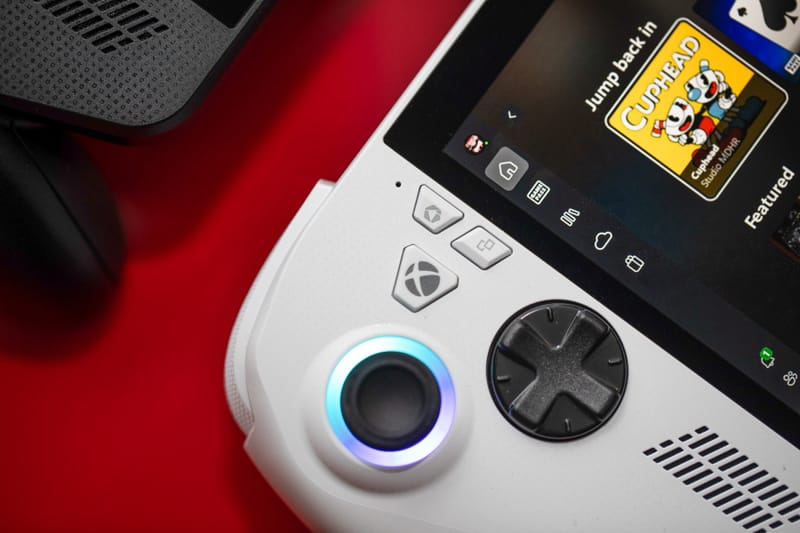
That ambiguity lines up with reporting around AMD’s leaked Ryzen Z3 and Gainsborough handheld chips, which are widely tipped to power a next-generation Steam Deck successor. If the lightweight FSR 4 model is tuned for that newer architecture, owners of today’s handhelds may end up watching from the sidelines even after AMD’s official rollout begins.
AMD has also been expanding its APU ambitions well beyond handhelds, as seen in AMD’s wider Ryzen AI chip strategy unveiled at IFA 2026. Folding FSR 4 into that broader push suggests the company sees upscaling as a feature that needs to span its entire mobile and handheld lineup, not a one-off addition for a single device.
What it means for handheld gamers
For anyone shopping for a handheld gaming PC over the next year, the timing matters. A device bought today might never receive full FSR 4 support if AMD ties the lightweight model to unreleased chips, while a wait-and-see approach could pay off once the new silicon and software land together before the end of 2026.
Valve, ASUS and Lenovo have all built their current handhelds around AMD chips, so any official FSR 4 support has the potential to improve framerates and battery life across a large slice of the market in one move. Until AMD names the exact hardware involved, though, existing owners are left in the same position as before: hopeful, but without a firm promise their device will benefit.

Frequently asked questions
What is FSR 4?
FSR 4 is AMD’s latest FidelityFX Super Resolution upscaling technology. It uses machine learning to reconstruct a higher-resolution image from a lower-resolution render, boosting framerates while aiming to keep visual quality close to native resolution.
Will the Steam Deck get official FSR 4 support?
It is not yet confirmed. AMD has promised FSR 4 for handhelds by the end of 2026, but has not said whether that support will extend to existing devices like the Steam Deck or will require new chips such as the rumoured Gainsborough silicon.
When is AMD bringing FSR 4 to handhelds?
AMD consumer chip boss Jack Huynh told Korean outlet The Elec that FSR 4 will reach APUs, gaming laptops and handheld devices by the end of 2026, alongside a new chip and a lighter version of the FSR 4 model.
How does FSR 4 compare to NVIDIA’s DLSS?
Both use machine learning to upscale games and boost performance. FSR 4 is considered AMD’s strongest answer yet to DLSS, though DLSS remains tied to NVIDIA’s GeForce RTX hardware while FSR 4 is expanding across AMD’s desktop, laptop and handheld chips.