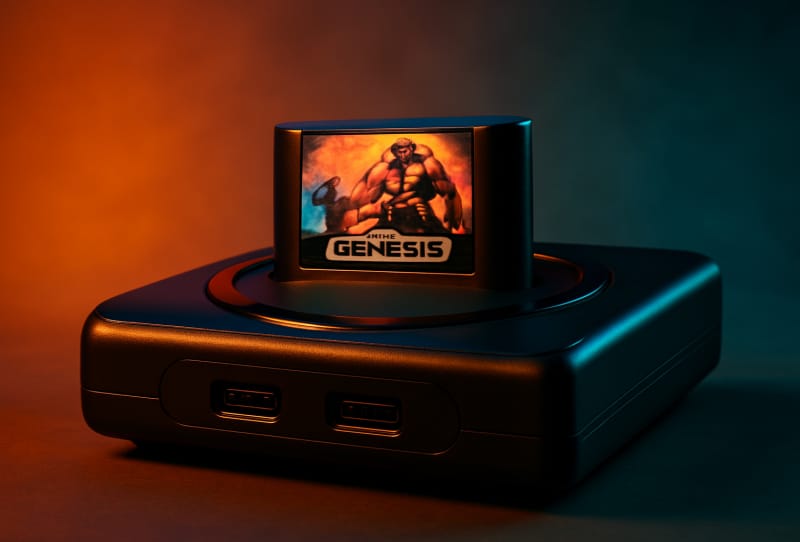
Analogue is reviving the Super Nt and Mega Sg, confirming that both FPGA-based 16-bit consoles will return in upgraded form and ship again in December 2026. The announcement ends a long stretch where both machines sat discontinued, scarce, and marked up well beyond retail on the resale market.
Key takeaways
- ✓Analogue is relaunching the Super Nt and Mega Sg, its FPGA-based SNES and Genesis consoles
- ✓Both consoles were discontinued and became scarce, pushing resale prices well above retail
- ✓The revived hardware is expected to ship again in December 2026
- ✓Both machines use FPGA chips to recreate original console hardware rather than software emulation
- ✓Analogue's console lineup has previously spanned 1985-era NES hardware through to 2002-era Game Boy hardware
For anyone who missed the originals, the Super Nt recreates a Super Nintendo Entertainment System, while the Mega Sg recreates a Sega Genesis. Both play real game cartridges rather than digital copies, using field-programmable gate array chips to reproduce the original hardware’s behaviour at the circuit level instead of relying on software emulation. That distinction matters to purists, because an FPGA console behaves far more like the original silicon than an emulator running on a modern chip ever can.
Table of Contents
Why the Super Nt and Mega Sg Disappeared
Analogue has spent the past decade working its way through console history, starting with the Nt Mini built around 1985-era NES hardware and later stretching forward to the Pocket and 3D, both rooted in 2002-era Game Boy technology. The Super Nt and Mega Sg filled the gap in between, covering the 16-bit era that defined the early 1990s console war between Nintendo and Sega.
Both consoles eventually ran their production cycles dry and were quietly discontinued. That left a gap in the market that scalpers were only too happy to exploit, with listings regularly appearing well above the original asking price. For collectors who missed the initial release windows, buying either console secondhand became an expensive proposition rather than a simple purchase.
Bringing both consoles back addresses that shortage directly. It also signals that Analogue sees ongoing demand for 16-bit hardware specifically, rather than treating that era as a one-off release to be replaced entirely by newer projects.
What Changes in the Upgraded Models
Analogue has framed the new versions as upgrades rather than straight reissues, though the company has not detailed every change at this stage. What is confirmed is the timeline: both the Super Nt and Mega Sg are expected to ship again in December 2026, giving fans a firm window to plan around after years without either console in production.
Analogue’s past hardware revisions have generally focused on refinements such as improved compatibility, updated connectivity, or firmware polish, while keeping the core FPGA approach intact. Given the company’s track record, buyers can reasonably expect the relaunched consoles to retain support for original cartridges and accessories while addressing whatever rough edges existed in the first release.
| Console | Original hardware recreated | Media supported | Expected shipping |
|---|---|---|---|
| Super Nt | Super Nintendo Entertainment System | Original SNES cartridges | December 2026 |
| Mega Sg | Sega Genesis / Mega Drive | Original Genesis cartridges | December 2026 |
How It Fits the Wider Retro Gaming Market
Analogue remains something of an outlier in the retro hardware space. Plenty of companies sell budget emulation handhelds and mini-console clones, but few invest in FPGA development specifically to avoid the input lag and compatibility quirks that software emulation can introduce. That commitment is part of why Analogue’s consoles tend to carry a premium reputation among collectors, even as cheaper alternatives flood online marketplaces.
The revived Super Nt and Mega Sg also arrive at a moment when interest in physical media preservation is growing again, partly as a reaction to digital storefronts shutting down or delisting older titles. Dedicated hardware that still reads an original cartridge offers a layer of permanence that a subscription service or digital re-release cannot guarantee. The same philosophy underpins how some enthusiasts approach console hardware more broadly, including projects that hide a retro console inside a CRT-style display to recreate the look and feel of an original setup.
It also sits alongside a broader trend of manufacturers rethinking console form factors, whether that means shrinking gaming hardware down to pocket size or supporting the enthusiast modding scene around console gaming that keeps older systems relevant long after official support ends.
What It Means for Buyers
For anyone who wanted a Super Nt or Mega Sg the first time around and missed out, this relaunch is the clearest opportunity in years to buy either console without paying a scalper’s markup. Given how quickly Analogue’s hardware tends to sell through, interest is likely to be strong once preorders open.
Collectors already holding an original unit are less likely to need the upgraded version, unless the specific improvements Analogue eventually details turn out to be significant. Everyone else now has a concrete December 2026 shipping window to work towards, and a reason to keep an eye on Analogue for further details as the release date approaches.
Frequently asked questions
What are the Analogue Super Nt and Mega Sg?
They are FPGA-based consoles that recreate the Super Nintendo Entertainment System and Sega Genesis respectively, playing original cartridges without relying on software emulation.
When will the new versions ship?
Analogue has confirmed both the Super Nt and Mega Sg are expected to ship again in December 2026, though full pricing and ordering details have not yet been detailed.
Do the new consoles play original cartridges?
Yes. Both the Super Nt and Mega Sg are designed around original cartridge compatibility, consistent with how the previous versions of each console worked.
Why were the original consoles discontinued?
Analogue wound down production on both consoles after their initial runs, which led to short supply and inflated resale prices before this relaunch was announced.