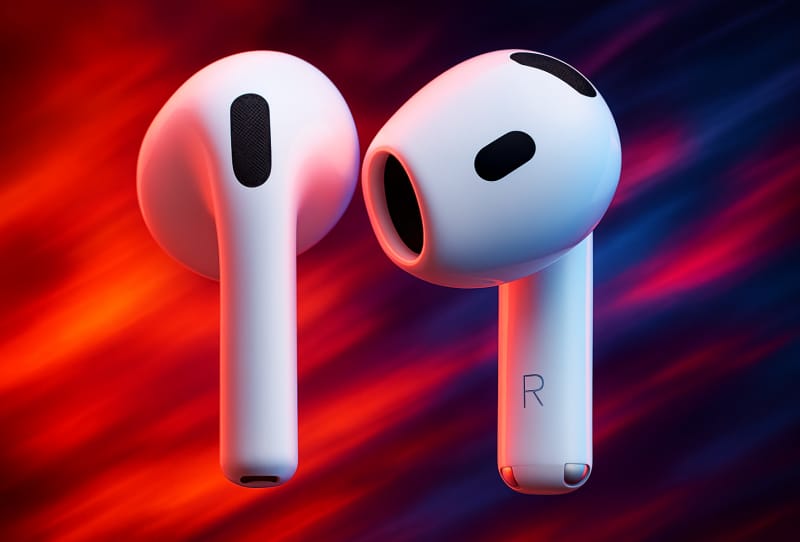
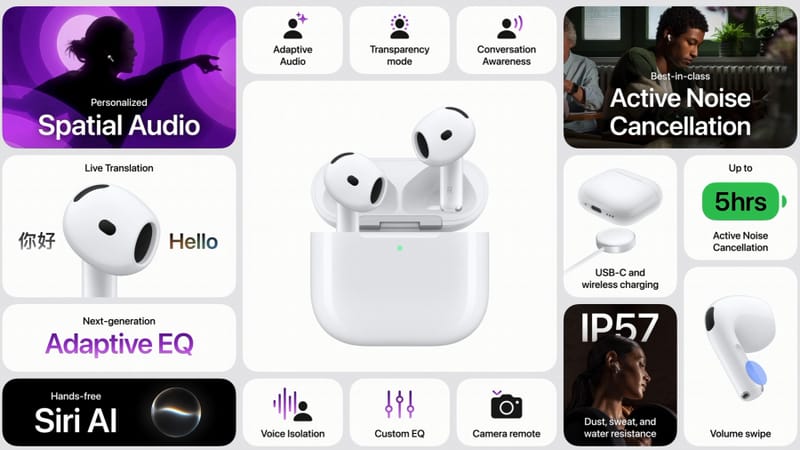
Apple has introduced the AirPods 5, and the headline claim is a bold one: the company says these open-ear earbuds now offer the industry’s best Active Noise Cancellation. That’s a striking statement for a design that, until now, has traded noise isolation for comfort and awareness of the world around the wearer.
The announcement came during Apple’s September event, alongside a wider run of hardware updates. Unlike the AirPods Pro line, which relies on silicone tips sealed inside the ear canal, the AirPods 5 keep the open-ear shape that has defined the standard AirPods since launch. Getting meaningful noise cancellation out of that shape is a genuine engineering challenge, since there’s no physical seal to block outside sound in the first place.
Table of Contents
What Apple actually changed with the AirPods 5
Open-ear earbuds have always struggled with Active Noise Cancellation because the technology traditionally depends on a tight acoustic seal to work well. Apple’s pitch with the AirPods 5 is that it has found a way to deliver strong ANC performance without asking buyers to give up the open, in-and-out convenience that made the standard AirPods popular in the first place.
Exact technical detail on how Apple achieved this remains limited beyond the marketing claim itself, but the direction is clear. Apple wants a single pair of earbuds that suits gym sessions, commutes, and office calls without forcing a trade-off between comfort and quiet. For a product line that has leaned heavily on convenience over outright audio performance, adding serious noise cancellation is a meaningful shift in ambition.
Why open-ear ANC is such a hard problem to solve
Traditional noise cancellation works by using microphones to detect ambient sound, then generating an inverse sound wave to cancel it out inside a sealed ear canal. Remove the seal, and that cancellation effect becomes far harder to control, because outside noise can simply leak back in around the edges of the earbud.
Several other brands have tackled open-ear audio from a different angle, focusing on comfort and situational awareness rather than blocking noise altogether. Earbuds such as the Shokz OpenFit Air 2 and the Kiwi Ears Spark have built loyal followings among people who want to hear their surroundings while running or working. Sports-focused designs like the JBL Endurance Zone take a similar approach, prioritising a secure, open fit over isolation.
Apple’s move suggests it isn’t satisfied with that trade-off. If the AirPods 5 genuinely deliver strong ANC in an open-ear shape, it would put pressure on rivals who have treated noise cancellation and open-ear comfort as mutually exclusive goals.
How the AirPods 5 fit into Apple’s wider earbud strategy
Apple currently sells the AirPods Pro as its noise-cancelling flagship, with sealed tips designed specifically to block outside sound. The standard AirPods, by contrast, have always been the more casual option, prioritising quick fit and all-day wearability over acoustic isolation.
The AirPods 5 sit somewhere between those two identities. By adding ANC to the open-ear formula, Apple appears to be blurring the line between its budget-friendly earbuds and its premium noise-cancelling model. That’s a notable strategic choice, since it could make the standard AirPods a far more serious option for commuters and office workers who previously felt pushed toward the Pro model just to get decent noise blocking.
It also raises the bar for the wider open-ear earbud market. Brands that built a reputation on comfort-first, awareness-friendly designs will now need to answer Apple’s claim directly, rather than simply competing on fit and battery life.
What this means for buyers
For anyone who has wanted the convenience of open-ear earbuds but found them too leaky for noisy commutes or busy offices, the AirPods 5 look like a genuine attempt to solve that problem. Whether the noise cancellation truly matches sealed designs will only become clear once independent listening tests and reviews start comparing it directly against the AirPods Pro and rivals such as Shokz and Kiwi Ears.
What is clear already is that Apple is no longer treating open-ear design and Active Noise Cancellation as separate categories. That shift alone is likely to influence how competitors approach their next generation of earbuds, regardless of how the AirPods 5 ultimately perform in real-world use.