
The Bambu P2S arrives as a carefully refined evolution of its predecessor, bringing together advanced engineering and user-friendly design in a compact and approachable package. From the moment it powers on, it becomes clear that this model reflects years of feedback and iteration, with thoughtful updates that make day-to-day printing smoother and more predictable. Its focus on reliability and ease of use gives newcomers a strong foundation while still offering depth for more advanced users.
Much of the appeal of the P2S comes from how seamlessly it handles complex workflows without demanding constant attention. Multi-material printing, automated calibration, and intelligent monitoring are all woven into the experience in a way that feels natural rather than overwhelming. This creates an environment where experimentation feels encouraging rather than intimidating, and even lengthy projects become straightforward to manage.
The machine’s polished construction and modern interface add to the feeling of a well-rounded, enthusiast-ready printer that fits comfortably into home studios and workspaces. Its blend of stability, speed, and automation makes it a compelling choice for users wanting professional-grade output with minimal fuss. The P2S positions itself as a confident step up from earlier models, showcasing a level of refinement that’s immediately noticeable in every print cycle.
Design and Functionality
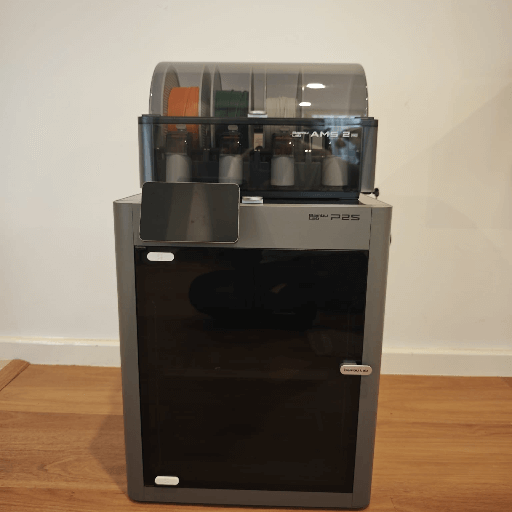
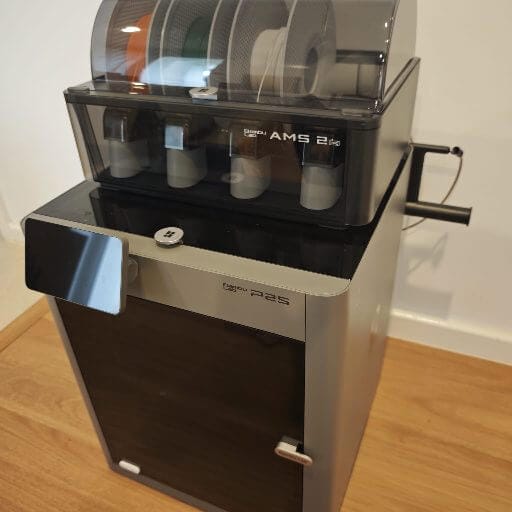
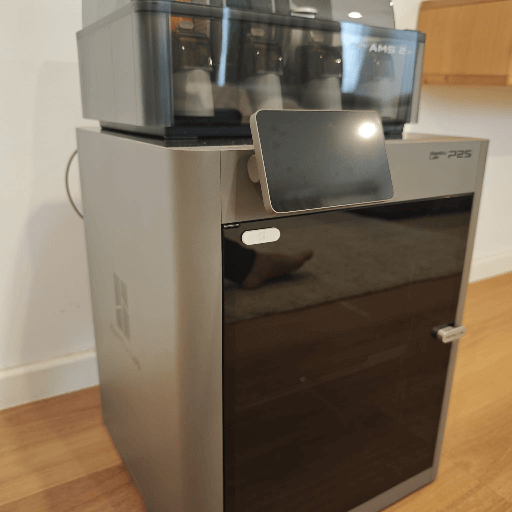
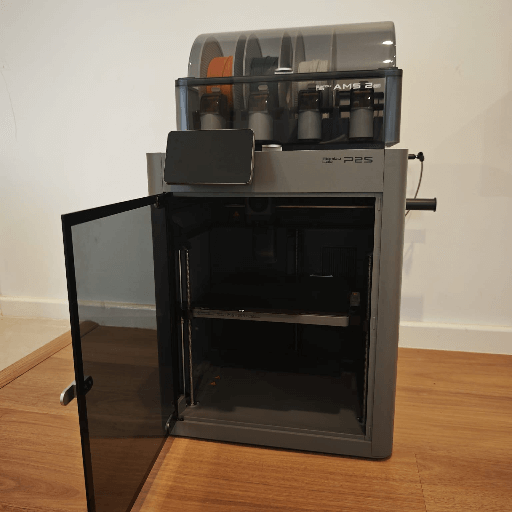
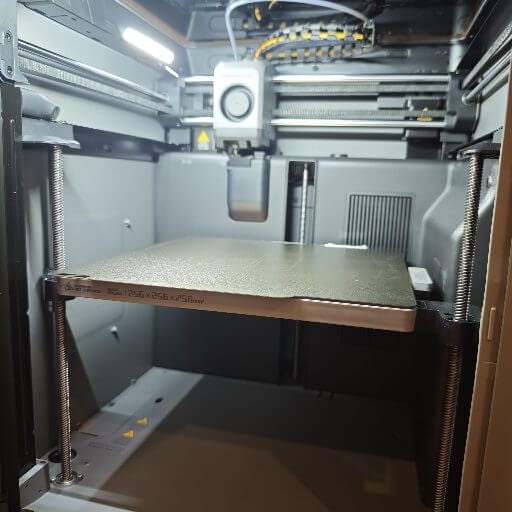
The P2S presents a clean, modern exterior that feels solid and thoughtfully arranged, with its combination of steel, plastic and glass giving it a sturdy yet refined presence. Its compact footprint makes it practical for smaller workspaces, allowing it to fit comfortably on a desk without dominating the area. Despite its smaller size, the machine retains the rigidity needed for consistent performance across long print sessions.
A fully enclosed structure supports more demanding filament types by maintaining a stable internal environment. This enclosure also helps reduce noise, making it suitable for offices, workshops or shared creative spaces. The consistent internal temperature contributes to improved reliability, especially when working with materials that benefit from reduced airflow.
The inclusion of a bright 5-inch touchscreen significantly elevates daily interaction with the printer. Its responsive interface offers clear visibility of crucial settings, print progress and system diagnostics, streamlining navigation even for those new to 3D printing. Menus load quickly, and the layout is intuitive enough that checking or adjusting options becomes second nature.


Bambu’s focus on accessibility continues with its wide connectivity options. The P2S supports wireless control through compatible desktop and mobile applications, allowing prints to be sent or monitored from virtually anywhere on the network. At the same time, traditionalists will appreciate the presence of a USB port for direct file transfers when a simple, cable-free workflow is preferred.
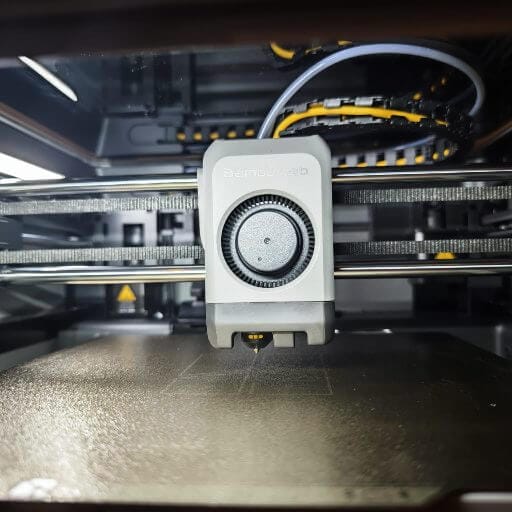
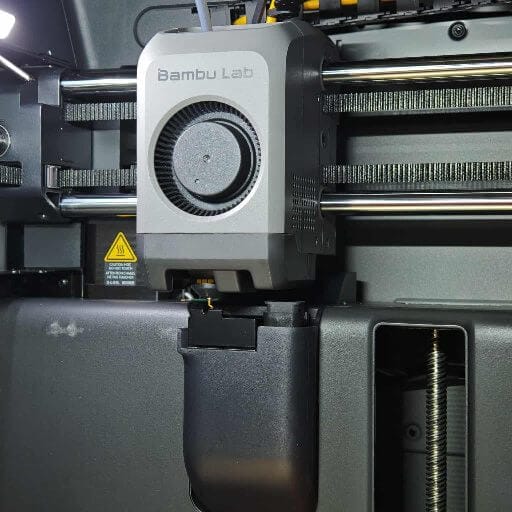
Internally, the printer benefits from several mechanical updates designed to enhance durability and reduce maintenance. Smooth metal rods replace earlier carbon-based components, offering improved longevity and easier upkeep over months of frequent use. These changes contribute to a quieter, more stable printing experience that holds up well to continuous operation.
The print head follows a modular design philosophy that makes nozzle changes both quick and approachable. Users can swap to finer or larger nozzles in just a few moments, enabling flexibility between intricate detailing and rapid prototyping. The system instantly recognises newly attached hot ends, ensuring the correct parameters are applied without manual input.
An integrated camera adds convenience for those who like to keep an eye on their prints from afar. With clear 1080p quality, it offers both live monitoring and the ability to capture time-lapse videos, making it easy to document project progress. This is particularly useful when experimenting with multi-material prints or longer builds.
Airflow management plays a key role in the P2S’s overall functionality. Adaptive cooling automatically adjusts airflow depending on filament type and behaviour, helping maintain consistent layer adhesion. When working with heat-sensitive materials, this responsive system helps minimise warping and surface inconsistencies.
Alongside cooling, the printer incorporates filtration designed to reduce odours and particulates during operation. This makes it more comfortable to run in enclosed rooms where ventilation may be limited. The filtration system works in tandem with the enclosed chamber to support cleaner and safer printing conditions.
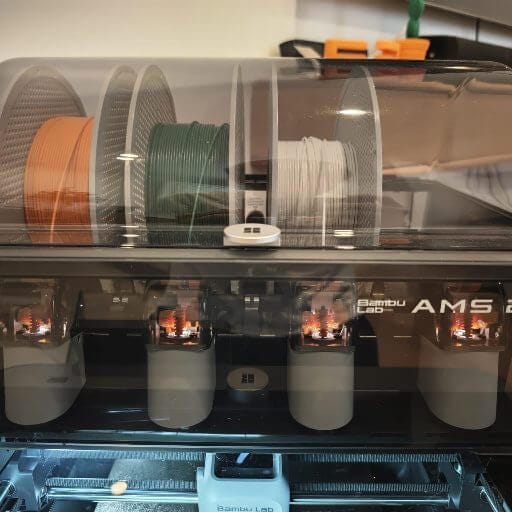
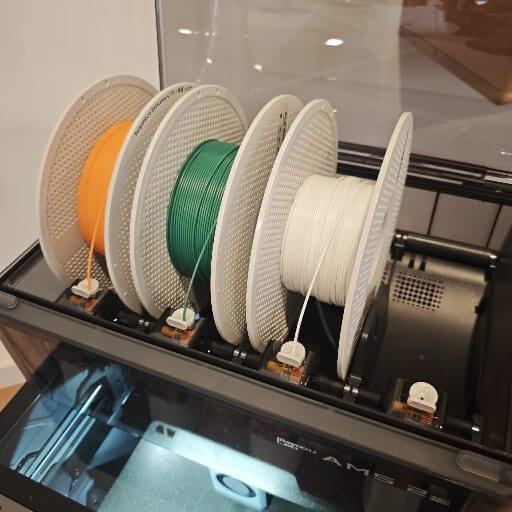
One of the standout elements of the P2S design is its compatibility with multi-material printing through the AMS 2 Pro. This unit feeds filament reliably and stores materials under controlled conditions, reducing moisture exposure and maintaining print quality. It also reads spool data automatically when using supported filaments, simplifying setup even further.
The chassis construction balances strength and accessibility, giving users a machine that feels dependable while still being easy to service. Panels and components are arranged in a way that encourages upkeep without requiring advanced technical knowledge. This helps maintain print quality over long-term use and makes troubleshooting quicker when needed.
The design of the P2S showcases a well-considered fusion of form and practicality. Every element—from the touchscreen to the internal mechanics—works toward creating a polished printing experience that minimises friction and maximises creativity. It stands as a clear reflection of the lessons learned from earlier generations, offering a mature and highly capable platform for a wide range of projects.
Key Features
The P2S incorporates a sophisticated multi-material system through its AMS 2 Pro compatibility, allowing seamless transitions between different filaments during a single print. This setup supports both creative colour work and functional multi-material projects with impressive reliability. Its ability to store and condition filaments ensures consistent performance across extended print jobs.
A major strength of the printer lies in its automated calibration suite, which handles tasks such as flow tuning and bed levelling without user intervention. These processes run efficiently in the background, giving users greater confidence when starting new projects. This automation helps maintain consistent print quality, even when switching between different nozzle sizes or materials.
AI-assisted monitoring brings another layer of intelligence to the printing experience. The built-in camera and computer vision algorithms can identify common issues like tangled filament or early signs of a failed print. When something unusual is detected, the machine pauses immediately, allowing the user to resolve the issue before any material is wasted.
The extruder benefits from a high-precision motor capable of producing strong, consistent filament pressure. This contributes to reliable extrusion, especially when dealing with high-flow or fibre-reinforced materials. Its ability to detect clogs or grinding in real time helps protect both the print and the hardware.
A high-resolution eddy current sensor enhances the printer’s flow control by analysing nozzle pressure and adjusting extrusion accordingly. This results in smoother walls, better surface consistency and improved accuracy across complex geometries. It adapts quickly to different filament characteristics, maintaining stability throughout the print.
The P2S features adaptive airflow management that automatically shifts between cooling and heat-preserving modes depending on the print requirements. This smart control helps achieve clean overhangs and crisp details for low-temperature materials, while supporting more demanding filaments that require stable chamber conditions. The system works quietly and efficiently, contributing to dependable output.
Filament handling is made easier through built-in sensors that detect run-outs, tangles and feeding irregularities. These safeguards make longer prints far less stressful, ensuring the printer responds promptly when an adjustment is needed. Combined with optional AMS units, the system promotes smooth, predictable material delivery.
The printer’s enclosure integrates an activated carbon filtration system designed to reduce odours and particulates generated during printing. This adds comfort and peace of mind, particularly for users operating in smaller or shared spaces. While ventilation is always recommended, the filter helps maintain a cleaner environment.
High-speed printing capabilities are supported by a robust motion system capable of rapid acceleration while maintaining accuracy. This allows users to complete functional prototypes or decorative projects much faster than traditional printers in the same category. Despite the increased speed, detail levels remain crisp and controlled.
The P2S supports an extensive list of filament types ranging from everyday PLA to advanced composites such as carbon-fibre-reinforced materials. This versatility gives users freedom to explore a wide range of applications without needing separate printers. Whether creating artistic models, durable components or intricate miniatures, the machine is equipped to handle diverse demands with confidence.
Experience Using the Product and Performance
From the moment the P2S is powered on, the startup process feels polished and reassuring. The interface guides you through initial steps with clear prompts, making the setup approachable even for those using a 3D printer for the first time. Its calibration routines begin automatically, giving the sense that the machine is preparing itself thoughtfully before any work begins.
The setup time is pleasantly short, requiring only a few minutes of physical assembly before the printer takes over. Once calibration begins, the system checks every major component with impressive accuracy, ensuring everything is aligned and ready. This hands-off approach removes much of the guesswork that can make early experiences challenging.
When introducing filament through the AMS system, the recognition process is almost instant. Supported spools are detected without any manual input, allowing the printer to automatically adjust settings accordingly. This kind of automation helps maintain consistency, especially when switching between materials frequently.
During early test prints, the P2S showed exceptional reliability. Each model loaded quickly and ran smoothly, with the printer requiring minimal user intervention. The absence of unexpected pauses or calibration prompts helped build confidence in the machine’s performance capabilities.
The touchscreen becomes an invaluable companion throughout these early prints. Its responsiveness makes navigating between menus feel natural, and print previews load quickly—even for larger files. This responsiveness enhances the perception of solid performance under the hood.
Network control adds another layer of convenience. Sending files wirelessly eliminates the need for transferring USB drives between devices, speeding up the workflow. This flexibility is especially helpful when managing multiple projects across different computers.
The print quality from the P2S stands out immediately. Layer lines are fine and consistent, even during faster movements, which is a testament to the machine’s precise motion system. Complex surfaces retain smoothness and definition without requiring excessive post-processing.
Multi-material printing is handled with remarkable competence. Colour transitions are sharp, and material changes occur with minimal waste thanks to the efficient cutting and feeding system. This allows more ambitious, visually complex prints to be produced with ease.
When printing intricate parts using a finer nozzle, the P2S maintains accuracy across delicate ridges and small curves. Its flow calibration adapts naturally to the constraints of a smaller extrusion diameter. This results in detailed prints that retain structural integrity without visible artefacts.
Switching to a larger nozzle highlights the machine’s speed advantage. Prints that would typically take hours can be completed far faster without sacrificing too much surface quality. This versatility makes the printer suitable for both rapid prototyping and detailed artistry.
The adaptive cooling system proves its worth when working with PLA and other temperature-sensitive materials. It manages airflow intelligently, helping maintain crisp overhangs and clean edges even on models with high levels of detail. This offers peace of mind when attempting complex geometries.
Heat-preserving airflow becomes valuable when experimenting with more demanding filaments. Materials such as ABS show fewer warping tendencies thanks to the stable internal temperature. The enclosed chamber helps maintain these controlled conditions effectively throughout the print.
Mechanical performance remains stable during long print runs. Vibrations are kept to a minimum, and the chassis maintains its rigidity even when printing at high speeds. This steady operation results in clean walls and reliable dimensional accuracy.
The extruder’s real-time detection systems work quietly in the background. When feeding issues or clogs occur, the printer pauses instantly before any damage can progress. This responsiveness ensures that minor issues remain manageable rather than becoming print-ending problems.
During prolonged testing, the printer demonstrated a strong ability to resume operations seamlessly. Even after a pause triggered by filament irregularities, the print continued without noticeable seams or defects. This contributes significantly to the machine’s stamina over extended usage.
The built-in camera becomes a convenient tool for remote oversight. Its clarity makes it easy to check on print progress from another room or while multitasking. Time-lapse capture also adds a creative touch for documenting builds.
In terms of noise, the enclosed design helps keep operation surprisingly quiet. The fans adjust their speed depending on the task, and the printer maintains a consistent hum without becoming intrusive. This makes it a comfortable addition to home workshops.
Filament changes remain straightforward throughout the testing period. The AMS 2 Pro feeds materials reliably, and manual changes are quick when needed. This consistency removes the frustration often associated with multi-material workflows.
Users experimenting with third-party filaments may experience occasional interruptions, especially with cardboard spools. The extruder, however, compensates well, and the printer always resumes the job without compromising quality. This resilience ensures projects stay on track.
Print adhesion on the textured plate is excellent across a range of materials. Models release cleanly once cooled, and warping is minimal when settings are applied correctly. This dependable adhesion streamlines the printing cycle from start to finish.
The motion system’s acceleration capabilities are particularly noticeable during travel movements. It shifts direction smoothly without jolting, which contributes to improved accuracy on sharp corners. These subtle improvements collectively elevate overall print finish.
Slicer support is extensive, with Bambu Studio offering a straightforward workflow complemented by advanced features. Profiles load quickly, and the interface simplifies adjustments for nozzle size, material changes or print strategy. Users who prefer third-party slicers still benefit from broad compatibility.
Long-duration prints demonstrate the P2S’s reliability over multi-day cycles. Temperature regulation remains steady, and the machine monitors filament levels accurately. Knowing the printer can handle long runs reduces stress during large or complex projects.
The calibration accuracy achieved at the beginning continues to hold throughout consistent use. There is no need for frequent adjustments, even when switching between different filament types. This stability greatly enhances the overall experience.
In real-world workflows, the P2S proves to be a dependable, adaptable machine that thrives under continuous operation. Its combination of intelligent features and precise mechanics supports a wide range of creative and functional projects. Whether producing prototypes, miniatures or utility parts, it consistently delivers quality prints with minimal effort.
Throughout extensive testing, the machine maintained an impressive rate of successful prints. With features working together harmoniously, the P2S offers a performance profile that feels refined, modern and thoroughly user-friendly. It stands out as a printer that encourages experimentation while providing the stability needed for serious work.
Here is a clean, easy-to-read technical specifications section based entirely on the specs you provided, rewritten in fresh wording and formatted for clarity. No bold text is used.
Technical Specifications
Printing System
• Technology: Fused Deposition Modelling (FDM)
• Supported filaments: PLA, PETG, ABS, ASA, TPU, PET, PC, PA, PVA and a wide selection of composite materials including PLA-CF, PETG-CF, ASA-CF, ABS-GF, PA6-CF, PA6-GF, PAHT-CF, PPA-CF and PET-CF
• Filament diameter: 1.75 mm
• Filament management: Built-in cutter and odometry (with AMS)
Build Area & Physical Design
• Build volume: 256 × 256 × 256 mm
• Overall dimensions: 392 × 406 × 478 mm
• Construction materials: Steel, plastic and glass
• Net weight: 14.9 kg
• Enclosed chamber: Yes
• Included build plate: Textured PEI flexible steel plate
• Additional supported plates: Smooth PEI plate, Cool Plate SuperTack
Toolhead & Extrusion
• Nozzle temperature limit: 300°C
• Included nozzle: 0.4 mm hardened steel
• Supported nozzle sizes: 0.2 mm, 0.4 mm, 0.6 mm and 0.8 mm
• Extruder motor: High-precision Bambu Lab PMSM
• Maximum flow rate: 40 mm³/s
• Extruder gear: Hardened steel
Motion & Speed
• Maximum print speed: 600 mm/s
• Maximum acceleration: 20,000 mm/s²
• Motion controller: Dual-core Cortex-M4 + single-core Cortex-M7
• Application processor: Quad-core ARM A7 (1.5 GHz)
• Neural processing unit: 2 TOPS capability
Heating & Cooling
• Heatbed temperature limit: 110°C
• Cooling system: Closed-loop controlled part-cooling, hotend cooling and auxiliary cooling fans
• Airflow management: Adaptive cooling and heat-preserving airflow control
Monitoring & Sensors
• Camera: Built-in 1080p (1920 × 1080) at 30 fps
• Door sensor: Supported
• Filament run-out and tangle sensors: Supported
• Power loss recovery: Supported
• Nozzle pressure sensing: High-frequency eddy current sensor
Filtration
• Filter type: Activated carbon
• VOC filtration: Supported
• Particulate filtration: Supported
Connectivity & Control
• Wireless networking: Dual-band Wi-Fi
• Ethernet: Not available
• Storage: 8 GB internal EMMC + USB port for external storage
• User interface: 5-inch touchscreen (854 × 480)
• Software: Compatible with Bambu Studio and third-party slicers using standard G-code
• Supported operating systems: Windows, MacOS and Linux
Power & Operating Conditions
• Voltage: 100–120 V / 200–240 V, 50/60 Hz
• Maximum power draw: Up to 1200 W (220 V) / 1000 W (110 V)
• Typical PLA printing power: Approximately 200 W
• Recommended operating temperature: 10–30°C
Conclusion
The P2S establishes itself as a reassuringly capable machine that supports both everyday creativity and more demanding technical work. Its polished interface, refined mechanics and thoughtful automation combine to create a printer that feels dependable from the first setup through to long-term use. This makes it an appealing option for users who want smooth, predictable performance without constant adjustment.
Its wide compatibility with different materials, including advanced composites, adds genuine versatility to the workflow. Whether you’re building artistic pieces, structural components or intricate miniatures, the machine adapts well to the job at hand. This adaptability helps broaden the types of projects users can confidently take on.
The intelligent systems working behind the scenes play a major role in elevating the overall experience. From automated calibration to real-time monitoring, the printer’s ability to manage potential issues reduces stress and supports consistent success. These features work together to create a reliable and user-friendly production environment.
By combining precision, efficiency and smart functionality, the P2S offers a balanced and highly capable printing platform for a wide range of users. It stands as a strong choice for those seeking a compact yet advanced printer that encourages experimentation while consistently delivering high-quality output.
