Comet C/2025 R3 (PANSTARRS) has been one of the more exciting night-sky targets for Australian observers in 2026, especially because of its brief evening visibility after sunset. For viewers in Western Australia, the comet has appeared low in the western sky, making it a rewarding but time-sensitive target that benefits from clear horizons, careful timing, and the right imaging setup.
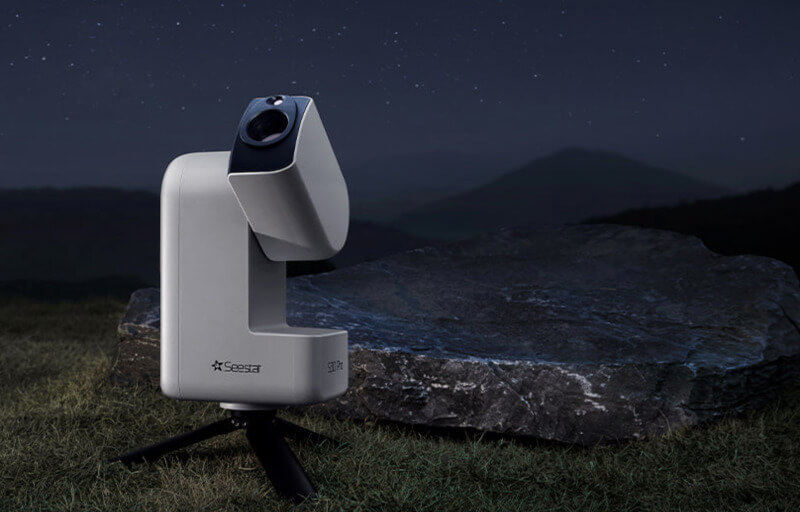
From Perth, this made C/2025 R3 both a challenge and a perfect opportunity for the Seestar S30 Pro. Rather than requiring a traditional telescope, tracking mount, camera, laptop, and manual alignment process, the S30 Pro brings the full astrophotography workflow into a compact smart telescope that can be carried outside, set up quickly, and controlled from a phone or tablet.
For our capture session, we used the Seestar S30 Pro to image the comet over roughly 30 minutes, using 10-second exposures that were stacked to build a clearer final image. This approach suited the target well, allowing the telescope to collect more light over time while keeping each individual exposure short enough to manage tracking, sky glow, and the comet’s low position above the horizon.
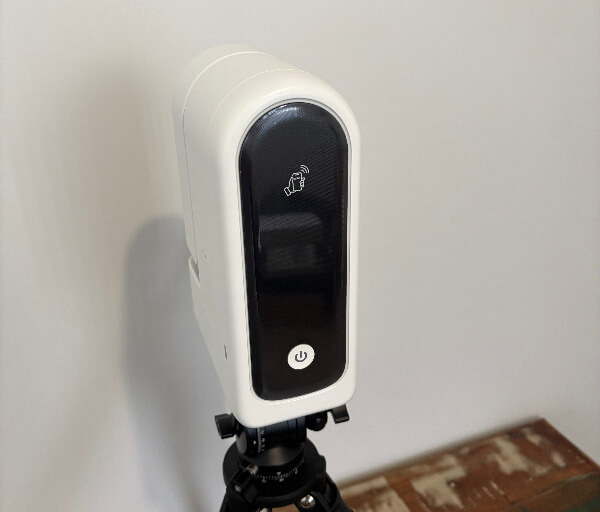
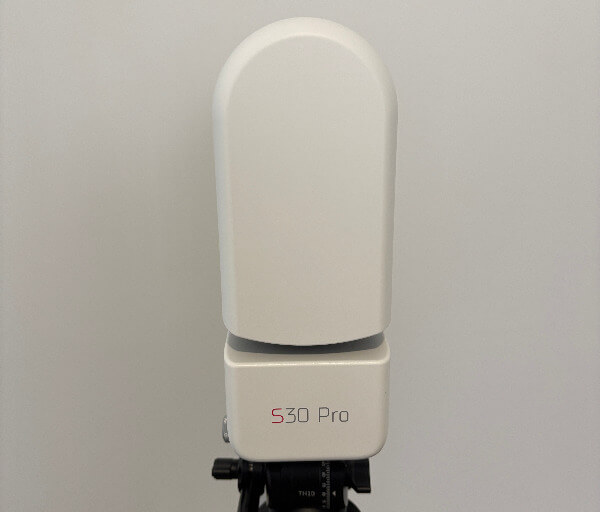
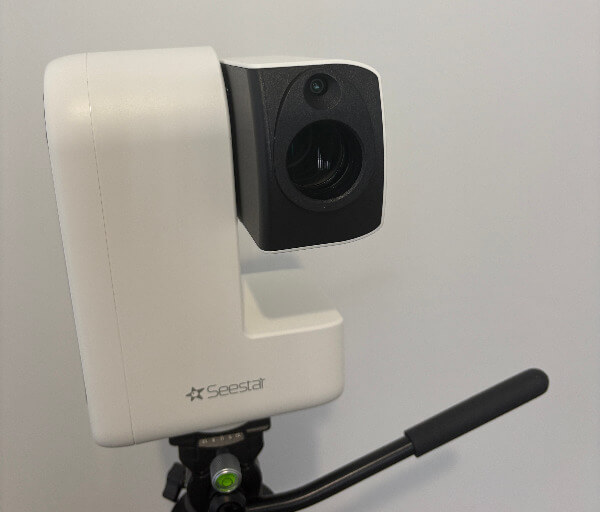
Table of Contents
A Rare Visitor in the Western Australian Sky
C/2025 R3 (PANSTARRS) is a long-period comet discovered by the Pan-STARRS survey in September 2025. It passed perihelion, its closest point to the Sun, on 19 April 2026 at around 0.50 AU, before becoming a post-sunset target for Southern Hemisphere observers in late April and early May. (Wikipedia)
For Australian observers, the comet’s timing has been particularly interesting because it has emerged in the evening sky after sunset. ABC reported that C/2025 R3 was glowing in the western sky after completing its slingshot around the Sun, with a brightness around magnitude 5.2 in early May, placing it close to the limit of naked-eye visibility under dark skies but far better suited to binoculars, cameras, and telescopes.
That is where the Seestar S30 Pro becomes so useful. A faint comet low in the twilight sky is exactly the type of target that can be frustrating with basic gear, especially from suburban Perth where light pollution, rooftops, trees, and the glow of sunset all work against the observer. With the S30 Pro, the experience becomes much more approachable because the telescope handles alignment, tracking, focusing, and stacking automatically.
The comet’s blue-green glow has also made it a visually appealing target. This colour is commonly associated with gases such as diatomic carbon and cyanogen fluorescing under solar ultraviolet radiation, giving many comet images their distinctive greenish appearance.
Why the Seestar S30 Pro Suits Comet Imaging
The Seestar S30 Pro is designed for people who want to experience astrophotography without turning the process into a technical project. That matters when targeting something like C/2025 R3, because the observing window is short and the comet’s position changes from night to night. The less time spent manually configuring equipment, the more time can be spent actually capturing data.
Its compact all-in-one design is a major advantage for backyard astronomy. The telescope combines optics, sensors, tracking, storage, battery power, and software into a single portable unit, removing the need for exposed cables or a complicated imaging train. This makes it especially useful for spontaneous sessions when clear skies appear unexpectedly.
The S30 Pro’s telephoto camera is built around a Sony IMX585 sensor with an 8.3MP resolution of 2160 × 3840. It uses a 30 mm aperture, 160 mm focal length, and f/5.3 optical system, giving it enough reach for targets like comets while still retaining a practical field of view for framing. The 4-element apochromatic lens with ED glass also helps maintain clean, controlled stars across the frame.
For C/2025 R3, the telescope’s 4.6-degree telephoto field of view is particularly helpful. Comets are not always easy to frame like planets or bright nebulae, and a wider field makes it easier to capture the surrounding star field along with the comet’s coma and any visible tail structure.
The S30 Pro also includes built-in filters, including a UV/IR cut filter and an astronomical light pollution filter with OIII and H-alpha bandwidths. While a comet is not the same type of target as an emission nebula, having integrated filtering and automatic image management still helps when imaging from suburban conditions where sky glow can quickly wash out faint detail.
Capturing C/2025 R3 from Perth
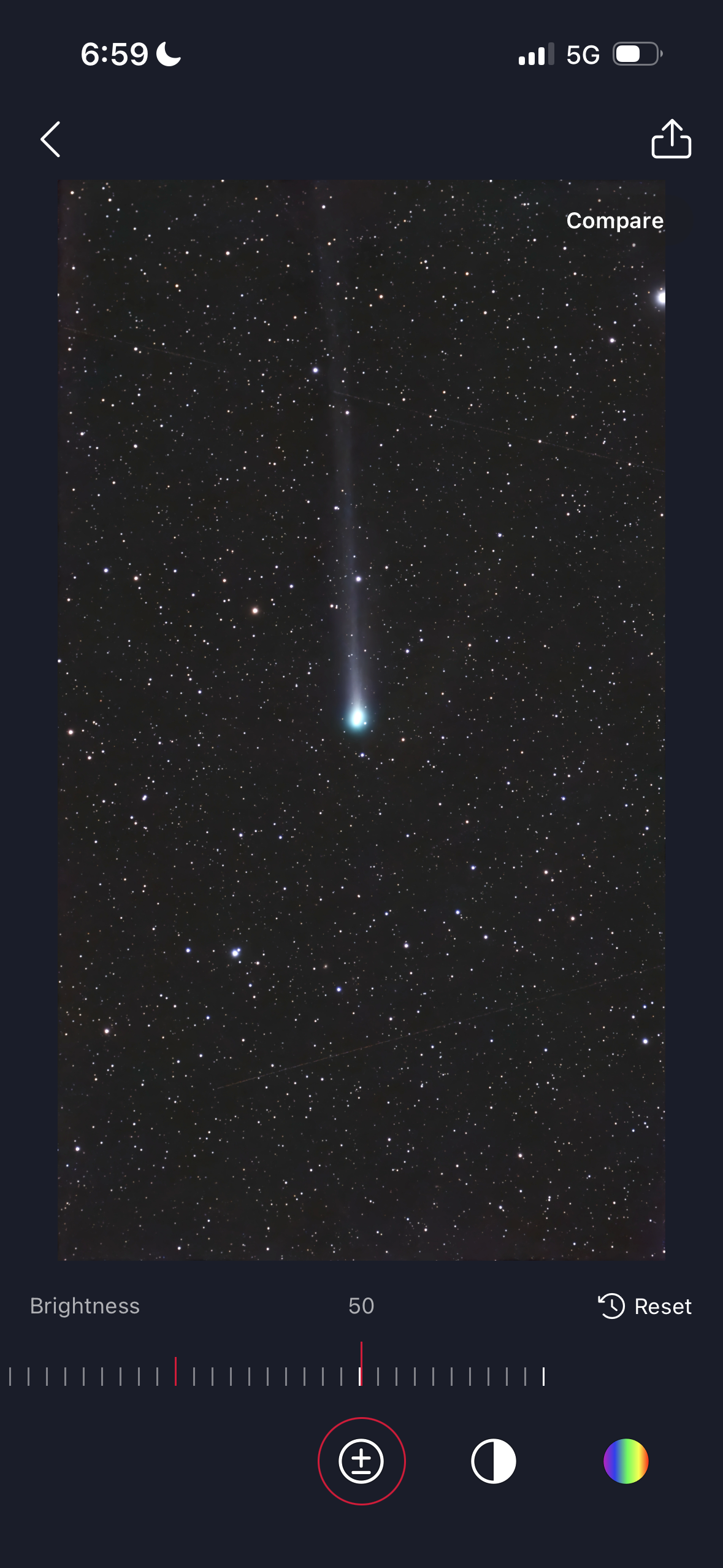
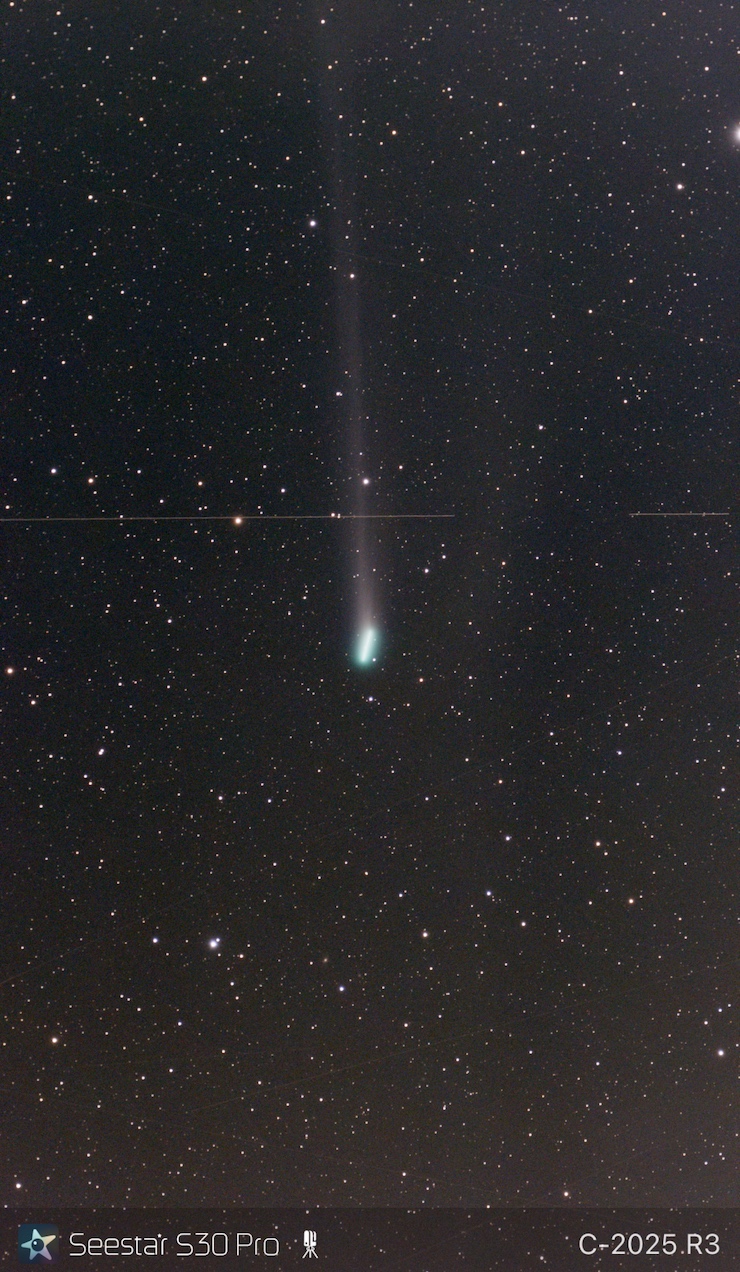
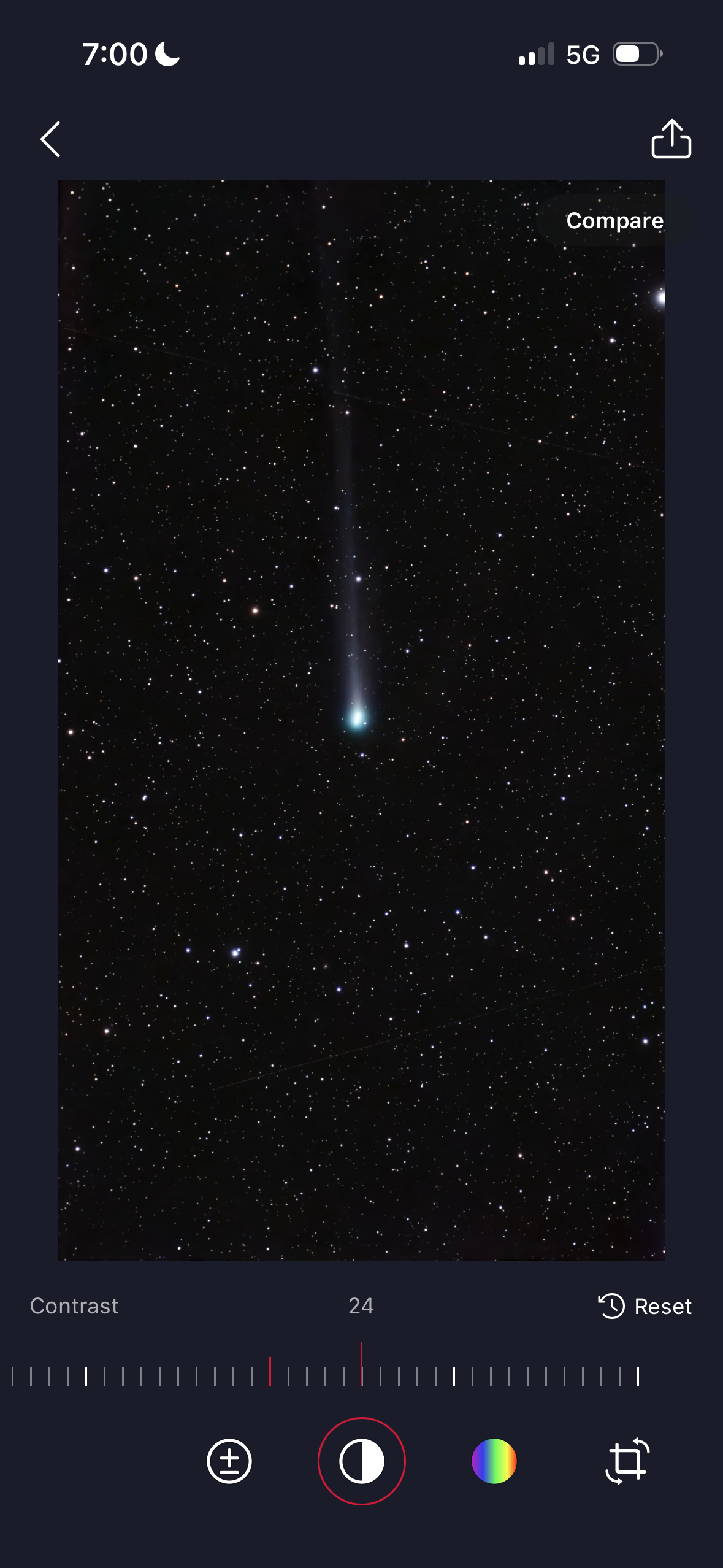
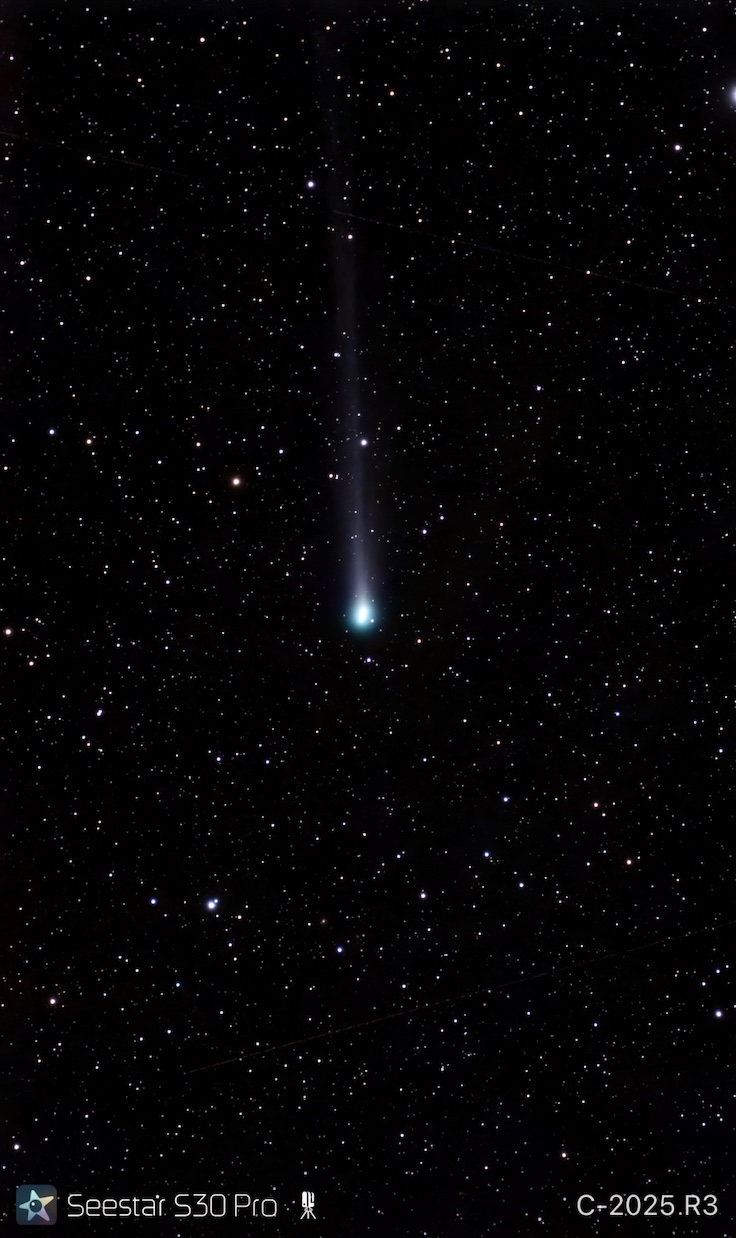
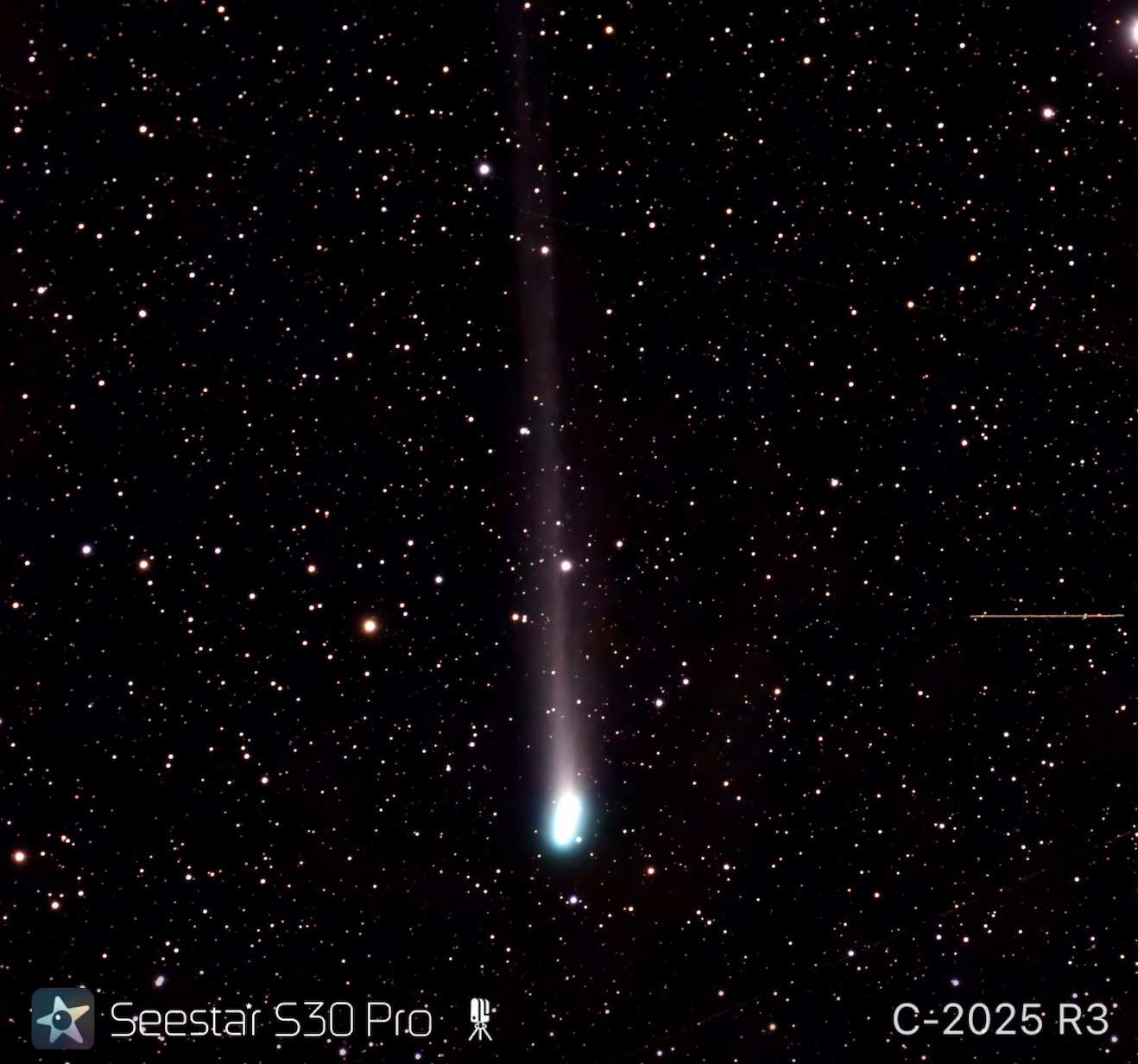
Our session in Perth was built around a simple goal: capture the comet while it was still accessible after sunset. With C/2025 R3 sitting low in the western sky, location and timing mattered. A clear view towards the west was essential, as even a small obstruction from buildings, trees, or fencing could shorten the useful imaging window.
Once positioned, the Seestar S30 Pro made the process feel straightforward. After powering on the telescope and connecting through the app, the workflow was focused less on technical setup and more on target acquisition. This is one of the best things about the S30 Pro: it removes the friction that can make astrophotography feel intimidating.
The image was captured over roughly 30 minutes using 10-second exposures stacked together. Short exposures are a practical choice for a comet sitting low in the sky because they help reduce the impact of tracking errors, atmospheric disturbance, and passing vibration. Over time, stacking those shorter exposures allows the faint comet signal to build into something much clearer.
Live stacking is where the Seestar S30 Pro feels especially rewarding. Rather than waiting until the end of a session to see whether the capture worked, the image gradually improves on screen as more frames are added. With a target like C/2025 R3, this makes the process far more engaging, as the faint fuzzy structure slowly separates itself from the background sky.
The 30-minute capture window was long enough to collect meaningful data while still matching the practical limits of the comet’s evening visibility. From Perth, where the target was low after sunset, this kind of session feels realistic and repeatable. You do not need an entire night under dark rural skies to come away with a satisfying result.
The Benefit of 10-Second Stacked Exposures
Using 10-second exposures gives the Seestar S30 Pro a good balance between light gathering and control. Each individual frame remains short, but the stacked result benefits from the total integration time. In our case, roughly 30 minutes of capture time allowed the comet to become more defined than it appeared in any single exposure.
This is also where the S30 Pro’s automated frame handling becomes useful. During a session, not every frame will be perfect. Wind, vibration, thin cloud, tracking variation, or atmospheric shimmer can all affect individual exposures. The telescope’s intelligent stacking workflow helps manage this by building the final image from usable data.
For comet photography, stacking can reveal structure that is otherwise easy to miss. The coma becomes more obvious, the surrounding sky smooths out, and subtle brightness differences become easier to see. Even when the final image remains faint, the result feels much more rewarding than a single still frame.
There is also an important practical benefit: short-exposure stacking is forgiving. Traditional astrophotography often demands precise polar alignment, long exposures, and careful calibration. The Seestar S30 Pro allows a more relaxed approach, which is exactly what makes it so appealing for rare targets that may only be well placed for a short time.
A Smart Telescope That Encourages You to Try
One of the strongest qualities of the Seestar S30 Pro is that it encourages experimentation. With a traditional setup, a target like C/2025 R3 might feel like too much effort unless conditions were perfect. With the S30 Pro, the barrier is much lower. You can take it outside, set it up quickly, and see what the sky offers.
That matters because comets are unpredictable by nature. Brightness forecasts can change, tails can become more or less visible, and viewing windows can be affected by weather or horizon conditions. A portable smart telescope makes it easier to respond when the opportunity appears.
The built-in 6000 mAh battery also suits this style of observing. The telescope can run for extended sessions without needing external power, while USB-C charging keeps the setup simple. For backyard use in Perth, this means fewer accessories and less preparation.
The S30 Pro’s 128 GB of internal eMMC storage is another useful inclusion. Longer imaging sessions can generate plenty of data, especially if saving individual frames for later processing, so having storage built into the device keeps the workflow clean. Files can then be transferred later for editing, sharing, or archiving.
Imaging from Suburban Perth
Capturing a comet from Perth brings its own challenges. Suburban skies are rarely perfect, and the western horizon after sunset can still hold plenty of brightness. Even so, the S30 Pro’s combination of automated tracking, live stacking, and compact optics makes it possible to capture objects that would otherwise be easy to miss.
The key is choosing the right location. An open western view is more important than almost anything else for this type of target. Coastal areas, open parks, elevated viewpoints, or backyards with a clear west-facing outlook can all improve the chances of success.
The Seestar S30 Pro also suits Perth’s observing conditions because it does not require a large amount of setup space. It can be used on the included tabletop tripod or attached to a larger photographic tripod using its 3/8-16 mounting thread. This flexibility makes it useful for balconies, patios, driveways, and travel locations.
For faint twilight targets, every minute counts. The S30 Pro’s fast setup process means you can begin capturing soon after the comet becomes visible, rather than spending the best part of the session aligning and troubleshooting equipment.
Final Thoughts
Using the Seestar S30 Pro to capture C/2025 R3 (PANSTARRS) from Perth was a great example of why smart telescopes have become so compelling. The comet was faint, low, and time-sensitive, yet the S30 Pro made the process feel achievable rather than frustrating.
The 30-minute session with 10-second stacked exposures showed how effective short-exposure astrophotography can be when paired with automated tracking and live stacking. Instead of needing a complex imaging rig, the S30 Pro allowed the comet to be captured with a compact device that could be set up quickly and left to gather data.
For experienced astrophotographers, the Seestar S30 Pro will not replace a full manual setup. However, that is not really the point. Its strength is making moments like this easier to enjoy. When a rare comet appears over Western Australia, the best telescope is often the one you can set up quickly, use confidently, and rely on while the sky is changing.
C/2025 R3 (PANSTARRS) may only be passing through briefly, but capturing it from Perth with the Seestar S30 Pro made the event feel personal and memorable. It turned a fleeting object in the western sky into something we could record, revisit, and share — and that is exactly where this smart telescope shines.