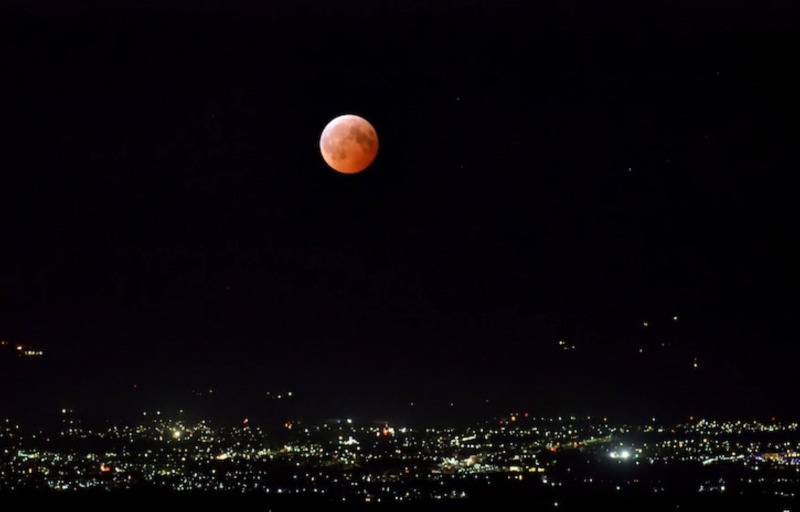
The total lunar eclipse on 3 March 2026 gave Perth skywatchers one of the most memorable astronomical events of the year. Often called a Blood Moon, this type of eclipse occurs when the Moon passes through Earth’s shadow, taking on a reddish, coppery glow as sunlight is filtered through Earth’s atmosphere.
For Western Australia, the timing made the event especially enjoyable. Rather than unfolding in the early hours of the morning, the eclipse took place during the evening, with the Moon rising already partially eclipsed before totality began. In Perth, totality began at around 7:04 pm AWST, reached maximum eclipse at around 7:33 pm, and ended at around 8:02 pm. (Time and Date)
That made it a perfect opportunity to capture the event with the Seestar S30 Pro. Unlike our comet photography session, where we used short exposures stacked over time, the Blood Moon was captured using the dedicated Moon photography mode inside the Seestar app, found under Solar System > Moon. This mode is designed for lunar imaging, making it far better suited to a bright, detailed target like the Moon than a deep-sky stacking workflow.
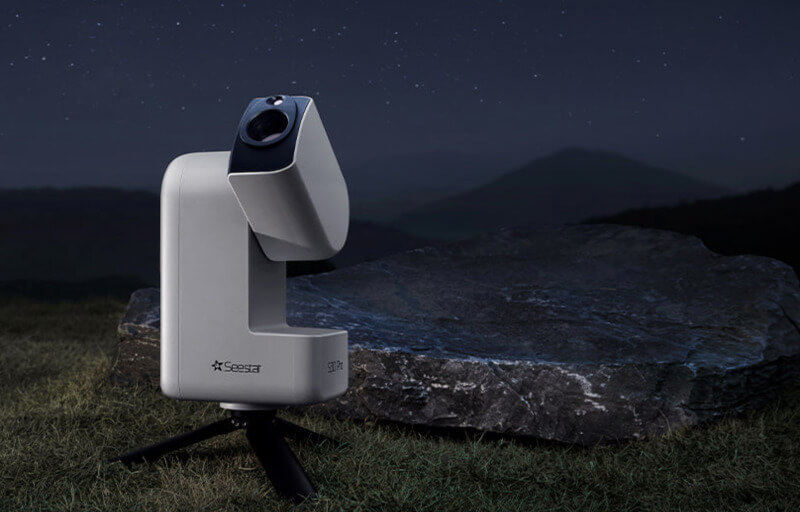
Table of Contents
A Rare Evening Eclipse Over Perth
The 3 March 2026 Blood Moon was visible across Australia, but Perth and southern Western Australia were among the best placed locations to enjoy it. ABC reported that the eclipse reached totality for about an hour from 7 pm in WA, turning the Moon from its usual neutral colour into a warm reddish-orange.
For Perth observers, the early part of the event required a clear eastern horizon. The Moon rose while the eclipse was already underway, meaning buildings, trees, fences, and hills could easily block the view during the first stages. Perth Observatory also noted that because totality began while twilight still lingered and the Moon was low, it could appear dim at first before becoming more dramatic as the sky darkened.
This made planning important, but not difficult. A backyard with a clean eastern outlook, an open park, an elevated location, or a coastal viewpoint with an unobstructed view inland could all provide a strong vantage point. Once the Moon rose higher and the sky darkened, the red tones became easier to see and photograph.
The appeal of a Blood Moon is that it does not require specialist equipment to enjoy. It is safe to view with the naked eye, and binoculars or a telescope can add extra detail. However, photographing it with a smart telescope like the Seestar S30 Pro gives the event another layer of enjoyment, turning a fleeting visual moment into something that can be captured, saved, and shared.
Why the Seestar S30 Pro Worked So Well
The Seestar S30 Pro is designed to make astrophotography approachable, and that simplicity was one of its biggest strengths during the eclipse. A lunar eclipse is not technically difficult to observe, but it is time-sensitive. The Moon changes in colour, brightness, and position throughout the event, so a quick and reliable setup makes a noticeable difference.
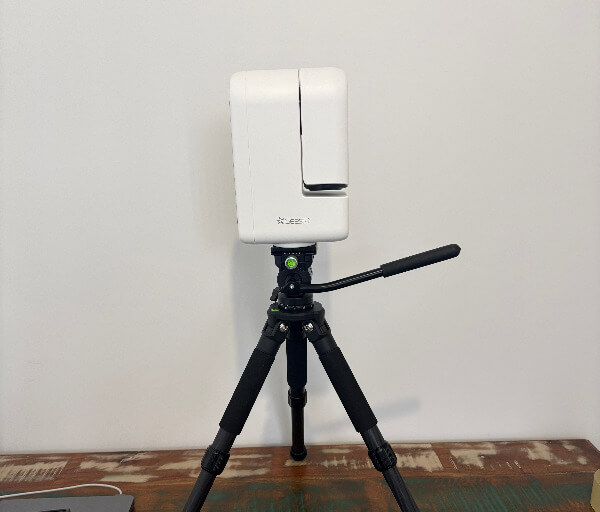
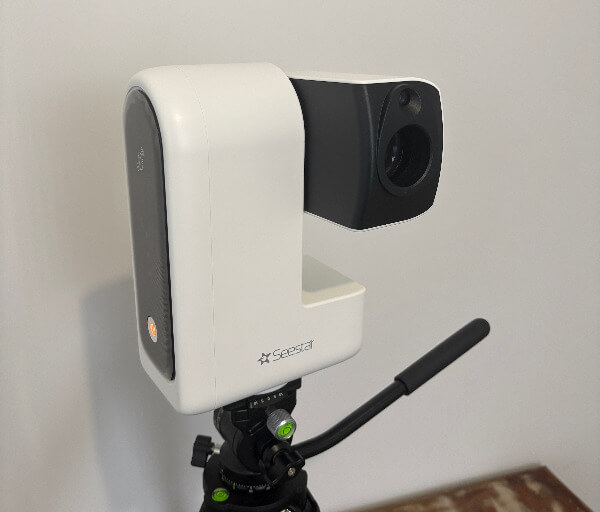
The S30 Pro’s compact all-in-one design meant we could set up quickly and focus on framing the Moon rather than managing a complicated telescope and camera combination. With its built-in battery, internal storage, tracking system, and app-based control, the entire capture process felt streamlined.
The telescope’s telephoto camera uses a Sony IMX585 sensor with an 8.3MP resolution of 2160 × 3840. Combined with its 30 mm aperture, 160 mm focal length, and f/5.3 optical system, it provides a useful balance of magnification and framing for lunar photography. The Moon sits clearly in the frame without the setup feeling overly narrow or difficult to aim.
Because the Moon is bright compared with deep-sky objects, the photography approach is different. Instead of relying on 10-second exposures and live stacking, the Seestar app’s Solar System > Moon mode is the more appropriate option. This mode is built around capturing a clear lunar image, preserving surface detail while handling the Moon’s brightness more effectively.
Using Solar System > Moon Mode
For this session, we used the Seestar app’s dedicated Moon mode rather than deep-sky stacking. This was important because a Blood Moon is still a lunar target, even when it is much dimmer and redder during totality. The goal is not to gradually build a faint object from many long exposures, but to capture the changing appearance of the Moon as cleanly as possible.
Inside the Seestar app, the process was straightforward. After connecting to the telescope, we selected the Moon from the Solar System section and used the Moon photography mode to frame and capture the eclipse. The app-based workflow made it easy to adjust the view and monitor the result as the Moon moved higher above the horizon.
During totality, the Moon was much darker than usual. This is one of the challenges of Blood Moon photography. A normal full Moon can be extremely bright, but during a total lunar eclipse, the surface takes on a subdued red-orange tone. The S30 Pro’s Moon mode helped keep the process simple while still allowing the colour and shape of the eclipsed Moon to come through.
The result was a very different experience from capturing a comet. With C/2025 R3 (PANSTARRS), the excitement came from watching faint detail build over time through stacked exposures. With the Blood Moon, the excitement came from watching the Moon’s appearance change in real time as Earth’s shadow moved across it.
Capturing the Colour of Totality
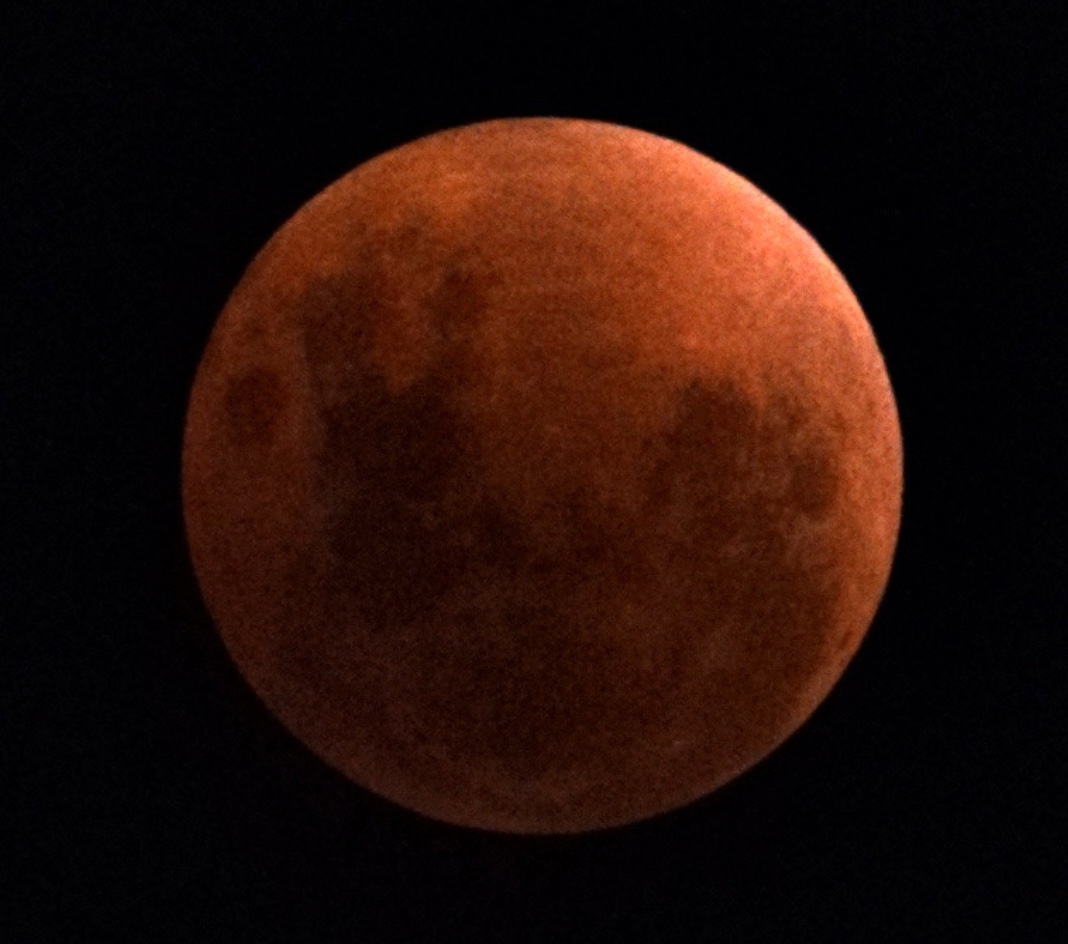
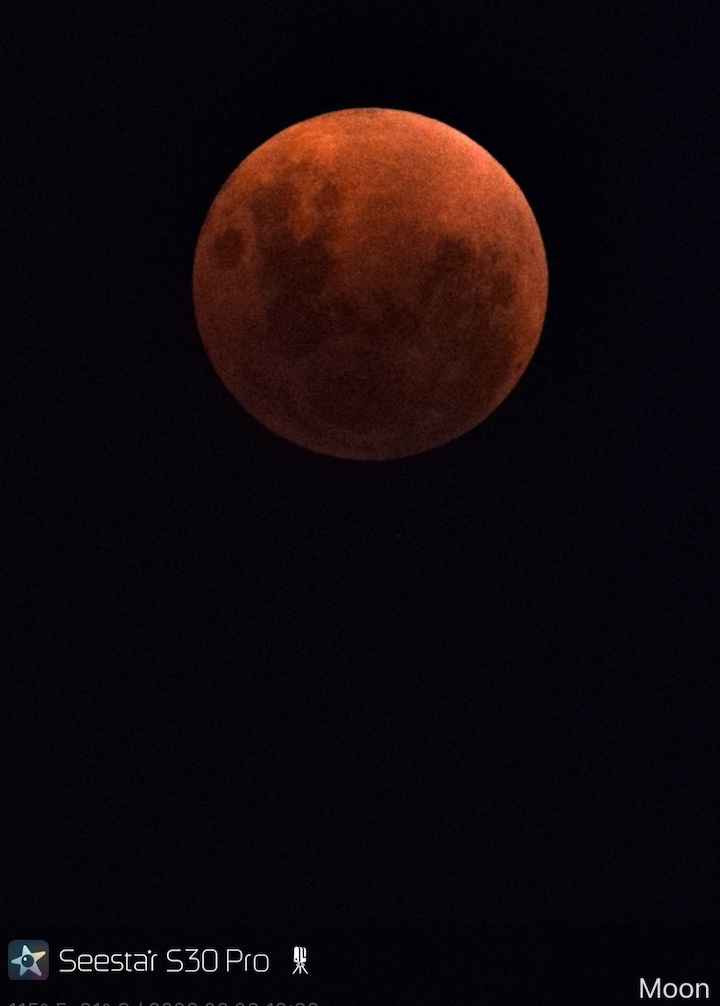
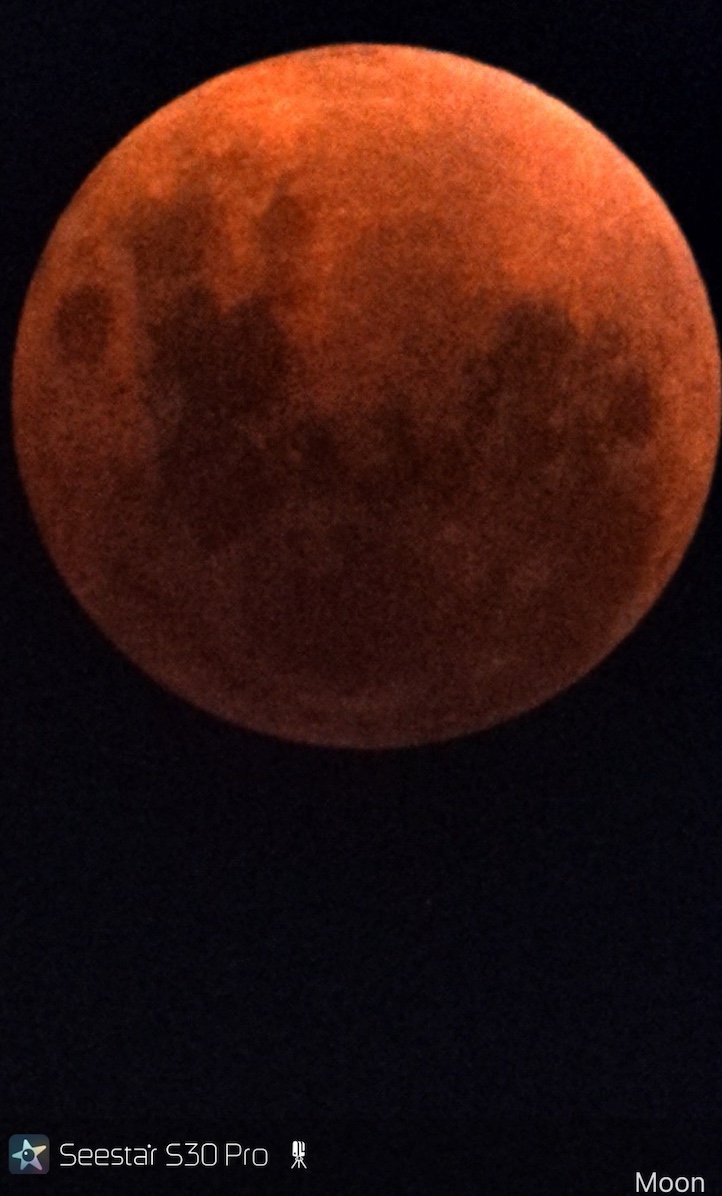
The red colour of a Blood Moon comes from sunlight passing through Earth’s atmosphere before reaching the lunar surface. Shorter blue wavelengths are scattered away, while redder light is bent into Earth’s shadow and reflected back from the Moon. This is why the Moon can appear copper, orange, red, or even dark brown depending on atmospheric conditions. (Courier Mail)
From Perth, the colour shift was especially striking once the sky became darker. Early in the event, the Moon was low and the remaining twilight made the eclipse appear softer. As totality continued, the contrast improved, and the red tone became more obvious against the evening sky.
This is where the Seestar S30 Pro was particularly enjoyable to use. Rather than wrestling with manual camera settings, the telescope allowed the moment to be followed naturally. The app view made it easy to see the changing colour, while the Moon mode kept the capture process focused and simple.
The compact nature of the S30 Pro also made the session feel relaxed. Lunar eclipses unfold over hours, but the most dramatic phase can feel surprisingly short. Having a system that is quick to deploy and easy to control meant more time watching and capturing the event, and less time adjusting equipment.
The Difference Between Moon Imaging and Deep-Sky Stacking
One of the most important differences with this session was the capture method. For the comet, we used 10-second exposures stacked over roughly 30 minutes because the target was faint and benefited from long total integration time. For the Blood Moon, we did not use that method.
Instead, the Moon was captured using the Seestar app’s photography mode under Solar System > Moon. This better matched the target because the Moon has a defined disc, visible surface detail, and changing brightness across the eclipse. Deep-sky stacking is excellent for faint nebulae, galaxies, and comets, but it is not the natural workflow for lunar photography.
The Blood Moon also changes gradually throughout the eclipse. Its brightness and colour shift as it moves deeper into Earth’s shadow and then begins to emerge again. A dedicated Moon mode makes it easier to treat the event as a sequence of visual moments rather than a single long exposure project.
This made the Seestar S30 Pro feel versatile. The same smart telescope that can stack faint deep-sky targets can also switch into a more direct lunar photography workflow when the subject calls for it. That flexibility is one of the reasons it works well as an everyday astronomy tool.
Photographing from Perth Conditions
Perth’s conditions added both beauty and challenge to the session. The evening timing made the eclipse accessible, but the low Moon at the start meant the viewing angle mattered. A clear eastern horizon was essential, especially around moonrise and the beginning of totality.
The Moon rose at around 6:43 pm in Perth, with the eclipse already underway. Totality began shortly afterwards at 7:04 pm, meaning there was not much time between first visibility and the most dramatic phase.
This is exactly the kind of situation where the Seestar S30 Pro’s fast setup is valuable. A traditional telescope setup may have taken longer to align, balance, and configure, but the S30 Pro allowed the session to begin quickly. For a target that was already changing as it rose, that ease of use made a real difference.
The event was also a reminder that astrophotography does not always need to happen under perfectly dark skies. Lunar eclipses are bright enough to enjoy from suburban areas, and the Seestar S30 Pro makes it easy to capture them from a backyard or local viewing spot.
Final Thoughts
Capturing the 3 March 2026 Blood Moon from Perth with the Seestar S30 Pro was a completely different experience from imaging a comet or deep-sky object. Instead of using stacked 10-second exposures, the session relied on the Seestar app’s dedicated Solar System > Moon photography mode, which was the right tool for the subject.
The eclipse itself was beautifully timed for Western Australia, with totality occurring in the early evening rather than the middle of the night. The Moon rose already partially eclipsed, turned a deep reddish-orange during totality, and became more striking as the Perth sky darkened.
What made the Seestar S30 Pro so enjoyable was how little it got in the way. It was quick to set up, easy to control, and well suited to capturing the Moon as it changed throughout the event. For a rare astronomical moment like this, that simplicity matters.
The Blood Moon showed another side of what the Seestar S30 Pro can do. It is not just a smart telescope for nebulae, galaxies, and comets. It is also a practical and enjoyable tool for Solar System events, making it easier to capture the moments that bring people outside, looking up at the sky.