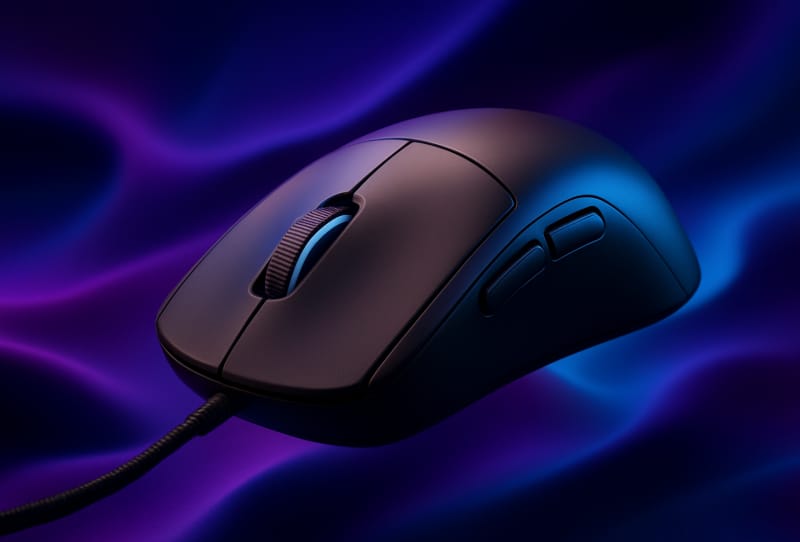
Corsair has launched the Sabre V3 Pro PureVector series, a new line of gaming mice that uses aim-training data from Aimlabs to build a custom sensitivity profile for each player’s hand movements. The company claims the system can cut aiming and correction time by as much as 33 percent, a bold figure for a peripheral update rather than a new sensor generation.
Key takeaways
- ✓Corsair's Sabre V3 Pro PureVector mice pair with Aimlabs to build a custom directional DPI map for each player.
- ✓Corsair claims the tech can cut aiming and correction time by up to 33 percent.
- ✓Six models span three shell materials (ABS, carbon fibre, magnesium) and two shapes, symmetrical and ergonomic.
- ✓The symmetrical shell measures 122.9 x 64.1 x 38.8mm; the new ergonomic shell is 125 x 67.5 x 44mm.
- ✓The magnesium model adds top-shell cutouts to shave extra weight off the chassis.
The idea behind the Sabre V3 Pro PureVector line is simple on the surface but genuinely different from how most mice handle sensitivity. Instead of a single flat DPI setting that applies no matter which direction the cursor moves, PureVector builds a directional map tailored to how an individual player actually aims.
Table of Contents
How PureVector tunes a mouse to your aim
PureVector is the result of a joint development effort between Corsair and Aimlabs, the aim-training platform popular with competitive shooter players. Rather than shipping with one static sensitivity curve, a Sabre V3 Pro PureVector mouse asks the owner to run through a calibration sequence inside the Aimlabs software first.
During that sequence, Aimlabs quietly logs data on the player’s specific weak points and movement patterns, things like overshooting on horizontal flicks or undershooting on vertical corrections. That data then feeds into a custom DPI table broken down by movement direction, rather than a single number applied uniformly across the mousepad.
Once the profile is built, the software flashes that directional DPI map directly to the mouse’s onboard firmware. The result, according to Corsair, is a sensor that responds slightly differently depending on which way the cursor is travelling, compensating for a player’s natural tendencies instead of forcing them to compensate manually through practice alone.
Six new models across three materials and two shapes
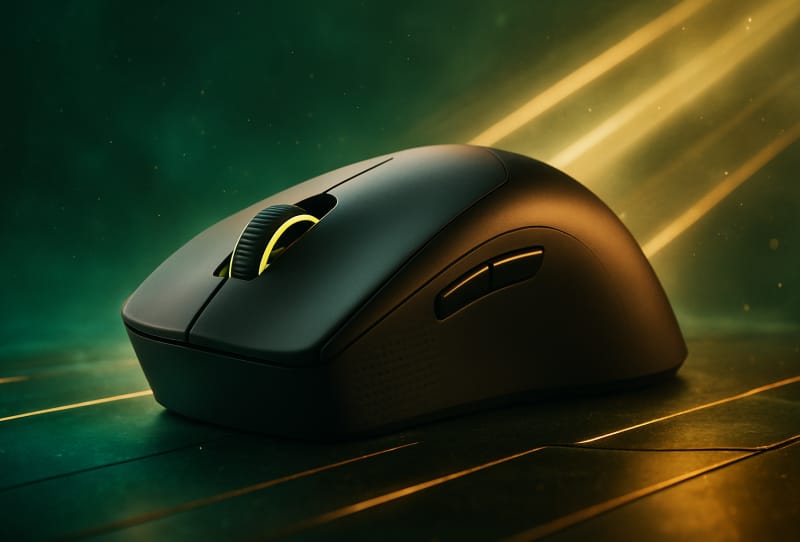
The PureVector technology comes preloaded on six new Sabre V3 Pro models, split across three shell materials and two distinct shapes. The familiar symmetrical shape returns, based on the design Corsair introduced with the Sabre V2 Pro Ultralight that came before it in late 2025, while a genuinely new right-handed ergonomic shape joins the lineup for the first time.
Each shape is offered in standard ABS plastic, woven carbon fibre, and magnesium alloy. The magnesium version goes a step further with cutouts machined into the top shell, shedding extra grams without sacrificing structural rigidity. Here’s how the two shapes compare on paper.
| Shape | Length | Width | Height |
|---|---|---|---|
| Symmetrical | 122.9mm | 64.1mm | 38.8mm |
| Ergonomic (new) | 125mm | 67.5mm | 44mm |
The ergonomic shape is a notable addition because Corsair’s recent Sabre releases have leaned heavily on the symmetrical, lightweight competitive form factor. A dedicated right-handed shell with a taller profile suggests Corsair wants PureVector available to players who prefer a palm or claw grip rather than the low-profile fingertip style the symmetrical shape favours.
Why directional DPI matters more than raw specs
Most gaming mouse launches lean on sensor resolution, polling rate, or weight as the headline figures. SteelSeries’ own wireless connectivity push with its Rival Pro mice is a good example of rivals chasing latency and reliability rather than sensitivity tuning. Corsair’s approach with PureVector sidesteps that race entirely and instead treats the player’s own aiming habits as the variable worth optimising.
That is a meaningfully different pitch to something like Razer’s Naga V3 Pro, which focuses on button count and MMO workflow rather than sensor personalisation. Whether PureVector’s 33 percent correction-time claim holds up under independent testing remains to be seen, since that figure comes from Corsair’s own internal benchmarking against Aimlabs rather than third-party verification.
Still, the concept fits a broader trend in gaming peripherals, where software and firmware increasingly do work that used to be left entirely to the player’s muscle memory. A mouse that reshapes its own sensitivity curve around a specific player’s flick habits is a logical extension of adjustable DPI stages and per-game profiles that Corsair and its competitors have offered for years.
What it means for buyers considering a Sabre V3 Pro
For players already invested in Aimlabs as part of their training routine, the Sabre V3 Pro PureVector series offers a reason to stick with Corsair rather than switching brands for a lighter or cheaper alternative. The calibration step does add friction compared with simply plugging in a mouse and playing, but it is a one-time process rather than something repeated every session.
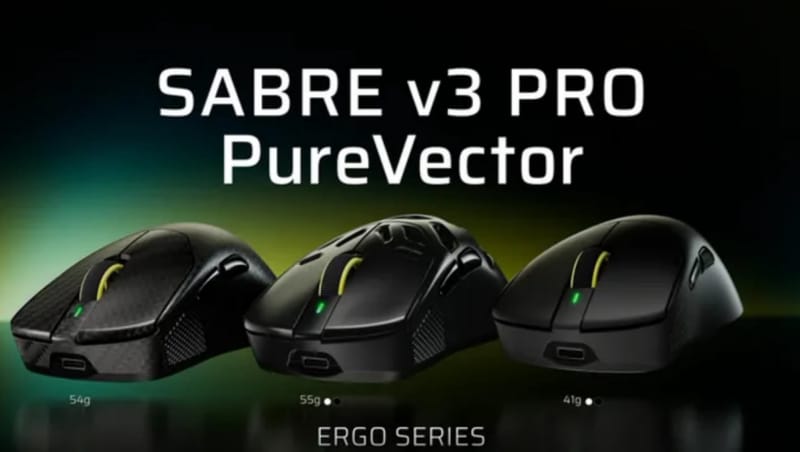
The expanded shape range is arguably just as significant as the new sensor tech. Offering carbon fibre and magnesium options alongside the standard ABS shell gives buyers a genuine choice between ultralight competitive builds and sturdier, more premium-feeling chassis, all running the same underlying PureVector firmware.
Anyone upgrading from an older Sabre model should weigh whether the directional DPI mapping is worth the calibration effort, or whether a simpler, sensor-only upgrade would suit their playstyle just as well. Corsair has not published independent benchmarks beyond its own Aimlabs partnership data, so competitive players who rely heavily on muscle memory may want to see outside testing before switching their main mouse.
Frequently asked questions
What is Corsair PureVector technology?
PureVector is a joint system from Corsair and Aimlabs that analyses a player’s aiming patterns during a calibration sequence and builds a custom DPI table based on movement direction, which is then flashed to the mouse’s firmware.
Which Sabre V3 Pro models include PureVector?
Six models carry the technology, split across a symmetrical shape and a new ergonomic shape, each available in ABS, carbon fibre, or magnesium shells.
Do I need Aimlabs to use a Sabre V3 Pro PureVector mouse?
The directional DPI mapping is built through an Aimlabs calibration sequence, so players need the Aimlabs software to generate and flash a personalised profile to the mouse.
How is the ergonomic shape different from the symmetrical one?
The new ergonomic shell measures 125mm by 67.5mm by 44mm, noticeably taller and wider than the 122.9mm by 64.1mm by 38.8mm symmetrical shape carried over from the Sabre V2 Pro design.