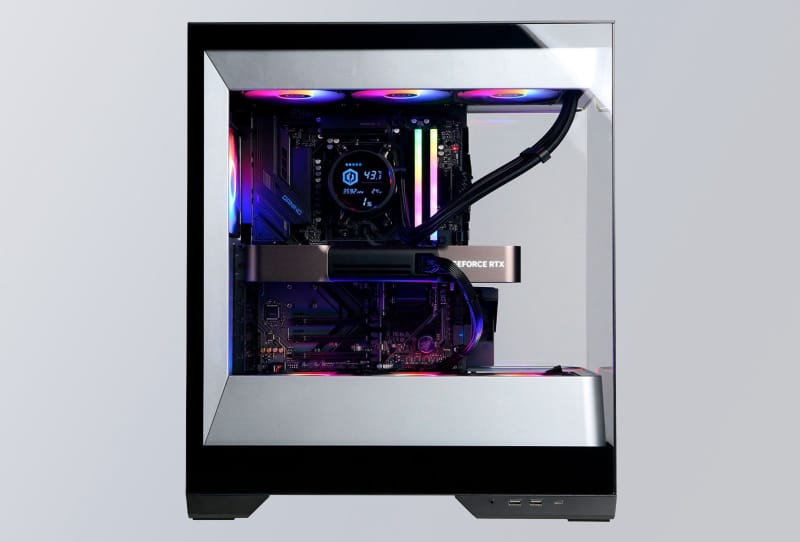
The CyberPowerPC SLC8500WST is turning heads for one simple reason: it combines two of the most in-demand PC gaming components available today, AMD’s Ryzen 7 9800X3D and Nvidia’s GeForce RTX 5080 Founders Edition, into a single prebuilt tower. Rather than making buyers hunt for stock of either part individually, CyberPowerPC has bundled both into a system built specifically for high-end 4K gaming. For anyone researching the SLC8500WST by name, this guide breaks down exactly what the model number means, what’s inside the box, and whether it’s worth buying over building a comparable rig from scratch.
Prebuilt systems often cut corners somewhere, pairing a strong CPU with a mediocre cooler or skimping on memory speed. The SLC8500WST largely avoids that trap. Every core component, from the processor to the graphics card to the memory kit, sits firmly in enthusiast territory, which makes this configuration worth a closer look for anyone weighing up a new gaming rig against building one from scratch. For shoppers comparing prebuilt options, the SLC8500WST is also a useful reference point for what a genuinely high-end, no-compromise gaming build should look like in the current market.
The model name itself is a handy shorthand for what’s inside. As with most CyberPowerPC SKUs, the SLC8500WST designation ties directly to a fixed hardware configuration, so shoppers searching for this exact code know they’re getting the Ryzen 7 9800X3D and RTX 5080 Founders Edition pairing rather than a variant with substituted parts. That consistency matters when comparing listings across retailers, since prebuilt naming conventions can otherwise make it difficult to confirm exactly what’s inside the box before buying. If you’ve seen the SLC8500WST listed on multiple storefronts with slightly different prices, this is also why: the model code is meant to guarantee the same hardware regardless of where you buy it, so price differences usually come down to bundled extras, warranty terms or regional stock rather than a different build underneath.
Table of Contents
What’s Inside the CyberPowerPC SLC8500WST
At the heart of the system is the octa-core Ryzen 7 9800X3D, backed by 32GB of DDR5-6000 memory and a 1TB PCIe 4.0 SSD. Graphics duties fall to Nvidia’s GeForce RTX 5080 Founders Edition, a variant of the card that has become genuinely hard to find at retail since launch. Here’s how the core specification stacks up.
| Component | Specification |
|---|---|
| Processor | AMD Ryzen 7 9800X3D (8-core, 96MB L3 cache) |
| Graphics card | Nvidia GeForce RTX 5080 Founders Edition |
| Memory | 32GB DDR5-6000 |
| Storage | 1TB PCIe 4.0 SSD |
None of these are throwaway specs. A 32GB DDR5-6000 kit alone typically commands a serious premium on its own, and finding an RTX 5080 in Founders Edition form has become increasingly rare as third-party board partners have taken over most retail shelf space. Buying the SLC8500WST as a complete package sidesteps the stock-tracking, price-checking and compatibility research that would otherwise be needed to assemble the same specification from separate retailers.
It’s also worth noting that CyberPowerPC positions this configuration squarely as a gaming-first build rather than a general-purpose workstation. That focus shows up in the balance of components: a CPU chosen specifically for its gaming cache advantage, a flagship-tier GPU, and memory clocked fast enough to keep both fed, rather than a mix of parts optimised for rendering, content creation or multitasking.
Beyond the headline components, buyers should also factor in the usual prebuilt extras that come with a system like the SLC8500WST, including the case’s airflow design, the number of included fans, and the power supply’s wattage headroom for future upgrades. While CyberPowerPC doesn’t always headline these details the way it does the CPU and GPU, they’re worth checking against the listed specification sheet before purchase, particularly if you plan to add extra storage or swap the cooler down the line.
It’s also worth considering the motherboard chipset and rear I/O on any SLC8500WST unit before buying, since this affects long-term upgrade paths. A board with spare M.2 slots and USB ports makes it far easier to add storage or peripherals later without opening up a full upgrade project, and it’s a detail that’s easy to overlook when the headline specs are dominated by the CPU and GPU.
Ryzen 7 9800X3D Still Rules Gaming Performance
AMD launched the Ryzen 7 9800X3D roughly two years ago, yet it remains the benchmark against which every gaming CPU is measured. Its Zen 5 architecture, combined with a huge 96MB pool of 3D V-Cache, gives games faster access to frequently used data than a conventional cache layout allows. That translates into higher and more consistent frame rates, particularly in CPU-bound titles and competitive esports games where every frame counts.
Both AMD and Intel have released newer desktop chips since the 9800X3D debuted, yet none have dislodged it from the top of the gaming performance charts. For a system built specifically around gaming rather than mixed productivity workloads, it remains the safest and most future-proof choice on the market, which explains why CyberPowerPC has kept it as the centrepiece of the SLC8500WST.
The eight-core, sixteen-thread layout also means the chip has enough headroom for background tasks like streaming, Discord and browser tabs running alongside a game, without the extra cache advantage going to waste. For gamers who occasionally dabble in light content creation or video editing between sessions, the 9800X3D still handles those tasks comfortably, even if it isn’t the outright fastest option for heavily threaded productivity work.
Another reason the 9800X3D remains such a strong fit for a system like this is power efficiency relative to its performance. It doesn’t demand an oversized cooler or an enormous power budget to hit its peak gaming performance, which allows CyberPowerPC to keep the rest of the system, including cooling and PSU sizing, relatively sensible rather than overbuilt just to feed the CPU.
RTX 5080 Founders Edition and DLSS 5 Support
On the graphics side, the RTX 5080 Founders Edition brings Nvidia’s reference cooling design and factory specifications, without the added bulk or styling choices that come with many custom board-partner cards. It is built for strong 3840×2160 performance while still delivering high frame rates at 1440p and 1080p for competitive players chasing higher refresh rates.
The card also supports DLSS 5, Nvidia’s latest frame generation and upscaling suite, which helps stretch performance further in supported titles without a significant hit to image quality. Given how difficult Founders Edition cards have become to source since launch, pairing one directly with a top-tier CPU in a finished system removes a lot of the guesswork buyers would otherwise face trying to track one down separately.
Ray tracing performance is another area where the RTX 5080 continues to lead its price bracket, with dedicated hardware for real-time lighting, reflections and shadows in supported games. Combined with DLSS 5’s upscaling and frame generation, the card can maintain smooth, high frame rates even with ray tracing enabled at 4K, which is exactly the scenario the SLC8500WST is built around.
The Founders Edition design also tends to run slightly cooler and quieter than some third-party cards under sustained load, thanks to Nvidia’s vapour chamber cooling and compact form factor. For a prebuilt system like the SLC8500WST, where internal case airflow has to be shared between the CPU cooler and GPU, that reference design can be a genuine practical advantage rather than just a cosmetic preference.
Beyond raw gaming performance, the RTX 5080’s 16GB-class VRAM pool is worth highlighting too, since it gives the SLC8500WST comfortable headroom for high-resolution texture packs, modded content and multi-monitor setups without running into memory ceiling issues that can affect cards with smaller frame buffers.
Why This Configuration Matters for PC Gamers
Building a system with this exact hardware combination from individual parts is not a trivial exercise. Sourcing a Founders Edition RTX 5080, a Ryzen 7 9800X3D, a compatible motherboard, a fast DDR5-6000 kit, and a reliable PCIe 4.0 SSD, then assembling and validating it all, takes both time and technical confidence. Readers weighing up that path themselves may find it useful to look at guides on choosing a gaming PC processor for your budget before deciding whether a prebuilt or a custom build makes more sense.
The single 1TB SSD is the one area where enthusiasts may want to plan ahead, since modern game install sizes can eat into that capacity quickly. Anyone who ends up with this system, or something similar, should look at adding more storage to a gaming PC down the track. Likewise, owners chasing extra headroom from the RTX 5080 might eventually explore overclocking a gaming GPU safely once the system has bedded in.
What makes the SLC8500WST notable is not any single component but the fact that none of them feel like a compromise. Pairing a class-leading gaming CPU with a scarce, well-regarded graphics card, then backing both with fast memory and modern storage, is the kind of configuration enthusiasts usually have to assemble themselves piece by piece. CyberPowerPC has effectively done that legwork already, and for anyone eyeing a genuine 4K gaming rig without the hassle of chasing individual components, that combination is hard to ignore.
For buyers specifically searching out the SLC8500WST by name, it’s worth confirming the listed specification matches what’s described here before purchasing, since retailers occasionally adjust memory or storage configurations between batches while keeping a similar model code. Checking the exact spec sheet against this breakdown is the simplest way to be sure you’re getting the full Ryzen 7 9800X3D and RTX 5080 Founders Edition combination this build is known for.
Warranty coverage and after-sales support are also worth factoring into any decision on the SLC8500WST, since prebuilt systems typically carry manufacturer warranties that cover the whole machine as a unit, rather than requiring separate claims against individual component makers. For buyers who’d rather avoid troubleshooting compatibility issues or chasing multiple warranty providers after a self-build, that single point of support can be just as valuable as the hardware itself.
Frequently asked questions
What games can the CyberPowerPC SLC8500WST handle at 4K?
Thanks to the RTX 5080 Founders Edition and DLSS 5 support, the SLC8500WST is well suited to running demanding modern titles at 3840×2160 with high or maxed-out settings, including games with ray tracing enabled. Competitive and esports titles will comfortably exceed high refresh rates at 1440p or 1080p as well, making the system flexible across different monitor setups.
Is 32GB of RAM enough for the SLC8500WST?
Yes, 32GB of DDR5-6000 is currently the sweet spot for gaming, offering plenty of headroom for modern titles, background applications and streaming software without bottlenecking the Ryzen 7 9800X3D or RTX 5080. Most gamers won’t need more unless they’re running very memory-intensive creative or virtualisation workloads alongside gaming.
Will the 1TB SSD be enough storage?
A single 1TB PCIe 4.0 SSD can fill up quickly given how large modern game installs have become, particularly with multiple AAA titles installed at once. Buyers who plan to keep a large library installed simultaneously should budget for additional storage down the line rather than treating 1TB as a long-term ceiling.
How does the Ryzen 7 9800X3D compare to newer CPUs?
Despite newer releases from both AMD and Intel, the Ryzen 7 9800X3D’s large 3D V-Cache still gives it a gaming performance edge that newer chips haven’t matched. For a system built primarily for gaming, like the SLC8500WST, it remains one of the most future-proof processor choices available.