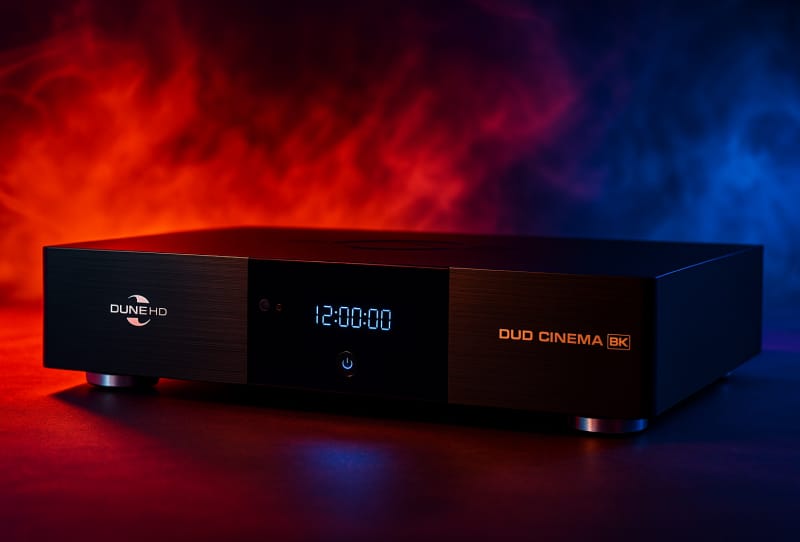
Home theatre enthusiasts chasing the cleanest possible 8K and Dolby Vision playback now have a genuinely novel option in the Dune HD Duo Cinema 8K, a media player built around two physically separate processing systems rather than the usual single-chip compromise. Full specifications and ordering details sit on the official Dune HD Duo Cinema 8K product page, but the short version is that this unit pairs a dedicated 8K playback engine with a certified Android TV module inside one steel chassis. It is a niche category, but Dune HD has built a loyal following among people who want their movie collection treated with the same seriousness as a dedicated Blu-ray transport.
Review summary
Dune HD Duo Cinema 8K
The Dune HD Duo Cinema 8K pairs a dedicated 8K local playback engine with a certified Android TV module in one steel chassis, giving it standout Dolby Vision handling, broad file format support and genuine NAS-style dual hard drive storage. Build quality, connectivity and audio flexibility are all rack-grade, making it a strong pick for anyone building a serious home theatre source rather than a casual streaming box.
Highlights
- ✓Dual-processor design separates local playback from certified streaming apps
- ✓Extensive Dolby Vision profile support (5, 7, 8) across multiple file types
- ✓Twin hot-swappable HDD bays with vibration isolation for built-in storage
- ✓Comprehensive audio format decoding and bitstream passthrough
- ✓Robust build with passive cooling and rack-friendly connectivity
What sets the Duo Cinema 8K apart from most streaming boxes and even from many of Dune HD’s own earlier models is that hardware separation. Rather than asking one processor to juggle certified app playback and reference-grade local file decoding, the Duo Cinema 8K gives each job its own silicon, its own memory, and its own storage allocation, then stitches the results together into a single interface. That approach speaks directly to the frustrations long-time media server owners have had with devices that handle Netflix beautifully but stumble on an obscure Dolby Vision ISO, or vice versa.
This review works through the design, the feature set, and the everyday experience of running the Duo Cinema 8K as a household’s primary home theatre source. It covers the twin HDD bays, the dual-OS menu system, Dolby Vision handling across multiple profiles, and how the unit behaves once it is actually loaded up with a real movie library and connected to an AV receiver. For anyone assembling a serious home cinema rack, this is a device that rewards a closer look.
Table of Contents
Design and Functionality
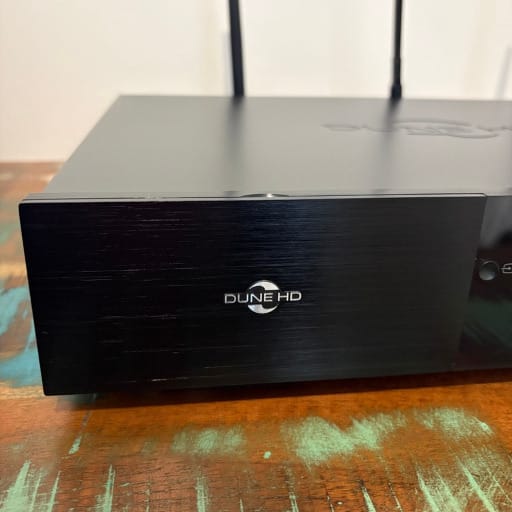
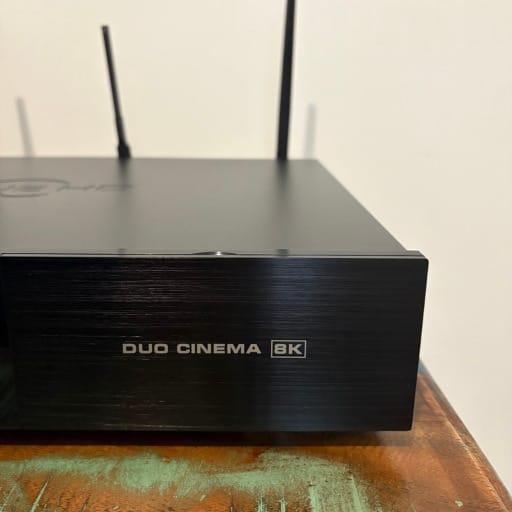
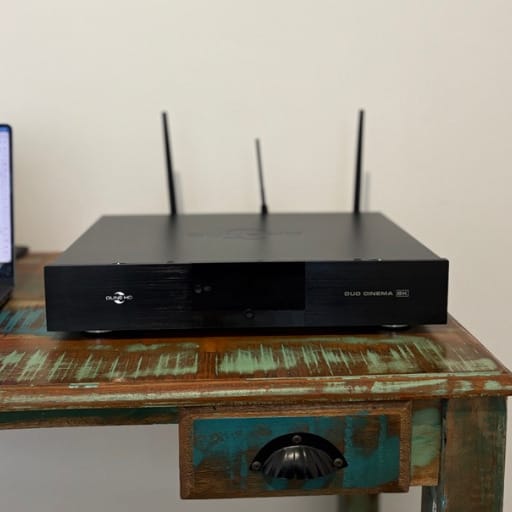
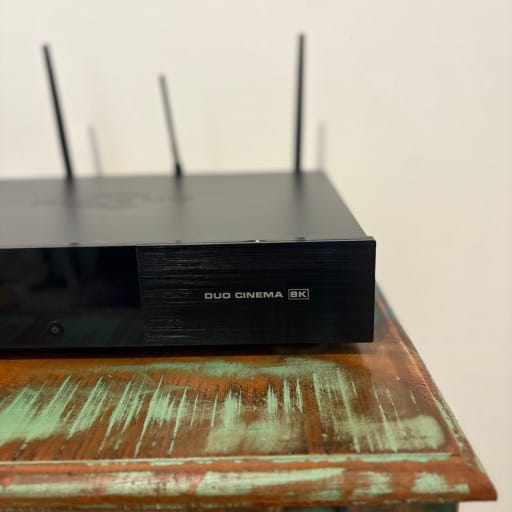
The Duo Cinema 8K arrives in a full-sized 43cm steel chassis with a brushed aluminium front panel, and it looks and feels every bit like a piece of separates-grade AV equipment rather than a plastic streaming stick pretending to be premium. At 430mm wide, 84mm tall, and 330mm deep, it is sized to sit comfortably alongside an AV receiver or amplifier in a rack, rather than balancing on top of a television.
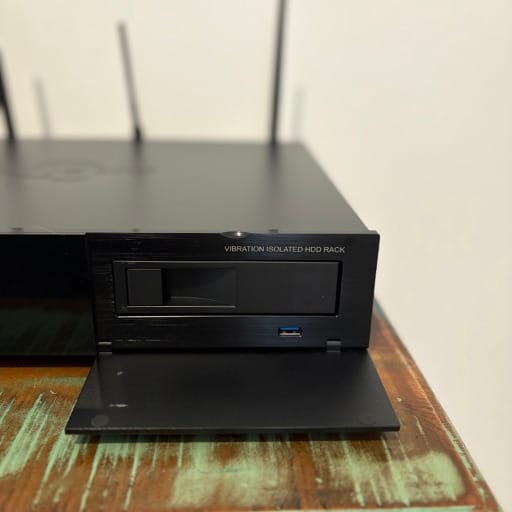
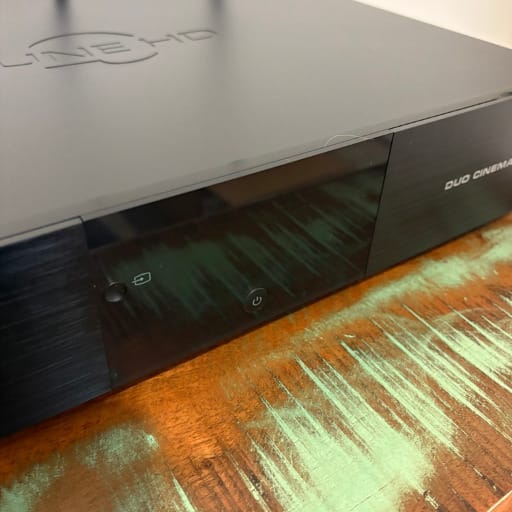
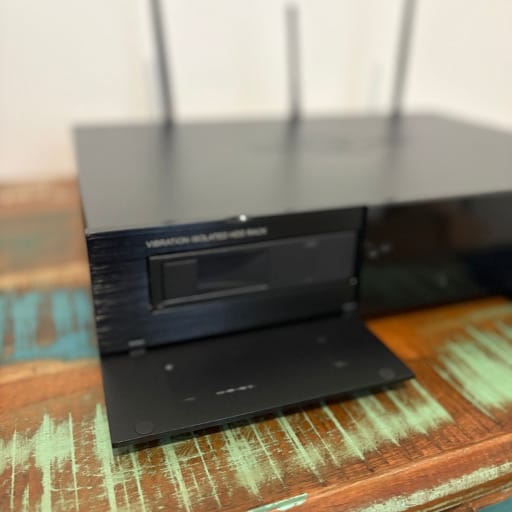
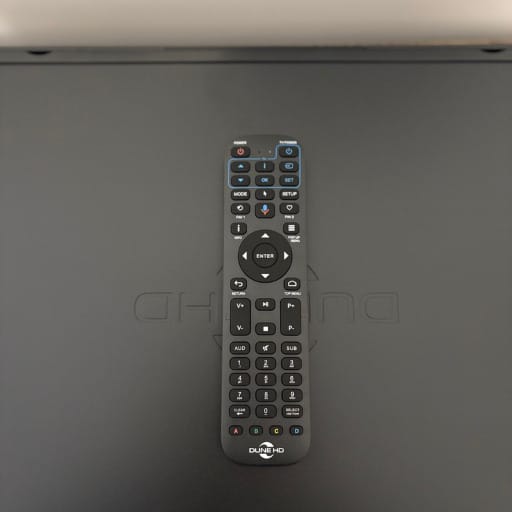
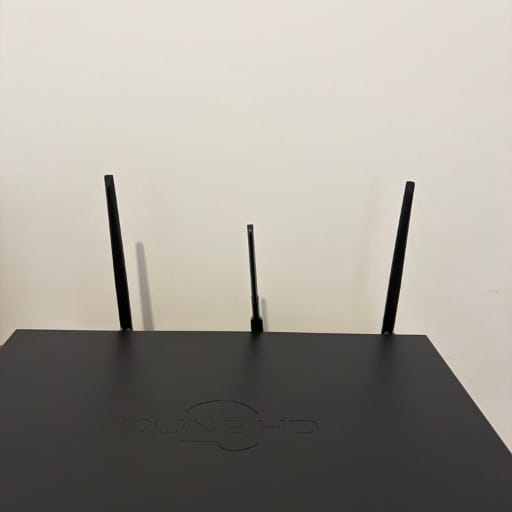
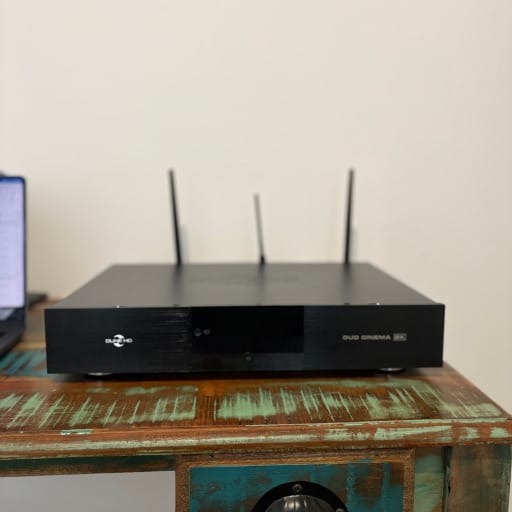
Dune HD has used the entire case as a heatsink, which means the outer shell itself dissipates heat from the main processing board passively, with no fan noise generated by the core system. A 120mm Noctua fan is fitted specifically to cool the internal hard drives, which is a sensible touch given how warm modern high-capacity drives can run under sustained use.
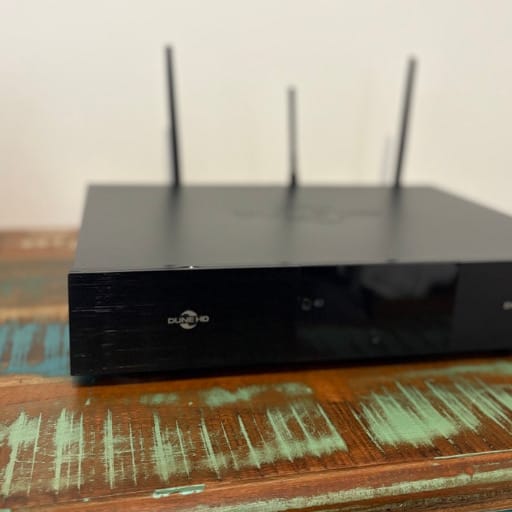
The front panel carries a multi-segment LED display capable of showing hours, minutes, and seconds, along with additional status indicators for the active system and input source. A physical input selection button lets users flick between the media player itself, HDMI input one, and HDMI input two without touching the remote, which is a handy feature for anyone using this as a central hub.
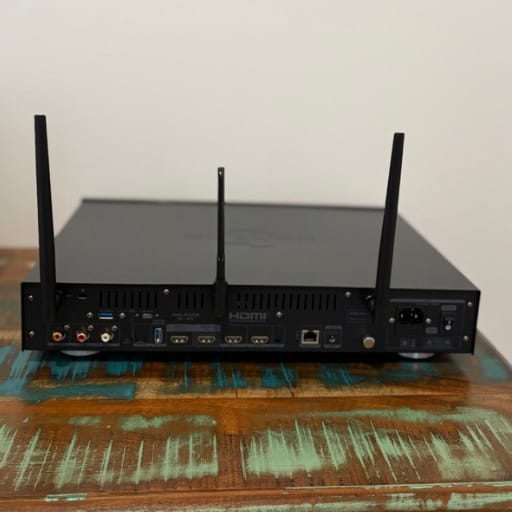
Around the back, the connectivity is genuinely comprehensive. There are two HDMI outputs (one full audio and video output, one dedicated to audio-only duties), two HDMI inputs with full passthrough, optical and coaxial S/PDIF, stereo RCA analog audio, gigabit Ethernet, and USB 3.0 ports. It is laid out with enough breathing room that cabling a fully populated AV rack doesn’t turn into a wrestling match.
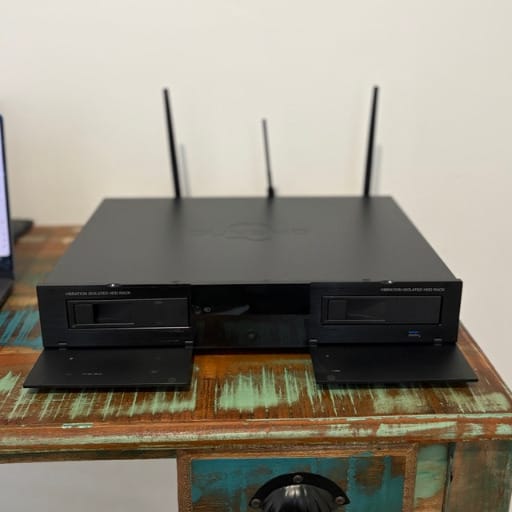
Perhaps the most distinctive physical feature is the pair of built-in 3.5-inch SATA hard drive bays, each supporting drives of 32TB or beyond, with hot-swap capability and vibration isolation mounts. This turns the Duo Cinema 8K into a media player and a modest NAS in one enclosure, which is a genuine convenience for anyone who has previously had to run a separate file server alongside their playback device.
Vibration isolation on those drive bays is not just a marketing line either; spinning hard drives inside a metal chassis can introduce audible hum or resonance if not mounted carefully, and Dune HD’s engineering here keeps operational noise very low even with two drives installed and active.
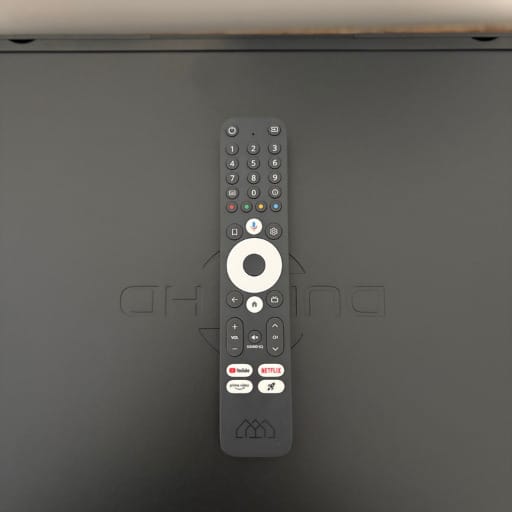
The bundled remote is a Bluetooth unit with a built-in microphone for voice search, air mouse functionality for navigating Android apps, backlighting for use in a darkened cinema room, and IR learning so it can absorb commands from other remotes in the rack. That last feature means a universal remote setup or a Logitech Harmony-style controller can still be built around the Duo Cinema 8K without losing functionality.
An external IR receiver is included in the box for situations where the player is tucked inside a cabinet with the door closed, which is a thoughtful inclusion given how sensitive IR reception can otherwise be to enclosure design and mounting angle.
Two external, detachable Wi-Fi antennas support 802.11ax (Wi-Fi 6) dual-band networking, while a third non-detachable Bluetooth antenna is dedicated to keeping that remote connection stable. Serious home theatre installations will likely still run Ethernet for the heaviest media libraries, but the wireless hardware here is a clear step up from the single internal antenna found on cheaper streaming boxes.
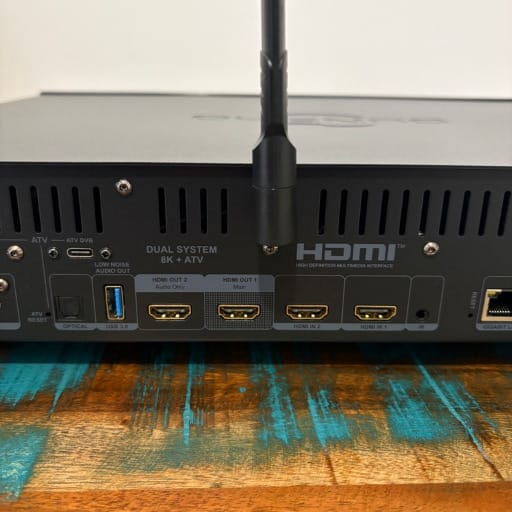
Power comes from a built-in switching supply with power-saving features, but Dune HD has also included a DC input connector for those who want to pair the Duo Cinema 8K with an external high-end linear or regulated power supply. This is squarely aimed at audiophiles who believe cleaner power delivery translates to better analog and digital audio output, and it is a nice option to have without being mandatory.
The dual HDMI inputs deserve a specific mention because they let the Duo Cinema 8K double as a basic AV switcher, passing video and audio from an external source like a games console or a set-top box straight through to the main HDMI output, while also extracting audio to the secondary HDMI output, optical, coaxial, or analog outs as needed. For anyone trying to consolidate cabling in a crowded entertainment unit, that flexibility is genuinely useful.
Internally, the twin-processor design means the main 8K system, built around the Amlogic S928X-K/J, handles local file decoding and the heavy lifting of the Dune HD 8K platform, while a separate Amlogic S905X4-K module runs a fully certified Android TV environment for streaming apps. These two systems share the same physical outputs and are operated with the same remote, but they never have to compromise on each other’s resource needs.
That hardware-level separation is the functional heart of this design. Apps from either system appear together in one main menu, so from a user’s perspective it feels like a single cohesive device, even though under the bonnet there are effectively two computers working in tandem.
Ventilation grilles are positioned to work with the passive heatsink case design, and airflow through the chassis has clearly been considered rather than bolted on as an afterthought. Even with both processing systems active and a pair of hard drives spinning, the unit stays commendably cool to the touch during extended sessions.
Cable management around the rear panel is straightforward thanks to generous spacing between the HDMI, USB, audio, and networking ports, and the antenna connectors are positioned so they don’t interfere with adjacent cabling. It is a chassis clearly designed by people who have actually had to wire up a home theatre rack before.
Taken as a whole, the physical design of the Duo Cinema 8K signals exactly what kind of buyer it is chasing: someone who wants a serious, rack-mountable centrepiece rather than a discreet dongle, and who values expandable local storage and flexible connectivity as much as raw playback specs.
Key Features
At the core of the local playback experience sits the Amlogic S928X-K/J processor, a high-performance chip capable of 8K video decoding, AV1 support, and Dune HD’s VS10 video processing engine. This is the same processor family used across Dune HD’s newest 8K lineup, and it is what allows the Duo Cinema 8K to handle the most demanding remuxed film files without dropping frames.
Running alongside it is a dedicated Android TV hardware module powered by an Amlogic S905X4-K chip, which carries official Google and Netflix certification. That certification matters because it guarantees access to the full-quality streams and correct HDR handling that uncertified Android boxes often can’t offer.
The main system runs a hybrid platform combining the Linux-based Dune HD OS with Android OS operating simultaneously, giving users the stability Dune HD is known for alongside the flexibility of the Android app ecosystem. Android apps can be installed directly on this main system, taking advantage of its more powerful hardware and deeper configuration options, or on the dedicated Android TV module for guaranteed certified streaming behaviour.
Memory allocation is generous for a device in this category, with 12GB of total RAM split as 8GB for the main system and 4GB for the Android TV module, backed by 96GB of total flash storage divided 64GB and 32GB respectively. That separation prevents one system’s background processes from eating into the other’s headroom.
Wi-Fi 6 (802.11ax) with dual-band 2.4 and 5GHz support and a 2T2R antenna configuration keeps wireless throughput solid for high-bitrate streaming, though the inclusion of gigabit Ethernet remains the sensible choice for anyone pulling large 8K remuxes across a home network.
USB connectivity includes two USB 3.0 host ports on the main system and a separate USB 3.0 port reserved for the Android TV module. One of the main system’s ports is specifically optimised for external USB DAC connections, with advanced noise filtering built in to reduce electrical interference passed through to an outboard digital-to-analog converter.
HDMI output is handled through HDMI 2.1a, supporting up to 8Kp60 HDR and 4Kp60 Dolby Vision, plus experimental 120Hz output at up to 4Kp120 for those pushing the edges of current display technology. Full high-resolution audio bitstreaming, including Dolby TrueHD and DTS:X, is supported over this connection.
Dolby Vision handling here is unusually thorough. The Duo Cinema 8K supports profiles 5, 7, and 8, across a wide range of container types including ISO, standard movie folder structures, MKV, and MP4, and it correctly manages double-track/double-layer configurations by combining base video data with the extended RPU metadata from a second track. Both LLDV (player-led) and STD DV (TV-led) output modes are supported, with manual override available for users who know exactly which mode their display prefers.
Audio decoding covers an impressive spread of formats, from multichannel FLAC and DSD to ALAC, WavPack, and Monkey’s Audio, alongside full bitstream passthrough and onboard decoding of every major Dolby and DTS format up to Atmos and DTS:X at up to 7.1 channels. PCM output preserves the original sample rate of the source file rather than forcing everything through a fixed conversion.
Video format support is similarly broad, spanning AV1, H.265, H.264, VP9 profile 2, VC1, and the older MPEG family, alongside ISO images, movie folder structures, and direct Blu-ray and DVD menu navigation in both Lite and Full Menu modes. This is genuinely one of the most complete local file compatibility lists available in a consumer media player today.
Dune HD’s Android Playback Accelerator technology is built to smooth out the kind of stutter and buffering that can plague Android-based apps when handling large local files, giving the main system’s app experience a noticeably more polished feel than a typical Android TV box running the same apps.
The included movie organiser and encyclopedia software automatically pulls in artwork, cast details, and synopses for a connected media library, turning a folder of files into something that looks and browses like a proper video-on-demand service.
Dune HD has a well-documented history of extended firmware support for its media players, often continuing to roll out meaningful updates years after a model’s original release. That track record adds genuine confidence that the Duo Cinema 8K will keep gaining refinements rather than being left static after launch.
Between the certified Android TV module for mainstream apps and the far more capable main system for everything else, the feature set here is built to cover essentially every angle of modern home theatre use without asking the owner to compromise on any single one.
Experience Using the Product and Performance
Setting up the Duo Cinema 8K for the first time feels closer to installing a piece of studio equipment than plugging in a streaming stick. The steel chassis has real heft, the HDD bays slide open with a reassuringly solid mechanism, and connecting everything up takes a few extra minutes simply because there are more ports worth using than on a typical media box.
Installing a pair of hard drives into the built-in bays is straightforward, with the hot-swap trays making it simple to add or replace storage later without powering the whole system down for an extended period. Vibration isolation mounts keep drive noise from resonating through the chassis, which is noticeable in a quiet room.
First boot brings up the unified menu almost immediately, and the presentation of both the main Dune HD system and the Android TV module in one interface is smoother than expected. There’s no jarring transition between “modes”; instead, apps and menu items from both systems sit together, and selecting one simply activates the relevant hardware behind the scenes.
Switching between the main 8K system and the Android TV module is essentially invisible during normal use. Launching Netflix, for example, quietly hands control to the certified Android TV hardware, while browsing a local movie folder keeps everything on the main system, and the front panel display quietly indicates which system is currently active.
Daily use of the Bluetooth remote is a pleasant experience. The air mouse function makes navigating Android’s more fiddly on-screen keyboards far less tedious than using directional pad presses, and the built-in microphone handles voice search requests reliably across both the main interface and streaming apps.
IR learning setup takes only a couple of minutes with a source remote in hand, and once configured it means the Duo Cinema 8K slots neatly into an existing universal remote control setup without losing any of its dedicated functions like input switching.
Netflix playback through the certified Android TV module delivers exactly the picture and audio quality expected from an officially licensed implementation, including proper HDR handling and full audio format support, without the occasional quality throttling seen on some third-party or sideloaded app installs.
Other major streaming apps installed through the Android TV module behave the same way: stable, properly licensed, and free of the awkward workarounds sometimes needed to get full-resolution playback on uncertified Android boxes.
Local media playback is where the Duo Cinema 8K really shows its purpose. Browsing a network share or an internal hard drive full of ISO images and movie folder structures is fast, and thumbnail generation combined with the movie organiser’s automatically fetched artwork makes scrolling through a large library feel closer to using a premium video service than a file browser.
The movie organiser software correctly matched the vast majority of titles in a varied test library, pulling in posters, cast lists, and plot summaries with minimal manual correction required, which saves considerable time compared with maintaining a library by hand.
8K test content, while still relatively rare, played back cleanly with no dropped frames or stutter, confirming that the Amlogic S928X-K/J has the horsepower Dune HD promises for its flagship playback tier.4K Dolby Vision content across a range of encodes, including ISO rips with double-track profile 7 structures, played correctly with accurate RPU metadata handling, producing the expected dynamic tone mapping shifts scene to scene on a compatible display.
Switching between LLDV and STD DV output modes worked exactly as described, and having manual control over that setting is valuable for viewers whose television or projector has a strong preference for one Dolby Vision delivery method over the other.
Automatic framerate and resolution switching triggered correctly and without visible flicker across a mix of 23.976fps film content and 60Hz television-sourced material, which matters enormously for judder-sensitive viewers who rely on this behaving properly every single time.
Passing audio through to an external AV receiver over HDMI confirmed full bitstream support for Dolby TrueHD Atmos and DTS:X, with no dropouts or handshake issues during extended movie sessions, including after the receiver was put into standby and woken again mid-session.
Multichannel DSD playback from SACD ISO sources came through cleanly as decoded multichannel PCM over HDMI, which will please audiophiles who have accumulated high-resolution music libraries and want them handled properly rather than downsampled.
Connecting an external USB DAC to the dedicated audio-optimised port produced a noticeably clean signal, and the advertised noise filtering appears to genuinely reduce electrical interference compared with running a DAC off a standard USB port on other devices.
Fan noise from the dedicated HDD cooling fan is very low, only really becoming perceptible if leaning in close to the chassis during a silent scene, and it never intrudes during normal viewing at a typical seating distance.
Heat management held up well across multi-hour viewing sessions, with the steel case running warm rather than hot even with both processing systems and two hard drives active simultaneously.
The two internal HDD bays proved genuinely useful in practice, letting a large film collection and a smaller working drive for downloads or temporary files sit side by side without needing an external enclosure cluttering the rack.
Streaming from a NAS device over the gigabit Ethernet connection was smooth even with large 8K remux files, and Wi-Fi 6 performance, while good, is best reserved for lighter 1080p or standard 4K content rather than the very largest file sizes.
Using the HDMI inputs to pass through a games console confirmed the switching functionality works as intended, with negligible added latency and correct audio extraction to the connected receiver.
Across several weeks of regular use, the system remained stable, with no unexpected reboots or app crashes on either the main system or the Android TV module, a reassuring sign for a device that’s meant to anchor an entire home theatre setup.
A firmware update arrived during the test period and installed without complication, continuing Dune HD’s reputation for keeping its media players current well beyond their initial release.
External SRT subtitle files loaded correctly across a range of test files, with accurate timing and no encoding issues on titles using extended character sets.
Menu responsiveness stayed snappy throughout testing, with app launches on the Android TV module and folder browsing on the main system both feeling immediate rather than sluggish.
On a modern OLED display, picture quality through the Duo Cinema 8K was excellent, with accurate colour rendering, stable HDR tone mapping, and none of the banding or macroblocking artefacts sometimes seen on lesser hardware handling demanding Dolby Vision sources.
Running both a hefty local film library and a full suite of streaming apps side by side never produced any sign of one system stealing resources from the other, which is exactly the promise of the dual-processor design put into practice.
For anyone coming from a single-chip streaming box, the difference in how confidently the Duo Cinema 8K handles the trickiest local files while still delivering a completely normal certified streaming experience is immediately obvious within the first few viewing sessions.
Conclusion
The Dune HD Duo Cinema 8K is a genuinely distinctive proposition in a market where most media players either chase certified streaming convenience or local file mastery, rarely both at once. By giving each job its own dedicated processor, as detailed on the official Dune HD Duo Cinema 8K product page, Dune HD has built a device that doesn’t ask serious home theatre owners to choose between the two.
The physical build backs up that ambition, from the rack-ready steel chassis and dual hot-swap HDD bays to the flexible HDMI switching and audiophile-friendly power and USB DAC options. It is a device clearly designed for people who take their movie and music collections seriously rather than casual streamers looking for a quick Netflix fix.
Feature depth across Dolby Vision profiles, high-resolution audio formats, and local video compatibility is about as comprehensive as anything currently available, and the certified Android TV module removes the usual compromises around mainstream app support that dedicated media players often carry.
For anyone building or upgrading a home cinema setup who wants uncompromised local playback alongside properly certified streaming, the Duo Cinema 8K stands out as one of the more thoughtfully engineered options on the market, and it pairs well with other entries in Dune HD’s current 8K lineup for those comparing models before committing.