
Astrophotography has traditionally been associated with bulky mounts, multiple accessories, and a steep learning curve, but compact smart telescopes are steadily reshaping that expectation. The DWARF mini steps into this space with an emphasis on portability and automation, aiming to make deep-sky imaging approachable without sacrificing meaningful results. Its small footprint suggests simplicity, yet its capabilities extend far beyond what its size implies.
Designed to be used almost anywhere, the DWARF mini brings together optics, tracking, imaging, and processing in a single unit controlled entirely from a smartphone. This approach removes much of the friction that can discourage newcomers while still offering enough flexibility to keep more experienced users engaged. Whether used from a suburban backyard or a darker sky location, it encourages spontaneous observing sessions rather than carefully planned setups.
What makes the DWARF mini particularly appealing is how it balances convenience with genuine astrophotography output. Instead of focusing on raw specifications alone, it prioritises a smooth end-to-end experience, from finding a target to producing a finished image. This review takes a closer look at how its design, features, and real-world performance come together in practical use.
Design and Functionality
The DWARF mini immediately stands out for its remarkably compact form, feeling closer in size to a portable camera than a traditional telescope. Its lightweight construction makes it easy to lift with one hand, which sets the tone for a device designed around convenience rather than complexity. Despite its small stature, it feels purposeful rather than toy-like when handled.
The vertical tower-style layout is both practical and visually distinctive. The upper section houses the optics and moves smoothly up and down, while the base rotates freely to cover the sky around it. This arrangement allows the telescope to track objects efficiently without awkward movements or the risk of cables getting tangled.


Build quality is reassuring for a device that prioritises portability. The housing feels solid enough to withstand regular transport, whether it is being packed into a backpack or set up repeatedly in the backyard. Buttons and ports are neatly integrated, giving the unit a clean, uncluttered appearance.
Portability is clearly one of the core design goals. At under a kilogram, the DWARF mini is light enough to take on camping trips or quick drives to darker skies without any planning stress. It occupies very little space, making it easy to keep on hand for spontaneous observing sessions.
The integrated design eliminates the need for external components such as mounts, cameras, or guiding equipment. Everything required for imaging is built directly into the unit, reducing setup time to just a few minutes. This all-in-one approach helps remove many of the barriers that typically slow down astrophotography.
From a functional standpoint, the dual-lens configuration adds a layer of versatility. The primary telephoto optics handle deep-sky targets, while the wide-angle camera opens up options for landscape-style sky imaging. Switching between these modes is handled entirely in software, keeping the physical design simple.
Power is handled internally through a built-in battery, which reinforces the device’s self-contained nature. There is no need to run extension leads or external power packs for shorter sessions. Charging over USB-C also means it fits neatly into modern charging setups at home or on the road.
The base of the unit is designed to work comfortably with standard photo tripods. This choice gives users flexibility in how they deploy it, whether on a lightweight travel tripod or something more substantial for longer sessions. The mounting feels secure once tightened, helping maintain stable tracking.
Ventilation and heat management are handled subtly within the design. During extended imaging sessions, the unit remains cool to the touch, which is important for maintaining consistent sensor performance. This quiet thermal behaviour contributes to reliable operation over longer periods.
Included accessories are kept to a minimum, reinforcing the streamlined philosophy. The essentials are there to get started safely, including provisions for solar imaging, while leaving storage and transport solutions up to the user. This keeps the overall package light and uncomplicated.
The design also reflects a strong focus on app-driven control rather than physical interaction. Once powered on, the telescope rarely needs to be touched again, as framing and adjustments are all handled remotely. This reduces vibration and helps maintain image stability during captures.
The DWARF mini’s design prioritises simplicity without feeling stripped back. Every physical and functional choice supports ease of use, portability, and reliability in the field. It presents itself as a tool that fits naturally into modern, mobile astrophotography workflows rather than demanding a dedicated setup.
Key Features
At the heart of the DWARF mini is its fully integrated smart telescope design, which combines optics, tracking, imaging, and processing into a single compact unit. This removes the traditional complexity of astrophotography setups and allows users to focus on capturing images rather than assembling gear. The result is a streamlined experience that feels approachable from the first use.
The optical system is built around a dedicated telephoto lens designed specifically for night-sky imaging. Its focal length and aperture are well matched to common deep-sky targets such as nebulae, galaxies, and star clusters. This balance allows it to capture fine detail while remaining forgiving for beginners.
Paired with the optics is a highly sensitive imaging sensor tuned for low-light performance. Rather than chasing high megapixel counts, the sensor prioritises light efficiency and low noise, which has a noticeable impact on real-world results. Faint objects emerge more quickly during stacking, even under less-than-ideal sky conditions.
One of the standout features is the inclusion of both telephoto and wide-angle cameras in the same device. This dual-camera approach expands the telescope’s use beyond deep-sky targets to include wide-field sky scenes and landscape-style imaging. Switching between these modes is handled seamlessly through the app.
Tracking is another key strength, with support for both alt-azimuth and equatorial-style operation. This flexibility allows users to choose between quick setup sessions or more refined imaging with longer exposures. The software handles alignment and tracking corrections in the background, reducing the learning curve significantly.
Built-in motorised filters add a layer of versatility that is rarely seen in devices of this size. These filters are designed to improve contrast, manage light pollution, and support different imaging scenarios without manual intervention. Being able to select them digitally encourages experimentation and makes adapting to conditions far easier.
The onboard processing capabilities are central to how the DWARF mini operates. Live stacking allows images to build gradually on the screen, giving immediate feedback as detail improves. This real-time progression is both engaging and informative, especially for those new to astrophotography.
Wireless connectivity is handled through a combination of Wi-Fi and Bluetooth, enabling stable communication with smartphones and tablets. The connection process is straightforward, and once linked, the app becomes the main control hub. This wireless design keeps the setup clean and free from cables.
Battery operation is another important feature that supports true portability. The internal battery provides enough capacity for extended imaging sessions without external power. This makes the telescope well suited to remote locations where power access is limited or unavailable.
The software ecosystem ties all of these features together into a cohesive experience. The companion app integrates targeting, capture, stacking, and basic processing into one interface. This unified approach ensures that the DWARF mini feels less like a collection of components and more like a complete imaging solution.
Experience Using the Product and Performance


Setting up the DWARF mini for the first time is refreshingly straightforward. After powering it on, connecting via the companion app takes only a few moments. The initial connection process feels smooth and modern, avoiding the frustration often associated with wireless astronomy gear. Within minutes, the telescope is ready to image without any physical calibration tools.
The app-driven workflow defines much of the experience. Once connected, the interface clearly separates different imaging modes, making it easy to understand what the telescope is capable of. Navigation feels intuitive, even for users with little astrophotography experience. Important settings are accessible without being overwhelming.
Placing the DWARF mini on a tripod immediately highlights its stability. Despite its light weight, it feels well balanced and secure once mounted. Minor adjustments to positioning are easy and do not disturb the system once tracking begins. This stability is crucial for maintaining consistent results during longer sessions.
In general imaging mode, the telescope works surprisingly well for daytime and casual photography. The wide-angle camera is useful for framing landscapes and testing alignment before nightfall. This mode helps familiarise users with the app and controls before moving on to more demanding targets. It adds versatility that extends beyond night-time use.
Solar system imaging is where the automation begins to shine. Selecting a target such as the Moon triggers guided steps that help centre and track it accurately. The process feels hands-off once initiated, allowing the telescope to handle fine adjustments. Live stacking quickly improves clarity and sharpness on screen.
Lunar imaging produces clean and detailed results considering the compact optics. Surface features become more pronounced as frames accumulate, with contrast steadily improving. Craters and maria stand out clearly after a short stacking period. The experience feels engaging as the image refines itself in real time.
Solar imaging follows a similar workflow, with built-in safety prompts ensuring correct use of the solar filter. Once attached, the telescope locks onto the Sun confidently and maintains stable tracking. Short exposures are combined automatically to reduce noise and improve detail. This makes solar observation accessible without specialised knowledge.

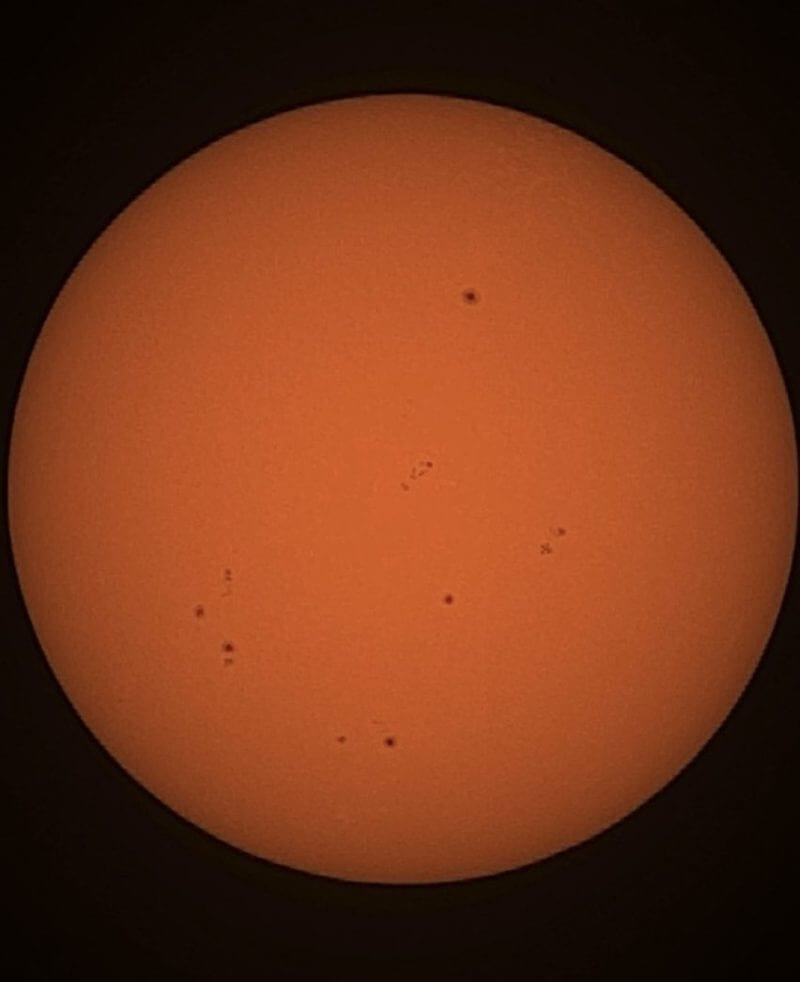


Moon: Aco Van Conis

M17 Omega Nebula: Duncan Pond
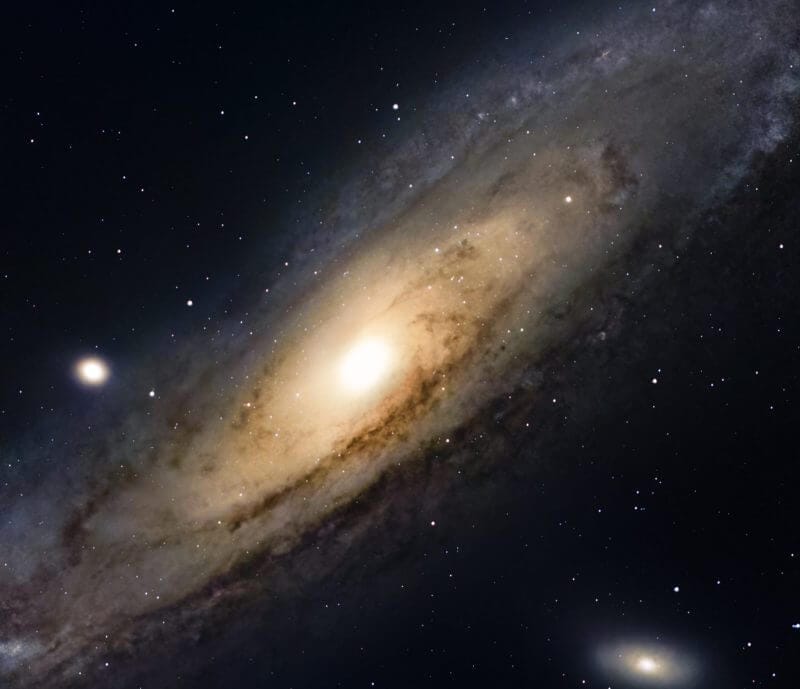
M31 Omega Andromeda Galaxy: Duncan Pond

M42 Orion Nebula
Transitioning to deep-sky mode reveals the DWARF mini’s primary strengths. Selecting an object from the built-in catalogue feels empowering, especially for beginners unfamiliar with star hopping. The telescope slews smoothly to the target and begins tracking without manual input. This automation removes much of the intimidation from deep-sky imaging.
Live stacking is central to the deep-sky experience. Initially faint smudges slowly evolve into recognisable structures as more frames are added. Watching this progression on a phone screen is both satisfying and educational. It reinforces how integration time directly impacts image quality.
From suburban locations, the telescope performs admirably given the constraints of light pollution. Bright nebulae and galaxies emerge with visible structure after relatively short sessions. Built-in filtering helps manage background glow without heavy manual intervention. Results feel rewarding even when skies are not ideal.
Under darker skies, the DWARF mini truly comes into its own. Fainter details appear more readily, and colour becomes more pronounced during stacking. Targets that struggle in urban environments show noticeably improved contrast. The difference highlights how well the system scales with better observing conditions.
Using alt-azimuth tracking is ideal for quick and casual sessions. Setup involves little more than levelling the tripod and selecting a target. Shorter exposures stack efficiently, delivering pleasing results with minimal effort. This mode suits spontaneous imaging when time is limited.
Equatorial-style tracking opens the door to more refined data capture. Longer exposures gather additional signal, improving detail and reducing noise. The app-guided alignment process feels approachable rather than technical. Even users unfamiliar with polar alignment can achieve solid results.
The alignment routine deserves particular praise. Instead of requiring a perfect view of the celestial pole, the software adapts to available sky conditions. Plate solving and on-screen guidance simplify what is usually a complex task. This flexibility makes equatorial tracking accessible in less-than-perfect locations.
Once equatorial tracking is established, star shapes remain impressively tight. Longer exposures show improved structure in nebulae and smoother gradients across galaxies. This mode rewards patience and careful framing. It is well suited to users looking to push image quality further.
Autofocus performance is reliable across different targets. Stars snap into focus quickly, and adjustments feel precise. The system maintains focus well as temperatures change during the session. This consistency removes another layer of manual adjustment.
The imaging sensor plays a significant role in overall performance. Its sensitivity allows faint details to emerge sooner than expected for such a small system. Noise levels remain controlled, even during extended stacking. This makes post-processing far less demanding.
Built-in filters noticeably enhance flexibility in different conditions. The broadband filter improves contrast for general targets without overly altering colour balance. Emission nebulae benefit greatly from the narrowband option. Switching filters digitally encourages experimentation throughout a session.
Dark frame handling is another subtle but valuable feature. Automatic capture of calibration frames helps improve final image cleanliness. This process runs quietly in the background without interrupting imaging. It adds a level of refinement typically reserved for larger setups.
The in-app processing tools strike a sensible balance between simplicity and control. Basic adjustments such as stretching and contrast are easy to apply. Results can be shared quickly without external software. This immediacy is especially appealing for casual users.
For those who want deeper control, the ability to save raw data is important. Files can be transferred for further processing on a computer later. This keeps the DWARF mini relevant for more advanced workflows. It does not lock users into a closed ecosystem.
Battery performance supports extended imaging sessions. Several hours of use are achievable without external power. This reinforces the telescope’s suitability for remote locations. Charging while in use further adds to flexibility.
Wireless performance remains stable throughout sessions. Dropouts are rare, and controls respond promptly. This reliability builds confidence during longer imaging runs. It allows users to focus on observing rather than troubleshooting connections.
The quiet operation of the telescope enhances the overall experience. Motors and internal systems operate discreetly without drawing attention. This makes it pleasant to use in quiet outdoor environments. It also helps avoid disturbing others nearby.
Portability continues to influence how often the telescope gets used. Its small size encourages frequent sessions rather than special occasions. Packing and unpacking never feels like a chore. This ease of use leads to more time under the sky.
For beginners, the learning curve feels gentle and rewarding. The app explains processes clearly without excessive jargon. Early successes come quickly, building confidence. This positive reinforcement is crucial for sustained interest.
Intermediate users will appreciate the balance of automation and control. There is enough flexibility to refine results without overwhelming complexity. The system grows with the user’s skills. It avoids feeling limiting too quickly.
As a secondary rig, the DWARF mini integrates well alongside larger setups. It can image a different target simultaneously with minimal supervision. This parallel workflow maximises productive time under clear skies. It adds value without demanding attention.
The dual-camera design encourages creative experimentation. Wide-field shots complement detailed deep-sky images nicely. Switching between perspectives keeps sessions engaging. It broadens the telescope’s appeal beyond a single use case.
Image consistency across sessions is another strength. Results feel repeatable once settings are understood. This predictability helps users refine their approach over time. It contributes to a sense of reliability.
The telescope handles different seasons well. Performance remains stable as targets change throughout the year. Adjusting to new constellations feels seamless through the app. This adaptability keeps the experience fresh.
Target acquisition is quick and dependable. Slews are smooth and accurate, landing close to centre each time. Minor framing adjustments are easy to make remotely. This precision saves time and frustration.
The user interface encourages exploration of lesser-known objects. Browsing the catalogue often leads to discovering new targets. This sense of discovery adds to the enjoyment. It turns imaging sessions into learning experiences.
Live feedback during stacking helps users understand exposure choices. Seeing improvements in real time reinforces good practices. It demystifies concepts like integration time and signal accumulation. This educational aspect is surprisingly effective.
The DWARF mini performs well in short sessions as well as longer ones. Even brief imaging runs can produce satisfying results. Longer sessions reward patience with improved depth and colour. This flexibility suits different observing styles.
Weather-limited opportunities are easier to take advantage of. Quick setup means clear patches of sky are not wasted. The telescope is ready before conditions change again. This responsiveness is a major practical benefit.
Transporting the unit feels stress-free. Its compact size reduces concerns about damage or weight. This makes it easier to justify taking it along on trips. More opportunities to image naturally follow.
Over time, the DWARF mini encourages a more relaxed approach to astrophotography. The focus shifts from equipment management to enjoying the sky. This change in mindset is refreshing. It aligns well with modern, mobile lifestyles.
The sense of immediacy sets it apart from traditional setups. Results appear quickly and evolve visibly on screen. This feedback loop keeps sessions engaging. It turns waiting into part of the enjoyment.
Performance remains consistent across different targets and conditions. While it has clear physical limits, it delivers within them reliably. Expectations are met rather than oversold. This honesty enhances trust in the system.
For its size, the level of detail achievable is impressive. Images feel satisfying rather than compromised. The experience challenges assumptions about what small instruments can do. It proves that thoughtful integration matters as much as raw scale.
Using the DWARF mini regularly builds familiarity and confidence. Each session feels smoother than the last. The telescope fades into the background as a tool. What remains is the experience of observing and capturing the night sky.
Conclusion
The DWARF mini succeeds in making astrophotography feel approachable without stripping away the sense of achievement that comes from capturing the night sky. Its compact design and integrated workflow remove many of the traditional obstacles that prevent people from getting started. Instead of focusing on setup complexity, it encourages users to spend more time observing and imaging.
What stands out most is how well the telescope balances automation with meaningful results. It delivers images that feel rewarding while guiding users through each step in a clear and supportive way. This balance makes it suitable for beginners while remaining engaging for those with more experience.
Portability plays a major role in how often the DWARF mini gets used. Its small size and self-contained operation make spontaneous sessions easy, whether from the backyard or a darker location. That convenience naturally leads to more frequent use and a deeper connection with the night sky.
As a complete package, the DWARF mini feels thoughtfully designed rather than compromised by its size. It offers a modern, mobile approach to astrophotography that aligns well with how people use technology today. For anyone seeking an accessible yet capable way to explore deep-sky imaging, it presents a compelling and enjoyable option.
