A fresh round of pricing data shows a graphics card price surge is hitting buyers harder than at any point since the current GPU generation launched. According to figures gathered across ten countries, average GPU prices jumped 15 percent in a single month, and the flagship RTX 5090 is now selling for as much as 136 percent above its official MSRP worldwide.
The numbers come from market tracking firm TechSpot, which monitors retail pricing across major regions rather than relying on a single storefront snapshot. That breadth matters, because it rules out the idea that this is a local shortage or a one-off retailer gouging customers. The increase is broad, consistent, and getting worse month on month.
Table of Contents
How bad is the graphics card price surge right now
Excluding the RTX 5090 from the calculation, the average graphics card across NVIDIA’s and AMD’s lineups now sells for 28 percent above its launch price. TechSpot deliberately left the 5090 out of that average because the card behaves like an outlier rather than a typical gaming GPU. Its buyers increasingly include AI researchers and small studios chasing its huge memory pool, not just gamers wanting the fastest frame rates.
Even with that exclusion, the RTX 5090 remains the most extreme example of the trend. NVIDIA still lists the card at $1,999, but the cheapest unit available in the United States now costs close to $5,000. That works out to a 145 percent premium domestically and 136 percent above MSRP when averaged globally. Few components in PC hardware history have drifted this far from their sticker price while still being sold as new stock.
GeForce cards as a whole rose 19 percent month over month, while Radeon cards rose 11 percent over the same period. Both brands are inflating, but NVIDIA’s lineup is climbing faster, likely because demand for its higher-end silicon extends well beyond the gaming market.
RTX 5060 Ti 16GB and the strange memory-size split
One of the more telling details in the data involves the RTX 5060 Ti. The 16GB version is now the second-most inflated card tracked, selling for 70 percent above its $429 MSRP in the US and 53 percent above MSRP globally. Its 8GB sibling, which launched at $379, sits at just 14 percent above MSRP worldwide.
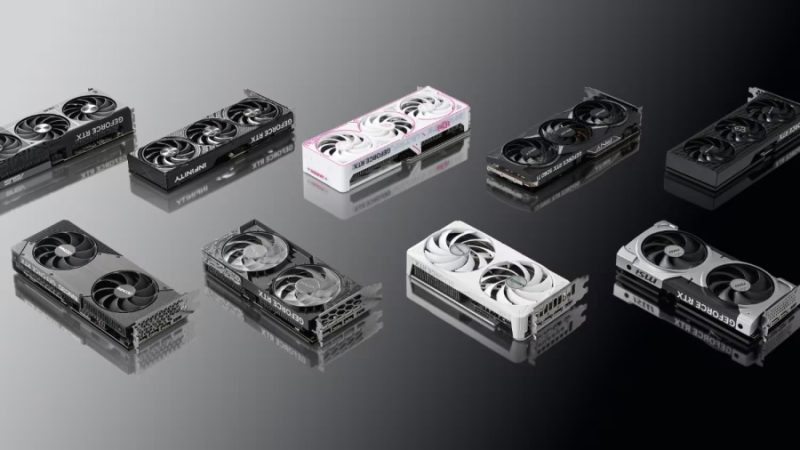
That gap between two versions of essentially the same card is unusual. It suggests buyers are specifically chasing extra memory, likely for AI workloads, video editing, or simply future-proofing against games that increasingly demand more VRAM. Retailers appear to be pricing accordingly, treating the 16GB model almost as a separate, scarcer product rather than a memory upgrade on the same board.
| Card | MSRP (US) | Premium (US) | Premium (Global) |
|---|---|---|---|
| RTX 5090 | $1,999 | 145% | 136% |
| RTX 5060 Ti 16GB | $429 | N/A | 53% |
| RTX 5060 Ti 8GB | $379 | N/A | 14% |
Part of a longer pattern, not a sudden spike
This is not the first sign of trouble for RTX 50-series pricing. Earlier reporting already flagged that median prices for the lineup had climbed by as much as 41 percent in a single month back in August, well before this latest data was collected. Rather than a temporary blip, the current figures look like a continuation of that trend, with prices creeping higher every time a new snapshot is taken.
The pattern lines up with wider pressure across the semiconductor industry, where chip prices climbing across the wider industry has become a recurring theme in 2025. Memory shortages, AI-driven demand for high-end silicon, and constrained manufacturing capacity are squeezing supply for everything from GPUs to laptop processors at once, and graphics cards sit right in the middle of that squeeze.
What it means for anyone building or upgrading a PC
For shoppers eyeing cards like the Gigabyte RTX 5070 Ti AERO OC or comparing them against the previous-generation RTX 4070 Ti SUPER, the practical takeaway is straightforward: MSRP is currently a poor guide to what a card will actually cost at checkout. Listed prices from NVIDIA’s official GeForce lineup and AMD’s Radeon graphics cards remain useful for comparing relative value between tiers, but they no longer reflect real-world availability or cost.
Buyers hoping prices settle soon may be waiting a while. With demand from AI workloads showing no sign of easing and manufacturing capacity still tight, there is little pushing this graphics card price surge into reverse in the near term. Anyone planning a build around a specific card, particularly a high-memory model like the 5090 or the 16GB RTX 5060 Ti, should treat current asking prices as the realistic budget rather than an inflated exception waiting to correct itself.