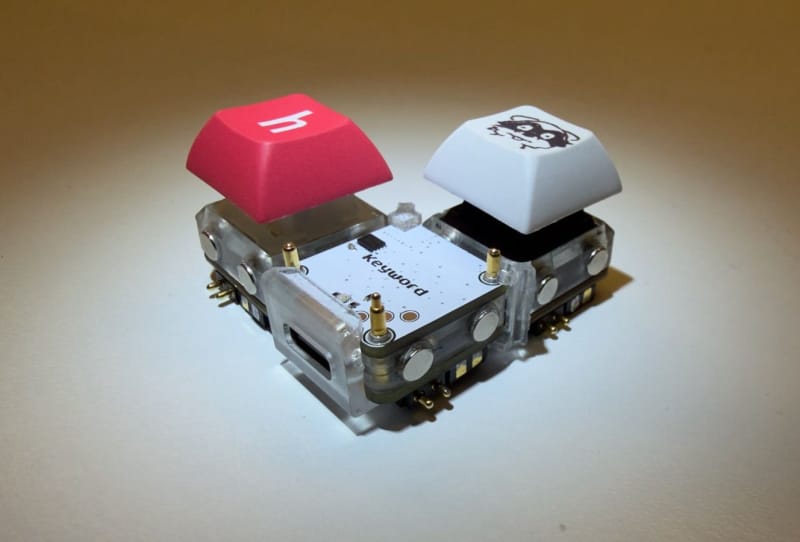
The Keybytes modular keyboard turns typing hardware into something closer to a box of building blocks, letting builders snap in individual magnetic key modules and add, remove or rearrange keys whenever they like. Each module carries its own microcontroller, which means the keyboard has no single master circuit board dictating how many keys it can hold or where they have to sit.
Key takeaways
- ✓Keybytes is a DIY project where each key is its own module with a dedicated microcontroller
- ✓Magnetic connectors let builders snap keys together and rearrange or expand a layout at will
- ✓The design avoids a single master PCB, unlike most mechanical keyboards on the market
- ✓It follows other attempts at keyboard modularity, including Framework's since-cancelled keyboard module
- ✓No commercial release date or pricing has been confirmed for the Keybytes project
That approach sets Keybytes apart from almost every keyboard sold today, where a single PCB defines the entire layout before a single switch is ever fitted. Instead of designing a board around a fixed number of keys, Keybytes flips the process: the layout grows or shrinks depending on how many modules a person clips together.
Table of Contents
How the Keybytes modular keyboard works
Each key in the Keybytes system is a self-contained unit. Rather than wiring switches back to a central controller, every key module includes its own microcontroller capable of handling input on its own. Magnets hold the modules to their neighbours, creating both a physical and electrical connection without screws, solder or a backplane.
The practical result is a keyboard that behaves more like a construction kit than a finished product. Want a 60 percent layout one week and a full-size board with a number pad the next? In theory, it is a matter of clicking extra modules into place rather than buying an entirely new keyboard.
This is also where the project earns its “truly modular” label. Plenty of keyboards already market themselves as customisable, usually through hot-swappable switches or software remapping, but the underlying PCB and key count stay fixed. Keybytes removes that constraint by making every key an independent, addable unit.
Why modularity has been the hard problem in keyboard design
Keyboard manufacturers have circled this idea for years without quite landing on it. Framework, known for repairable laptops, previously worked on its own low-profile keyboard module before scrapping the custom low-profile keyboard module rather than ship it. That cancellation highlighted how difficult it is to make a modular typing surface that still feels solid and consistent under the fingers.
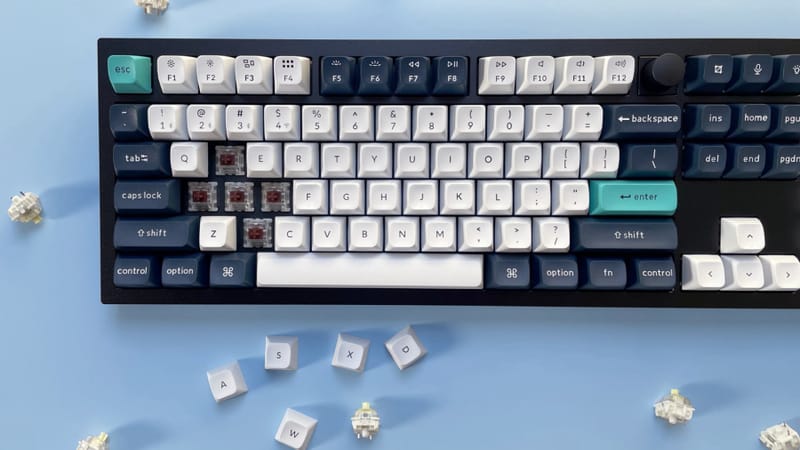
Other companies have chased adjacent goals through different means. Magnetic and Hall effect switch technology has become popular in boards like the Epomaker HE60, which uses magnetic sensing for adjustable actuation points rather than modular key placement. Those designs improve feel and precision, but they still rely on a conventional fixed PCB underneath.
Firmware has been part of the puzzle too. Many enthusiast keyboards, including fully custom builds, run on open source firmware projects such as QMK, which handle key mapping and macros once the physical layout is locked in. A keyboard where the physical layout itself can change on the fly is a different kind of challenge, since the firmware needs to recognise new modules as they are added rather than working from a layout baked in at manufacture.
What a genuinely modular keyboard means for builders and the wider market
For the DIY and mechanical keyboard community, a working modular system like Keybytes solves a real annoyance. Anyone who has broken a single switch on a soldered board knows that repairs can mean desoldering an entire row or replacing the whole unit. Individual key modules with their own microcontrollers would make a single faulty key a five-minute swap rather than a repair project.
It also opens the door to layouts that simply do not exist as off-the-shelf products. Someone who wants an unusual split layout, an oversized spacebar cluster, or a board that grows a numpad only on demand would no longer need a custom PCB run or a niche vendor. They could build it from the same base modules as everyone else.
There are trade-offs worth watching, too. Magnetic connections and per-key electronics typically cost more than a single stamped PCB, and keeping dozens of microcontrollers in sync without added latency is a nontrivial engineering task. Framework’s experience shows that modularity which looks great as a concept can be genuinely hard to ship at a price and build quality people will accept. No release date, pricing or commercial availability has been confirmed for Keybytes, so it is best treated for now as a promising project rather than a product on shelves.
Even so, the idea lines up neatly with a broader shift already visible in keyboards, from budget boards adding rapid trigger features once reserved for high-end gear to hot-swap sockets becoming standard rather than a premium extra. A genuinely modular keyboard would be the logical next step in that trend, giving everyday typists and competitive gamers alike a board that can evolve instead of being replaced.
Frequently asked questions
What makes the Keybytes modular keyboard different from a normal mechanical keyboard?
A standard mechanical keyboard wires every switch to one shared circuit board with a fixed number of keys. Keybytes gives each key its own microcontroller and connects modules magnetically, so keys can be added, removed or rearranged without redesigning the whole board.
Is the Keybytes keyboard available to buy?
No confirmed release date, pricing or retail availability has been announced. It should currently be treated as a project or prototype rather than a shipping product.
How do the magnetic key modules connect to each other?
Each module uses magnets for both the physical connection between keys and the electrical link that passes signals between them, removing the need for soldering or a traditional backplane.
Has anyone else tried to build a modular keyboard before?
Yes. Framework previously developed a custom low-profile keyboard module for its laptops before cancelling it, and several Hall effect keyboards use magnetic switch technology, though they still rely on a fixed circuit board rather than fully modular keys.