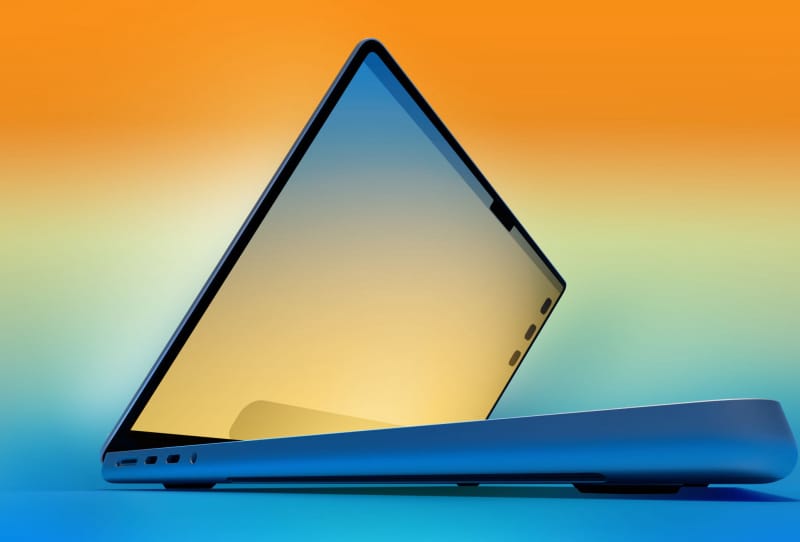
The mini-LED MacBook Pro looks set to remain part of Apple’s lineup for longer than most people expected. A new display industry roadmap suggests the company has slowed its planned shift to OLED panels across its laptops, meaning the existing LCD-based Pro models with mini-LED backlighting could stay on shelves until at least 2028.
That timeline comes from research firm Omdia, which tracks display technology adoption across major electronics makers. According to its latest analysis, Apple still intends to move its entire MacBook and iPad range to OLED screens eventually. However, the pace of that transition has changed noticeably in recent months, largely because of rising memory and component costs across the display supply chain.
Table of Contents
What the Omdia Roadmap Actually Says
Omdia had previously forecast that Apple would phase out its LCD-based MacBook Pro models fairly quickly once OLED versions arrived, expected either later this year or in early 2027. That would have made for a fast, clean handover between technologies, similar to how Apple retired older iPhone displays once OLED became standard across its phone range.
The updated forecast tells a different story. Omdia now expects Apple to run both the 14-inch and 16-inch mini-LED MacBook Pro models alongside new OLED-equipped machines well into 2028. Rather than a quick switch, this points to a longer overlap period where shoppers will have a genuine choice between two display technologies within the same product family.
Cost is the reason cited for the change. OLED panels large enough for a 14-inch or 16-inch laptop remain expensive to produce at scale, and broader increases in memory and component pricing have made the economics of a rapid switch less appealing for Apple in the near term.
Where the MacBook Ultra Fits In
Earlier reporting had already flagged that Apple is preparing a new high-end laptop, widely referred to as the “MacBook Ultra,” which is expected to sit above the current M5 Pro and M5 Max MacBook Pro models rather than replace them outright. That model is tipped to introduce an OLED display along with a touchscreen and several other design changes, positioning it as a genuinely new flagship rather than a simple spec bump.
Until now, there had been little clarity on how long Apple would keep selling the existing mini-LED MacBook Pro alongside that new flagship. Omdia’s roadmap is the first indication that the overlap could last well beyond a single product cycle, giving the current existing MacBook Pro lineup a longer shelf life than many assumed.
There are also hints that Apple’s software team is already preparing for OLED hardware. Developers examining the macOS Golden Gate beta have noted that certain Liquid Glass interface elements appear noticeably glassier on high-end OLED displays with HDR support, compared with how they render on standard screens. That detail lines up with reports that an OLED-equipped MacBook Pro or MacBook Ultra is due by early 2027, even if it won’t immediately replace the mini-LED models.
Mini-LED Versus OLED: What Changes and What Doesn’t
Mini-LED and OLED both deliver strong contrast and support for HDR content, but they get there differently. Mini-LED relies on thousands of tiny LED clusters behind an LCD panel to dim specific zones of the screen, while OLED lights each pixel individually, allowing for true blacks and typically thinner panels.
| Display Type | Used In | Key Strength | Apple Timeline |
|---|---|---|---|
| Mini-LED (current) | 14-inch and 16-inch MacBook Pro | Mature, cost-effective, strong HDR via local dimming | Expected to remain on sale until at least 2028 |
| OLED (upcoming) | MacBook Pro / MacBook Ultra | True blacks, thinner design, per-pixel lighting | Expected to launch by early 2027 |
For everyday use, most buyers are unlikely to notice a dramatic difference between the two in typical tasks like browsing or word processing. The gap becomes more obvious in dark-room video editing or HDR content viewing, where OLED’s per-pixel control has a clear edge over even a well-implemented mini-LED backlight.
What It Means for Buyers
For anyone shopping for a new Apple laptop over the next couple of years, this changes the calculus. Rather than facing a hard cutoff where mini-LED models disappear the moment OLED versions launch, buyers should expect a genuine choice between the two display technologies for an extended period.
That is good news for anyone hesitant about paying a likely premium for a first-generation OLED laptop, or for those who simply prefer the proven, well-reviewed mini-LED panel already fitted to current MacBook Pro models. It also suggests Apple sees value in offering different tiers within its lineup, much as many Windows laptop makers already let buyers pick their preferred display type at checkout.
None of this is officially confirmed by Apple, and the company has not commented on its internal display roadmap. Omdia’s projections are based on supply chain analysis rather than an Apple announcement, so the 2028 timeline should be treated as an informed industry forecast rather than a locked-in date. Even so, it lines up with a broader pattern of reporting suggesting Apple’s OLED transition across MacBooks will be gradual rather than a single sharp break. Readers curious about how recent Apple-adjacent laptops stack up against the wider market can also check other recent laptop reviews for context on where the competition stands.