Nintendo Switch games on Mac computers and iPhones can now run natively, without a traditional emulator sitting in between, thanks to a new open-source project called nxnative. Built by a developer going by the handle seedds, the tool takes a player’s own game dump and prod.keys and converts them into a standalone app for iPhone, iPad or Mac, rather than translating Switch code on the fly the way an emulator typically does.
Key takeaways
- ✓nxnative converts a player's own Switch game dump into a native Apple Silicon app, with no emulator involved.
- ✓Developer seedds based the technique on d2r-mobile, which did the same for Diablo II: Resurrected.
- ✓Monster Hunter Rise reportedly held a locked 60fps on a fanless M1 MacBook Air with 8GB of RAM.
- ✓Around 70 games are listed as tested, though Doom Eternal fails to boot.
- ✓There's no online play or amiibo support, and most titles target iPhone 15 Pro or newer.
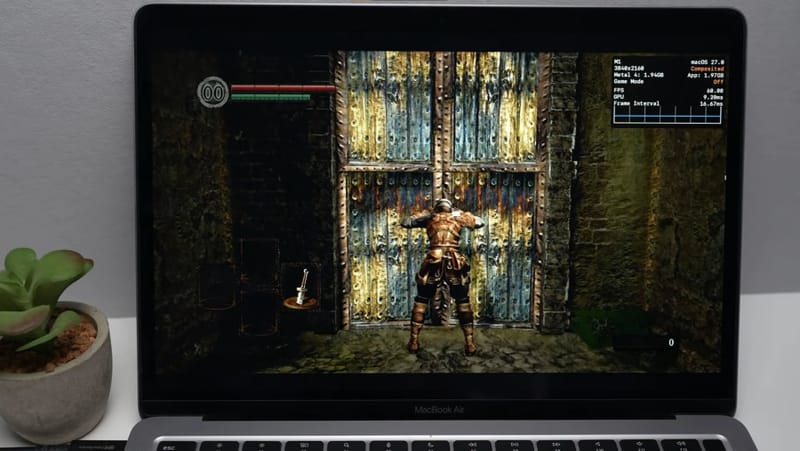
The project has already drawn attention from YouTuber Andrew Tsai, who put it through its paces on Mac hardware. Monster Hunter Rise reportedly held a locked 60 frames per second on a base, fanless M1 MacBook Air with just 8GB of RAM, a fairly modest machine by today’s standards. Unicorn Overlord, Dragon Quest XI S and Dark Souls Remastered also ran without major issue, though Doom Eternal refused to boot at all.
Table of Contents
How nxnative Avoids Emulation on Nintendo Switch Games on Mac
The trick behind nxnative comes down to shared architecture. The Nintendo Switch and every modern Apple Silicon chip, from the M1 through to the latest A-series processors, use the Arm64 instruction set. Because the underlying hardware language is already compatible, nxnative can rewrite a game’s code to run directly on Apple’s silicon instead of simulating a separate Switch processor the way emulators such as Ryujinx or Yuzu historically have.
To make that work, the tool swaps out the Switch’s Horizon operating system for a lightweight stand-in host, then rebuilds Nintendo’s NVN graphics API on top of Apple’s Metal framework. Shader translation, a notoriously tricky part of any cross-platform conversion, is borrowed from Ryujinx, the once-popular Switch emulator that Nintendo had pulled from distribution in 2024. The broader technique isn’t new, either; it mirrors an existing project called d2r-mobile, which used the same approach to get Diablo II: Resurrected running on mobile Apple devices.
Which Games Actually Work
The nxnative README currently lists roughly 70 tested games, a number that should grow as more users experiment with their own libraries. Compatibility leans toward recent Apple hardware: most titles are aimed at the iPhone 15 Pro or newer, plus iPads running an M1 chip or later. Mac users can get titles running too, though Mac builds require an extra compilation step compared with the iOS and iPadOS versions.
The results so far are a mixed bag, as expected for a project still in its early stages. Performance in titles like Monster Hunter Rise suggests real headroom even on entry-level Apple Silicon, while Doom Eternal’s total failure to launch is a reminder that not every Switch title will translate cleanly. It echoes the pattern seen in other native-port efforts, including a similar project aiming to run PS5 games natively on PC, where some games run flawlessly and others simply refuse to cooperate.
What’s Missing: Online Play, amiibo, and Easy Setup
nxnative is not a plug-and-play solution. There’s no support for online multiplayer, so anything built around Nintendo’s network services is off the table. amiibo functionality is also absent, which rules out features tied to those figures in games like Animal Crossing or The Legend of Zelda. Setting it up requires a player’s own legally dumped game files and console prod.keys, a process that demands technical comfort and, realistically, ownership of the original hardware and cartridges or digital licences.
That barrier to entry puts nxnative closer in spirit to an Android app that runs Steam and Windows games locally than to a simple downloadable emulator. Both tools ask users to bring their own legitimately owned content and do some setup legwork, rather than offering a one-click way to play anything.
What It Means for Switch Owners and Apple Users
For anyone who already owns Nintendo Switch games on Mac-capable hardware, nxnative offers a genuinely different proposition to standard emulation: running titles as native Apple apps rather than through a translation layer, which can mean smoother performance on less powerful machines. The fact that a fanless M1 MacBook Air can hold 60fps in a demanding title like Monster Hunter Rise says a lot about how much native execution can save in overhead compared with conventional emulation.
It also lands at a sensitive moment for Nintendo, which has aggressively pursued emulator projects through legal action in the past, including the shutdown of Ryujinx itself. Whether nxnative draws similar scrutiny remains to be seen, but the project’s reliance on user-supplied game files and keys, rather than any pirated content, puts it in a similar legal grey area to other self-dump tools. For now, it’s a niche but notable proof of concept for just how far native Arm64 compatibility between consoles and consumer devices has come, and a reminder of how closely Apple’s chip architecture now mirrors the hardware inside dedicated gaming consoles. Anyone following Nintendo’s stance on physical Switch game ownership will recognise the pattern: enthusiast projects keep finding new ways to use legitimately owned game data, long after official support details are settled.
Frequently asked questions
Is nxnative an emulator?
Not in the traditional sense. Rather than simulating Switch hardware, nxnative rewrites a game’s code to run directly on Apple Silicon’s shared Arm64 architecture, which developers say gives better performance than standard emulation on the same hardware.
What devices does nxnative support?
Most tested games target the iPhone 15 Pro or newer, iPads with an M1 chip or later, and Apple Silicon Macs. Mac versions require an additional build step compared with iOS and iPadOS installs.
Does nxnative support online multiplayer or amiibo?
No. The project currently has no online play support and no amiibo functionality, limiting it to single-player or local content within each game.
Do players need to own the original Switch game?
Yes. nxnative requires a user’s own dumped game files and console prod.keys, meaning it relies on legitimately owned hardware and software rather than downloaded ROMs.