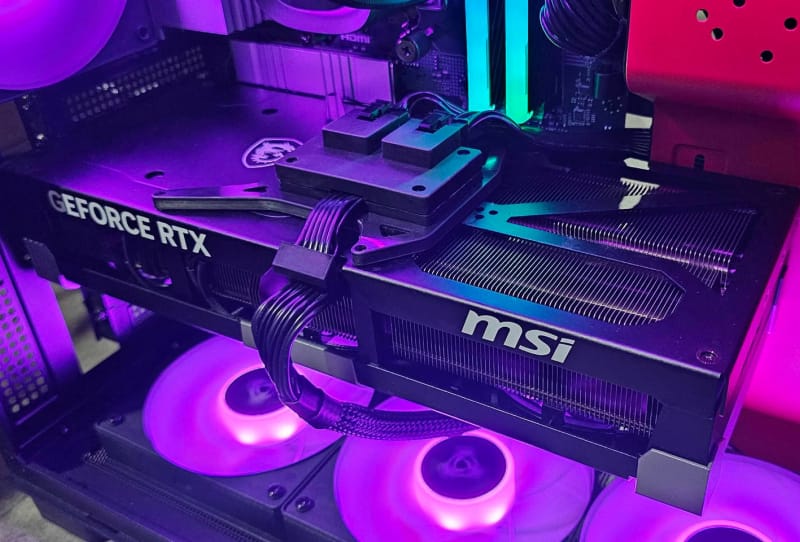
A Reddit modder has tackled the RTX 5090 power connector melting problem head-on, soldering two extra 8-pin PCIe inputs onto an MSI GeForce RTX 5090 alongside its stock 16-pin plug. Over a 48-hour test at 550 watts, the user says the wires never climbed above 40°C, even at the solder joint, offering a homemade workaround to a problem Nvidia has struggled to shake since the RTX 50-series launched.
Key takeaways
- ✓Reddit user DallasGrave added two 8-pin PCIe inputs alongside an MSI RTX 5090's stock 16-pin connector
- ✓Each conductor reportedly carries about 3 amps, well under the 9.5A per-pin limit of the standard
- ✓Wires stayed below 40°C during a 48-hour run at 550 watts, according to the modder's own figures
- ✓NVIDIA's 12V-2×6 connector was meant to end melting issues but failures have continued through 2025
- ✓A Hardware Unboxed test last month recorded one RTX 5090 cable reaching 175°C with roughly 22A on a single wire
The user, who goes by DallasGrave, detailed the build in a post on r/pcmasterrace. The approach is unusual but logical: rather than relying solely on the card’s single 16-pin connector to carry the full load, the extra 8-pin inputs spread the current across three separate cables instead of one.
Table of Contents
How the RTX 5090 power connector mod works
The mod centres on a small pickup board soldered directly to the contacts of the 16-pin header. That board feeds a second PCB carrying two standard 8-pin PCIe sockets, which then connect to a power supply using conventional cables. The RTX 5090 ends up drawing power through three cables in total instead of the usual single 12V-2×6 cable.
According to DallasGrave, each conductor in the reworked setup now carries roughly 3 amps. That is a significant drop from the loads some stock 16-pin connectors have been recorded handling, and it sits comfortably below the per-pin limits the connector standard was designed around. The modder says more test data is on the way, so for now the 40°C figure and the 3A-per-wire estimate are self-reported rather than independently verified.
Why the 16-pin connector keeps overheating
This is not the first time an RTX 5090 owner has had reason to worry about its power connector. Nvidia introduced the 12V-2×6 revision specifically to address the melting failures that plagued the original 12VHPWR design on earlier RTX 40-series cards. Early last year, the company said those issues were effectively resolved on the redesigned connector.
Problems resurfaced quickly. A Founders Edition RTX 5090 reportedly melted its connector shortly after that announcement, though in that instance a third-party cable was involved. Since then, further failures have been documented, including one case where the connector melted despite the card running an undervolt and a 100-watt power limit reduction, conditions that should have made the load easier to handle, not harder.
The most striking recent example came from the channel Hardware Unboxed, which recorded its own RTX 5090 cable reaching 175°C at one point, with a single wire pulling around 22 amps. That kind of imbalance, where one conductor in a multi-wire connector ends up carrying far more current than the others, has been the recurring theme across most of the reported failures. The connector’s design assumes current splits evenly across its pins, and when it doesn’t, localised heat can build fast.
A DIY fix, not an official one
Spreading current across three separate cables instead of one, as this mod does, directly targets that imbalance risk by giving the card more physical paths for power to flow through. In principle, that makes it harder for any single wire to become a bottleneck, which lines up with why DallasGrave’s wires stayed cool even under a sustained 550-watt load.
It is worth being clear about what this is and isn’t. This is a single enthusiast’s soldering project, not a sanctioned fix from Nvidia or from board partners like MSI. It requires opening the card, soldering directly to its power delivery contacts, and running extra cables out of the case, work that will void warranties and carries real risk if done incorrectly. Nvidia has not commented on this specific mod, and there is no indication the company plans to adopt a similar approach on future cards.
What it means for RTX 5090 owners
For most buyers, this remains a cautionary tale rather than a practical instruction manual. The RTX 5090 draws up to 575 watts at stock settings, and that figure, combined with a connector standard that keeps producing isolated failures, has left some owners uneasy enough to seek their own solutions rather than wait for a fix. The repeated incidents, spanning Founders Edition and third-party cards alike, suggest the underlying cable and connector tolerances remain tighter than ideal for a part regularly asked to carry over 500 watts through a handful of thin wires.

Until Nvidia or the PCI-SIG group that oversees the connector standard addresses the root cause, the safest advice for RTX 5090 owners remains the basics: fully seat the connector, avoid excessive cable bending near the plug, and keep an eye on temperatures during extended gaming sessions. Mods like this one are a sign of genuine owner frustration, not a recommended retrofit for a card that, at this price point, should not need owners reaching for a soldering iron in the first place.
Frequently asked questions
What caused the RTX 5090 power connector mod?
Repeated reports of melted 16-pin and 12V-2×6 connectors on RTX 5090 cards pushed one Reddit user to add extra 8-pin inputs, aiming to spread current across more wires and reduce the risk of any single cable overheating.
Is the 12V-2×6 connector safer than the original 12VHPWR?
Nvidia introduced 12V-2×6 to fix melting issues seen on the original 12VHPWR design, but multiple RTX 5090 failures have still occurred since its release, including a case with an undervolt and reduced power limit.
Should RTX 5090 owners try this mod themselves?
No. It requires soldering directly to a graphics card’s power contacts, voids the warranty, and carries real risk of damage or injury if done incorrectly. It is best treated as a case study rather than a how-to guide.
How hot did the official RTX 5090 cable get in other reports?
Hardware Unboxed recorded one RTX 5090 power cable reaching 175°C last month, with a single wire reportedly carrying around 22 amps, far above the roughly 3 amps the modded setup reports per conductor.