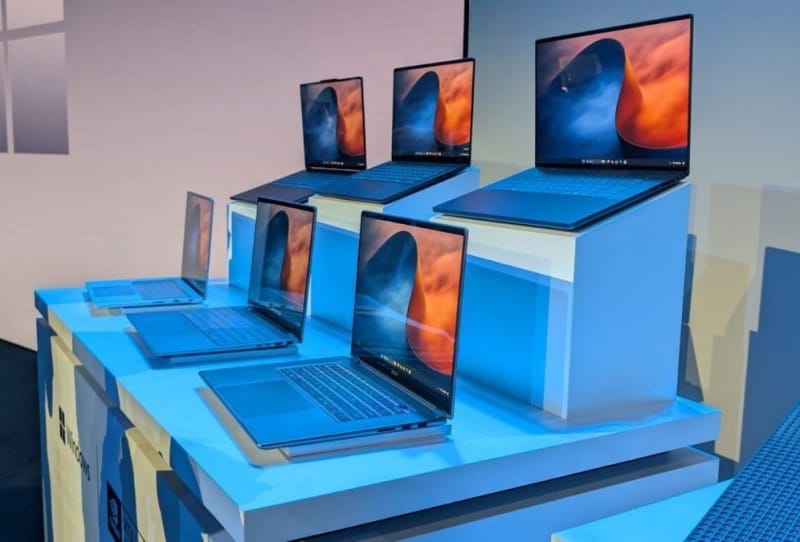
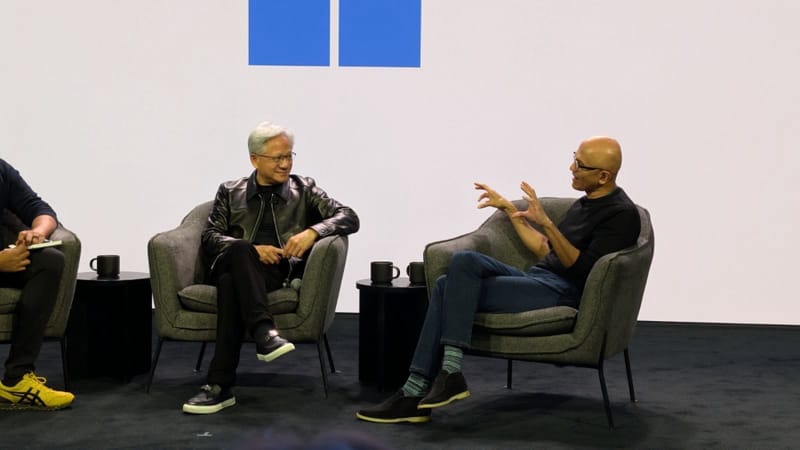
Microsoft and Nvidia used a rare joint keynote to introduce RTX Spark Builder PCs, a new category of machines built to run AI agents locally and securely around the clock. The announcement, made at Microsoft’s Surface event on October 7, paired Microsoft CEO Satya Nadella with Nvidia CEO Jensen Huang on the same stage, a pairing that signals how seriously both companies are treating the shift toward what they’re calling the PC’s “agentic era.”
Key takeaways
- ✓Microsoft CEO Satya Nadella and Nvidia CEO Jensen Huang shared a stage at the October 7 Surface event.
- ✓Nvidia's RTX Spark silicon underpins a new PC category Microsoft is calling Builder PCs.
- ✓Windows 11 is gaining sandboxing features meant to let AI agents run locally and securely around the clock.
- ✓The announcement builds on the earlier Copilot+ PC push rather than replacing it outright.
- ✓Builder PCs are pitched as machines for both creative and development work alongside everyday use.
Seeing the two executives present together is unusual enough to be the real story here. Nadella and Huang rarely share a keynote, and when they do, it tends to mark a genuine strategic alignment rather than a routine product refresh. This time, the pitch centres on hardware and software moving in lockstep: new Nvidia silicon paired with Windows 11 changes designed specifically to let AI agents operate on a device without constant supervision.
Table of Contents
What Microsoft and Nvidia Actually Announced
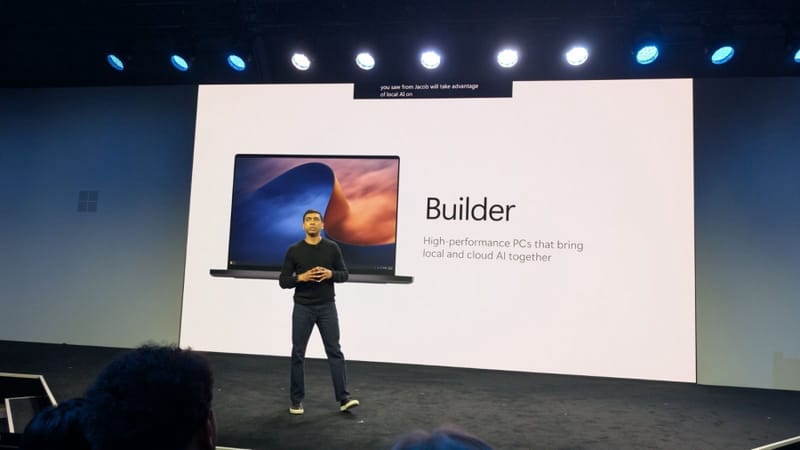
At the core of the announcement sits RTX Spark, Nvidia’s newer silicon platform, and Builder PC, a fresh label Microsoft is applying to machines designed around sustained, local AI workloads. Rather than treating AI as a bolt-on feature triggered occasionally by a Copilot button, Builder PCs are framed as always-ready systems where an agent can keep working, researching, or coding in the background while someone uses the computer normally.
That distinction matters. Earlier “AI PC” efforts, including Microsoft’s Copilot+ PC program, leaned heavily on on-device neural processing units for quick, bursty tasks like image generation or live captioning. Builder PCs push further, aiming for continuous operation rather than short demos. Readers following Nvidia’s RTX Spark chip coverage will recognise the silicon as part of a wider rollout that already includes laptop designs and compact desktops.

Nvidia has been testing the format in different shapes. Acer’s small-form-factor RTX Spark desktop, shown around the same period, gives an early sense of how the chip translates into a shelf-ready product rather than just a reference design.
How Builder PCs Differ From Today’s AI Laptops
Most current AI-capable laptops and desktops were built to accelerate specific tasks: noise cancellation, photo touch-ups, or local chatbot queries. They run the AI workload, finish, and hand control back to the user. RTX Spark Builder PCs are pitched differently, as machines expected to keep an agent active in the background for hours, handling research, code compilation, or file organisation while the person at the keyboard does something else entirely.
That’s a heavier, more persistent demand on both the chip and the operating system. It explains why Nvidia hasn’t limited RTX Spark to gaming hardware alone. Coverage of the platform has already touched on locking in game support ahead of RTX Spark laptops, showing Nvidia wants these chips to handle entertainment just as capably as always-on productivity agents, rather than forcing buyers to choose one use case over the other.
The broader industry context helps explain the timing. Nvidia has also been pushing ideas like turning idle PCs into a home AI cluster, part of a pattern where spare local compute gets put to work instead of sitting unused. Builder PCs fit that same philosophy: hardware that’s doing something useful even when a person isn’t actively driving it.
Windows 11’s New Sandboxing for Agentic AI
Running an AI agent continuously, with access to files, applications, and the web, raises an obvious question: what stops it from doing something it shouldn’t? Microsoft’s answer, outlined alongside the RTX Spark Builder PC announcement, is new sandboxing built into Windows 11 specifically for agentic workloads.
Sandboxing isn’t a new concept in computing, but applying it to an AI agent that’s meant to operate semi-autonomously for extended periods is a meaningfully different engineering problem than isolating a single app or browser tab. Microsoft’s framing suggests the goal is containment: let an agent read, write, and act within defined boundaries without it gaining broader system access it hasn’t been explicitly granted.
For everyday users, that security layer is arguably more important than the silicon itself. An agent that can be left running overnight only makes sense if a household or business can trust it won’t quietly overstep its permissions. Microsoft positioning this as a Windows 11 platform feature, rather than something unique to a single app, suggests the company wants it treated as baseline infrastructure for any software built on top of Builder PCs.
What It Means for Buyers and Developers
For everyday buyers, RTX Spark Builder PCs aren’t likely to replace a standard laptop purchase overnight. They represent a new tier aimed at people who genuinely want sustained local AI assistance, whether that’s a developer running code analysis in the background or a small business owner letting an agent sort through documents. Pricing, specific models, and Australian availability haven’t been detailed in what’s been announced so far, so anyone curious should treat this as an early-stage platform rather than a confirmed retail lineup.
For developers, the sandboxing work matters just as much as the chip. Nvidia has separately been expanding its development tooling, a trend visible in its ongoing rendering and AI software updates, which points to a broader push to make agentic features something third-party software can build on, not just a showcase feature baked into Windows itself.
The bigger picture is a PC industry trying to figure out what “useful AI” looks like once the novelty of chatbots wears off. Pairing custom silicon with operating-system-level security is a sensible way to tackle that, since an agent with real autonomy needs both the horsepower to do work and the guardrails to do it safely. Whether Builder PCs become a mainstream category or a niche for power users will depend heavily on how these sandboxing protections hold up once agents are let loose on real household and business workloads.
Frequently asked questions
What is a Builder PC?
Builder PC is the name Microsoft is using for a new category of computers designed around Nvidia’s RTX Spark silicon, built to run AI agents continuously and locally rather than only for short, on-demand tasks.
How is this different from existing Copilot+ PCs?
Copilot+ PCs focus on quick, NPU-accelerated features like live captioning or image generation. RTX Spark Builder PCs are pitched for sustained, background AI work, supported by new Windows 11 sandboxing meant to keep that ongoing activity contained and secure.
Is RTX Spark only for gaming PCs?
No. Nvidia has already confirmed game support for RTX Spark laptops, but the platform is also appearing in compact desktops and productivity-focused Builder PCs, suggesting Nvidia wants the chip to cover both entertainment and everyday AI workloads.
When will RTX Spark Builder PCs be available in Australia?
Neither Microsoft nor Nvidia has detailed specific release dates, pricing, or regional availability for Builder PCs at this stage, so local buyers should wait for official confirmation before expecting these machines on shelves.