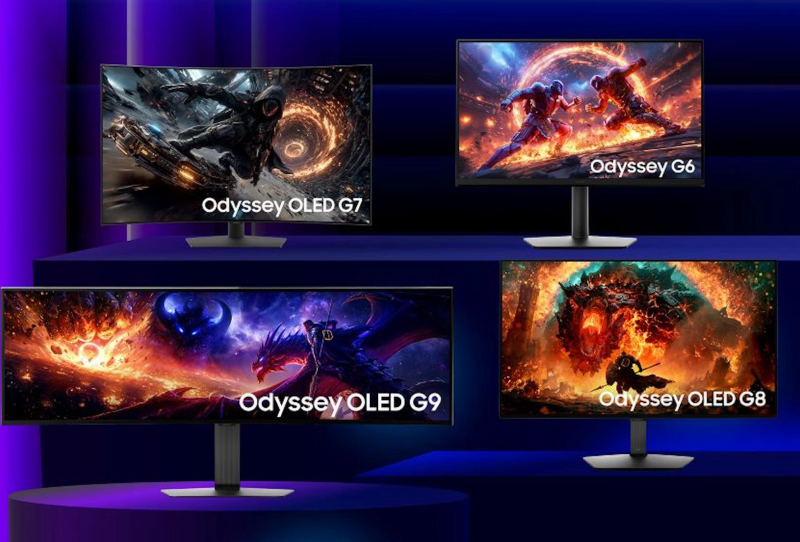
Samsung has used Gamescom to confirm its next wave of Odyssey gaming monitors, and the standout of the bunch is a Samsung Odyssey 1100Hz monitor that the company says is the fastest gaming display ever announced. The reveal landed amid a packed showing at Gamescom in Cologne, where everything from Xbox-branded furniture to a wave of new gaming accessories from ASUS competed for attention. Samsung’s 2027 Odyssey range spans a huge ultrawide display down to this screaming-fast panel, and it signals that the refresh rate arms race among monitor makers is nowhere near finished.
Table of Contents
What Samsung Showed Off at Gamescom
Samsung’s 2027 Odyssey lineup covers a broad spread of gaming monitors, but two models are drawing the most attention. One is described as a widescreen behemoth, aimed at players who want an immersive, curved field of view for sim racing, flight simulation, or open-world titles. The other is the headline act, a panel built specifically to push the ceiling on how fast a gaming monitor can refresh a frame.
That second display is what carries the Samsung Odyssey 1100Hz monitor badge, and it is being pitched as a world first. Samsung has not yet detailed full specifications such as panel type, resolution, or exact release timing, which means plenty of the finer details remain unconfirmed ahead of a fuller product launch closer to 2027.
Even without every spec locked in, the announcement itself matters. Samsung rarely leads with refresh rate as the singular selling point unless it believes the number will resonate with competitive gamers who track every fraction of a millisecond of input lag.
Why a 1100Hz Refresh Rate Actually Matters
Refresh rate determines how many times per second a monitor redraws the image, and higher numbers translate to smoother motion and reduced perceived blur during fast panning or quick reflex plays. Competitive shooters, in particular, benefit because a faster refresh rate can shave milliseconds off the time between a mouse movement and the corresponding change appearing on screen.
Most gaming monitors sold today still sit between 144Hz and 240Hz, with premium esports panels pushing toward 360Hz or 500Hz. A jump to 1100Hz sounds almost absurd by comparison, and for most people the difference beyond a few hundred hertz becomes harder to perceive with the naked eye. Still, elite players and hardware enthusiasts chase these numbers because even small reductions in latency can matter in split-second competitive scenarios.
There is also a practical hurdle worth noting. Hitting 1100 frames per second consistently requires a graphics card capable of rendering that many frames, which realistically limits the benefit to lower resolution, competitive-focused titles rather than demanding, graphically rich games. Readers curious about how a faster gaming monitor actually improves the experience will find that the gains are real, but they scale with the hardware feeding the display.
How Samsung Stacks Up Against Rivals
Samsung is not the only manufacturer chasing extreme refresh rates. LG recently began selling LG’s own 1000Hz gaming monitor in the United States, and Samsung’s newly announced panel edges past that figure by 100Hz. ASUS, meanwhile, used the same Gamescom window to show off a monitor built around Display Stream Compression technology, chasing higher resolutions and refresh rates simultaneously rather than refresh rate alone.
The table below places the headline numbers side by side, based on what each company has confirmed publicly so far.
| Monitor | Refresh Rate | Status |
|---|---|---|
| Samsung Odyssey (2027, unnamed model) | 1100Hz | Announced at Gamescom, full specs pending |
| LG UltraGear (2027 model) | 1000Hz | On sale in the United States |
| Typical premium esports monitor | 360Hz to 500Hz | Widely available |
This kind of rapid one-upmanship between Samsung and LG has played out before in the monitor space, from HDR brightness claims to curvature and OLED adoption. Refresh rate has simply become the newest battleground, and it tends to trickle down from flagship halo products into more affordable models over the following year or two.
What It Means for Buyers
For now, the Samsung Odyssey 1100Hz monitor is more of a statement than a shopping option. Samsung has not confirmed pricing, a release date, or which regions will get the panel first, so anyone tempted by the headline number will need to wait for a fuller announcement before making any decisions.
What the reveal does confirm is that Samsung intends to keep the Odyssey brand at the pointy end of gaming monitor technology heading into 2027, rather than ceding that ground to LG or ASUS. Expect more detail, likely including panel size, resolution, and curvature, to emerge as Samsung moves closer to a commercial launch. Until then, the 1100Hz figure stands as an early marker of where the fastest gaming monitors are heading next.
Everyday gamers shopping today are unlikely to need anything close to this speed, and mid-range monitors running at 165Hz or 240Hz remain more than capable for the vast majority of titles. The bigger story is what these extreme numbers signal about where the top end of the market is pushing, and how quickly that trickles down into the monitors people actually buy.